
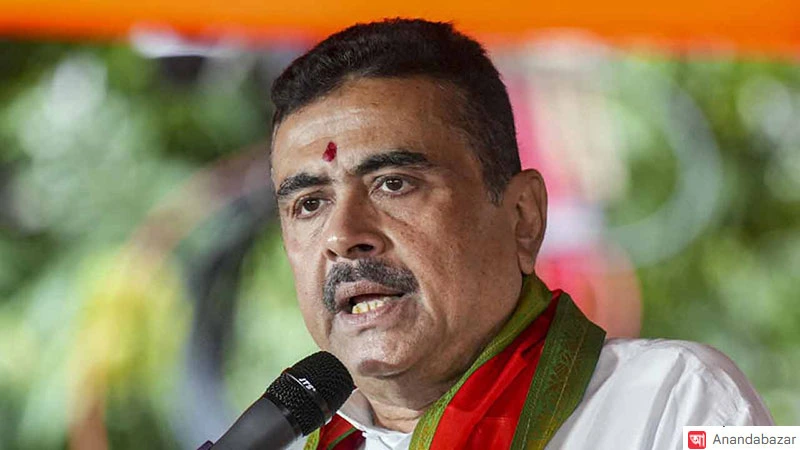
Will Suvendu On Baruipur Remain as Gimmick?
The latest stance of Suvendu on Baruipur signals a massive shift in how the state handles brutal crimes.
The air in Suryapur village was thick with grief and smoke. A quiet Sunday morning exploded into pure rage.
Angry residents blocked roads, burned tires, and uprooted railway tracks along the Sealdah-Namkhana line. A horrific tragedy had occurred.
The mutilated body of an 11-year-old girl was recovered from a local pond. She went missing on Saturday while going to buy a birthday gift for her friend.
The post-mortem report revealed a nightmare. She was brutally assaulted and thrown into the water alive. This spark ignited a massive firestorm across West Bengal.
The statement of Chief Minister Suvendu Adhikari on the Baruipur case emphasizes that his government will ensure justice. He directly called the victim’s father and promised the strictest punishment under the Bharatiya Nyay Sanhita.
The state government immediately formed a six-member Special Investigation Team (SIT). The police quickly conducted overnight raids. They have already arrested the prime accused, Ananda Sardar, alongside Prabhas Mondal and Dibakar Sardar.
For more real-time visual updates on the ground situation, you can watch the initial television broadcast on TV9 Bangla Coverage of the Baruipur Incident.
What Happened In The Baruipur Minor Girl Case?
The details of the crime are deeply unsettling.
- The Disappearance: The minor went missing on Saturday afternoon.
- The Search: When she did not return, her family and neighbors searched all night.
- The Discovery: On Sunday morning, her body was found stuffed in a sack inside a local pond.
The initial medical findings shocked the state:
- Severe Trauma: The child suffered severe head injuries from a heavy object before being dumped into the water.
- Cause of Death: The presence of water in her lungs proved she was still breathing when she hit the water.
Public Outrage and Law and Order Breakdown
The discovery led to instant chaos and vigilante action.
- Mob Violence: Believing the local police reacted too slowly, an enraged mob cornered a 26-year-old suspect and lynched him.
- Clashes with Police: When police and central forces rushed to intervene, the crowd threw bricks and wounded several security personnel.
- Arson: A police vehicle was set on fire during the peak of the riots.
- Emergency Measures: The administration had to enforce Section 163 of the Bharatiya Nagarik Suraksha Sanhita (BNSS) to halt the widespread violence.
Read the comprehensive national publication coverage detailing the initial reports on The Hindu News Report on Baruipur.
Why Is The Chief Minister Warning ‘Restless Souls’?
The official communication from Suvendu on Baruipur highlights four separate First Information Reports (FIRs) that have been registered by investigators to target different layers of the unrest.
| FIR Category | Focus of Police Investigation |
|---|---|
| FIR No. 1 | Murder and sexual assault of the 11-year-old girl |
| FIR No. 2 | Mob lynching of a suspect in Suryapur village |
| FIR No. 3 | Attacks on police, CRPF jawans, and arson |
| FIR No. 4 | Uprooting and damaging of public railway tracks |
The Chief Minister openly stated that the lynching and track sabotage had a calculated, political design behind them:
- Political Motives: He referred to the agitators as “frustrated, restless souls” who were defeated in the elections.
- Historical Comparisons: He compared the track vandalism to past anti-CAA agitations.
- Strict Warning: He vowed that those who orchestrated the riots to destabilize the state would suffer heavy consequences.
Analysts at Knowledge Mart note that this dual approach targets both the immediate criminal perpetrators and the political opportunists trying to weaponize human tragedy.
You can find full statements and breakdowns of the administrative stance on The Economic Times Baruipur Briefing.
How Does This Compare To The Past 15 Years of Governance?
When analyzing the stance of Suvendu on Baruipur, the institutional difference in managing sensitive criminal cases becomes instantly visible to independent political observers.
For over a decade, West Bengal witnessed a culture of institutional denial. Whenever a shocking crime occurred, the ruling establishment systematically tried to minimize the gravity of the situation.
- The Culture of Denial: High-ranking leaders often labeled horrific crimes as “small incidents” or “stray fabrications” to protect the state’s image.
- Changing State Counsels: In infamous cases like the Kamduni gang-rape, the state government frequently changed its legal counsels. This tactic repeatedly dragged out proceedings and weakened the prosecution’s case.
- Shielding the Connected: The long hands of the law rarely reached the culprits because local political bosses protected them.
The current administration’s immediate arrest of three key suspects indicates a departure from that old blueprint. However, independent observers emphasize that executing a swift arrest is only the first link in a very long chain.
Heinous Crimes Against Women / Girl Child – West Bengal (Justice Gap Timeline)
| Year | Place | Incident | Status of Punishment / Justice |
|---|---|---|---|
| 2012 | Park Street, Kolkata | Woman gang-raped in a moving car | Initial denial and delay; arrests later, justice widely questioned |
| 2013 | Kamduni, North 24 Parganas | College girl gang-raped and murdered | Verdict later altered; some acquittals weakened justice perception |
| 2022 | Hanskhali, Nadia | Minor girl raped, death, forced cremation | CBI probe; final outcome delayed / unclear |
| 2024 | RG Kar Hospital, Kolkata | Lady doctor raped and murdered inside hospital | Conviction (life term) given, but probe lapses, evidence tampering allegations and wider conspiracy claims raised questions on full justice |
| 2025 | Durgapur / Kasba | Reported gang rape incidents | Public outrage; legal outcome not concluded |
| 2026 | Baruipur, South 24 Parganas | Minor girl rape and murder | Arrests made; no conviction yet (ongoing investigation) |
Can the Indian Justice System Deliver Swift Punishment?
While the focus remains on the response of Suvendu on Baruipur, the execution of the new laws relies entirely on the structural integrity of the local courts.
The age-old legal crisis in India continues to slow down the path to a final verdict.
- Judicial Backlog: The state’s legal framework is currently crippled by millions of pending cases.
- Judicial Vacancies: A severe shortage of judges complicates this issue, as hundreds of vacancies remain unfilled for years.
- Bail Exploitation: Influential political figures regularly exploit loopholes to secure extended bail. This turns the legal process into an endless waiting game.
“Justice delayed is justice denied“.
If a trial takes ten years to complete, the legal system loses its power to deter hardened criminals. For a detailed historical view of how systemic delays impact major criminal investigations in the region, watch this media evaluation on Legal Delays and Mob Justice Analysis on YouTube.
What Is The True Role of Local Police and Administration?
True deterrence does not come from political speeches. It comes from flawless paperwork and complete police accountability.
- The Need for Watertight Cases: The police must build airtight chargesheets. They cannot rely on shortcuts or forced confessions that fail in court.
- No Room for Negligence: The Chief Minister has ordered an inquiry into what the local police precinct did right after the girl’s family filed the missing person report. If any officer is found guilty of initial negligence, they must face immediate dismissal.
- Protecting the Innocent: While pushing for the capital punishment of the killers, the administration must ensure that the basic rule of law stands firm: no innocent person should ever face punishment due to media pressure or political convenience.
Knowledge Mart Final Thoughts
The firm response of Suvendu on Baruipur serves as a critical test for the state’s changing political and law-and-order landscape.
Key takeaways from the current situation include:
- Political Will vs. Courtroom Reality: While the swift initial arrests and tough rhetoric show political will, the real test lies in securing a conviction in the courtroom.
- Breaking the Cycle: West Bengal cannot afford to let Baruipur become just another statistic in a long history of institutional failure.
- The Public Demand: The public demands more than promises. They want a legal system that moves swiftly, a police force that acts without political bias, and a judiciary that closes loopholes for the powerful.
Only a flawless prosecution and an unwavering commitment to the rule of law can truly ensure safety for the state’s most vulnerable citizens.
Key Takeaways
- Suvendu on Baruipur Case: The Chief Minister has taken a definitive stance, ensuring direct administrative oversight and promising the absolute harshest penalties under the law.
- SIT Investigation Intensifies: A specialized six-member Special Investigation Team (SIT) was deployed immediately to ensure a flawless, watertight probe.
- Rapid Law Enforcement Actions: Overnight police raids successfully captured the prime accused, Ananda Sardar, alongside two key accomplices.
- Unyielding Legal Provisions Applied: The state is leveraging the strict, newly implemented guidelines of the Bharatiya Nyay Sanhita to pursue capital punishment.
- Zero Tolerance for Civil Disruptions: Tough administrative action has been launched against political agitators or “restless souls” weaponizing the tragedy.
- Multi-Layered Police Crackdown: Four distinct FIRs have been registered to penalize the core crime, the vigilante mob lynching, and public infrastructure sabotage.
- Departure from Past Governance Blueprints: This prompt response marks a structural shift away from the legacy of systemic delay and institutional denial seen over the past 15 years.
- Strict Police Accountability Mandated: A rigorous internal inquiry is underway to identify and immediately dismiss any local precinct officers guilty of initial negligence.
- Judicial System Overhaul Demanded: Analysts at Knowledge Mart stress that long-term safety relies on filling court vacancies and blocking easy bail loopholes for influential figures.
- A Flawless Court Trial Needed: While swift initial arrests demonstrate immense political will, the final measure of justice rests on securing a swift, airtight conviction.
Frequently Asked Questions Regarding Suvendu on Baruipur Case
What is the core statement of Suvendu on Baruipur case?
Chief Minister Suvendu Adhikari officially labeled the incident as a “most heinous crime” and firmly assured that the state administration will pursue the maximum possible penalty – capital punishment – against the primary culprits under the provisions of the Bharatiya Nyay Sanhita.
How many FIRs have been registered in connection with the incident?
A total of four distinct First Information Reports (FIRs) have been registered by investigators. These cover the core murder and assault of the minor girl, the subsequent vigilante mob lynching of a suspect, direct violent attacks on law enforcement personnel, and the public sabotage of railway tracks.
Who are the main individuals arrested by the police so far?
Law enforcement authorities have apprehended three key individuals, including the prime accused, Ananda Sardar. The other two arrested suspects linked to the crime have been formally identified by police as Prabhas Mondal and Dibakar Sardar.
Why did the Chief Minister issue a warning against “restless souls”?
The Chief Minister strongly condemned the strategic vandalism and track blockades that followed the tragedy, asserting that the unrest had a calculated political design. He referred to the orchestrators as “restless souls” trying to exploit human grief to destabilize law and order, promising severe legal pushback against them.
What independent actions are being taken to handle the investigation?
The state administration has officially deployed a specialized six-member Special Investigation Team (SIT) to manage the entire probe. Additionally, analysts at Knowledge Mart emphasize that the government has initiated a internal inquiry to uncover and penalize any initial negligence by local police precinct officers.