
Will Industries in West Bengal Finally Recover?
Many people ask a critical question today. Is Bengal’s Industry Deadlock finally breaking?
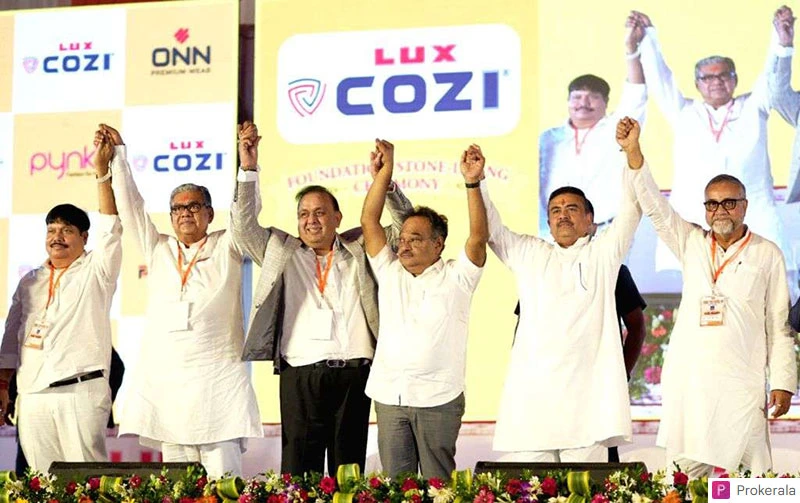
A recent speech on July 11 by Chief Minister Suvendu Adhikari brings fresh hope to the state. He did not announce a completely brand-new factory. Instead, he highlighted a major expansion.
As reported by The Hindu, the Lux Cozi Group is setting up its second automated manufacturing unit in Dankuni.
Why Does a 600 Crore Investment Matters Today?
At first glance, a 600 crore INR investment might look small. However, Knowledge Mart analysts point out that we must look at the bigger picture.
West Bengal has faced severe economic stagnation for the past 15 years. Therefore, this new step toward Bengal Industrialization is a massive psychological victory.
According to official details shared by The Economic Times, the project brings concrete economic benefits to the local youth:
- Direct Jobs: The new factory unit will directly employ 3,000 workers.
- Indirect Employment: The project will create 6,000 additional jobs in supply chains and local businesses.
- Total Impact: In total, 9,000 families will benefit from this single initiative.
Economic Impact: Lux Cozi Second Unit Expansion
| Key Metric | Details & Impact |
|---|---|
| Total Financial Investment | 600 Crore INR |
| Immediate Employment | 3,000 Direct Jobs |
| Support System Jobs | 6,000 Indirect Opportunities |
| Current Government Age | Just 2 Months Old |
Can This Stop Migrant Worker Outflow From Bengal?
For the last 50 years, political decisions have severely damaged Industries in Bengal. As a result, the state has turned into an industrial desert. Millions of bright young men and women regularly leave their homes to work as migrant laborers in other states.
Consequently, creating 9,000 jobs inside the state is a highly significant milestone.
Furthermore, this development highlights something even bigger. The new state government is showing a highly positive attitude toward business.
During the event, the Chief Minister announced a brand-new single-window clearance system for large investments to eliminate red tape. This fresh policy shift is exactly what is needed to permanently end Bengal’s Industry Deadlock.
Major Industrial Closures in West Bengal (Post-1977)
| Industry / Company | Location | Sector | Closure / Decline Phase | Key Reasons |
|---|---|---|---|---|
| Hindustan Motors (Ambassador Plant) | Uttarpara | Automobile | Gradual decline > Closed 2014 | Outdated technology, labor issues, competition |
| Dunlop India | Sahaganj | Tyre | Multiple shutdowns > Closed 2015 | Financial crisis, ownership disputes |
| Burn Standard Company | Howrah | Engineering | Decline post-1990s > Closed 2018 | PSU inefficiency, low demand |
| Jessop & Company | Kolkata | Engineering | Decline post-2000 | Loss-making PSU |
| Hindustan Cables | Rupnarayanpur | Telecom Cables | Closed 2017 | Obsolescence, losses |
| Metal Box India | Multiple | Packaging | Closed 1990s | Financial mismanagement |
| Jute Industry (Various Mills) | Hooghly Belt | Textile | Continuous decline | Labor unrest, global competition |
| Tea Industry (Various Estates) | Dooars/Darjeeling | Plantation | Periodic closures | Wage issues, falling prices |
| Bengal Chemicals | Kolkata | Pharmaceutical | Decline phase | PSU inefficiency |
What Major Policy Shifts Did Suvendu Adhikari Announce?
Moving beyond the specific Lux Cozi expansion, let us analyze the broader administrative promises made by the Chief Minister.
Knowledge Mart has closely examined his speech. We found three transformative pillars designed to permanently dismantle Bengal’s Industry Deadlock.
1. Ending Extortion and Improving Law and Order
First and foremost, the Chief Minister addressed the root cause of industrial flight: poor security. He delivered a strict, uncompromising warning against local extortion (tolabaji). Improving the state’s law and order situation is now the top priority.
According to a report by The Hindu, this move aims to build ultimate confidence among major investors looking at Industries in West Bengal.
2. Revolutionizing Land Acquisition for Industry
Land acquisition has historically been the biggest barrier to Bengal Industrialization. The new administration is completely changing this policy.
As highlighted by The Indian Express, the state government will rely on direct purchase rather than forced acquisition. Instead of leaving businesses to fight complex local disputes, the state government will directly purchase the land and hand it over smoothly to industrial entrepreneurs.
In addition, this fast-track method will apply to critical infrastructure projects, including:
- National Highways expansion
- New Railway lines and connectivity hubs
- Strategic border-area industrial zones
3. Implementing Single-Window Clearance for Large Investments
Bureaucratic red tape has historically killed many promising projects. To fix this, the government is launching a powerful single-window clearance system for any investment exceeding 100 crore INR.
As detailed by Financial Express, investors will no longer face endless delays. They will not have to run from one department to another, wearing out their shoes just to get a basic permit.
Additionally, Business Standard notes that the state government will step in directly. They will handle approvals centrally through the West Bengal Industrial Development Corporation (WBIDC), completely bypassing the corrupt interference of local Municipalities and Panchayats.
Key Administrative Reforms for Investors
| Focus Area | The Old Challenge | The New Solution |
|---|---|---|
| Business Security | Extortion (Tolabaji) and local threats | Strict law enforcement and direct protection |
| Land Acquisition | Protracted legal disputes with land mafias | Direct government purchase and clean handover |
| Bureaucracy | Red tape across multiple separate departments | Single-window clearance for over 100 Crore INR |
| Local Approvals | Harassment by Municipalities and Panchayats | Direct state intervention to bypass local corruption |
Why Suvendu Adhikari’s Grassroots Experience Matters?
Why do these specific promises feel genuine to industry experts? Suvendu Adhikari is a leader who rose directly from the grassroots political level. Consequently, he has deep, firsthand experience with local governance.
He knows exactly how syndicates operate, how corruption thrives, and how land mafias exploit the system to stall growth.
Therefore, when analyzing the future of Industries in Bengal, these administrative structural reforms are vital.
By attacking local corruption directly from the top, the administration is providing the first real blueprint to resolve Bengal’s Industry Deadlock once and for all.
Why is Land Acquisition So Difficult for Industries in Bengal?
To understand why Bengal’s Industry Deadlock lasted so long, we must look at history. The problem started with land reforms in 1977. These reforms broke the state’s land into millions of tiny, scattered plots.
Today, if an entrepreneur wants to acquire even 100 acres of land for a factory, it is completely impossible without direct state intervention.
Former Chief Minister Buddhadeb Bhattacharjee honestly tried to revive Bengal Industrialization. He achieved some partial success. However, his own party members did not fully support his vision.
Soon after, Mamata Banerjee launched a destructive political movement against land acquisition. The glimpses of hopes of ending Bengal’s Industry Deadlock fell in despair.
While that agitation revived her political career and made her Chief Minister, it drove the final nail into the coffin of Industries in Bengal.
The Grim Era of the Tata Exit and Empty Promises
After the historic exit of Tata from Singur, West Bengal turned into an industrial desert. No major corporate house wanted to invest in the state. For over a decade, the previous government organized the Bengal Global Business Summit (BGBS) every year with massive media fanfare.
According to Knowledge Mart researchers, these summits wasted enormous amounts of taxpayers’ money. Prominent billionaires attended and signed grand agreements on paper, but the actual result for the state was zero.
As reported by Business Today, the situation became so desperate that the former government resorted to announcing new industrial tie-ups during a promotional trip to Spain involving cricket icon Sourav Ganguly. These stunts only proved that the past administration was never genuinely serious about solving the economic crisis.
Nothing could ensure the end of long-standing Bengal’s Industry Deadlock.
Bengal Industrialization: A Timeline of Stagnation
| Year / Period | Key Historical Event | Direct Impact on Bengal’s Economy |
|---|---|---|
| 1977 Onward | Massive land reform policies introduced | Land fragmented into tiny plots; large-scale factories lose space. |
| 2006 – 2008 | Buddhadeb Bhattacharjee‘s industrial drive and the Tata Singur crisis | Tata Motors exits the state; big manufacturing investments completely dry up. |
| 2011 – 2026 | Mamata Banerjee’s tenure and annual BGBS events | High state expenditure on summits, but zero major factories on the ground. |
| 2026 (Present) | New government takes charge with direct purchase policy | Fresh administrative hopes to break the long-standing economic deadlock. |
How Political Escape Tactics Fueled the Migrant Crisis
The previous Chief Minister knew exactly why the Left Front government fell. She rose to power purely by exploiting the anti-land acquisition sentiment.
Therefore, she adopted a strict policy: the government would never buy land for anyone. As detailed in the historical analysis of her tenure on Wikipedia, this rigid rule applied not just to corporate factories, but even to critical national security projects like border fencing.
She forced private industrial groups to purchase land directly from thousands of individual farmers. In a highly fragmented state, this task remains practically impossible. This escapist policy completely destroyed the future of Industries in West Bengal.
The previous administration focused entirely on aggressive vote-bank politics and freebies, completely emptying the state treasury.
Consequently, the youth of West Bengal are facing the brunt of this failure. Millions are fleeing the state.
Today, our young boys and girls leave their homes not just for high-paying white-collar jobs, but even for low-wage casual labor in other states.
Breaking this deep-rooted Bengal’s Industry Deadlock is the biggest challenge for the new administration today.
Knowledge Mart Analysis: A Broader Perspective on Bengal’s Economic Future
According to Knowledge Mart economic experts, we must look at the recent corporate announcements through a much larger lens. This development is not just about a single brand or an isolated project. Instead, it reflects a genuine administrative willpower to finally reverse Bengal’s Industry Deadlock and restore business confidence.
During the event, state BJP President Shamik Bhattacharya delivered an ambitious vision, promising that major global investments from London, Munich, Silicon Valley, and even Israel would eventually arrive in the state.
While those massive global projects belong to the future, smaller immediate steps are crucial today. Steady local capital injections are what the state needs right now to jumpstart Bengal Industrialization.
The Real Revenue and Employment Potential
Even a localized expansion brings tangible financial relief to the state’s struggling economy. Political leaders and financial analysts remain highly optimistic about the structural numbers of this project:
- Substantial Job Relief: Providing immediate employment to local youth reduces the urgent need for migration to other states.
- Massive Corporate Revenue: Once fully operational, this automated hub is projected to generate an incremental annual revenue of 900 to 1,000 crore INR.
- Boost to State Treasury: This massive business turnover will directly contribute to the state’s tax collection, injecting vital funds back into the public exchequer.
Expected Financial and Growth Projections
| Economic Metric | Projected Value & Impact |
|---|---|
| Global Investment Vision | Future tech hubs from Silicon Valley, Munich, and London |
| Incremental Corporate Revenue | 900 Crore to 1,000 Crore INR annually at full capacity |
| State Policy Priority | Eliminating red tape and ensuring safe business grounds |
| Economic Outlook | Positive structural shift to replace decades of stagnation |
A Positive Step to Break Decades of Economic Stagnation
As responsible observers, we must keep our eyes open. Knowledge Mart will continue to track the government’s performance, monitor real progress on the ground, and evaluate their long-term priorities. However, it is undeniable that the initial steps look highly promising.
The government is showing a practical, sincere effort to dismantle the economic standstill that came to define Mamata Banerjee’s previous tenure. Moving away from empty political rhetoric and focusing heavily on manufacturing reality is a refreshing change.
This proactive business approach provides the exact spark needed to revitalize Industries in Bengal and permanently solve Bengal’s Industry Deadlock.
10 Key Takeaways: Is Bengal’s Industry Deadlock Finally Over?
Discover the most critical insights from Chief Minister Suvendu Adhikari’s historic economic roadmap designed to permanently revive Industries in West Bengal:
- Dismantling the 15-Year Gridlock: The state’s new direct land purchase policy and strict administrative reforms provide a concrete blueprint to completely shatter Bengal’s Industry Deadlock.
- Massive 600-Crore Investment: The Lux Cozi Group has officially broken ground on a landmark expansion in Dankuni, signaling a massive breakthrough for modern Bengal Industrialization.
- Asia’s Largest Garment Hub: The project will add 12 lakh square feet to the existing setup, building a massive 20 lakh square feet highly automated manufacturing campus.
- 9,000 New Jobs for Local Youth: Financial analysts at Knowledge Mart confirm the expansion will generate 3,000 direct jobs and 6,000 indirect employment opportunities.
- Tripling Production Capacity: The state-of-the-art facility will boost manufacturing capabilities by an additional 20 crore garment pieces annually.
- 1,000 Crore Revenue Potential: Once fully operational, this flagship automated hub is projected to inject up to 1,000 crore INR in incremental annual revenue.
- Zero-Tolerance for Extortion: The government has issued an uncompromising warning against local tolabaji (extortion) and land syndicates to secure a safe environment for Industries in Bengal.
- Single-Window Fast-Track Clearance: To eliminate decades of red tape, all large-scale corporate investments exceeding 100 crore INR will bypass local panchayats and handle permits centrally.
- Reversing the Migrant Crisis: By shifting focus from aggressive vote-bank freebies to heavy manufacturing, the new policy aims to keep bright young workers from fleeing the state.
- Unlocking Global Investments: This domestic manufacturing boost lays the groundwork for the administration’s long-term goal of drawing tech and industrial giants from Silicon Valley, London, and Munich.
Frequently Asked Questions (FAQ)
What is the main cause behind Bengal’s Industry Deadlock?
The primary causes of Bengal’s Industry Deadlock stem from historic 1977 land reforms that fragmented plots, combined with intense anti-land acquisition movements in the mid-2000s. These factors, alongside systemic administrative red tape, severe local extortion (tolabaji), and a long-standing government policy refusing direct state intervention in acquiring land, made large-scale industrial projects almost impossible for private corporations.
How is the new government planning to boost Industries in West Bengal?
The new administration is targeting structural reforms to revive Industries in West Bengal. Key strategies include bypassing local panchayat interference, adopting a proactive direct-purchase land policy where the state secures and hands over clean land parcels to developers, implementing a zero-tolerance policy against corporate extortion syndicates, and streamlining business setups.
What is the single-window clearance system for Bengal Industrialization?
To rapidly accelerate Bengal Industrialization, the government has launched a centralized single-window clearance system managed directly by the state for all mega-investments exceeding 100 crore INR. This system eliminates bureaucratic red tape, meaning corporate groups no longer have to run between multiple local departments or deal with municipal delays to secure basic environmental, building, or operational permits.
How will the Lux Cozi expansion impact Industries in Bengal?
According to data tracked by Knowledge Mart, the 600-crore INR Lux Cozi expansion in Dankuni serves as a major psychological turning point for Industries in Bengal. Spanning a massive 20 lakh square feet campus, it creates a state-of-the-art automated manufacturing hub that will generate 3,000 direct and 6,000 indirect jobs while pumping up to 1,000 crore INR in incremental business volume back into the state economy annually.
Can these new industrial policies solve the state’s migrant worker crisis?
Yes, by shifting the focus away from short-term cash freebies toward sustainable heavy manufacturing and infrastructure creation, these policies target the root cause of the migrant crisis. Creating steady, localized employment opportunities in garment manufacturing, roadways, and technological hubs provides viable livelihoods inside the state, keeping the youth from fleeing to other parts of India for basic casual labor.