
Bengal Industrial Growth: Meetings Are Not Enough
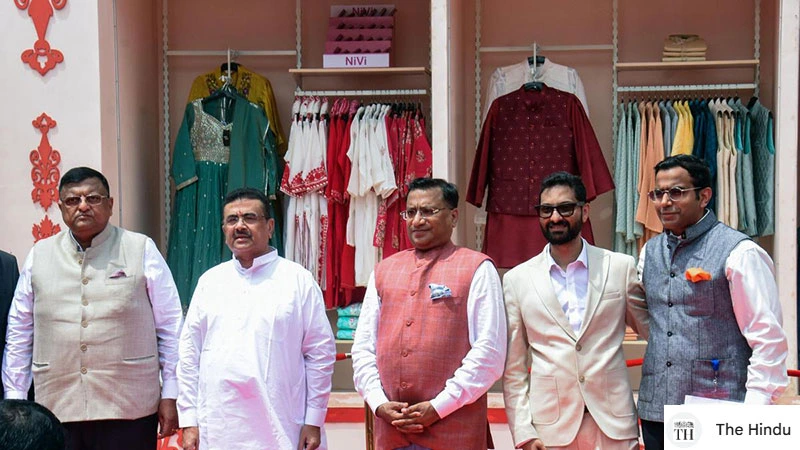
Bengal has been hearing promises of industrialisation for years. The Bengal Global Business Summit (BGBS) became an annual showcase, with MoUs being signed, investment figures being announced and corporate leaders posing for photographs with ministers.
Mukesh Ambani, among other big names, became a familiar face at these events. Every government spoke of turning Bengal into an industrial hub. Still the gap between an investment announcement and a factory actually coming up on the ground has often remained frustratingly wide.
Singur was one of the rare cases where a major industrial project actually moved beyond the announcement stage. The Tata Group had begun building its Nano factory there. But the prolonged agitation led by Mamata Banerjee eventually forced Tata Motors to pull out of Bengal and shift the project to Sanand in Gujarat.
That is why the new government’s meetings with big industrialists are worth watching, but not celebrating too early. Suvendu Adhikari meeting Mukesh Ambani in Mumbai may open the door for a larger investment conversation. It does not, by itself, create a factory or a job. The important part begins after the meeting, when promises have to survive government files, land issues, approvals and local politics.
Adhikari’s meeting with Mukesh Ambani focused on investment opportunities and Reliance’s expansion in Bengal, as The Statesman reported. There have also been reports of meetings with major infrastructure groups, including Adani and L&T. These contacts are significant. But Bengal has seen enough investment announcements to know that a corporate meeting is only the first step.
From Investment Meetings to Actual Projects
There is at least an attempt to engage directly with industry. Suvendu Adhikari, Tapas Roy and Shamik Bhattacharya have been talking about investment, infrastructure and the business environment. The government has also said that land will be handed over to 33 industrial projects before Durga Puja. The Times of India reported on the projects cleared by the state cabinet.
Now comes the difficult part. Do these projects actually reach the ground?
A factory does not create jobs only for the people working inside its gates. It needs transporters, suppliers, warehouses, repair shops, restaurants and many other local businesses. Once a big project starts running, an entire business ecosystem can grow around it. We saw the beginnings of something like that when the Tata project was being developed in Singur.
But the administration at the time failed to maintain the kind of law and order needed to keep the project on track. The prolonged agitation eventually led Tata Motors to leave Bengal. Look at what happened afterwards. Singur lost the industrial project, while the promised return to agriculture did not produce the kind of transformation many had expected.
For Bengal, that kind of industrial ecosystem is far more valuable than another glossy investment announcement. Especially when thousands of young people still leave the state looking for work in Hyderabad, Bengaluru, Delhi, Mumbai and other cities.
The government should also be careful about calling every proposal industrial growth. A proposal can remain a proposal for years. Even land allocation is not the same as production. Bengal knows this story rather well.
The Extortion Problem Cannot Be Brushed Aside
This is where the BJP’s industrial promise faces a difficult question. Extortion, syndicates and cut-money were major weapons in its political attack on the TMC government. BJP leaders repeatedly alleged that local political networks had become involved in business dealings, leaving builders, contractors and other businessmen to deal with political operators before they could get on with their work.
Narendra Modi and Amit Shah made similar allegations more than once during election campaigns. These were political claims, of course, but they became an important part of the BJP’s promise to change the way business is conducted in Bengal.
There were serious allegations behind that political debate. A 2020 ThePrint report documented allegations from businessmen about recurring payments and extortion linked to local political networks during the Mamata Banerjee government. More recently, The Telegraph reported allegations from the construction sector, including a company official’s claim that a ₹300-crore project had paid around ₹3 crore to syndicates. Those claims need to be investigated rather than automatically accepted as fact. But they help explain why the syndicate issue became such a damaging subject for Bengal’s business environment.
The BJP now faces an awkward situation. It spent years telling Bengal that a change of government would mean an end to this political-business culture. That promise cannot disappear simply because the BJP has moved from Opposition to government.
If a builder or businessman is accused of paying money to a political network, the government has to investigate. If the accused happens to be connected to the ruling party, that should make the matter more important, not less. The old excuse that an accused person was acting on his own will not inspire much confidence if the same pattern keeps appearing.
And this is not merely an Opposition charge against the BJP. Its own state president, Shamik Bhattacharya, acknowledged the problem in August. He said the party had not been able to eliminate extortion after coming to power and admitted that some people were showing similar tendencies within the BJP. He also said Suvendu Adhikari was trying to put a brake on such behaviour. India Today reported his remarks.
That admission deserves attention. The BJP has been in government only for a short period, so not every problem inherited from the previous administration can reasonably be blamed on the new government. But neither can “the old system” become a permanent excuse. If political protection continues to influence business at the local level, investors will notice it regardless of which party is in power.
Changing the Political Jersey Is Not Enough
The Telegraph reported complaints from people in real estate and other sectors who alleged that the political “jersey” had changed while demands for money continued. Again, these are allegations, not proof against every BJP worker. But the comparison is politically unavoidable because the BJP itself made extortion and syndicate politics a major issue during its campaign.
Imagine a businessman being told yesterday to deal with one political network and today being told to deal with another. From his point of view, the party flag outside the office is not the main issue. He wants to know whether he can run his business without somebody turning up to demand money, favours or a political cut.
That is the point the BJP leadership should understand. It cannot promise a new business environment while allowing local political operators to behave as though a change of government has simply changed who gets access to the system. If there is evidence of extortion, the administration has to act, even when the trail leads towards its own political camp.
The BJP’s TMC Problem
The BJP leadership also has another political challenge to manage: the extraordinary split inside the TMC. The dispute between the Mamata Banerjee camp and the Ritabrata-led rebel camp has expanded into a battle over leadership, organisation, finances, party identity and the election symbol. The Election Commission has temporarily frozen the traditional TMC name and twin-flower symbol for the bypolls and assigned separate identities to the rival factions. The Indian Express reported on the decision.
For the BJP, a divided TMC obviously creates a new political opportunity. Its leaders are entitled to attack the Opposition. But there is a difference between taking political advantage of an opponent’s internal crisis and allowing the party’s attention to become consumed by that crisis.
There is another issue that deserves scrutiny. What happens when local political networks from the old ruling establishment start moving towards the new ruling party? India Today reported concerns within the BJP about the “Trinamoolisation” of the party, including allegations that some people associated with the old system were attempting to enter the BJP.
This is where the BJP’s own promise of political change will be tested. Bringing former TMC workers into a new political organisation is a political decision. But bringing the old methods of local control, collection and patronage with them would be a very different matter.
The TMC’s internal fight may change the Opposition’s structure. It may alter the political calculations before the bypolls. But it does not build an industrial park, improve a highway or employ a single engineer. Those remain government responsibilities.
Industrial Growth Needs a Different Political Culture
This is why the extortion issue matters so much to Bengal Industrial Growth. An investor needs clear rules, functioning infrastructure, timely approvals, reliable power and, above all, confidence that political connections will not suddenly become a business expense.
The BJP spent years arguing that extortion and syndicate politics were damaging Bengal. It cannot now apply one standard to the TMC and another to itself. If political protection of money collectors was wrong under Mamata Banerjee, it remains wrong under Suvendu Adhikari.
That does not mean every allegation against a BJP worker is automatically true. Evidence matters. Investigation matters. Due process matters. But those principles should work in both directions. A government claiming to have brought political change has to be willing to investigate complaints involving its own supporters rather than dismissing them as Opposition propaganda. The rhetoric like, “Not True BJP” or “Not BJP Culture” should not come as the first reaction.
Where Is the Industrial Roadmap?
Corporate meetings alone will not build Bengal’s industrial base. A serious industrial policy for Bengal has to deal with land, electricity, roads, ports, railways, logistics, skilled labour, environmental approvals, taxation and incentives. More importantly, an investor needs to know how long it will take to move from application to actual production.
Shamik Bhattacharya has spoken about preparing a new industrial policy through consultations with investors, start-ups, academics and industrialists. India Today reported on that proposed consultation process.
Consultation is useful. But Bengal has never suffered from a shortage of policy documents. The bigger problem has been implementation. Can an investor get approvals without running from office to office? Can land be secured through a predictable legal process? Can a small supplier operate without having to cultivate a political connection? Those answers will matter more than the title of the next industrial policy.
Infrastructure Will Decide More Than Speeches
Bengal has several natural advantages: ports, railways, highways, airports, a large workforce and a location that gives it access to eastern and northeastern markets. But advantages on a map do not automatically become economic advantages on the ground.
A factory depends on the movement of raw materials, workers and finished products. If trucks lose hours in traffic, freight takes too long or logistics costs become uncompetitive, an investor will eventually look elsewhere. Roads, railways, ports, freight movement and urban transport therefore belong inside the industrial discussion, not outside it.
The proposal for a Regional Rapid Transit System connecting Kolkata with important centres in South Bengal is one example of the wider infrastructure debate. The Indian Express reported on the proposed corridors. Whether that particular proposal moves ahead is a separate question. What Bengal needs is a long-term approach in which transport infrastructure supports economic activity instead of being planned project by project.
Welfare Cannot Replace Employment
There is also a basic economic point that often gets lost in political arguments. Welfare has a legitimate place in government, particularly for people who genuinely need support. But welfare payments cannot substitute for employment, entrepreneurship and productive investment.
Under Mamata Banerjee’s tenure, West Bengal introduced numerous direct benefit and welfare programs, ensuring that most households received some form of state assistance. However, critics point out that this heavy expenditure has pushed the state’s total debt beyond ₹8 lakh crore, while raising concerns that widespread reliance on state aid may dampen work initiative among young people.
A young Bengali needs more than financial assistance. He needs a job, a business opportunity or an economy in which a small enterprise has room to grow. That is why Bengal should not measure industrialisation only by the number of large companies entering the state. Manufacturing, services, logistics and MSMEs have to grow around those investments.
Shamik Bhattacharya has argued that large industries can create opportunities for ancillary businesses and MSMEs. PTI reported on this argument. That is the sort of industrial chain Bengal needs: a major investment creating business for many smaller enterprises instead of becoming another isolated headline.
The Double-Engine Opportunity
The BJP government also has an advantage in having the same political leadership at the Centre and in the state. Coordination on highways, railways, ports, logistics, industrial corridors and central schemes could be easier under this arrangement.
But that advantage comes with responsibility. If Centre-state coordination is smoother, it becomes harder to explain every delay as a political dispute between Kolkata and Delhi. The government now has an opportunity to spend its political capital on infrastructure, investment, administration and employment.
Political conflict with the TMC will obviously continue. That is part of electoral politics. But Bengal’s economy cannot wait for the political temperature to cool down.
An Investor Meeting Is Only the Beginning
The government’s industrial push will ultimately have to be judged by what happens away from meeting rooms. Do projects receive land? Does construction begin? Do factories actually open? Do supply chains develop? Do local businesses benefit? Do young people find work?
Those are harder questions than counting meetings with industrialists. They are also the questions that matter.
The extortion issue belongs in the same conversation. Bengal cannot seriously present itself as an investment destination if businesses remain worried about political interference at the local level. The government has to demonstrate that its own supporters are not above the rules.
That is particularly important for the BJP because the party’s political rise in Bengal was built partly on the promise of ending the old culture of syndicates, cut-money and political protection. Now it has to show that the promise applies in government as well as in Opposition.
Knowledge Mart Final Thoughts
Bengal Industrial Growth will not be decided by one meeting with Mukesh Ambani, another investment summit or another announcement from Nabanna. Those things can help. They are not the result.
The new government is reaching out to major industrial groups and talking about projects, policy and infrastructure. That is a reasonable place to start. But Bengal has started this conversation many times before. The difference this time will have to come through execution.
The BJP also has to answer a question of its own making. It spent years attacking the TMC over extortion and syndicate politics. Now that it is in power, it cannot ask Bengal to accept the same behaviour simply because the political flag has changed. The admission from its own state president that extortion has not disappeared makes that challenge even more difficult to ignore.
The TMC’s internal split gives the BJP another political opening, but political advantage and economic revival are two different things. A weakened Opposition does not automatically mean stronger industry.
For Bengal Industrial Growth, the final test is much less glamorous. Can a company invest without fear? Can it get land and approvals without political connections? Can goods move efficiently? Can a small entrepreneur grow without paying unofficial cuts? Can a young person find a decent job without leaving Bengal?
If the answer to those questions gradually becomes yes, Bengal will have something more valuable than another investment photograph. It will have an industrial economy that people can actually see.
10 Key Takeaways
- Bengal Industrial Growth cannot depend on corporate meetings alone; actual factories, investment and jobs will determine whether the government’s industrial push delivers results.
- The Suvendu Adhikari government’s outreach to Mukesh Ambani and other major industrial groups is significant, but investment announcements must eventually become projects on the ground.
- Land for 33 proposed industrial projects before Durga Puja could be an important step, provided the projects move beyond government files and reach the implementation stage.
- Extortion and syndicate politics remain a serious concern for Bengal’s business environment, particularly because the BJP made ending this culture a major political promise.
- Reports of alleged extortion during the Mamata Banerjee government form an important part of Bengal’s industrial debate, but individual allegations still require evidence and proper investigation.
- BJP state president Shamik Bhattacharya has himself acknowledged that extortion has not disappeared after the change of government, putting pressure on the new administration to act against such practices.
- If political operators simply change party colours while continuing to demand money or influence businesses, the political change will mean little to investors.
- The TMC’s internal split has created a new political situation, but BJP leadership also faces questions about whether absorbing old political networks could reproduce some of the practices it once criticised.
- Industrial policy has to go beyond investment summits and address land, approvals, infrastructure, logistics, skilled labour, electricity and the everyday problems faced by businesses.
- The real measure of Bengal Industrial Growth will be visible in factories, supply chains, infrastructure and employment, not in the number of meetings, announcements or corporate photographs.