Mamata's Serampore Rally: Big Court Nod
Sep 17, 2026 - By Ashutosh Roy Current AffairsGovernance & AdminPoliticsRegional UpdatesWest Bengal Politics
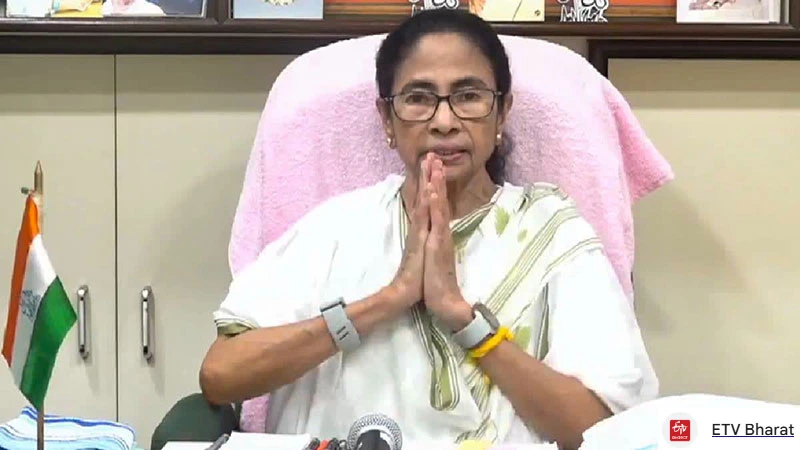
Mamata’s Serampore Rally: Why Did It Need the Court?
Mamata Banerjee is set to hold a political meeting in Serampore on September 26, but the road to the meeting has been unusually complicated. The initial plan faced objections not only from the state administration but also from a temple trust connected with the proposed venue. The dispute eventually reached the Calcutta High Court, where the venue, crowd size and proposed procession were considered through more than one round of proceedings.
The latest order has allowed the meeting at the Serampore court premises from 4 pm to 6 pm, with attendance restricted to 1,000 people. The proposed procession on GT Road has not been permitted, and the court has directed that normal traffic movement should not be blocked. Anandabazar Patrika reported the latest conditions imposed by the High Court.
There is nothing unusual about imposing reasonable conditions on a large political gathering. Roads have to remain open, emergency services need access and the police have to consider security and crowd management. A temple trust also has the right to raise objections if it believes that its property or religious premises are being used without proper authority.
But the Serampore dispute raises a question that goes beyond the venue.
Why should an opposition party have to go to court to hold a political meeting in the first place?
That question is particularly relevant in Bengal because Suvendu Adhikari spent years raising a similar complaint when he was in opposition. The political positions have now changed. The problem of political permissions, however, appears familiar.
Political Rallies Need Regulation. But Should They Need Litigation?
No political party can reasonably expect an unrestricted right to use every public road or ground for a rally. A large meeting can affect traffic, emergency services, local residents and public safety. A procession is an even more complicated matter because it involves movement through public roads and requires police deployment. The administration therefore has a legitimate responsibility to regulate such programmes.
The difficulty begins when regulation becomes so complicated that an opposition party has to approach the High Court simply to get its political programme organised.
There are many ways an administration can deal with a difficult rally without turning the matter into litigation. It can reject a particular venue and suggest another. It can restrict the number of participants if the proposed crowd is too large. It can refuse a procession on a busy road while allowing the meeting itself. It can change the timing or impose conditions relating to sound, traffic and security.
Those are normal administrative measures. They become a democratic concern when political parties repeatedly feel that the only effective way to challenge a refusal is to approach the judiciary.
That distinction is important in a state where political competition is intense and opposition parties need access to public spaces just as much as the party in government.
What Actually Happened With Mamata’s Serampore Rally?
The Serampore dispute did not begin as a straightforward question of whether Mamata Banerjee could address a political meeting. The initial programme involved a particular venue and a proposed procession, both of which attracted objections. According to reports, the state administration raised concerns over traffic and other arrangements, while a temple trust also objected to the use of the proposed field for the political programme.
The matter consequently moved to the High Court.
On September 10, Justice Saugata Bhattacharyya permitted a meeting at Mahesh Jagannath Dev Snanpiri Maidan for up to 2,000 people, while refusing permission for the proposed procession. The order also imposed conditions relating to sound, volunteers, public order and traffic. UNI reported on the original High Court order.
The dispute did not end there. The trust connected with the field challenged its use for the political programme, and the matter subsequently reached a Division Bench. The case was sent back for reconsideration, leading to the present arrangement at the Serampore court premises.
The latest order therefore allows the meeting under substantially tighter conditions. The crowd has been reduced to 1,000, the programme is limited to two hours and the proposed procession on GT Road remains prohibited.
This is why the story should not simply be described as Mamata Banerjee receiving permission for a rally. She has received permission, but only after an administrative dispute and a legal battle over the venue and the proposed programme.
Suvendu Adhikari Had Faced a Similar Problem
The comparison with Suvendu Adhikari is important because the present situation resembles an issue he repeatedly raised while his party was in opposition. Suvendu has claimed that after the 2021 Assembly election he had to approach the Calcutta High Court 104 times for permission to organise political programmes.
The figure needs to be treated carefully. It is Suvendu’s stated figure and should not be presented as an independently verified count of 104 separate court orders unless the underlying cases are examined individually. The Indian Express reported Suvendu’s claim.
There is nevertheless a documented record of BJP rally-permission disputes reaching the High Court. In November 2025, for example, the court allowed BJP rallies at Sodepur and Burdwan while imposing conditions relating to the programmes. Suvendu Adhikari was scheduled to address the Sodepur rally. The Times of India reported the court’s decision.
This history gives the present Serampore dispute a significance beyond one meeting. A leader who spent years complaining about the difficulties faced by the opposition is now part of a government that is dealing with an opposition leader’s rally-permission dispute.
What Did Suvendu Say About 104 Court Interventions?
Suvendu has himself spoken about the 104 figure, and readers can hear his claim directly in the ABP Ananda video.
Watch: Suvendu Adhikari on his claim of approaching the court 104 times
Watch the ABP Ananda video on YouTube
Note: The figure of 104 is presented as Suvendu Adhikari’s own claim. The underlying cases would need to be examined individually before the number is treated as a verified count.
Now Mamata Is Facing the Same Political Problem
This is where the political irony becomes difficult to ignore. Suvendu spent years in opposition arguing that the administration was making it unnecessarily difficult for the BJP to hold political programmes. He repeatedly used the High Court when permission disputes arose. Mamata Banerjee is now facing a similar situation from the opposition side, with her Serampore programme having to pass through the courts before the final arrangements could be settled.
That does not, by itself, establish that the present government is deliberately targeting Mamata. The administration has cited practical concerns, and the temple trust’s objection to the original venue is a separate issue that also has to be taken into account. The High Court has itself imposed restrictions, including the ban on the proposed procession.
But there is still a legitimate democratic question to ask: why should an opposition party have to enter litigation simply to organise a political meeting?
A democracy necessarily places some restrictions on public gatherings. What it should avoid is creating a situation in which access to political space depends so often on judicial intervention.
Is Political Permission Becoming a Political Weapon?
This is the point at which the debate becomes larger than Mamata and Suvendu.
A government has considerable administrative power. It controls the police, traffic arrangements and much of the machinery through which permission for political programmes is processed. An opposition party does not have the same institutional power. That is why the administration has to be particularly careful to ensure that the rules are transparent and consistently applied.
The state may have genuine reasons for refusing a venue. The police may have genuine concerns about traffic. A religious trust may have legitimate objections to the use of its property. None of these issues should be dismissed merely because a political leader is involved.
At the same time, the existence of legitimate administrative concerns does not answer the larger question of whether opposition parties are being given a fair and workable route to hold lawful political programmes.
If a venue is unsuitable, another venue should be considered. If a procession creates a traffic problem, the procession can be restricted while the meeting is permitted. If the proposed crowd is too large, the number can be reduced. The administration has several options between unconditional approval and forcing the organisers into court.
That is where a mature democratic system should operate.
The “You Did It First” Argument Is Not Enough
There will inevitably be a political argument that Suvendu complained about rally permissions when he was in opposition and that Mamata is now experiencing the same thing. The comparison is politically understandable, but it should not become the standard by which administration is judged.
If an earlier government made opposition parties repeatedly seek judicial intervention, that does not make the practice desirable when the government changes hands. Otherwise every change of government simply produces a new set of opposition leaders facing the same old administrative hurdles.
The lesson from Suvendu’s experience, if his claim of repeated court intervention is borne out by the individual cases, should be that the permission system needs improvement. It should not be that Mamata now deserves the same difficulty.
That would merely turn an old problem into a political tradition.
What Should the Administration Do?
The administration has every right to impose reasonable conditions on political programmes, particularly when traffic, security, crowd control or emergency access is involved. But that authority should come with an equally clear responsibility to explain its decisions. If a particular venue cannot be used, the organisers should be told why and, where possible, offered an alternative. If the problem is the size of the gathering, the administration can set a reasonable limit. If a procession is likely to disrupt traffic, the route can be changed or the procession can be refused while the meeting itself is allowed to go ahead.
A transparent system would make these decisions less vulnerable to political allegations. When the reasons are recorded and the same criteria are applied to different political parties, it becomes much easier to distinguish a genuine administrative restriction from an allegation of political discrimination. The purpose should not be to make life easier for Mamata Banerjee, Suvendu Adhikari or any other individual leader. The larger objective should be to create a permission system that an opposition party can understand and rely upon, regardless of which party happens to be running the government.
Would the Same Rules Apply to Suvendu?
That is perhaps the most useful test of the present controversy. If Suvendu Adhikari wanted to hold a meeting in Serampore under similar circumstances, the administration should be entitled to impose the same conditions relating to traffic, crowd size, security and the use of public roads. His position in government should not give him an unlimited right to organise a procession or occupy a public space in a way that creates genuine problems for the administration.
The same standard must apply to Mamata Banerjee. If her meeting can be conducted safely with a particular crowd limit, timing or venue, those conditions should be clearly stated and applied. If a procession cannot be permitted because it would seriously affect traffic, that restriction should apply irrespective of whether the request comes from the TMC, BJP, Left, Congress or any smaller political organisation. Political neutrality does not mean giving every party everything it asks for; it means applying the same reasonable standards when the circumstances are comparable.
Mamata’s Serampore Rally Is Bigger Than One Political Meeting
The significance of the Mamata’s Serampore Rally lies in what the dispute reveals about political space in Bengal. Governments have changed and opposition parties have changed, yet complaints over permissions for rallies and processions have remained a recurring feature of political life. Suvendu Adhikari raised such complaints when he was in opposition, and Mamata Banerjee is now dealing with a similar problem from the opposition benches. The political circumstances are different, but the underlying question remains the same: can an opposition party conduct a lawful political programme without having to depend on the goodwill of the government of the day?
That does not mean opposition parties should be exempt from reasonable restrictions. They must accept limits when there are genuine concerns over traffic, public safety, security or the capacity of a venue. At the same time, those restrictions should not become a convenient way of making political activity unnecessarily difficult. Both principles can operate together, provided the administration follows clear rules and applies them consistently.
Should The Court Be The Safeguard Always?
There is nothing wrong with a political party approaching the judiciary when it believes that an administrative decision is arbitrary, discriminatory or unlawful. Courts are an essential safeguard against the misuse of public power, and that remedy must remain available to political organisations as well as ordinary citizens. The problem begins when court intervention becomes a regular part of organising political meetings because the administrative process itself cannot resolve routine disagreements.
A better system would require the administration to give written reasons for restrictions, consider alternative venues or arrangements where practical, and apply the same criteria to political programmes irrespective of the party organising them. Most disputes over crowd size, timing, venue or procession routes should ideally be capable of being settled through that process. When that fails, the court can step in and examine whether the administrative decision was reasonable and lawful.
That is the proper role of judicial intervention. The High Court should remain a constitutional safeguard for political rights, not become the routine permission office through which opposition parties have to pass before they can hold a meeting.
Has Mamata Been Paid Back in The Same Coin?
That is an easy political line to use. Suvendu spent years complaining about rally permissions, and now Mamata’s political programme has itself become the subject of administrative objections and court proceedings. Someone might say that she is getting the right Answer. But there is a more important way to look at the same situation.
If the earlier system was unfair to opposition parties, repeating it today does not make the system fair. It simply transfers the problem from one political camp to another. We expect the democratic standard to be higher than that.
Mamata should not receive special treatment because she was once the Chief Minister. Suvendu should not receive special treatment because he is now in government. What matters is whether the same transparent rules are available to every political party when it seeks to conduct a lawful programme.
That is the real test.
Knowledge Mart Final Thoughts
The Mamata’s Serampore Rally has exposed an uncomfortable feature of Bengal’s political system. The initial programme faced objections from both the state administration and a temple trust, the venue changed, the crowd limit changed, the proposed procession was dropped and the dispute eventually went through the High Court. The final meeting has now been permitted under clearly defined conditions. The Indian Express reported on the latest court order.
There is no contradiction in saying that the restrictions may be reasonable while also questioning why the matter had to reach court. A democratic administration has to manage traffic, security, public property and genuine objections. But it should also make it possible for opposition parties to organise lawful political programmes through a clear and predictable administrative process.
Suvendu Adhikari has claimed that he had to approach the High Court 104 times for political programmes. Now Mamata Banerjee has had to seek judicial intervention over her Serampore meeting. The individual circumstances of those cases are not necessarily identical, and the 104 figure should not be treated as independently verified without examining the underlying cases. But the repeated appearance of the same issue in Bengal’s political life deserves attention.
The opposition should not need the court as its regular route to political space.
That principle applies to Mamata today just as it applied to Suvendu when he was in opposition. We know that governments change, political fortunes change, so as the people sitting on the treasury benches change.
The rules governing democratic political activity should not change with them.
10 Key Takeaways
- The Mamata’s Serampore Rally is scheduled for September 26, but the original plan became the subject of an administrative and legal dispute.
- Both the state administration and a temple trust objected to the initial plans, although the grounds of their objections were different.
- The latest High Court order permits the meeting at the Serampore court premises from 4 pm to 6 pm, with attendance limited to 1,000.
- The proposed procession on GT Road has not been allowed, reflecting the court’s concern about traffic and public movement.
- Reasonable restrictions on political rallies are legitimate, but the larger concern is when an opposition party repeatedly needs judicial intervention to organise political programmes.
- Suvendu Adhikari has claimed that he approached the Calcutta High Court 104 times for political programmes after the 2021 Assembly election.
- The 104 figure remains Suvendu’s own claim unless the underlying cases are examined individually and independently verified.
- The political irony is clear: Suvendu raised similar permission problems while in opposition, and Mamata is now facing a rally-permission dispute from the opposition side.
- The answer should not be political retaliation. What matters is whether the same transparent criteria apply to every political party.
- A healthy democratic system should allow reasonable regulation of rallies while ensuring that the court remains a safeguard rather than the routine gateway to political activity.