Is Suvendu's Falta Package a Corrupt Deal?
Jun 29, 2026 - By Ashutosh Roy Current AffairsElection AnalysisGovernancePoliticsRegional UpdatesWest Bengal Politics
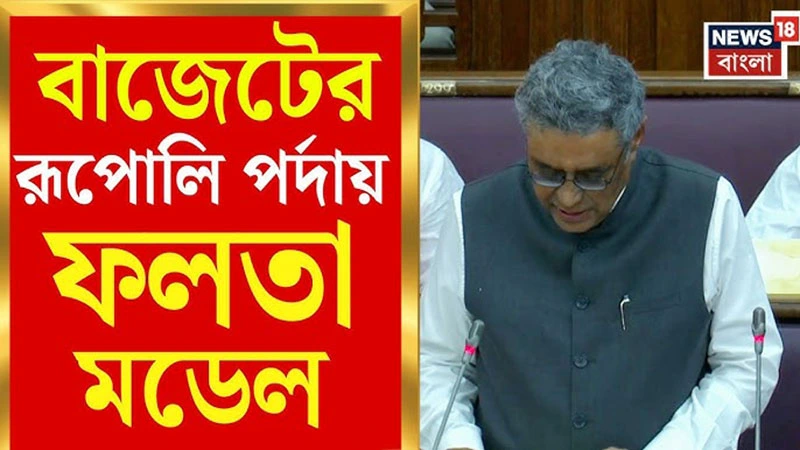
Is Falta Package A Reward or Voter Bribe?
The highly controversial Falta Package has officially hit the state budget, turning a campaign dare into policy. The microphones were live, the mid-day heat was oppressive, and the political atmosphere in South 24 Parganas was thick with tension.
Standing before an electric campaign rally crowd, Chief Minister Suvendu Adhikari did not just pitch a standard political promise. He issued an explicit, high-stakes institutional ultimatum.
The terms of the proposal were entirely transactional: defeat the ruling party’s machinery Jahangir Khan of Falta, secure a staggering victory margin of over 1 lakh votes for Debangshu Panda against local equations, and the reward would be an exclusive, dedicated budget allocation.
The counting day came, the historic target was crossed, and the state budget officially transformed that campaign rhetoric into concrete policy.
A massive infrastructure blueprint was locked into the state’s financial sheet, converting rural medical units into a 100-bed hospital and pumping heavy capital into regional public academies. You can track the full bureaucratic trajectory of this historic legislative shift on Anandabazar Patrika.
Even now, behind the celebration lies an explosive question of constitutional ethics. Is this an authentic exercise in democratic reform, or is it a raw, unvarnished electoral bribe dressed up as a legislative budget line?
At Knowledge Mart, we look past the immediate victory banners to examine the systemic fallout of this highly controversial development strategy.
Is the Falta Package a Democratic Reward or a Vote Swap?
Politicians have always promised roads and hospitals during intense campaign cycles. However, explicitly linking the basic constitutional right of regional infrastructure to a specific mathematical ballot threshold alters the entire nature of public service. It functions essentially as a corporate exchange offer.
The underlying message is hard to ignore: development is no longer a civil right; it is a transactional commodity bought with electoral margins.
This controversial arrangement triggers deep, uncomfortable questions regarding long-term political ethics and geographic fairness:
- The Voting Premium: It sets a dangerous precedent where public financial spending is dictated by partisan loyalty rather than audited regional necessity.
- The Penalty of Dissent: If development is explicitly tied to winning numbers, any assembly constituency that chooses an opposition representative faces systemic, localized underfunding.
- The Constitutional Shift: It moves the governance framework away from equitable statewide welfare toward a performance-based reward system.
However, the local reality contains a crucial historical layer. For over fifteen consecutive years, residents across this belt openly claimed they could not participate in free elections.
The democratic field altered completely when a dominant local strongman, Jahangir Khan, withdrawn his candidature from the contest just 48 hours prior to the polls. Right now, he is behind the bars.
For the first time in a generation, a Jahangir-free Falta witnessed completely unhindered public participation on election day.
Citizens stood in long queues entirely free from local coercion. From this viewpoint, the massive 1-lakh victory margin was not bought through an unethical vote swap.
It was a massive, pent-up release of democratic energy by a population finally operating outside the shadow of local intimidation.
Did Suvendu Design This Strategy to Destroy the Diamond Harbour Model?
The geographic location of this budget battle is entirely intentional. Falta is not an isolated pocket; it is a vital base inside the highly visible Diamond Harbour Lok Sabha constituency.
This entire zone has served as the unassailable political headquarters for TMC National General Secretary Abhishek Banerjee.
For years, opposition parties attacked the famous Diamond Harbour Model, arguing that its massive statistical margins were built entirely on heavy administrative pressure and strict local dominance.
Suvendu Adhikari designed his targeted financial counter-strategy specifically to dismantle this symbol of opposition strength. You can analyze the intense local campaign environment and the scale of these roadshows via The Tribune YouTube Coverage.
To understand the core mechanics of this administrative confrontation, we can map out how both political models position their regional operations:
| Operational Metric | Diamond Harbour Model (TMC) | Falta Model (BJP) |
|---|---|---|
| Development Strategy | Concentrated sub-divisional welfare initiatives like ‘Sevasree’. | Direct state budget allocations tied directly to local ballot thresholds. |
| Administrative Approach | Strong local coordination coupled with deep grass-roots organization. | Direct dismantling of old security equations by locking up strongmen. |
| Electoral Intent | Maintaining an elite, mathematically unchallenged regional fortress. | Executing a major symbolic breach to show a dominant stronghold can fall. |
By codifying this allocation straight into the official state budget, the Chief Minister delivered a massive psychological blow to his primary political rival. He demonstrated that a seemingly permanent fortress could be systematically unpicked through a calculated mix of targeted law enforcement and localized development incentives.
This political strategy served notice that no seat in the state is completely insulated from aggressive, transactional counter-measures.
Is Selective Regional Development Unfair to the Rest of West Bengal?
This sharp focus on one specific territory opens up a broader, structural debate on state financial equity. Can a ruling administration ethically turn its annual budget into a highly selective reward mechanism?
If every political party adopts this method, state financial planning risks devolving into a volatile political lottery. The entire state budget could become a rotating wheel, showcasing one single model block each fiscal year based entirely on its immediate electoral utility.
This development is causing deep concern across other vulnerable sectors of the state. Historically, both North Bengal and the western districts of the state have struggled against long-term economic deprivation. Let’s look at how regional funding priorities are shifting under this current model:
- The Problem of Neglect: Impoverished rural communities in North Bengal have spent decades waiting for basic hospital modernizations that this area secured in a single legislative session.
- The Support Premium: Critics frequently argue that western districts are receiving long-overdue infrastructure funds primarily as a political return for their sustained allegiance to the ruling party.
- The Resource Drain: In a fixed state economy, shifting massive amounts of capital into a single zone to validate a campaign dare inevitably limits the resources available for non-aligned, equally impoverished blocks.
While these neglected frontier zones require serious, structured capital injection, the highly public, hyper-focused funding of this project shows that immediate political survival remains a dominant factor in determining where state infrastructure funds are deployed.
North Bengal has been constantly blessing BJP for long in consecutive elections.
North Bengal Deprivation Since 1947
| Period | Key Events / Policies | Core Issues & Impact |
|---|---|---|
| 1947-1955 | Partition of India | Loss of trade routes, geographic isolation -> economic slowdown & structural disadvantage |
| 1950s-1970s | Industrial growth centered in Durgapur & South Bengal | No parallel industrialization in North -> agriculture & tea dependence -> regional imbalance begins |
| 1950s-present | Tea plantation expansion (Darjeeling, Dooars) | Low wages, poor living conditions -> long-term worker poverty & inequality |
| 1960s-present | Strategic importance of Siliguri Corridor | Transit growth but local underdevelopment -> Siliguri grows, rest lags |
| 1970s-1990s | Floods & erosion (e.g., Teesta River) | Land loss, displacement -> funds spent on relief, not development |
| 1971-1990s | Post-Bangladesh migration | Population pressure -> land fragmentation & unemployment |
| 1980s-2000s | Gorkhaland Movement | Unrest, strikes -> tourism loss & investment decline |
| 1990s-2010s | Growth of Siliguri as trade hub | Cluster-based development -> strong urban growth but rural lag persists |
| 2000s-2010s | Tea garden crisis & closures | Job loss, starvation reports -> deep rural distress |
| 2010s-present | Govt infrastructure push & tourism focus | Partial improvement -> gap reducing slowly but still uneven |
How Does This Compare to National Coalition Politics?
This transactional approach to governance is by no means unique to the politics of West Bengal. We see this exact strategic script played out at the absolute highest level of the central government.
Prime Minister Narendra Modi famously deployed massive, ring-fenced financial assistance plans to key regional leaders to ensure the central administration remained entirely secure and uninterrupted.
For a detailed breakdown of how these major federal funds are allocated, watch the coverage on News18 Bangla.
We can place these major state and national financial arrangements side-by-side to understand the broader structural pattern:
| Special Allocation Zone | Key Political Figure | Structural Nature of the Deal | Core Political Purpose |
|---|---|---|---|
| Bihar | Nitish Kumar | Massive national project approvals and industrial funds. | Stabilizing the JDU alliance to keep the NDA coalition intact. |
| Andhra Pradesh | Chandrababu Naidu | Dedicated capital city financing and state economic packages. | Guaranteeing critical TDP parliamentary votes for a secure central government. |
Are these massive financial injections an indirect method of purchasing political stability with public tax revenue? A large cross-section of political analysts argue that it is.
The practice openly strains the traditional spirit of cooperative federalism. Still, in the current political landscape, it stands as the foundational manual for maintaining state and national executive power.
Should We Criticize a Move That Ultimately Helps the Public?
When you strip away the fierce partisan rhetoric and the intense personal rivalries, a concrete reality remains on the ground. The everyday families of this constituency are finally receiving a fully equipped, 100-bed rural hospital.
Their local schools are getting significant structural modernizations in the announced Falta Package.
For a community that lacked basic emergency medical care for generations, frequently enduring dangerous, high-risk transit times to distant medical colleges, this infrastructure is fundamentally life-saving.
Can an infrastructure project be labeled as entirely corrupt if its direct, physical consequence is the upliftment of impoverished rural communities?
This entire development remains a complex, deeply intertwined mix of raw campaign calculation and genuine public utility. The tactical method raises clear ethical warnings, but the structural output delivers necessary, long-delayed development to the people of Bengal.
Selective Development in West Bengal
Knowledge Mart Analyzes from the history that focusing on a segment is nothing in West Bengal Politics.
| Place / Project & Time Period | Type of Development | Selective Aspect | Outcome / Controversy |
|---|---|---|---|
| Singur (Tata Nano Project) 2006-2008 | Industrial (Auto Manufacturing Hub) | One rural agrarian zone chosen for rapid industrialization | Massive protests over land acquisition; project withdrawn; SC later returned land to farmers; Finally it has become useless to the users. |
| Nandigram (Chemical Hub SEZ) 2006-2007 | Industrial (Chemical Hub / SEZ) | Specific cluster selected near Haldia for industrial expansion | Violent protests; police firing killed villagers; became turning point in Bengal politics |
| Digha Tourism Push 1950s-present (major push post-2000) | Tourism & Urban Development | Focused investment to make it Bengal’s primary beach tourism hub | Boosted economy but also criticism over over-commercialization & environmental stress |
| Durgapur Industrial City (Older Model) 1950s-1970s | Planned Industrial Township | One region heavily prioritized as industrial backbone of Bengal | Initially successful; later industrial decline raised questions on sustainability |
| Haldia Petrochemical Hub 1970s-present | Port + Petrochemical Industry | Coastal industrial cluster chosen strategically | Economic boost but uneven regional growth vs nearby rural areas |
| Salt Lake City (Bidhannagar) 1960s-1980s | Planned Urban + IT Hub | State invested heavily in one satellite city | Became IT center; stark contrast with underdeveloped neighboring zones |
| Rajarhat (New Town) 1990s-present | Smart City / Urban Expansion | Focused urban expansion near Kolkata | Rapid growth but land acquisition controversies |
| Falta Industrial + Political Model 1990s-present (renewed focus 2020s) | Industrial cluster + Model Constituency politics | Selective development tied to political messaging | Raises debate on vote-linked development promises and It appears as a quid-pro-quo |
The Knowledge Mart Special: Our Editorial Verdict
At Knowledge Mart, our analytical framework prioritizes observable ground realities over idealized political theory. Our assessment of this controversy highlights the central paradox of this model:
- The Ethical Threat: Making public budget distributions dependent on specific ballot margins creates a problematic precedent that reduces governance to a literal trade-off.
- The Human Reality: An environment where citizens can exercise their franchise completely free from local intimidation, paired with a brand-new hospital unit, represents a massive step forward for local human security.
The field data compiled by Knowledge Mart indicates that while the political road to this allocation was deeply transactional in Falta Package, the physical infrastructure is entirely beneficial.
In a highly competitive political ecosystem, when leaders are forced to build actual hospitals and modern schools to secure their victory margins, the common citizen might finally be extracting a real price from the political class.
10 Key Takeaways
- The 1-Lakh Vote Dare: Chief Minister Suvendu Adhikari transformed a high-voltage campaign dare into official state policy by locking the Falta Package directly into the state budget.
- The Transactional Dilemma: Tying vital regional infrastructure directly to explicit mathematical ballot margins raises explosive new questions about modern political ethics.
- Welfare vs. Exchange Offer: Critics argue that conditioning a 100-bed hospital on voting numbers turns a basic constitutional right into a corporate style transaction.
- The Jahangir Factor: For the first time in fifteen years, a Jahangir-free Falta allowed citizens to stand in voting queues completely free from local coercion and earn the Falta Package.
- Smashing the Fortress: This targeted financial strategy was calculated explicitly to dismantle the famous Diamond Harbour Model of arch-rival Abhishek Banerjee.
- The Risk of a Political Lottery: Focusing state budget rewards on specific loyal pockets creates a dangerous precedent that threatens regional fairness for non-aligned blocks.
- The Deprivation Debate: While Falta secures rapid funding, impoverished frontier zones in North Bengal continue to wait decades for basic rural healthcare upgrades.
- A Proven Manual for Survival: This transactional approach directly mimics national coalition plays, where massive funds are earmarked to keep administrations running uninterrupted.
- The Ultimate Human Win: Strip away the fierce partisan rhetoric, and the ground reality remains, impoverished local families are finally getting life-saving infrastructure.
- The Knowledge Mart Verdict: Data compiled by Knowledge Mart reveals that while the political road was deeply transactional, the physical consequence remains undeniably progressive for the people of Bengal.
[…]Is Suvendu’s Falta Package a Corrupt Deal? Is Suvendu’s special Falta Package a democratic reform or an illegal vote swap? Benefits for votes raise serious questions on ethics and political intent.[…]