Anant Maharaj: Fierce TMC vs BJP Power Clash
Aug 15, 2026 - By Ashutosh Roy Current AffairsCulture & HeritageGovernancePoliticsRegional UpdatesWest Bengal Politics
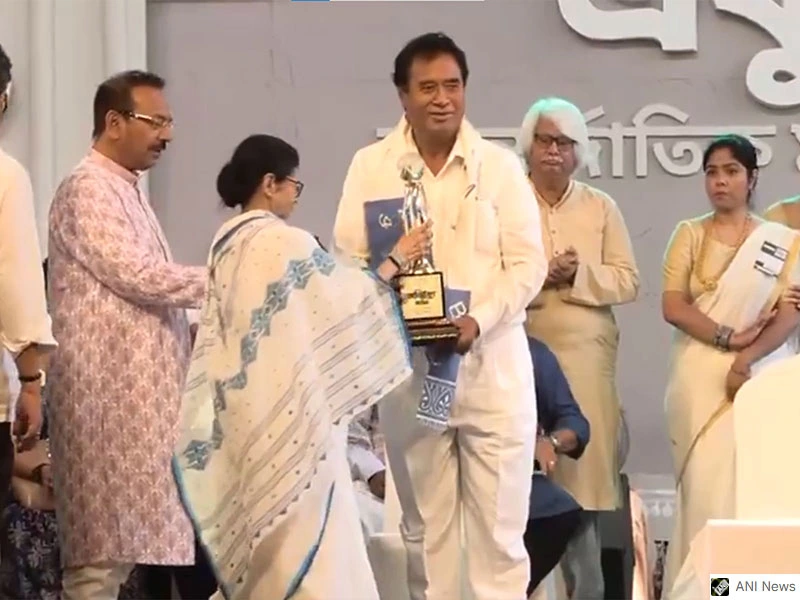
How can Anant Maharaj Create BJP-TMC Power Clash?
Anant Maharaj is finding out just how quickly political ground shifts in North Bengal.
One morning you are sipping tea inside a gated mansion as an honored guest of state leaders. By the next afternoon, criminal cases pile up against you while the state strips away your medals.
Bengal politics has produced plenty of erratic figures over the years, but few match the bizarre arc of this self-appointed kingmaker.
When news broke that police registered a formal FIR in Cooch Behar targeting the sitting Rajya Sabha parliamentarian, shockwaves ran straight through regional political circles. Nabanna didn’t stop there. They officially revoked his Banga Bibhushan title. His crime? He stood up right before Independence Day and made disparaging remarks about Netaji Subhas Chandra Bose.
Here at Knowledge Mart, we do not just rehash press releases. We look at the actual gears turning behind the curtain. How did a former employee reinvent himself as an untouchable monarch? Why were the two largest political parties in the region so desperate to fawn over him?
Let us look closely at how this entire saga unfolded. And more interestingly, how the identity politics paved its way into Bengal Politics.
Who Is Anant Maharaj And Why Did He Change Names?
If you want to understand what makes this leader tick, you have to look at his personal transformation over the decades.
Anant Maharaj did not inherit a throne. Nobody handed him a golden crown at birth.
Long before he dressed in royal robes and started holding court, locals knew him simply as Upen Roy.
So why would a regular man change his legal identity multiple times?
- First, Upen Roy quietly dropped out of sight from public administrative records.
- Next came Nagen Roy, a persona he used while starting his work as a regional organizer.
- Eventually, he assumed the grand title of Anant Maharaj, presenting himself as a spiritual authority and legitimate heir to the historical Koch-Rajbanshi legacy.
People in politics don’t swap names on a whim. It is usually a deliberate maneuver to wipe the slate clean, erase awkward past chapters, and wrap themselves in an intimidating aura that makes ordinary voters hesitate to question them.
By shedding his birth name, Upen Roy left his humble origins behind. By adopting the title Anant Maharaj, he built a persona that political managers felt compelled to bargain with.
While Bangshibadan Barman another leader of the Greater Cooch Behar People’s Association was arrested, self-claimed Anant Maharaj moved to Assam in 2020 as he got a hint of potential arrest.
Following that the BJP and TMC almost fell in a tug of war of taking him to their own folds.
From Assam Oil Refinery Employee To North Bengal Kingmaker?
Where was he before he made headlines across West Bengal?
Years ago, he wasn’t anywhere near political corridors. He moved out of his hometown to find basic work in neighboring Assam.
Public records confirm he spent years working in an oil refinery in Assam. Nagendra Ray worked for Indian Oil Corporation Limited (IOCL) at the Bongaigaon Refinery and Petrochemicals Limited (BRPL) in Assam and retired in 2018.
How does someone go from working at an industrial site to organizing massive political rallies back home? Not only that, he was a self-proclaimed Maharaj.
Perhaps Assam gave him an unexpected education in identity politics. He observed how indigenous groups and regional factions organized themselves to demand separate states, district councils, and financial autonomy.
He realized that tapping into identity grievances offers an instant fast-track to power in the contemporary West Bengal Political Landscape.
He returned home to Cooch Behar with a clear plan. He tapped directly into longstanding anger within the Rajbanshi community. He helped establish and fuel the activity of the Greater Cooch Behar People’s Association (GCPA). Almost overnight, the former refinery hand wasn’t looking for work anymore: he was demanding a separate state.
Political Journalist Sumon Chattopadhyay expresses his anger through the video called Maharaj My Foot!
How Did Anant Maharaj Gain The Rajbanshi Vote Bank?
Elections in North Bengal run heavily on regional pride and historic identity.
The Rajbanshi community holds immense sway across crucial voting belts in Cooch Behar, Jalpaiguri, and the Dinajpur districts. For generations, many Rajbanshi families felt marginalized by the central administration in Kolkata, believing their language and heritage were systematically pushed aside.
Anant Maharaj stepped straight into that resentment and built his influence around it.
- He Channelled Royal Heritage: He constantly talked about the old Koch kingdom, framing himself as the primary protector of their culture.
- He Pushed Statehood Demands: He mobilized local youth behind the emotive proposal of a separate Greater Cooch Behar State.
- He Spoke The Local Dialect: He dressed in traditional attire and used regional dialects to connect directly with rural families.
- He Cultivated Royalty Expectations: He rarely operated like a typical politician running for office. Instead, he carried himself like a sovereign monarch holding court.
Local supporters began viewing him as their ultimate community champion. He didn’t even need to stand for local assembly seats to prove his weight, he commanded thousands of devoted followers whose votes swung entire constituencies.
He effectively held the keys to the Rajbanshi vote bank. That’s why the political parties applied appeasement policy
Because of that leverage, both major political camps in Bengal realized they had to play ball with him if they wanted to dominate the northern districts.
How Built A Massive Palace In Cooch Behar Without Scrutiny?
If you drive out to Chakchaka in Cooch Behar, you will see a structure that looks entirely out of place.
A sprawling, gated compound stands there, styled like a modern royal palace. It comes complete with fortified boundary walls, grand courtyards, expensive marble work, and personal security guards patrolling the entrance.
Everyday citizens across Bengal keep asking a straightforward question: How did an ex-refinery employee build a multi-crore estate?
The uprising is mind-boggling: While his past background is a simple Migrant refinery employee in Assam, he is the owner of a grand palace in Chakchaka at present. But never question about his Funding Sources. When the investigation agencies keep their eyes closed, why should you bother!
Where did that level of capital come from?
- Was it built on community donations from loyal followers?
- Did off-the-record political funds fuel the construction?
- Is there an unmapped financial network operating behind his organization?
The most fascinating element is the total silence from law enforcement: Why didn’t investigative agencies ask questions?
Where was the Central Bureau of Investigation (CBI)?
Where was the Enforcement Directorate (ED)?
Why didn’t the state Crime Investigation Department (CID) or local police run a routine check?
If a regular middle-class taxpayer constructs a modest double-story home, tax authorities want every receipt documented. If an opposition politician buys a plot of land, central agencies drop by with audit notices. But asotinshingly this massive estate went up in Cooch Behar without raising a single red flag among financial regulators.
The reason is obvious. Both political parties needed his influence. As long as he delivered block votes, nobody wanted to dig into his books. His mansion stood as a quiet symbol of political immunity.
Did Anant Maharaj Cross The Line On Netaji Subhas Chandra Bose?
When leaders get used to absolute political immunity, they eventually overreach.
The latest storm broke right on the eve of Independence Day.
Anant Maharaj addressed a crowd and delivered a set of comments that stunned listeners. He openly questioned Netaji Subhas Chandra Bose, making derogatory claims about his historical legacy and questioning the role of the Azad Hind Fauj.
Netaji isn’t just another name in a textbook for Bengal. He is a deeply personal figure of national pride.
The public reaction was immediate and unforgiving.
As documented by Aajkaal News and verified by ETV Bharat, the Cooch Behar police quickly lodged a formal FIR against Anant Maharaj.
At the same time, the state administration moved fast. The West Bengal government issued an official circular revoking and withdrawing the Banga Bibhushan title that had been handed to him earlier.
| Action Type | Status |
|---|---|
| Banga Bibhushan Award | Revoked & Cancelled |
| Legal Action | FIR Lodged under Cyber Cell & Local Police |
His remarks sparked immediate angry demonstrations across districts. Visual media updates on ABP Ananda on YouTube showed crowds taking to the streets. Attempting to diminish Netaji while operating within Bengal was a line the public was simply unwilling to let anyone cross.
Can An Apology Save A Lawmaker Who Blundered?
Seeing the political damage control unfolding around him, the leader put out a short video trying to smooth things over with a brief expression of regret.
Is a hasty video apology enough to settle a blunder of this scale?
Consider his constitutional position. He sits as a sworn Member of Parliament (MP) in the Rajya Sabha. An MP is an active constitutional lawmaker.
When you take that oath, you commit to respecting the nation’s heritage and the figures who built its independence.
How does a standing parliamentarian make a comment like that by mistake?
- If an ordinary citizen made those exact statements online, they would likely be taken into custody within hours.
- When a sitting politician does it, the immediate reaction is to issue a 15-second video clip and expect everyone to move on.
A simple apology misses the point entirely. Questioning Netaji isn’t a minor slip of the tongue during a live speech. It reveals a deep disregard for the nation’s history. Losing state honors and facing police inquiries are reasonable consequences for that kind of conduct.
Would The State Act If Politics Were Different?
It is worth stepping back to evaluate the state’s sudden decisive actions without partisan bias.
Stripping his award and filing an FIR over insults to Netaji is completely appropriate. Protecting national icons should never be negotiable.
Still, a fair observer has to ask: Is this sudden crackdown motivated purely by principle, or did changing political math play a role?
Look at the timeline over the past few years.
For a long time, Anant Maharaj made highly provocative statements regarding the division of West Bengal, openly calling for statehood and challenging the state administration.
Did police stations lodge FIRs back then? No, they did not.
Instead, Chief Minister Mamata Banerjee personally visited his residence in Chakchaka, as reported in The Indian Express. They sat down for tea, exchanged pleasantries, and her administration later bestowed the Banga Bibhushan upon him in early 2026.
Why did that happen? Because at that moment, the ruling party wanted to build bridges with him to chip away at the BJP’s dominance in North Bengal.
Ask yourself these straight questions:
- If he had formally aligned his entire organization with the ruling party in Kolkata, would law enforcement have registered an FIR this quickly?
- If he were an active political partner of the state government today, would his Banga Bibhushan have been canceled overnight?
The bitter truth about state politics is that legal machinery often moves fastest against figures when they are on the opposite side of the fence. The state’s anger over Netaji is entirely valid, but the political convenience of the timing cannot be ignored.
We can see plenty of such examples for TMC Rebel Groups, where administration is acting seemingly slow.
Knowledge Mart Special: The Shameless TMC vs BJP Tug Of War
Here at Knowledge Mart, our goal is to highlight political posturing regardless of which party is doing it.
The downfall of Anant Maharaj isn’t just about one man making an outrageous speech. It is a textbook example of how opportunistic political parties empower controversial figures for short-term gain.
Look at the cynical tug-of-war both parties engaged in over this single individual:
BJP Handed him a coveted Rajya Sabha MP seat to secure Rajbanshi votes and hold North Bengal. Whereas, TMC Conferred the prestigious Banga Bibhushan award to court Rajbanshi voters and weaken the BJP’s stronghold.
The BJP’s Opportunism
The BJP wanted to protect its parliamentary footprint across North Bengal. What did they do? They bypassed seasoned local party workers who spent decades building the organization. They handed Anant Maharaj a direct entry into the Rajya Sabha on a party ticket. They looked the other way while he made divisive statements, tolerating his erratic behavior simply to lock down the Rajbanshi vote bank.
The TMC’s Counter-Game
The TMC was determined to regain its footing in the north. What was their strategy? They tried to win him over using state honors. They presented him with the Banga Bibhushan, sent high-level delegations to his home, and overlooked his past controversies as long as there was a chance he might swing his supporters toward them.
Both major camps treated prestigious constitutional positions and top civilian honors like bargaining chips in a political bidding war.
- The BJP took him a seat in Parliament.
- The TMC awarded him the state’s highest civilian honor.
Neither camp seemed bothered by his murky past, his name changes, his unexplained palace, or his radical public stances. The only metric that mattered to either party was his ability to move vote blocks on election day.
Now that his comments about Netaji have caused widespread public anger, both parties are scrambling to play the victim. The BJP is trying to distance itself from his speech, while the TMC is using the revoked award to claim moral superiority.
It is a cynical display that assumes voters have short memories.
When political organizations trade national pride and high honors for temporary electoral advantages, figures like Anant Maharaj are the natural result. He is the product of a system where arithmetic routinely trumps principles.
The police FIR is an important step toward legal accountability. However, true political accountability rests with the party leaders who built him up in the first place. The people of Bengal deserve far better than this ongoing political circus.
10 Key Takeaways
- From Manual Employee to Political Titan: Anant Maharaj transformed his life from an obscure oil refinery job holder in Assam into an influential political kingmaker in North Bengal.
- Strategy of Changing Identities: Originally named Upen Roy, he later adopted Nagen Roy before fashioning himself as “Anant Maharaj”, using identity changes to craft a pristine, authoritative political persona.
- Monopolizing the Rajbanshi Vote Bank: By establishing the GCPA and championing Rajbanshi pride, statehood demands, and regional culture, he established himself as an indispensable voice for thousands of voters.
- Unchecked Palace & Wealth: Despite building an ultra-luxurious mansion in Chakchaka, Cooch Behar, his rapid accumulation of wealth remained completely unscrutinized by central or state investigative agencies (CBI, ED, CID).
- Outrage Over Remarks on Netaji: The current controversy exploded after he made derogatory remarks about Netaji Subhas Chandra Bose on the eve of Independence Day, insulting a deeply revered national icon.
- Immediate Legal & Administrative Crackdown: Following public backlash, the state government registered a formal FIR against him in Cooch Behar and officially revoked his prestigious Banga Bibhushan award.
- Constitutional Blunder as a Lawmaker: As a sitting Rajya Sabha MP, his comments breached his constitutional oath to respect national heritage, proving that a basic video apology is insufficient to resolve the issue.
- Political Opportunism by the BJP: The BJP bypassed its dedicated party workers to grant him a Rajya Sabha seat on a silver platter solely to secure North Bengal’s electoral arithmetic.
- Counter-Playing by the TMC: The TMC attempted to lure his allegiance by conferring the state’s highest civilian honor (Banga Bibhushan) and sending top leaders to visit his estate, ignoring his past separatist rhetoric.
- Knowledge Mart’s Verdict: The entire episode exposes a cynical political system where both major parties traded constitutional honors and state titles for vote-bank politics, creating a monster they now struggle to control.
[…]Anant Maharaj: Fierce TMC vs BJP Power Clash Anant Maharaj faces fierce backlash after insulting Netaji! Discover the shocking story behind his lost Banga Bibhushan and the BJP-TMC political war.[…]