BJP's KMC Takeover Plot: Controversial Move
Nov 13, 2026 - By Ashutosh Roy Current AffairsElection AnalysisPoliticsRegional UpdatesWest Bengal Politics
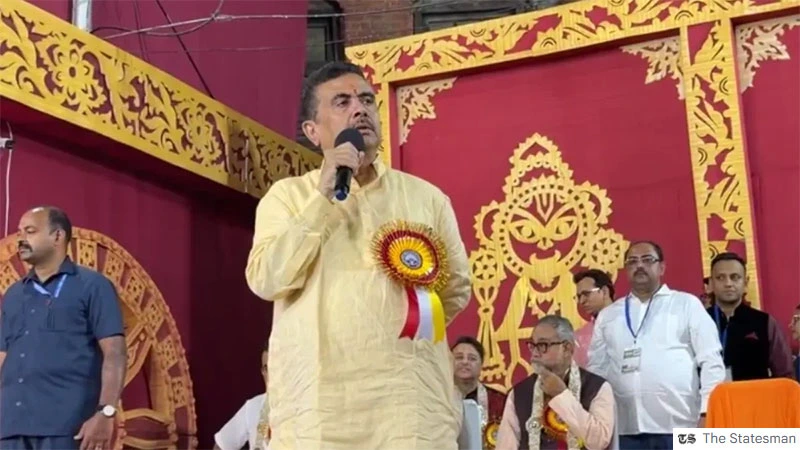
BJP’s KMC Takeover Plot: A Backdoor Power Grab
There was supposed to be a straightforward plan to capture the Kolkata Municipal Corporation (KMC). After all, if one did the political arithmetic as per assembly election results, around 102 of the 144 existing wards appeared to be within the BJP’s reach. But then, why settle for what is already within reach? When everything is available, why not grab everything? So, why are the political analysts talking about BJP’s KMC Takeover Plot?
So what if the court has stopped the election notification over the ward delimitation dispute? We will appoint coordinators. And we will openly declare that these coordinators will be BJP people. The government is ours, the administration is ours, and we have a double-engine government. Why not turn it into a triple-engine government by bringing the corporation directly under our political influence?
After all, an opposition-free political landscape seems to be the ultimate ambition of those who cannot distinguish between winning an election and owning the entire system. The means do not matter much, as long as the desired result is achieved. Rejinagar and Nandigram have already witnessed political battles of this kind. Now, it is Kolkata’s turn.
Why Settle for an Administrator When You Can Have Direct Control?
Until now, the KMC was functioning under an administrator. Apparently, that arrangement was not enough. What is needed now is direct political influence. And there is another important consideration. There are so many disgruntled party workers and leaders who have worked tirelessly for the party but have not received any position. They, too, need to be rewarded. A coordinator’s chair, even if temporary, can keep many dissatisfied souls happy.
There are arguments ready at hand to defend this arrangement. The defeated parties have approached the court because they are afraid of losing the election. Why should we not say so? Who will challenge that political argument? Meanwhile, let us accurately implement the BJP’s KMC Takeover Plot.
We have also learnt the art of calling political opponents losers from our previous political experience. Why should we abandon a convenient vocabulary simply because we have changed sides? We can also point out that some Trinamool councillors have switched sides or resigned. So, what possible objection can anyone raise against our arrangement?
And if necessary, we can always take a lesson from history.
On November 11, Suvendu Adhikari reiterated that if the Supreme Court did not lift the stay on the KMC election process, his government would appoint BJP members as coordinators in all 209 proposed wards after November 30. He maintained that the government wanted elections to take place but would not allow civic administration to suffer in the meantime. The announcement has triggered opposition allegations of an attempt to capture the corporation through the backdoor.
Read The Telegraph’s report on Suvendu Adhikari’s announcement for the latest details.
When Mamata and Siddhartha Shankar Roy Set Precedents
In 1972, the Siddhartha Shankar Ray government superseded the elected municipal corporation and placed it under administrators. The official history of the Kolkata Municipal Corporation records that the corporation remained under administrators for 13 years following its supersession.
In 2020, Mamata Banerjee’s government also continued the KMC administration through an appointed Board of Administrators after the elected councillors’ term expired during the Covid pandemic. Firhad Hakim headed that board. The circumstances were different, but the question of democratic accountability did not disappear.
As reported by Business Standard, the board headed by Firhad Hakim was appointed after the elected board’s tenure expired. The arrangement also raised questions about the procedure and the role of the Governor.
There is, however, an important distinction. In 2020, outgoing councillors were temporarily designated as ward coordinators, while Firhad Hakim headed the Board of Administrators. The present proposal is different because the Chief Minister has specifically said that the new coordinators will be BJP members. But doesn’t that give the government the authority for a BJP’s KMC Takeover Plot blueprint?
At least, Siddhartha Shankar Ray’s administration relied on bureaucrats to run the corporation. Mamata Banerjee’s government put a political leader at the head of the Board of Administrators. So, are we really doing anything unprecedented?
For another account of the 2020 arrangement, read this Times of India report on KMC coordinators.
For the last 15 years, Bengal has witnessed enough examples of political control over institutions and local bodies. Have people forgotten what happened in Malda and North Dinajpur? Does anyone remember how Trinamool gradually expanded its political influence in Murshidabad, once considered a Congress stronghold?
Critics may point out that Suvendu Adhikari himself had a role in some of these political operations when he was with the Trinamool Congress. But why should that bother us now? We are in government. The administration is ours. Surely, that must come with some freedom to operate!
That is the dangerous logic of all-grabbing politics: whatever was unacceptable when the opposition did it becomes perfectly acceptable when we are in power.
BJP’s KMC Takeover Plot and the Politics of Domination
What about the charge of political domination? The BJP has been in power for barely six months. Before that, Bengal witnessed 15 years of Trinamool’s political domination. Compared with that history, what is so extraordinary about a few temporary appointments?
If the people of Bengal tolerated 15 years of Mamata Banerjee’s style of governance, why would they object to a few such arrangements under us? If Trinamool could remain in power for 15 years despite failing to fulfil so many public expectations, why should we not dream of 50 years?
We spoke about Poriborton (change) before the election. People in Bengal have always responded to that word. But does a change of government necessarily mean a change in political culture? Must we introduce a new standard of democratic accountability simply because we promised change?
Apparently, there is no need to worry. A few industrial projects, some investment announcements and a handful of high-profile events may be enough to keep people occupied. Given the relationship between the business community and the central government, bringing a few industrial projects to Bengal should not be impossible.
So, why should we worry about the small matters of democratic convention?
Political Promises and the Temptation of Power
But there is another problem. Allegations of extortion and political interference have started surfacing in the political discourse. BJP state president Shamik Bhattacharya has been issuing statements, while some party MLAs have also expressed concerns about the conduct of party workers and the new political environment.
Jitendra Tiwari or Ratna Debnath, the BJP MLA from Panihati may say whatever they want. But is the temptation to make money really so easy to overcome? What do people expect after a change of government? That the demands and ambitions of political workers will suddenly disappear?
For years, many of these workers watched others enjoy political influence and the opportunities that came with it. Now they believe it is their turn. At least, we can open a few doors for them for some time.
And if someone approaches the court, who knows how long the case will continue? Have we forgotten the long-running DA dispute? Even after court directions, how far and how quickly did the Mamata government implement them? What about the court’s directions concerning the Metro Railway work at Chingrighata?
First, let the court issue its orders. We can always consider what to do afterwards.
That is another convenient political calculation: delay, dispute and uncertainty can all become instruments of administration when accountability is treated as an inconvenience.
What Exactly Has Changed Since Mamata’s Rule?
There is, however, one important lesson that should not be forgotten. The politics of domination eventually fragmented the Trinamool Congress itself. A party that once appeared invincible gradually became vulnerable because too much power was concentrated around a handful of leaders and too many political interests were allowed to operate under one umbrella.
The BJP should remember that political domination does not create lasting loyalty. It creates dependence, resentment, internal competition and eventually rebellion. A party may enjoy the comfort of power for a few years, but the people who help it build that power may also become its biggest liability.
We should not assume that people will forget everything simply because 15 years have passed. Nor should we believe that Bengal’s voters will tolerate the same political culture indefinitely just because the party practising it has changed.
The BJP came to power promising a change in Bengal’s political culture. People expected an end to intimidation, extortion, political patronage and the practice of treating government institutions as party property. They expected a government that would respect the opposition, protect democratic institutions and allow elected representatives to perform their responsibilities.
Instead, if the new government starts treating every institution as an extension of the ruling party, what exactly has changed?
Our earlier analysis of why Mamata Banerjee lost power explains how prolonged political dominance can turn into a liability. The BJP should not ignore that lesson.
Howrah and Bally: What Happened to Democratic Elections?
Before lecturing others on democratic principles, shouldn’t we look at what has happened in Howrah and Bally? The municipal elections there have remained pending for years. Howrah last went to the polls in 2013. The elected board’s term expired in December 2018, and since then the corporation has been run by administrators appointed by the state government.
The government’s own notification confirms that the elected board’s term had ended and an administrator was appointed. A Telegraph report also documented how the absence of elected councillors affected residents. Bally, which was merged with Howrah in 2015, was separated again in 2021. Still, its people have also been waiting for a fresh elected municipal board. The separation of Bally from Howrah did not bring the long-awaited return of elected local representation.
So, where was this commitment to democracy all these years? Why were the people of Howrah and Bally denied the opportunity to elect their own municipal representatives? Did the absence of elected councillors not affect democratic accountability? Were administrators considered a perfectly acceptable arrangement then, simply because the ruling party found it convenient?
Now, when the same question arises in Kolkata, suddenly there is a need to appoint party coordinators. What an interesting interpretation of democracy! Elections can wait when the political circumstances are inconvenient, but political appointments cannot. The people can remain without elected representatives for years, but party workers cannot remain without positions for a few months.
This is precisely the problem with Bengal’s political culture. Governments change, slogans change and the people occupying ministerial chairs change. But the temptation to control every institution and accommodate party loyalists remains remarkably familiar.
For the BJP, Howrah and Bally should have been a reminder that prolonged administrative arrangements cannot become a substitute for elected local government. Instead of repeating the old practices, the new government should demonstrate that it has genuinely learnt from them. After all, the new government’s own stated intention to hold civic polls in Howrah and Bally acknowledges how long people have been waiting for elected representatives. Even Suvendu Adhikari has spoken of holding the long-pending elections. The real test is whether the government will now respect that democratic principle in Kolkata as well.
The Court’s Intervention and the Question of Democratic Legitimacy
The immediate issue is not whether the BJP would win the KMC election. That is a question for the voters to decide. The issue is whether a party that has won power in the state can use that mandate to install its own political representatives in a civic body without allowing the people of Kolkata to elect them.
There is a legitimate argument for maintaining uninterrupted civic services when an elected board is not in office. Roads need maintenance, garbage must be cleared, drainage systems need attention and citizens must have someone to approach with their everyday problems. No one can reasonably dispute that.
But there is a fundamental difference between ensuring civic services and handing political influence to ruling-party workers. An appointed coordinator is not an elected councillor. The authority, accountability and legitimacy of these two positions cannot be treated as interchangeable.
The government may argue that its proposed coordinators will help the administration monitor civic services. That argument deserves examination. But when the Chief Minister specifically declares that the coordinators will be BJP members, questions about political neutrality become unavoidable.
The Calcutta High Court’s November 6 interim order restrained the State Election Commission from issuing a KMC election notification on the basis of the revised ward boundaries until the pending challenge to the delimitation exercise is decided by the single bench. The proposed expansion would increase the number of wards from 144 to 209.
Importantly, the court has not finally declared the delimitation exercise illegal. Its observations are interim, and the legal proceedings must be allowed to reach their conclusion. The state government has also approached the Supreme Court against the High Court’s interim order.
Read Bar & Bench’s detailed report on the Calcutta High Court’s intervention for the legal background.
For a broader understanding of Bengal’s political environment, read our articles on criminalisation of politics in Bengal, the West Bengal election results and political change, and the challenges facing the KMC opposition alliance.
Key Takeaways: A Change of Party Is Not Enough
- Electoral mandate matters: Winning the state government does not automatically give a political party the right to control an elected municipal institution.
- Coordinators are not councillors: Appointed political coordinators cannot be treated as equivalent to representatives elected by the people.
- Democratic accountability must continue: Civic services must function, but their delivery should not become an excuse for partisan political appointments.
- History offers a warning: The administrative arrangements of 1972 and 2020 should not be used as convenient justifications for repeating questionable practices.
- Political domination has consequences: The Trinamool Congress’s experience demonstrates the dangers of excessive centralisation and political patronage.
- BJP must honour its promise: A government elected in the name of change must demonstrate that change through its conduct, not merely through slogans.
Conclusion: Bengal Needs Change, Not Another Trinamool
There is a difference between replacing a government and changing a political culture. Bengal has already experienced what happens when a ruling party begins to believe that winning an election gives it unlimited ownership over the administration, local institutions and political space.
Mamata Banerjee’s 15 years in power should have been a lesson for every political party. The concentration of authority, the shrinking space for opposition and the growing dependence on political patronage eventually carry a price. The BJP’s KMC Takeover Plot seems to be a mirror reflection of the same.
The BJP now has an opportunity to demonstrate that it has learnt from those mistakes. It can allow the legal process to conclude, ensure that civic services continue through a transparent and legally sound arrangement, and let the people of Kolkata elect their representatives without unnecessary delay.
But if the BJP chooses the same path of political domination, it will be difficult to distinguish its governing culture from the one it promised to replace.
People did not vote for a change of political flag over government offices. They voted for a change in the way Bengal is governed.
After 15 years of Trinamool’s all-grabbing politics, Bengal does not need another ruling party with the same appetite for power. It needs a government that understands the limits of its mandate.
Does the BJP intend to deliver Poriborton, or is it simply preparing to become another Trinamool Congress?