Bengal Anti-Goonda Law: Protection or Fear?
Jul 14, 2026 - By Ashutosh Roy Current AffairsGovernancePoliticsRegional UpdatesWest Bengal Politics
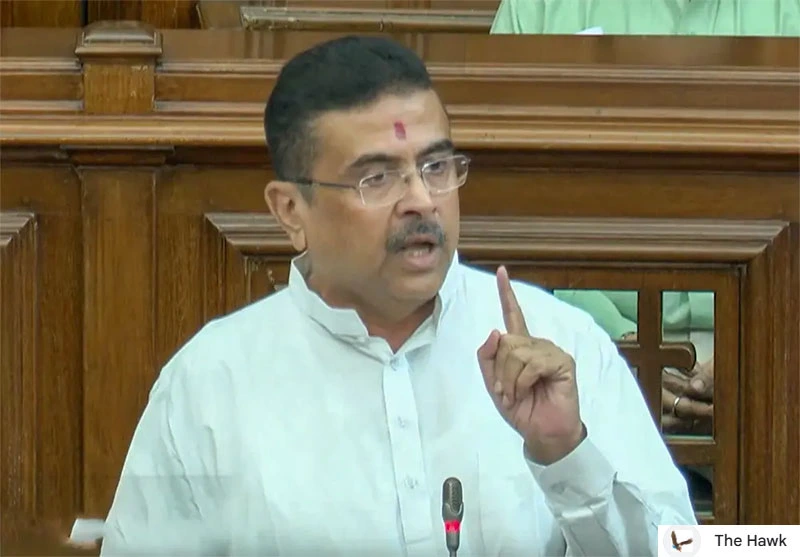
Is Bengal Anti-Goonda Law Crucial or Draconian?
The midnight knock echoes loudly as the controversial Bengal Anti-Goonda Law takes full effect across the state. Footsteps fade down a dark corridor while a citizen vanishes into preventive custody under these new rules.
No charges are filed and no lawyer is present, creating an environment where the Bengal Anti-Goonda Bill sparks immense public debate.
This is not a scene from an old movie about colonial rule; it is the raw reality staring at eastern India right now under the modern Bengal anti goonda law draconian overreach.
The political battle lines are drawn sharp. The state assembly just shook with thunderous slogans. In a historic shift, the ruling BJP administration passed twin legislations that completely redraw the limits of policing.
Critics are shouting from the rooftops, calling it pure tyranny. Simultaneously, the government insists it is the only way to save a collapsing society from street violence.
At Knowledge Mart, we look past the high-decibel political theatre. Let us break down what these new rules mean for you. We will analyze the fine print, the hidden traps, and the heavy price of state power.
Bengal Anti-Goonda Law: Protection or Fear?
The Bengal Anti-Goonda Law is the talk of every tea stall from Kolkata to Siliguri. Officially titled the West Bengal Public Safety and Control of Anti-Social Activities Bill, 2026, this statute changes everything.
For decades, people complained about the violent street culture. Extortion, syndicate rackets, and political clashes ruled the land.
The government claims the regular penal codes are too weak. They wanted a lethal legal weapon to smash criminal networks forever.
But the actual Bengal Anti-Goonda Law goes much further than just locking up street thugs. It introduces a system of “pre-crime” punishment.
You can read the deep constitutional worries of legal experts on Peoples Democracy. The state can now act before a crime even occurs. More analysis regarding the shrinking space for democratic dissent can be followed on The Quint.
States with Laws Similar to Bengal Anti-Goonda Law
| State | Name of Law | Key Features | Preventive Detention |
|---|---|---|---|
| West Bengal | Public Safety and Control of Anti-Social Activities Bill, 2026 | Broad definition of anti-social activities, externment, strong police powers | Up to 12 months |
| Maharashtra | MPDA Act | Targets dangerous activities, organized crime, bootlegging | Up to 12 months |
| Uttar Pradesh | UP Goonda Act + NSA | Control of habitual offenders, externment powers | Up to 12 months (NSA) |
| Karnataka | Karnataka Prevention of Dangerous Activities Act | Focus on public order threats, repeat offenders | Up to 12 months |
| Gujarat | PASA Act | Targets anti-social elements, bootleggers, property offenders | Up to 12 months |
| Tamil Nadu | Tamil Nadu Goondas Act | Widely used for preventive detention of habitual offenders | Up to 12 months |
| Madhya Pradesh | Anti-Goonda Laws | District-level control, externment of offenders | Varies |
| Telangana / Andhra Pradesh | Preventive Detention Acts | Focus on bootleggers, drug offenders, anti-social elements | Up to 12 months |
| Jharkhand | Preventive Detention Framework | Control of habitual offenders and organized crime | Varies |
| Delhi | Special Preventive Laws + NSA | Used for maintaining public order and national security | Up to 12 months (NSA) |
What is the new anti goonda law in West Bengal?
To evaluate if this act is a shield or a weapon, we must look at its core mechanisms. The legislation targets actions that create alarm, public insecurity, or disrupt businesses. It covers mafia operations, illegal sand mining, and organized extortion rackets.
To enforce this, the state passed a companion act called the West Bengal Maintenance of Public Order (Amendment) Act, 2026.
Together with the Bengal Anti-Goonda Law, these laws form a dual-layered mechanism designed to deter lawbreakers through absolute state dominance.
The Twin Pillars of the 2026 Legal Reset
| Law | Primary Function | Maximum Penalty Without Trial |
|---|---|---|
| West Bengal Public Safety and Control of Anti-Social Activities Bill, 2026 | Preventive detention of suspected threats, externment from districts. | Up to 12 months in custody. |
| West Bengal Maintenance of Public Order (Amendment) Act, 2026 | Recovery of financial damages caused during public riots and protests. | Confiscation and auction of personal property. |
Who Qualifies as a Threat Under the New Definitions?
- Syndicate Leaders: Individuals running extortion cartels in building construction.
- Bootleggers & Smugglers: Persons involved in cross-border trade or illicit liquor networks.
- Land Mafias: Those occupying public or private property by raw physical force.
- Public Disruptors: Anyone creating community panic or blocking essential economic activity.
Why are critics calling it a draconian act?
The terror lies in the operational text of the Bengal Anti-Goonda Law. Under this framework, a District Magistrate or a Police Commissioner can lock you up simply by being satisfied that you might disrupt public order.
You do not need to stand in a courtroom. The police do not need to show an active First Information Report (FIR) to secure immediate jail time. Detailed human rights breakdowns of this structural issue are highlighted on The Wire.
Even worse, the classification of offenses shifts dramatically under the Bengal Anti-Goonda Bill. Violations are now strictly cognizable and non-bailable. This means police officers can arrest suspects without getting a warrant first.
Once inside, getting out on bail becomes an uphill battle. The law also includes an externment clause where the administration can banish an individual from entering their home district for a full year. You can follow live updates regarding enforcement parameters on Open Magazine.
The Red Flag: Section 10(4) of the Bengal anti-social activities act states that a detained person cannot ordinarily be represented by a lawyer before the reviewing Advisory Board. This strips away a fundamental pillar of natural justice.
Critical Legal Flashpoints: Old System vs. 2026 Act
| Legal Metric | Standard Penal Procedure (CrPC/BNSS) | West Bengal Public Safety Bill 2026 |
|---|---|---|
| Arrest Basis | Clear evidence or active FIR of a committed crime. | Reasonable suspicion of a future crime. |
| Right to Counsel | Immediate access to a defense lawyer. | Restricted before the executive Advisory Board. |
| Bail Provision | Statutory right depending on the offense grade. | Highly restricted; non-bailable category. |
| Geographic Banishment | Rarely applied; requires high-level judicial scrutiny. | Up to 12 months via administrative order. |
Will these sweeping powers boomerang on the creators?
History has a strange, poetic way of punishing political overreach. Today, the BJP holds the reins of power in Bengal. Their lawmakers celebrated the passage of the Bengal Anti-Goonda Law with heavy desk-thumping.
They firmly believe they are cleaning up a corrupt system. But political winds change direction quickly. No party stays in power forever.
When a ruling elite builds a legal guillotine like the Bengal Anti-Goonda Bill, they rarely think about their own necks. What happens when they lose an election?
The exact same sweeping powers will be handed over to their bitter rivals. The weapons of state oppression will change hands. The hunter will instantly become the hunted.
The Chidambaram Lesson: A Warning from History
The current leaders should remember the story of P. Chidambaram. As the Union Finance Minister during the UPA government, he oversaw the implementation of the Prevention of Money Laundering Act (PMLA) in 2005.
He pushed for subsequent amendments to make the law tougher. He believed he was creating an indestructible tool to track dirty money.
Fast forward to the BJP regime. The Enforcement Directorate utilized those exact same stringent PMLA clauses. They arrested Chidambaram and sent him to Tihar Jail. The law he carefully constructed turned around and bit its own creator.
Watch the Video to comprehend the entire story.
Bengal’s lawmakers must learn from this history before passing the unchecked rules of the Bengal Anti-Goonda Law.
Why Laws Often Boomerang on Lawmakers
- Changing Executives: The bureaucracy serves the current master; tools built for defense are repurposed for offense.
- Lowered Legal Thresholds: Removing checks and balances makes it easier for future rivals to target you.
- Precedent Creation: Once a harsh law is accepted by the public, harsher additions become politically viable.
Do existing Indian laws already have adequate provision?
Chief Minister Suvendu Adhikari argued that old legal systems failed to handle modern gang networks. But legal experts disagree, noting the overlapping scope of the new West Bengal Public Safety and Control of Anti-Social Activities Act, 2026.
India already possesses heavy national security legislation. The National Security Act (NSA) of 1980 allows long-term preventive detention for public safety.
In addition, the new Bharatiya Nyaya Sanhita (BNS) contains dedicated sections to punish organized crime, extortion, and rioting.
Why build a new state-level regime when central laws already exist? Additional analysis concerning this legislative friction can be reviewed on Sansa Legal.
The answer lies in administrative control. Central laws require rigorous oversight and specific federal conditions. This new state bill bypasses those roadblocks.
It places total, unchecked power straight into the hands of local police officers and bureaucrats via the Bengal Anti-Goonda Law. It turns the executive branch into both the judge and the jury.
Comparison of Overlapping Public Safety Frameworks
| Law Framework | Governing Authority | Key Structural Focus | Oversight Body |
|---|---|---|---|
| National Security Act (NSA) | Central / State Government | Defense of India and national security threats. | High Court Advisory Boards |
| Bharatiya Nyaya Sanhita (BNS) | Judicial Courts | Punishing committed crimes through regular trial. | Independent Judiciary |
| Bengal Anti-Goonda Law | District Executive (DM/CP) | Local anti-social prevention and street crime. | State Executive Board |
How does the property attachment system work?
The financial aspect of this legal package is incredibly aggressive, working side-by-side with the Bengal Anti-Goonda Law. The amendment to the public order act sets up a specialized Claims Commission.
If a political rally or protest turns violent, this body calculates the monetary loss. Reports regarding the absolute timelines for property attachment are documented in The Times of India.
- Extended Liability: The law does not just target the rioter throwing a rock.
- Targeting Sponsors: It explicitly holds organizers, financial sponsors, and logistical supporters liable.
- Asset Seizure: If the calculated fine is not paid, the state can auction your family home, seize vehicles, and freeze private bank accounts.
- Speedy Execution: Property attachment happens under fast-track timelines, bypassing slow civil court disputes.
- No Initial Appeal: The decision of the commission acts with immediate effect before standard civil court interventions.
This mechanism mimics the strict recovery models used in other states. It can easily be twisted to bankrupt political opponents, peaceful protest groups, and student unions.
Knowledge Mart Final Thoughts
At Knowledge Mart, we firmly believe that Bengal needs stable law and order. The culture of street intimidation and political violence must end. Stringent rules like the Bengal Anti-Goonda Law are necessary to keep professional criminals off the streets. However, absolute power corrupts absolutely.
Lawmakers have the constitutional freedom to write new bills.
But they bear an enormous responsibility to calculate the long-term cons before implementing the Bengal anti goonda law draconian overreach. The primary goal of a public safety law must always be protection, never the oppression of political dissent.
A democracy thrives on debate, not on numbers alone. Passing major bills through voice votes without vivid, line-by-line assembly discussion is a dangerous path.
Governments must focus heavily on the legal merit of the Bengal Anti-Goonda Law, rather than rushing it through just because they hold a legislative majority.
If Bengal does not balance protection with civil liberties, it will replace the fear of criminals with the fear of the state.
10 Key Takeaways:
- Shocking “Pre-Crime” Arrests: Discover how the new Bengal Anti-Goonda Law permits police to arrest citizens without an active FIR or judicial warrant based on mere administrative suspicion.
- The Banishment Clause: Learn how the West Bengal public safety bill 2026 empowers local bureaucrats to exile any individual from entering their home district for a full 12-month period.
- No Lawyer Allowed: Find out why Section 10(4) of the 2026 anti-crime framework is sparking massive outrage by restricting a detainee’s right to legal counsel before the Advisory Board.
- Total Asset Seizure: Under the twin public order updates, the state can instantly freeze your bank accounts and auction your family home to pay for public protest damages.
- Targeting the Sponsors: The the new public safety act goes beyond street rioters to explicitly hold financial backers, logistical organizers, and political sponsors fully liable for property losses.
- The Ultimate Political Boomerang: Read why today’s lawmakers risk facing their own legal guillotine the exact moment power shifts to their bitter political rivals.
- The Chidambaram Warning: Revisit history to see how the very PMLA clauses P. Chidambaram built in 2005 were later used by rivals to send him straight to jail.
- Bypassing Judicial Oversight: See how the West Bengal Public Safety and Control of Anti-Social Activities Act, 2026 cleverly side-steps standard Central safety guidelines to place absolute, non-bailable power in local executive hands.
- Crushing the Note of Dissent: Legal experts warn that this aggressive framework can be easily weaponized to bankrupt peaceful student unions and opposition protest groups.
- Knowledge Mart Verdict: Why passing sweeping bills via rushed voice votes without vivid assembly debates replaces the fear of street thugs with the fear of the state.
[…]Bengal Anti-Goonda Law: Protection or Fear? Explore the dark side and the necessity of the Bengal Anti-Goonda Law. Is it a draconian overreach of power, or the urgent protection citizens desperately need?[…]