Can Hindu Bachao slogan secure new victory
Oct 25, 2025 - By Ashutosh Roy PoliticsCurrent AffairsElection AnalysisGovernance & AdminRegional UpdatesSocial IssuesWest Bengal Politics
Hindu Bachao: The Stakes of Competitive Polarization in West Bengal’s 2026 Assembly Election
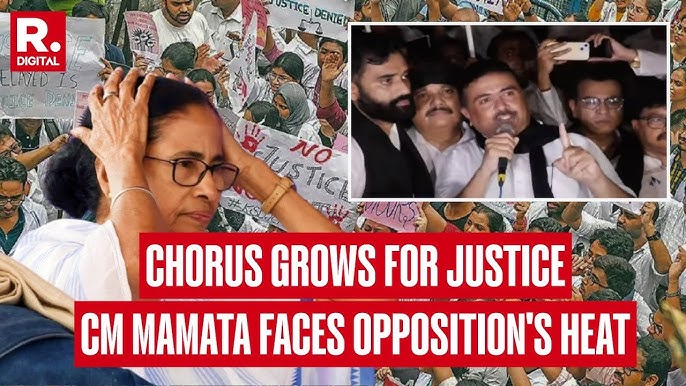
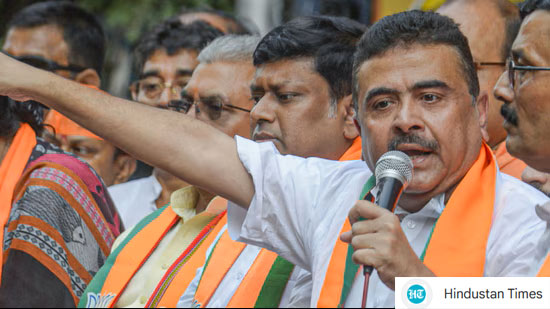
Suvendu Adhikari’s slogan “Mamata Bhagao, Hindu Bachao” has been reverberating across West Bengal for months. Such a rhetoric has amplified recently by the solgan, “Jo hamaara saath, hum unke saath”. The message is crystal clear.
The BJP, led by Adhikari, is betting heavily on consolidating the Hindu vote as its decisive force in the 2026 Assembly election. Yet, whether this rhetoric can translate into electoral success depends on Bengal’s intricate socio-political culture. Mamata Banerjee has certainly initiated the counter narrative by fueling the identity politics.
The pivotal question remains: Can this focus on religious identity truly be a game-changer?
The Complex Electoral Landscape of West Bengal
West Bengal’s 294 assembly constituencies reflect a complex demographic reality. According to the 2011 Census, Hindus form the majority in more than 200 constituencies, while about 70–75 have Muslim majorities. This alone makes the Hindu vote crucial.
But the distributions of voters are not uniform. The Matua and Rajbongshi communities significantly influence around 30–40 constituencies. Both groups, however, remain divided between the BJP and TMC.
The Citizenship (Amendment) Act (CAA) debate has deepened the fragmentation. The influential Thakur Bari once spoke with a unified voice for the Matua community. Today, internal divisions have fractured that unity.
These divisions of The Matua and Rajbongshi communities have added to the uncertainty and reshaped the political landscape of West Bengal.
Illegal migration and voter roll controversies have further charged the atmosphere. BJP leaders frequently claim that infiltrators have tilted the demographic balance in several districts. Meanwhile, Mamata Banerjee’s government has accused the Special Intensive Revision (SIR) drive to be politically motivated.
According to Mamata Banerjee, the Election Commission has been in desperation to fulfill BJP’s Wishlist. The BJP’s exaggerated figures, like “one crore fake voters”, certainly lack statistical support. But the TMC’s defensive posture indicates their political anxiety.
The SIR exercise, modeled after Bihar, could strike off dead, relocated, or duplicate voters. This will potentially redraw the state’s electoral boundaries.
The “Hindu Bachao” call has also gained momentum amid a perceived pattern of police inaction during communal violence. The recent Samserganj riots strengthened Adhikari’s narrative.
People accused law enforcement of ignoring the violence by Muslim aggressors. This accusation added fuel to his claims. The divisive politics of BJP demands such an welcoming stage of religious polarization.
In this atmosphere, identity politics has pushed pressing issues into the background. Neither BJP, nor TMC raises voices regarding economic stagnation, unemployment, and rural distress.
Hindu bachao: Identity Politics and Competitive Polarization
Mamata Banerjee, once accused of minority appeasement, has begun to reshape her image. She publicly declared her Brahmin identity and her devotion to Lord Shiva. Perhaps her sudden Hindu favoritism is a knee-jark reaction against the religious polarization of BJP.
Mamata Banerjee inaugurated the Jagannath Dham in Digha. She also announced a Mahakal Temple in Siliguri. Her overt Hindu symbolism marks a dramatic shift. In other words, she is also encouraging competitive polarization. So, indirectly, she has fallen in the trap of Identity Politics.
West Bengal, with a long heredity of secular politics, now finds itself witnessing one of the most open phases of religious polarization in its modern history.
In retrospect, Jayaprakash Narayan’s clarion call to “Save Democracy” thwarted Indira Gandhi’s regime. In 1989, V.P. Singh’s anti-corruption crusade did the same to Rajiv Gandhi. Narendra Modi stormed into the power in 2014 with his plebiscitary call to save India.
Modi’s ascent stood on the pillars of UPA’s corruption fatigue and vibrant Gujrat. When the leaders can create a genuine public perception that can adequately topple any juggernaut. Mamata Banerjee herself rose to power in 2011 on the wave of public disgust against CPI(M)’s authoritarianism and political violence.
The Factor of Anti-Incumbency and Welfare Schemes
Yet, the government of Mamata Banerjee now faces serious challenges. The corruption scandals, job scams, and public outrage over incidents like the R.G. Kar Hospital horror have been widespread. Simultaneously, welfare schemes like Laxmir Bhandar and Kanyashree continue to secure her core base, particularly among women.
Her portrayal of BJP as a divisive, communal force still resonates with many. A section of beneficiaries still believes her. That’s why she has to tell that the people should assume that she is fighting in all 294 constituencies. She still believes that her image remains clean and acceptable.
The fate of Hindu Bachao
As Bengal forges ahead toward 2026, the electoral narrative is clear but fraught: “Mamata Bhagao, Hindu Bachao” versus “No to Communal Politics”. The outcome will depend on which sentiment runs deeper. The people will decide on the clarion’s call to save Bengal or the fear of polarization. What’s certain is that Bengal’s political discourse has entered into an untrodden sojourn, where identity has eclipsed ideology.
Do you think the focus on identity politics will completely overshadow economic and development issues in the 2026 election?
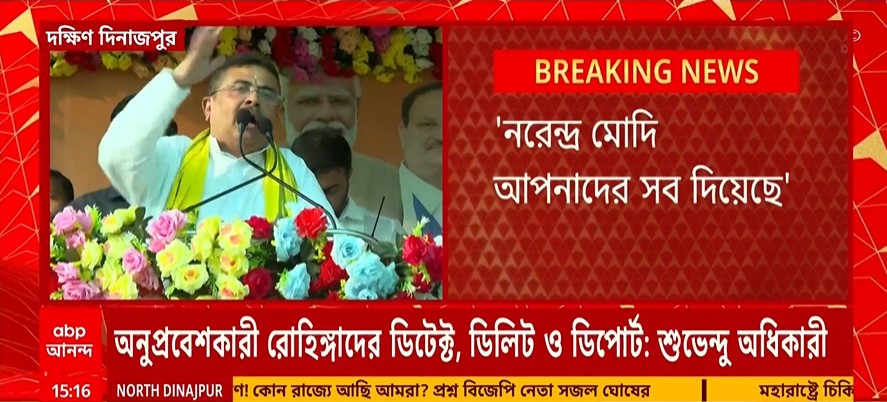
Interestingly, Suvendu’s slogan has two segments one is Mamata bhagao and the other is Hindu bachao. So, the clarion call of Hindu Bachao may fall flat in West Bengal. Rather, the plebiscitary call to Mamata Bhagao may finally become the triumph card in the 2026 Assembly election in West Bengal
[…]Can Hindu Bachao slogan secure new victory Uncover whether the impactful ‘Hindu Bachao’ slogan can influence election outcomes. An expert analysis on politics, voter sentiment, strategy, and power play.[…]
[…]Can Hindu Bachao slogan secure new victory Uncover whether the impactful ‘Hindu Bachao’ slogan can influence election outcomes. An expert analysis on politics, voter sentiment, strategy, and power play.[…]