The Ugly Truth of Turncoat Politics Proven
Feb 08, 2026 - By Ashutosh Roy Election AnalysisNational PoliticsPoliticsWest Bengal Politics
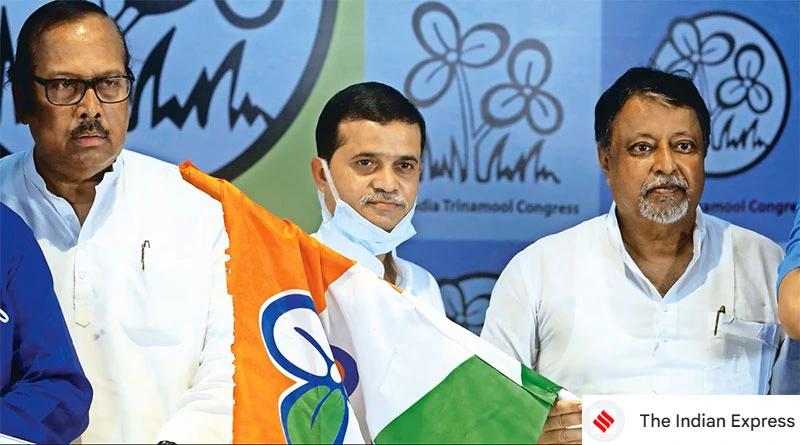
Key Highlights
- The trend of Turncoat Politics had started in 1967. Indian politics has witnessed a new coinage “Aaya Ram, Gaya Ram”
- Turncoat politics was an exception in West Bengal till Mamata Banerjee era.
- TMC revealed the Desperation for no-opposition when the TMC forced the leaders and workers of other parties to strengthen TMC.
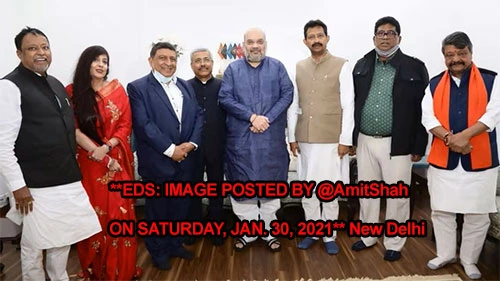
- However, on the eve of 2021 assembly election, we had discovered a gamut of leaders switching from TMC to BJP.
- We may say unhesitatingly that Turncoat Politics is just a betrayal to the voters either for high personal ambition or fear.
Turncoat Politicians: Power Over Ideals
Turncoat politicians have gained significant influence in Indian politics, and naturally, in West Bengal as well. Although this tradition has existed in many other states for a long time, turncoat politics was once considered extremely rare in West Bengal.
Changing parties is a matter of personal freedom. However, here we focus on those politicians who switch parties without resigning from their posts.
Therefore, this growing trend raises serious political and ethical questions.
The History of Turncoat Politics: Aaya Ram, Gaya Ram
To discuss this issue, we must briefly recall history.
The story began in 1967 with Haryana MLA Gaya Lal. In a single day, he changed parties three times. As a result, he became the undisputed pioneer of “Aaya Ram, Gaya Ram” politics.
This triggered massive political instability. In fact, the situation became so volatile—some say deliberately so—that a non-Congress government collapsed, forcing the imposition of President’s Rule.
Later, the crisis deepened. Therefore, during Rajiv Gandhi’s tenure as Prime Minister, Parliament had to step in.
As a result, India introduced the Anti-Defection Law in 1985.
It came through the Tenth Schedule of the Constitution (52nd Amendment). The goal was clear: to curb the unchecked trend of political defections.
However, reality proved different. Many lawmakers may ignore public welfare, but they rarely give up their lust for office. Consequently, they skillfully find legal loopholes to protect their positions and escape the law’s grip.
Turncoat Politics Shakes Bengal
In our state, people long treated turncoat politics as an exception rather than a norm.
The main reason was the Left parties’ strong caution on this issue. They never wanted to abandon their ideology. On the contrary, this excessive ideological rigidity often kept them away from timely political thinking and, at times, even pushed them into trouble.
Still, since West Bengal remained under Left rule for a long period, the culture of turncoat politicians simply did not exist here.
One clarification is important. We are not referring to nationally known political flip-floppers such as Nitish Kumar or Chandrababu Naidu. They did not switch parties; instead, they changed alliances for their own benefit. So, we can not label them as turncoat politics.
For example, Nitish Kumar has done this around nine times.
Mamata Banerjee
When Mamata Banerjee left the Congress in 1997, she was still a Congress MP at the time. Even after forming her own party in 1998, she did not resign from her MP post.
That moment marked the beginning of a trend. Unfortunately, it never stopped.
Today, the situation has become so chaotic that one might need a notebook to remember which party a leader belongs to in the morning and which one by the evening.
Mamata broke the Congress and brought many leaders into her new party. Most of them followed the same path.
Even among turncoat politicians back then, some ideological positioning still existed. Today, that has vanished like camphor.
Thankfully, exams do not ask questions like “Which party’s minister is who today?” Otherwise, students would face serious trouble.
Turncoat Politicians across the whole India
Let us repeat this clearly. Turncoat politics affects states even beyond West Bengal. It has spread, more or less, across India.
A burning example stands right before us, Maharashtra.
However, in West Bengal, the Calcutta High Court took a significant step on 13 November last year. It brought Mukul Roy’s defection under the Anti-Defection Law of India.
Later, in January this year, the Supreme Court stayed that order.
Although this stay order had little practical impact, considering Mukul Roy’s current health condition and the fact that the present Assembly’s term is almost over, it could have sent a strong warning to future turncoat politicians.
Be that as it may, an important question remains. What did the voters gain who elected him from Uttar Krishnanagar?
According to the 2021 Assembly election results, the BJP won 77 seats. Today, how many of those MLAs are actually still in the BJP?
Perhaps even Suvendu Adhikari or Shamik Bhattacharya do not have a clear answer to that question.
Major Political Parties in West Bengal Politics
This trend is not limited to the Trinamool Congress alone. In West Bengal, we often see leaders moving from the Congress to the BJP or the Trinamool Congress.
Even the Congress’s only MLA, Byron Biswas, left the party and joined the Trinamool Congress.
Now, the reverse has also begun. Mausum Benazir Noor has left the Trinamool Congress and returned to the Congress. Notably, she resigned from her post before switching parties.
Similarly, despite facing many allegations, Suvendu Adhikari resigned from all his positions before leaving the Trinamool Congress and joining the BJP.
In the case of the Left, there are “Gaya Rams”, but almost no “Aaya Rams”. Leaders such as Khagen Murmu, Rezzak Mollah, and Ritabrata left the Left and joined the Trinamool Congress.
Personal Ambition or Threats in West Bengal Politics
Across cases, these turncoat politicians repeat the same script, like a broken record. They claim their old party had a suffocating atmosphere and that they joined the new party to work for the people.
In reality, the reasons are often the exact opposite. Either personal gain and ambition or pressure and intimidation from the ruling party drives these defections. Turncoat Politics has come up in West Bengal in different shapes.
It is widely said that Byron Biswas faced serious problems in his own business, which forced him to join the Trinamool Congress. In Balurghat, a group of RSP leaders and workers joined the Trinamool Congress after murder cases were allegedly filed against them.
We all know the story of Anubrata Mondal’s ganja case. And it hardly needs saying that, in every such situation, the ruling party benefits the most.
Turncoat Politics and Moral Collapse
One issue needs serious reflection.
When a person belongs to a party, they are expected to criticise rival parties for political reasons. This is completely normal in politics. Moreover, as time passes, the language of attacks keeps getting uglier.
Now, when that same person joins a new party, how do they feel comfortable? That is hard to understand.
Even more puzzling, these turncoat politicians begin attacking their former party immediately after switching sides—again, for the same party-driven reasons.
How they manage this mental and moral switch is a subject that deserves deep examination.
In effect, principles or ideology no longer exist in Turncoat Politics. Everyone behaves like a robot. They simply do what they are told to do.
Key Questions for Voters before Bengal Election 2026
- Do voters see party switching as a direct betrayal of their mandate?
- Do politicians practice double political standards by flying one party flag inside the Assembly and another in their constituency?
- Should voters treat frequent party switching as a serious ideological shift that questions a leader’s credibility and reliability?
- Do politicians change parties to fulfil personal ambition, escape pressure or fear, or to protect voters’ interests?
- Can any political defection genuinely serve public interest, or does it mostly reflect opportunism and power politics?
- Do you, as a voter, support or reject turncoat politicians in a democracy?💬 Answer in the comment box.
Your opinions matter—please share your views and join the debate.
[…]The Ugly Truth of Turncoat Politics Proven Party loyalty is collapsing. Turncoat politics now dominates Bengal and India, raising serious questions about democracy and ethics. A deep dive into power play[…]