Simple Truth of Bengal Voter List Revision
Jan 20, 2026 - By Ashutosh Roy Current AffairsElection AnalysisPoliticsRegional UpdatesWest Bengal Politics
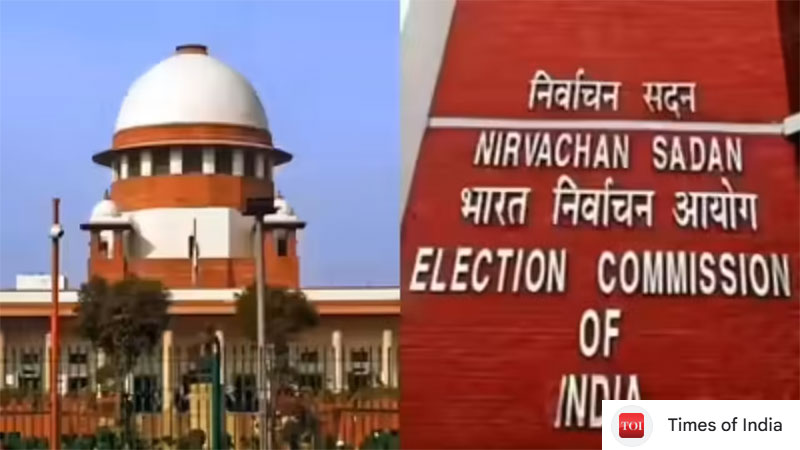
Key Highlights
- Supreme Court intervened in West Bengal voter list revision process
- Lack of transparency triggered public concern and legal scrutiny
- Violence and unrest reported during voter verification activities
- Election Commission issued multiple orders amid rising confusion
- “Logical discrepancy” category remained poorly explained
- Genuine voters fear wrongful exclusion from the voter list
- Credibility of the Election Commission faces serious questions
- Citizens demand a clean, fair, and transparent voter list
Bengal Voter List Revision or Voter Harassment?
The West Bengal voter list Revision has triggered widespread unrest. At present, what is happening does not reflect a healthy democratic or political culture.
First, we are witnessing chaos and violence. In several cases, ruling party , Trinamool Congress MLAs are allegedly leading attacks on video offices. Moreover, reports of government property being destroyed are becoming routine. The Hooligans are vandalizing vehicles, and there are even frequent incidents of arson.
Meanwhile, if you turn on any television channel, you will see disturbing visuals. Fights over the simple Form 7 process, damaged vehicles, and triggered repeated occurrences of street violence. Clearly, Can we call this situation normal by any standard?
On the other hand, the Election Commission is issuing one order after another. However, despite these directives, the entire process lacks transparency. Ultimately, this serious gap in clarity is raising major questions about the credibility of the voter list revision exercise.
Why Did the Supreme Court Step In Bengal voter list Revision?
The West Bengal voter list Revision has reached a stage where the Supreme Court had to intervene. In effect, this intervention appeared like a strong rebuke to the Election Commission.
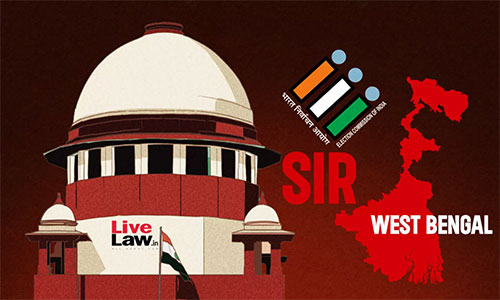
Yesterday, on 19 January, the proceedings in the Supreme Court was not just unusual but it has also deeply unsettled everything. During the Bihar voter list case, the Supreme Court had shown clear respect and confidence in the Election Commission. However, yesterday’s hearing showed a completely opposite picture.
First of all, the Supreme Court did not hesitate to issue one directive after another. This clearly indicated the court’s lack of satisfaction with the paths and proceedings of the election commissions in West Bengal Voter List Revision.
Meanwhile, the Election Commission’s counsel, Surya Kant, offered little resistance. In fact, he hardly objected to any of the observations made by the court.
Standing next to senior lawyers like Kapil Sibal, he appeared visibly inexperienced and ineffective.
More importantly, the petitioners alleged that the Election Commission has flagged 1.36 crore names for logical discrepancies and the number has now come down to 96 lakh. He did not even attempt to clarify or present this crucial correction.
As a result, serious questions have emerged about the Election Commission’s preparedness, transparency, and ability to defend its own data before the highest court of the country.
Now, let us look at what happened in the Supreme Court yesterday. In reality, most of it was completely normal and reasonable.
Is Bengals Voter List Revision Transparent?
First of all, the court asked for transparency, such as publishing the list of 1.36 crore names. This level of transparency is not extraordinary at all. Earlier, the Election Commission itself had displayed the names of 58 lakh voters marked as excluded at every polling booth.
Then why is there so much secrecy in this case? West Bengal voter list Revision is certainly lacking transparency.
Next, there is the issue of voter harassment. The Supreme Court has arranged so that the voters can go to panchayat or block offices to submit documents.
However, only serious cases deserve attending hearings. For example, cases where
- one father allegedly has ten children
- the age gap between father and son is just 15 years
- the man has become a grand father at the age of 40.
Did the Election Commission or its many observers even try to explain this basic logic to the Chief Election Commissioner?
Can the biased DGP maintain law and order?
After this, the situation became even more absurd. The Supreme Court directed the state DGP to maintain law and order. But isn’t that already his basic duty? Should the Supreme Court really have to issue such an order?
Unfortunately, in West Bengal, the person holding this post of DGP is controversial.
There are allegations against him of destroying evidence in the Saradha scam. He is also the same DGP who accompanied the Chief Minister and allegedly threatened officials of another central agency, the ED, during an investigation.
Given this background, the Supreme Court’s expectation that he will act neutrally now seems somewhat surprising.
Bengal Voter List Revision: Role of Election Commission
Now, let us examine the role of the Election Commission in the context of West Bengal voter list revision.
India has seen several Chief Election Commissioners in the past, including Seshan, Chawla, and Quraishi.
Whether loyalty or competence should be the key factor for such a crucial constitutional post is for lawmakers to decide.
However, the primary duty of a Chief Election Commissioner is clear.
Under Article 324 of the Constitution, the Commission enjoys extraordinary powers, and it must use these powers responsibly and fairly.
At times, the Commission may hesitate to take strong action against the ruling party. Even so, it must still reach a level of public trust and institutional credibility.
Is Credibility of Election Commission in a stake?
Importantly, the credibility of the Election Commission does not depend only on the decisions it takes. Instead, it depends largely on how the authorities explain those decisions in public. That is why clear and timely communication is essential.
If the Commission can openly explain its decisions before the public, and do so at the right time, the voters and political parties will see those decisions as far more fair, transparent, and trustworthy.
In this case, we can compare the situation with the role of the judiciary.
In the recent past, nearly 26,000 people lost their jobs. The judges clearly explained their decision in simple and direct language. They said it was not possible to separate the genuine candidates from the tainted ones. Therefore, they had no option but to cancel all appointments.
People may debate this explanation. It may even trigger intense public discussion. However, this explanation itself reflects transparency.
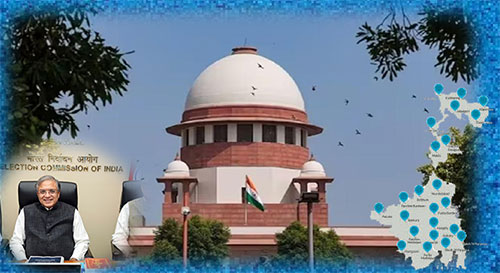
In contrast, during West Bengal’s voter list revision, the Election Commission suddenly decided to exclude validity of Class 10 admit cards for verification. But did the Commission ever publicly explain this decision? So far, they didn’t give any clear justification.
What Does “Logical Discrepancy” Mean?
Similarly, this confusing concept of “logical discrepancy” sounds impressive but remains vague. If the Election Commission had published the list of names flagged under this category from the beginning, would the issue have reached the Supreme Court at all?
Gyanesh Kumar may be a competent officer. Still, why is there so much secrecy and hesitation in his actions? In the current climate, authorities deliberately wrap everything in a layer of unexplained confidentiality.
If the credibility of an institution like the Election Commission itself comes under question, that is deeply alarming. Naturally, this situation only strengthens the ruling party’s critics, who have been protesting against the Special Intensive Revision process from the very start.
What Do Citizens Really Want?
No one knows whether the West Bengal voter list revision will ever be completed, or when authorities will finish it. However, as ordinary citizens, we want only one thing—a transparent and accurate voter list.
First of all, the list should not exclude even a single eligible voter. Every rightful citizen must retain their democratic right to vote. At the same time, not a single ineligible person should be allowed to cast a vote and influence the choice of our elected representatives.
Ultimately, a clean, fair, and transparent voter list is the foundation of democracy. Anything less than that undermines public trust and weakens the electoral process itself.
[…]Simple Truth of Bengal Voter List Revision Uncover the shocking reality behind West Bengal voter list revision. Transparency, Supreme Court intervention, and democracy at stake. Read the full analysis.[…]
[…]Simple Truth of Bengal Voter List Revision Uncover the shocking reality behind West Bengal voter list revision. Transparency, Supreme Court intervention, and democracy at stake. Read the full analysis.[…]