Supreme Court’s Big SIR Shock: Jaw-dropping
Feb 20, 2026 - By Ashutosh Roy Current AffairsElection AnalysisPoliticsRegional UpdatesWest Bengal Politics
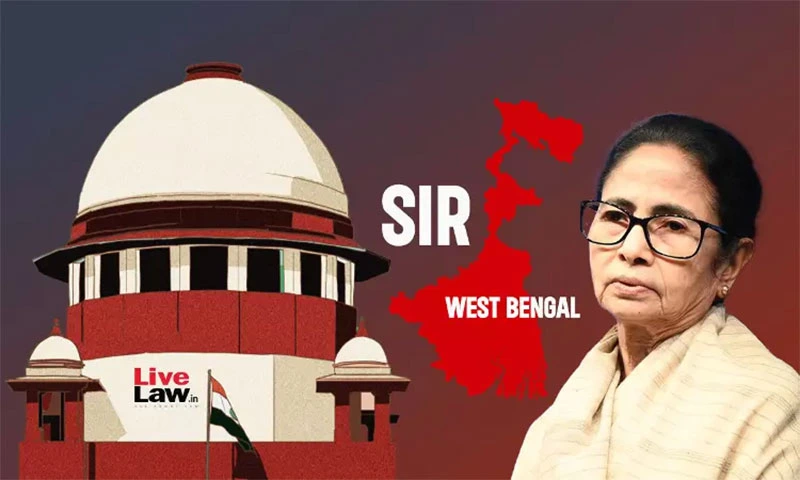
Key Highlights:
- Supreme Court’s Big SIR Shock: The apex court stepped in directly in the Special Intensive Revision (SIR) case, calling it also a serious constitutional matter.
- Judicial Oversight Ordered: The Court directed the appointment of judicial officers to handle claims and objections in the SIR process.
- Trust Deficit Observed: Judges flagged a clear lack of coordination between the State Government and the Election Commission.
- Focus on Voter Roll Integrity: The Court stressed that electoral roll accuracy is crucial ahead of upcoming elections.
- Political Stakes High: The case has triggered intense political debate in West Bengal over alleged irregularities in voter list revision.
- Neutral Adjudication Mechanism: The Supreme Court emphasized the need for an impartial, transparent system to resolve disputes.
- Potential National Impact: The ruling may influence how SIR exercises are conducted in other states.
- Next Hearing Crucial: Further directions from the Court could reshape the entire SIR framework.
Supreme Court’s Big SIR Shock:: Key Update on the SIR Case in India
New Delhi, Feb 20, 2026 :
The Supreme Court of India delivered a significant order today. The case is regarding the ongoing Special Intensive Revision (SIR) litigation involving West Bengal’s electoral roll revision process. Consequently, the Big SIR Shock has erupted political slugfests.
The apex court stepped in to oversee and streamline the stalled SIR exercise after prolonged disagreements between the State Government of West Bengal and the Election Commission of India (ECI).
However, today’s Big SIR Shock in Supreme Court does not depict a glittering image of the West Bengal Officers. Rather, it points at their inefficiency.
What Happened in Court Today?
On Friday, the Supreme Court directed the Calcutta High Court to appoint judicial officers, including serving and retired judges from the district judiciary, to manage critical aspects of the SIR exercise, such as handling claims and objections submitted by citizens.
This intervention came amid what the court described as an “unfortunate blame game” and a trust deficit between constitutional authorities namely the West Bengal government and the Election Commission. The State Government has already submitted the list of 8505 Officers as per the court order. But Election Commission has found a lot of officers not belonging from Group B Cadre.
A bench led by Chief Justice of India Surya Kant, along with Justices Joymalya Bagchi and Vipul M. Pancholi, stressed that there was no other viable option left to efficiently complete the revision of voter lists.
The judges remained concerned especially given the sensitive and large-scale nature of the SIR process in the politically important state.
Why Judicial Oversight Was Ordered
The Supreme Court observed that the fight between the Bengal Government and ECI has stuck the SIR process at the stage of adjudication of claims and objections. Additionally, this SIR Process involves verifying millions of voter records and resolving discrepancies,
According to the court, the inability of either the state or the ECI to provide a satisfactory and neutral mechanism for reviewing these objections necessitated judicial involvement.
Nevertheless, the SIR exercise in West Bengal has been controversial, with political and legal tensions escalating as the state approaches its elections. The Big SIR Shock came at a time, when the EC has targeted 28 February as the publication of Final Voter List.
ECI has flagged thousands of voter names with discrepancies require careful review to ensure the inclusion of eligible voters exclusion of ineligible voters.
The Supreme Court’s order aims to establish a quasi-judicial framework where impartial judicial officers can decide these issues fairly.
Broader Context of the SIR Litigation
The SIR controversy first gained national attention amid similar debates in other states like Bihar and Assam, where petitions regarding special voter roll revisions have also appeared before the Supreme Court.
On the other hand, in Assam, the apex court recently dismissed a plea seeking a special intensive revision, noting that the final electoral roll had already been published and the petition had become infructuous.
In West Bengal, SIR has dominated headlines for weeks, with the state’s Chief Minister Mamata Banerjee seeking to appear in person before the Supreme Court to challenge certain aspects of how the SIR exercise is being conducted.
However, her active role in arguing the case underscored the political stakes involved.
What This Means Going Forward
Today’s Supreme Court order is likely to accelerate the resolution of disputes in the SIR process by involving judicial officers who can make binding decisions on individual claims.
This judicial oversight may help restore public confidence and legitimacy in the electoral roll revision, especially as elections approach and voter list integrity becomes paramount.
As the situation develops further, additional court directions and procedural clarifications may follow, shaping how large-scale electoral roll revisions are managed across India.
People Also Ask (PAA) – Big SIR Shock Case
1. What is the Big SIR Shock case?
The Big SIR Shock refers to the latest Supreme Court intervention in the Special Intensive Revision (SIR) of electoral rolls. The Court issued key directions to ensure transparency and fairness in the voter list revision process.
2. Why did the Supreme Court step in?
The Supreme Court stepped in after observing disputes and a lack of coordination between the State Government and the Election Commission over how claims and objections were being handled during the SIR process.
3. What is Special Intensive Revision (SIR)?
Special Intensive Revision (SIR) is a detailed verification process of electoral rolls. Authorities review voter details, correct errors, remove ineligible names, and add eligible voters to maintain accurate voter lists.
4. What did the Supreme Court order?
The Court directed the appointment of judicial officers to independently handle claims and objections. This move aims to create a neutral and transparent mechanism for resolving disputes.
5. How does this affect upcoming elections?
The order may significantly impact upcoming elections by ensuring that voter lists are accurate and legally sound. Consequently, a transparent revision process strengthens electoral integrity.
6. Why is the SIR case politically sensitive?
The SIR process directly affects voter eligibility. As a result, any errors or alleged irregularities can influence election outcomes, making the case politically high-stakes.
7. What happens next in the SIR case?
The Supreme Court is expected to monitor compliance with its order. Further hearings may clarify timelines and procedures for completing the SIR exercise.
[…]Supreme Court’s Big SIR Shock: Jaw-dropping Big SIR Shock in Supreme Court! A dramatic hearing reshapes the SIR case in West Bengal, raising crucial questions on electoral rolls and state powers.[…]
[…]Supreme Court’s Big SIR Shock: Jaw-dropping Big SIR Shock in Supreme Court! A dramatic hearing reshapes the SIR case in West Bengal, raising crucial questions on electoral rolls and state powers.[…]
[…]Supreme Court’s Big SIR Shock: Jaw-dropping Big SIR Shock in Supreme Court! A dramatic hearing reshapes the SIR case in West Bengal, raising crucial questions on electoral rolls and state powers.[…]
[…]Supreme Court’s Big SIR Shock: Jaw-dropping Big SIR Shock in Supreme Court! A dramatic hearing reshapes the SIR case in West Bengal, raising crucial questions on electoral rolls and state powers.[…]
[…]Supreme Court’s Big SIR Shock: Jaw-dropping Big SIR Shock in Supreme Court! A dramatic hearing reshapes the SIR case in West Bengal, raising crucial questions on electoral rolls and state powers.[…]
[…]Supreme Court’s Big SIR Shock: Jaw-dropping Big SIR Shock in Supreme Court! A dramatic hearing reshapes the SIR case in West Bengal, raising crucial questions on electoral rolls and state powers.[…]
[…]Supreme Court’s Big SIR Shock: Jaw-dropping Big SIR Shock in Supreme Court! A dramatic hearing reshapes the SIR case in West Bengal, raising crucial questions on electoral rolls and state powers.[…]