Pratikur Quits: Unlock CPM's Hidden crisis
Feb 21, 2026 - By Ashutosh Roy Current AffairsPolitics
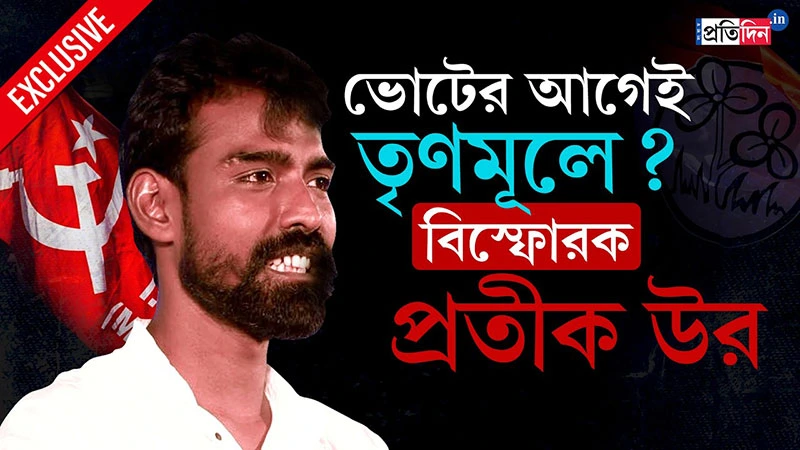
Key Highlights
- Pratikur Quits CPI(M). He left on February 16, 2026, triggering major political debate in West Bengal.
- He was a rising young leader in the Communist Party of India (Marxist) and held multiple key positions, including State Committee member and former SFI national leader.
- In Addition, he openly criticized State Secretary Mohammed Salim over a controversial political meeting.
- Rahman also claimed he could not align with the district and state leadership’s strategy and accused the party of cornering him.
- Especially, he demanded an internal probe into how his resignation letter was leaked to the media.
- Reports suggest mediation attempts by Biman Bose failed to resolve the crisis.
- Speculation intensified after Kunal Ghosh publicly displayed his resignation letter.
- Strong political buzz indicates he may join the All India Trinamool Congress, though he has not officially confirmed it.
- If he joins TMC, the party could strengthen its minority outreach in districts like Malda, Murshidabad, and Nadia.
- Critics argue that moving from CPI(M) to TMC may raise serious questions about ideological consistency and internal democracy.
Pratikur Quits CPI(M): Why?
Pratikur Rahman left the CPI(M) on February 16, 2026. But who is Pratikur Rahmana and Why Pratikur quits CPI(M) ?
Pratikur Rahman was one of the young faces rising within the Communist Party of India (Marxist). Additionally, many saw him as part of the party’s new generation of leaders. He steadily moved to the front line of state politics.
What Roles Did Pratikur Rahman Hold?
He handled several important responsibilities. Therefore, it is wrong to say that the party ignored him.
Here are his key roles:
- Member of the State Committee of the CPI(M)
- National Vice President of Students’ Federation of India (SFI)
- CPI(M) Lok Sabha candidate in 2024 against Abhishek Banerjee
- Member of the Khet Mazdoor Samiti (Peasants’ Labour Association)
- Assembly candidate in the 2021 West Bengal elections
Clearly, the CPI(M) gave him significant importance, in spite of that Pratikur Quits CPI(M) has become a headline grabber.
Was His Loyalty Ever Questioned?
No. His ideology and dedication were never questioned. In fact, many respected his fighting spirit and grassroots strength.
However, politics in West Bengal changed rapidly. Despite, the aggressive expansion of All India Trinamool Congress created pressure across districts, he was a strong organizer. In particular, Abhishek Banerjee’s so-called “Diamond Harbour Model” reshaped the political landscape in several rural areas.
Pratikur Rahman came from one such village. In that region, the CPI(M) struggled to keep its organizational base active. As a result, maintaining strong party presence became difficult.
Even then, no one doubted his fighting attitude. He stayed grounded and worked closely with local people.
What Changed Inside the CPI(M)?
Only one major change took place in the party leadership.
In 2022, Mohammed Salim became the West Bengal State Secretary, replacing Surjya Kanta Mishra.
Therefore, the leadership transition marked a new phase in the party’s state politics.
This political shift now adds fresh questions about Pratikur Rahman’s future path and the CPI(M)’s strategy in West Bengal.
What Are Pratikur Rahman’s Main Complaints?
Now, let us examine the exact nature of allegations triggered to Partikur Quits CPI(M).
- Criticism of MD Salim: Rahman openly criticized Mohammed Salim, the West Bengal State Secretary of the Communist Party of India (Marxist) as Gabbar Singh. He objected to Salim’s meeting with Humayun Kabir.
- No Compromise on Ideology: Rahman made his position clear. He said a true communist can never compromise on principles and ideology. Therefore, he argued that maintaining ideological purity is more important than political adjustment.
- Growing Disconnect with Leadership: Rahman stated that recently he could not “align himself” with the views and strategies of the district and state leadership. As a result, he felt increasingly uncomfortable within the party structure.
- Allegation of Being Cornered: Rahman claimed that the party “cornered” him because he spoke openly about his principles. In other words, he believed internal dissent led to organizational isolation. That triggered Pratikur Quits CPI(M).
- Feeling Restricted at the District Level: After moving from the student wing, Students’ Federation of India (SFI), to the main party, he received responsibility in the . While working at the district level in South 24 Parganas, he felt “restricted” while working in agricultural labour front.
- Rahaman and Srijan Bhattacharya sidelined in Bangla Bachao Yatra: Rahaman felt that the leadership, specifically State Secretary Md. Salim, intentionally sidelined this Srijan and him (SFI Duo) during the high-profile Bangla Banchao Yatra.
- Demand for Internal Inquiry: Finally, Rahman raised a serious procedural question. He asked how his resignation letter, which he addressed to the State Secretary, became public. Therefore, he demanded that the party form a commission to investigate the leak.
These allegations now open a broader debate about internal democracy, ideological discipline, and leadership strategy within the CPI(M).
Is the allowance of the whole timers are sufficient?
We may mention another different but highly relevant point over here. The allowance of the party whole timers are too less. If they don’t have a supporting income source, it’s really difficult for them in today’s market challenges. Reliable sources reveal that Pratikur used to receive Rs. 7500 only as monthly allowance.
Reaction of CPI(M) State committee
| Action | Detailed Steps |
|---|---|
| Wait and Watch |
|
| Biman Bose as a Damage Controller |
|
| Md. Salim’s Response |
|
What Could Be the Impact on the CPI(M)?
If the situation turns toward a more centralized or “strongman-style” leadership approach, several political consequences may follow.
1.Youth Leaders May Leave the Party
Many young activists from the Students’ Federation of India (SFI) and the Democratic Youth Federation of India (DYFI) already feel pressure from older leadership structures. They also may try to raise the question, why Pratikur Quits CPI(M).
If they believe their voices are being suppressed, more young leaders may exit the Communist Party of India (Marxist). So, the CPI(M) will become an old age home.
As a result, the party’s generational transition could weaken.
2. Advantage for the Trinamool Congress
If the CPI(M) appears internally divided, the All India Trinamool Congress may gain an advantage in the political narrative.
In politics, perception matters. Therefore, even minor internal disagreements can become major public issues.
The Trinamool Congress could project the CPI(M) as unstable or conflicted. Consequently, this may strengthen its position in propaganda and public messaging battles.
3. Deepening Internal Factionalism
The party headquarters at Alimuddin Street could see sharper divisions.
Two internal tendencies may clash more openly:
- The “ideological purists,” who prioritize strict adherence to principles
- The “strategic pragmatists,” who support tactical flexibility
If this divide deepens, decision-making may become slower and more contentious.
Therefore, the long-term impact will depend on how the CPI(M) leadership handles dissent, internal democracy, and generational change.
If managed carefully, the party can stabilize itself. However, if tensions escalate, organizational strain may grow in the coming months.
Is Pratikur Rahman Likely to Join the Trinamool Congress?
Is it execution of well planned script now?
There is strong speculation that Pratikur Rahman may join the All India Trinamool Congress (TMC).
Reports suggest that Biman Bose, Chairman of the Left Front, tried to mediate. However, his efforts reportedly failed. As a result, speculation grew stronger.
Although Rahman has not publicly confirmed his next move, the political buzz intensified after Kunal Ghosh displayed his resignation letter at a press conference. Moreover, he appeared for an interview on 20 February with Sumon Dey at ABP Ananda. He has almost confirmed.
Reports reveal that Pratikur has stayed away from all party activities for the last two months. Meanwhile, sources claim that I-PACK has already taken him under its control.
Therefore, the entire development now appears to be part of a well-planned script.
Image Boost Among Minority Voters
Now the key question is: What could the Trinamool Congress gain if he joins?
The TMC already has several minority leaders. However, adding a former CPI(M) face like Pratikur Rahman could refresh its public image.
If projected strategically, his entry could strengthen the party’s credibility among minority voters who still have emotional or ideological ties with the Left.
Therefore, the move may improve perception and expand outreach.
Expansion Beyond Diamond Harbour
Even if Rahman does not significantly influence politics in Diamond Harbour, his value may lie elsewhere.
If the TMC positions him as a prominent face in districts like:
- Malda
- Murshidabad
- Nadia
then the party could gain organizational depth in these politically sensitive regions.
In these districts, minority voters play a crucial role. As a result, a recognizable former Left leader could help the TMC consolidate support.
Strategic Advantage in Narrative Politics
Moreover, his switch would allow the TMC to send a broader political message:
- The Left is losing young leaders.
- Ideological rigidity is pushing cadres away.
- The TMC remains the dominant and expanding force in West Bengal politics.
Consequently, beyond electoral arithmetic, the psychological impact could be significant.
Ultimately, whether Pratikur Rahman formally joins the TMC or not, the speculation itself has already created political momentum.
Is Pratikur Rahman Jumping from the Frying Pan into the Fire?
Critics argue that Pratikur Rahman may be taking a bigger political risk.
They say that within the Communist Party of India (Marxist), he at least had some internal democratic space. He could openly disagree with the leadership. He could question strategy. Even if he felt cornered, there was still a structured party forum.
However, the situation may be very different inside the All India Trinamool Congress.
Is the TMC a Centralized Leadership Model?
Many political observers describe the TMC as highly centralized.
They argue that real authority rests mainly with:
- Mamata Banerjee (1.0)
- Abhishek Banerjee (0.5)
In this view, internal dissent rarely becomes public. Strong opposition within the party structure is uncommon. Therefore, space for ideological disagreement may be limited.
As a result, critics believe Rahman could lose the limited democratic platform he once had.
A Bigger Question: What About Ideological Consistency?
Rahman strongly criticized Mohammed Salim. He claimed that a communist cannot compromise on ideology and principles. That was perhaps the key reason behind Pratikur Quits.
That statement now raises a larger political question.
If he joins the TMC, will he apply the same standard to himself? Will he evaluate whether the new platform fully aligns with his ideological commitments?
In politics, shifting parties is not uncommon. However, ideological positioning matters, especially for leaders who publicly emphasize principle over pragmatism.
The Political Mirror Test
Ultimately, the debate is no longer just about organizational conflict. It is about political consistency. Pratikur Quits CPI(M) may sound proper, but when he joins Trinamool Congress, it will raise questions.
If Rahman changes camps, critics may argue that he moved from internal ideological disagreement to a more centralized power structure.
Therefore, the real test will not be about strategy alone. It will be about whether his actions match his earlier words on ideology and compromise.
The coming weeks may reveal whether this move strengthens his political career or challenges his credibility.
Frequently Asked Questions (FAQ)
Why did Pratikur Quits CPI(M)?
Pratikur Rahman said he could not align with the district and state leadership’s strategy within the Communist Party of India (Marxist). He also alleged that the party cornered him for openly expressing his ideological views.
What triggered his public criticism?
He openly criticized State Secretary Mohammed Salim for meeting suspended All India Trinamool Congress MLA Humayun Kabir. He questioned whether such engagement aligned with party ideology.
Did senior Left leaders try to stop his exit?
Reports suggest that Biman Bose attempted mediation. However, those efforts reportedly failed to resolve the disagreement.
Is Pratikur Rahman joining the Trinamool Congress?
There is strong political speculation that he may join the Trinamool Congress. However, he has not officially confirmed his next move.
How could the Trinamool Congress benefit if he joins?
If he joins the TMC, the party may strengthen its minority outreach, especially in districts like Malda, Murshidabad, and Nadia. It may also use his exit to project internal divisions within the CPI(M).
What larger political debate has this triggered?
His resignation has sparked debate about ideological consistency, internal democracy, and leadership style within both the CPI(M) and the TMC.