Special Bengal Polls 2026: Why & How?
Apr 29, 2026 - By Ashutosh Roy Current AffairsElection AnalysisPoliticsRegional UpdatesWest Bengal Politics
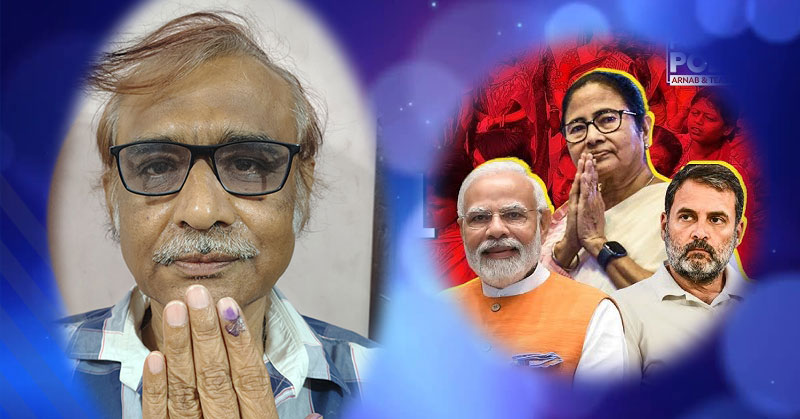
Special Bengal Polls 2026: Is It A Silent Revolution in Democracy?
Electoral violence has long etched deep scars onto the landscape of West Bengal’s political history. Furthermore, booth jamming and overwhelming party muscle power have historically dominated the voting process. However, the Special Bengal Polls 2026 has emerged as a startling departure from this notorious tradition.
Citizens may debate whether a silent revolution or sheer fear drove this change. Nevertheless, it remains undeniable that West Bengal has moved through an amazing election cycle.
This experience felt fundamentally different from anything seen in the last three decades.
Long-time residents often remember the standard Bengal style of voting as a chaotic ordeal. Consequently, they viewed this year’s transformation as nothing short of miraculous.
Usually, voters must navigate a gauntlet of political booth camps where workers scrutinize every face. In contrast, a powerful silence filled the air this year in the best possible way.
The Special Bengal Polls 2026 proved that the state machinery can truly transform the lives of average citizens when it decides to uphold the law.
What About the History of Electoral Violence in West Bengal?
| Year | Election Type | Nature of Violence | Deaths |
|---|---|---|---|
| 2018 | Panchayat Elections | Widespread uncontested seats, nomination filing obstruction, clashes, political killings | 15+ |
| 2019 | Lok Sabha | Clashes between party workers, booth capturing attempts, intimidation | 10+ |
| 2021 | Assembly Election | Pre-poll intimidation, polling day violence, post-poll revenge attacks | 50+ |
| 2023 | Panchayat Elections | Booth capturing, ballot box destruction, armed clashes | 20+ |
| 2024 | Lok Sabha | Pre-poll clashes, strong central force deployment limited polling-day violence | 5–10 |
| *Sources from Various News Reports and Websites | |||
Is the Booth Camp Culture Finally Over?
One of the most striking features of this election was the total absence of the usual scenes of clutter and intimidation. Historically, different political parties set up temporary shelters or camps just outside the restricted zone. Hence, these spots were hubs for gathering crowds. They often used to monitor who was coming to vote and who was staying away.
- Strict Adherence to the 100-Meter Rule: This year, everyone treated the 100-meter restricted zone as sacred. There were no groups of people chatting or crowding near the booths. The perimeter was clear, allowing voters to enter with a sense of dignity rather than dread.
- Zero Tolerance for Loitering: I noticed a man attempt to drop his wife off at the gate via motorbike. Almost instantly, security forces signaled him to move away without delay. The message was clear: drop, go, and do not linger.
- Swift Management of Transport: Even an old couple arriving by rickshaw faced the same level of scrutiny. As soon as they stepped off the vehicle, the Jawan on duty politely but firmly asked the rickshaw puller to vacate the area. There was no room for the usual hangers-on who often serve as the eyes and ears of local political units.
Why is the Security Management Different This Time?
In previous years, the voters used to often criticize the role of central forces was as being static or passive. But during the Special Bengal Polls 2026, they were the proactive masters of the territory. The discipline of the queue was a testament to their presence.
In addition, there was no jumping the line, no special entries for local influential figures, and no shouting matches.
Moreover, the central force jawans were exceptionally alert. They managed the flow of voters one by one, ensuring that the polling room never became crowded or chaotic.
Furthermore, their conduct toward the vulnerable was commendable. They showed significant caution and empathy in giving priorities to senior citizens and the physically challenged, ensuring they didn’t have to wait in the heat.
Technologically, the surveillance was tighter than ever. Webcams were supposedly working in every corner of the sensitive zones.
In the past, we often heard about technical glitches during elections. In contrast, the response teams acted with such sheer promptness this time that they proved the digital eyes were indeed watching.
Why Are The BLOs Present in The Booth?
The Election Commission laid extensive administrative groundwork months in advance to ensure the success of the Special Bengal Polls 2026. Additionally, the Special Intensive Revision (SIR) process was not just a bureaucratic exercise this time; it was a genuine field operation.
- Personal Identification: Because the Booth Level Officers (BLOs) and officials had met most voters personally during the SIR process, identifying voters by face became significantly easier. This reduced the chances of proxy voting or impersonation, which has been a plague in Bengal for years.
- Cross-Checking Mechanisms: Inside the booth, the polling officers announced the names of the voters loudly and clearly. The agents of various political parties were diligently cross-checking these names against their lists.
- Digital Transparency: The integration of real-time data and physical verification meant that the ghost voters of the past found no place in the system.
Even the weather seemed to favor this democratic shift. A cool, comfortable breeze replaced the usual sweltering heat of the Bengal summer.
A light drizzling of rain served to soothe the nerves of the people standing in line, making the atmosphere feel more like a civic festival than a high-stakes battle.
How Did Early Voter Turnout Hit Record Highs?
We must ask ourselves: what changed the psychology of the troublemakers? Many point to the viral videos and the reputation of the encounter-specialist observer, Ajay Pal Sharma.
Whether it was the fear of his specific brand of administration or the Election Commission’s preset examples of strict action in the first phase, a sense of accountability finally permeated the air.
In our specific booth, the turnout hit almost 46% before 11:00 AM. This is a staggering number. When people feel safe, they do not hesitate to vote early.
The fear of post-poll violence seemed to be overshadowed by the immediate confidence provided by the security arrangements.
However, this success raises a vital and somewhat painful question: Why did the Commission fail to conduct such elections in previous years?
Why has West Bengal remained notorious for casualties, bloodshed, and booth jamming for decades? If this level of peace was possible in 2026, it was certainly possible in 2021, 2016, or 2011.
The Special nature of this election is a victory of democracy, but it is also an indictment of past failures.
What About the Voters Left in Adjudication?
Despite the overall success, the Special Bengal Polls 2026 was not without its victims.
We must show our deepest sympathy for those genuine, long-term voters who found themselves on the adjudication lists and were unable to cast their ballots.
For a citizen, there is no greater loss than the loss of their constitutional right to vote.
The complications arose from the pivotal and sometimes faulty roles of the BLOs, AEROs, EROs, and DEOs. Somewhere in the transition between paper and digital, or perhaps through administrative oversight during the intensive revision, thousands of names were caught in a legal limbo.
- The Innocent Voter: Under any circumstance, the voters are not at fault. They have lived in their houses for decades; they have their ID cards, yet they were turned away.
- Administrative Accountability: It is easy for an official to say, You can vote next time, but that ignores the fact that this specific election is a unique moment in history.
- A Plea to the Judiciary: There is a growing demand for the Honourable Supreme Court to take punitive action against the officers who were at fault for these deletions. If there is no penalty for disenfranchising a citizen, the mistake will repeat itself.
Is it A Trendsetter for the Future?
As I returned home and turned on the television, I did see reports of a few stray incidents. In a state as large and politically volatile as West Bengal, expecting zero friction is perhaps unrealistic. However, the difference this time was the promptness of action.
In previous years, incidents would drag on for hours; this time, security forces arrived within minutes to neutralize any tension.
The Special Bengal Polls 2026 should not be a one-time event. It must remain a trendsetter for this jinx-ridden state.
We have finally seen that violence does not have to be a routine affair. When the administration, the security forces, and the commission work in a synchronized manner, democracy actually wins.
Ultimately, we call this the victory of the people. The silence at the booths wasn’t just a lack of noise; it was the sound of a system finally working the way it was always intended to work. Let this be the new normal for West Bengal.
Updates:
- 1PM: The Voter Turnout is 61.11%
- 3PM: The Polling Percentage has crossed 78.68 .
- 5PM: The Voter Turnout is 89.99%
- 6PM: Voter Turnout Reached 91.91%
10 Critical Takeaways:
- End of Booth Camps: Political party stalls, a traditional fixture of Bengal elections, were completely cleared within the strict 100-meter radius.
- A Silent Revolution: Voters experienced a calm, intimidation-free environment, which many are calling a transformative shift in Bengal’s democratic history.
- The Ajay Sharma Effect: The deployment of UP’s encounter specialist IPS Ajay Pal Sharma as a police observer reportedly deterred local troublemakers and muscle power.
- Record Early Turnout: Enhanced safety measures led to massive participation, with some booths recording nearly 46% turnout before 11:00 AM.
- Central Force Vigilance: Jawans maintained a disciplined one-by-one entry system and provided priority access for senior citizens.
- Strict Loitering Ban: Security forces ensured the immediate dispersal of anyone dropping off voters or lingering near polling centers to prevent crowding.
- SIR Process Success: The Special Intensive Revision (SIR) allowed officials to identify voters by face, drastically reducing the risk of proxy voting.
- Technological Oversight: Functional webcams and live monitoring by the Election Commission ensured real-time transparency and a swift response to stray incidents.
- Adjudication List Controversy: Despite the success, many genuine voters were disenfranchised due to administrative errors in the adjudication lists, sparking calls for judicial action.
- A New Blueprint: The 2026 polls proved that peaceful elections in West Bengal are possible, setting a benchmark for accountability for future BLOs, EROs, and DEOs.
People Also Ask (FAQs)
1. Why was there no violence reported in most booths?
The strict deployment of central forces and the removal of political party camps within 100 meters of the booth prevented traditional booth jamming and intimidation.
2. Can voters whose names were deleted still vote?
If a name was in the adjudication list and not cleared by the appellate tribunal before the deadline, those voters were unfortunately unable to exercise their rights this time.
3. What made the 2026 election special?
The combination of advanced face-identification (from the SIR process), active webcam monitoring, and the prompt action of observers like Ajay Sharma created a high-surveillance environment that deterred casualties and bloodshed.
[…]Special Bengal Polls 2026: Why & How? Discover how the Special Bengal Polls 2026 became a silent revolution with record-breaking peace, strict security, and a victory for democracy in West Bengal.[…]