Bengal 2026 Phase 2: Massive Security Blitz
Apr 28, 2026 - By Ashutosh Roy Current AffairsElection AnalysisPoliticsRegional UpdatesWest Bengal Politics
Abstract: Bengal Elections 2026 Phase 2 Security Overview
As West Bengal approaches the critical Bengal 2026 Phase 2 on April 29th, the Election Commission of India (ECI) has unleashed an unprecedented Iron Shield to ensure a violence-free mandate.
Moving into the state’s most volatile zones, including Kolkata, North & South 24 Parganas, and Nadia, the ECI has shifted into a strict zero-tolerance mode.
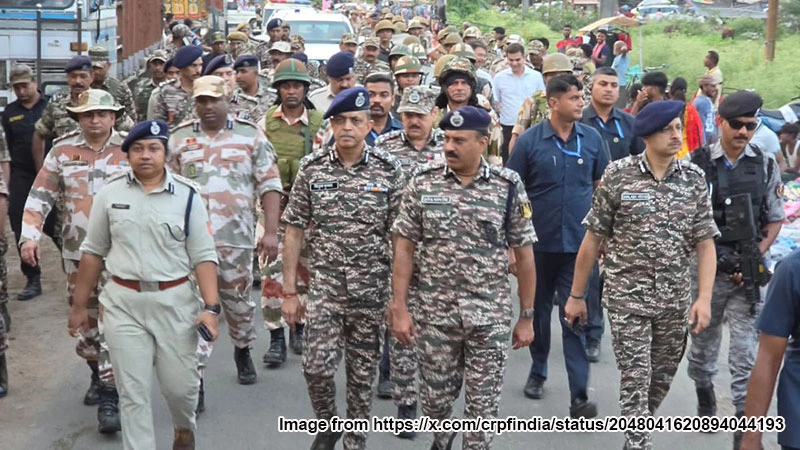
This phase sees a massive deployment of 2,321 companies of CAPF, spearheaded by personal route marches from the Director General to instill voter confidence.
For the first time, the security apparatus integrates military-grade surveillance, featuring high-tech drones and armored vehicles patrolling narrow urban lanes to dismantle traditional booth-jamming tactics.
While the heavy military presence and extended dry-day mandates have sparked debates over panic vs. peace, the strategy aims to build on the success of Phase 1, which recorded zero fatalities.
This article explores whether these splendid security measures can finally break Bengal’s historical cycle of poll-related violence and protect the democratic rights of voters in 142 crucial seats.
Is the Security Tightened for Bengal 2026 Phase 2 Polls?
Should we call the security initiatives to be splendid or just unprecedented? The Bengal 2026 Phase 2 elections are just around the corner (29th April 2026), and the atmosphere is electric.
However, it isn’t just the political rallies making noise this time. The streets are buzzing with the sound of heavy boots and military engines.
Is ECI taking a Zero-tolerance Stand?
The Election Commission of India (ECI) has shifted gears into a zero-tolerance mode. Furthermore, they are deploying a security blanket so thick that the state has never seen anything like it in its history.
Military vehicles are patrolling the narrow lanes of Kolkata. Simultaneously, the Director General (DG) of the CAPF is personally leading route marches to send a clear message: the law is in charge.
This massive show of force aims to instill confidence, yet some wonder if it is triggering a sense of panic among the common people.
Let the Bengal Elections 2026 be a landmark in the history of West Bengal Political Landscape.
What are the Key Poll-Violence Areas?
| Year | Election | Nature of Violence |
|---|---|---|
| 2018 | Panchayat | High rural violence, especially in North & South 24 Parganas and Nadia; nomination filing clashes, booth capture, and intimidation dominated. Howrah–Hooghly saw limited incidents. |
| 2019 | Lok Sabha | Moderate to high intensity, with spread into semi-urban belts like North 24 Parganas and Howrah; poll-day clashes, crude bomb use, and political confrontations reported; |
| 2021 | Assembly | High and widespread tension, especially pre-poll; bomb attacks and intimidation in South & North 24 Parganas, booth-level clashes in Kolkata; violence more controlled on poll day due to heavy central forces but still present. |
| 2023 | Panchayat | Very high intensity (peak for poll-day violence); widespread clashes, deaths, and booth capture in rural districts (South 24 Parganas, Nadia, North 24 Parganas); urban areas like Kolkata relatively calm. |
| 2024 | Lok Sabha | Moderate but persistent violence; pre-poll clashes in South 24 Parganas, poll-day tension and repolling in North 24 Parganas; isolated incidents in Kolkata and Howrah; overall lower than Panchayat years but pattern continues. |
Why is there an Iron Shield for Bengal 2026 Phase 2?
The primary reason for this unprecedented security is the ECI’s commitment to building on the success of Phase 1. The first phase of the Bengal 2026 Phase 2 elections remained relatively peaceful.
However, the second phase moves into the most politically volatile zones in the state. Specifically, regions like Kolkata, North and South 24 Parganas, and Nadia are under the spotlight.
This is because they contain seats that the Election Commission historically marks as super-sensitive.
We have already noticed the buses to ply to the border areas with army forces.
What are the Key Preventive Measures of ECI?
To ensure every voter feels safe, the Election Commission has implemented several high-intensity measures:
- Preventive Arrests: Reports reveal that more than the police has arrested more than 1000 suspected people with proven track record.
- Massive Troop Deployment: Over 2,321 companies of Central Armed Police Forces (CAPF) are flooding the polling zones.
- Military-Grade Surveillance: For the first time, high-tech drones are monitoring sensitive pockets to prevent illegal gatherings.
- Area Domination: Specialized military vehicles and Quick Response Teams (QRTs) are stationed every few kilometers to provide an immediate crackdown on any unrest.
- Top-Level Leadership: When the DG of the CAPF steps onto the ground for a route march, it signals to local miscreants that the highest levels of Indian security are watching.
Does heavy security create panic or peace?
This is the big question on everyone’s mind before the 2nd phase of Bengal Elections 2026. For a state that has historically seen poll-related clashes, the sight of armored vehicles can be double-edged.
What Should be The Path to Peaceful Voting?
For the average voter, especially those in rural or sensitive booths, the presence of the CAPF is a relief. It acts as a psychological barrier against intimidation. When a voter sees a route march in their neighborhood, they know that the booth jamming tactics of the past will not work.
This confidence-building measure is designed to increase voter turnout by ensuring that the only power on election day is the power of the finger on the EVM.
Is there Any Risk of Panic?
On the other hand, the presence of military cars and thousands of armed personnel can feel overwhelming. Some critics argue that it turns a festival of democracy into a security operation. However, the ECI maintains that a few days of intense policing is a small price to pay for a violence-free mandate.
It was also shocking to the people when the ECI announced the closure of alcohol shops before 96 hours of poll instead of routine 48 hours. Ultimately, people have accepted that as they also want a violence-free poll.
What makes the 2nd Phase so critical?
The second phase is often the deciding factor in Bengal elections 2026. With nearly 142 seats at stake, the pressure is immense. The EC is particularly focused on:
- Urban Congestion: Navigating the dense lanes of Kolkata and Barrackpore requires more than just foot patrols; it requires specialized bike squads.
- Historical Data: Security forces are focusing on booths that reported violence in 2021.
- Preventing Post-Poll Violence: Unlike previous years, the force will not leave immediately after the votes are cast. They will remain to ensure safety during the transition period.
What is the Post-Poll Violence Record in West Bengal?
| Year | Election Type | Geographic Spread | Key Features |
|---|---|---|---|
| 2018 | Panchayat | Rural districts (North & South 24 Parganas, Murshidabad, etc.) | Post-result retaliation, opposition suppression in rural areas |
| 2019 | Lok Sabha | Semi-urban & industrial belts (Bhatpara, Barrackpore) | Expansion of violence into urban-industrial zones |
| 2021 | Assembly | Statewide | Largest scale violence; national attention; CBI/NHRC involvement |
| 2023 | Panchayat | Predominantly rural (Birbhum, Murshidabad, South Bengal) | High polarization; violence during & after polls |
| 2024 | Lok Sabha | Localized (Nadia, South 24 Parganas, etc.) | Court intervention; lower scale than 2021 but persistent pattern |
What Are The Key takeaways for voters?
- Stay Informed: Follow local guidelines regarding Zero-Entry Zones within 100 meters of the booth.
- Don’t Fear the Force: The CAPF is there to protect your right to vote, not to stop it.
- Use the Apps: The ECI’s cVIGIL app allows you to report any security concerns directly to the observers.
Will the Iron Shield succeed?
The success of the first phase proved that heavy deployment works. By tightening the screws even further for Bengal 2026 Phase 2, the Commission is trying to break the cycle of political fear.
While the military vehicles might look intimidating, they represent the path to peace that many citizens have been waiting for for decades.
The goal is simple: a vote cast in peace is a vote for democracy.
This video of The Indian Express provides an in-depth look at why Bengal has historically required such heavy security and the long-term impact of these forces on local polling dynamics.
Not Rumors But Truth: Gradual fall in Day Temperature (Maximum Temperature) by 2 – 3 °C during next 03 days that includes 29/04/2026, the day of 2nd phase of Bengal Elections 2026.
Indeed, Election Commission has to remain more alert as the oppositions are weak in South Bengal in this super-sensitive poll.
Final Thoughts for Knowledge Mart Audience
The sight of military cars and the sound of CAPF boots might feel intense, but voters must not feel afraid. Instead, you should view this massive presence as your personal shield. The first phase has already proven that this strategy works, as it concluded without a single death from poll violence.
Therefore, you can shed your fears and step out to the booths with confidence for Voting in Bengal Elections 2026. Your vote is a sacred democratic right guaranteed by the Indian Constitution.
Ultimately, the security forces are here to ensure you can exercise that right freely and fearlessly during Bengal 2026 Phase 2.
10 Key Takeaways:
- Massive Troop Surge: The Election Commission is deploying 2,321 companies of central forces. Furthermore, this marks an unprecedented level of security for a single phase.
- High-Level Leadership: The DG of the CAPF is personally leading route marches. Consequently, this sends a strong message of law and order directly to the ground.
- Military Presence: Heavy military vehicles are patrolling the narrow lanes of Kolkata. In addition, these assets are being used for area domination in sensitive neighborhoods.
- Drone Surveillance: High-tech drones are monitoring polling zones for the first time. Specifically, they will track illegal gatherings and potential unrest from the skies.
- Urban Focus: Kolkata alone has received 273 companies of security forces. Meanwhile, this deployment is designed to secure the city’s complex and dense voting blocks.
- Mobile Patrols: 160 specialized bike squads are navigating narrow interior alleys. As a result, security forces can reach interior lanes where larger vehicles cannot enter.
- Confidence Building: These measures aim to restore public trust in the electoral process. Thus, voters can head to the booths without fear of intimidation or threats.
- Zero-Violence Goal: The EC wants to repeat the success of Phase 1, which saw zero deaths. Therefore, they are leaving no room for security lapses this time around.
- Voter Protection: Unauthorized persons are banned from entering within 100 meters of booths. Strictly speaking, the Zero-Entry Zone will be enforced by armed central personnel.
- Constitutional Rights: The massive security acts as a shield for your democratic right. Ultimately, the goal is to ensure every citizen exercises their vote freely and fearlessly.
People Also Ask (PAA)
Why is there a massive CAPF deployment for the second phase?
The Election Commission has deployed 2,321 companies of central forces to cover 142 seats. Specifically, they aim to prevent booth jamming and intimidation in politically volatile districts like North 24 Parganas and Kolkata.
What is the purpose of a route march by the DG?
A route march led by the Director General (DG) of the CAPF serves as a high-level area domination exercise. Consequently, it boosts voter confidence and sends a stern warning to anti-social elements that the highest levels of security are monitoring the polls.
Are military vehicles being used in the Bengal elections?
Yes, the EC has deployed military-grade vehicles for the first time to navigate sensitive zones. Furthermore, these vehicles assist Quick Response Teams (QRTs) in reaching troubled spots within minutes.
How does the Zero-Entry Zone work on polling day?
The Election Commission enforces a 100-meter radius around every booth where unauthorized persons are strictly prohibited. Thus, the CAPF ensures that only genuine voters can approach the polling station without any outside pressure.
Will the security forces stay in Bengal after the second phase?
Yes, about 700 companies of CAPF will remain in the state even after the polls conclude. In addition, their presence is intended to prevent post-poll violence and ensure a peaceful transition.
Can drones really stop poll violence?
Drones act as a force multiplier by providing real-time aerial footage of narrow lanes and rooftops. As a result, security forces can identify and disperse illegal gatherings before they escalate into violence.