An Insider stand on Neutral Digital Media
Dec 16, 2025 - By Ashutosh Roy EducationNational PoliticsPoliticsWest Bengal Politics
An Insider’s View of Neutral Digital Media
Not only in India but across the world, the role of the media in a democracy has remained controversial. However, since we live in India, we will limit our discussion to the country, especially to West Bengal. In this country, and particularly in this state, incidents are occurring one after another. As a result, the idea of neutral digital media now sounds almost like a mythical concept. Also, the mainstream media is propagating mainly their views.
Moreover, the digital revolution has brought about a phenomenal change across the world. In Addition, its immense popularity has made people almost addicted. As a result, it has written almost an obituary of the main stream media.
Press Freedom
Since India ranks 151 on the Press Freedom Index, one can clearly say that journalists enjoy very limited freedom in the country. Moreover, the Prime Minister, Narendra Modi, has effectively stopped holding press conferences. In contrast, the situation in West Bengal is the opposite. For Example, the Chief Minister, Mamata Banerjee, frequently holds press meets. However, critics allege that she allows only journalists of her choice to attend. Therefore, truly neutral journalism has become virtually impossible.
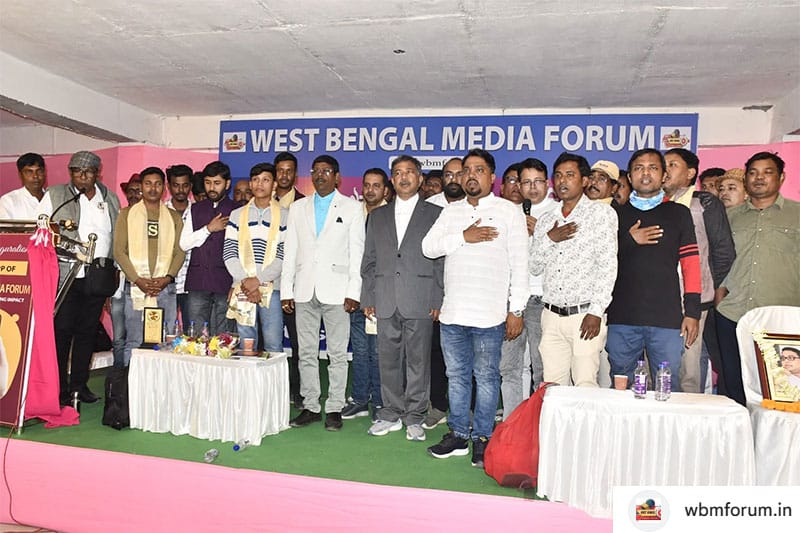
If we look closely at the mainstream media of West Bengal, we can see that it is sharply divided also. Nevertheless, there are outlets that openly support the BJP. Hence, the new term “Godi Media” has become coinage. On the other hand, there are media platforms that rarely, if ever, criticize the state government. So, people mockingly refer them as “Didi Media.”
As a result, it has become almost impossible to place trust in any of them. In reality, politically aware people in Bengal tend to become fans of one political party or another from as early as their college days. In a way, this shows significantly a part of Bengal’s political culture.
The role of neutral digital media
While describing the chaos and vandalism that occurred two days ago over Messi, even the most neutral digital media would naturally raise questions. In particular, they would question the role of Minister Arup Biswas and his family members. Their acts have become viral in social media also. After all, one of the core responsibilities of the media is to present accurate information to the public at the right time. If, while reporting this incident, the media criticizes Arup Biswas’s conduct, can that really be called a fault of the biased media? Consequently, did the West Bengal Government immediately act upon it? What was even more surprising was the complete absence of any effort to restrain or calm the agitated crowd!
Another major role of the media is to monitor those in power and expose their mistakes and failures. Hence, in this context, will the minister’s role not have an impact on West Bengal’s politics? Furthermore, Messi appeared confident, spontaneous and at ease in Hyderabad and Mumbai. So why did he seem almost stiff and uneasy in Kolkata, the so-called Mecca of Indian football? Investigating this question is also an essential duty of any truly neutral digital media outlet.
Corruptions
Everyone knows that one corruption scandal after another is coming to light in West Bengal. As a result, Corruption has surfaced in jobs, healthcare, ration distribution, MGNREGA, housing schemes, sand mining, and coal smuggling, almost everywhere.
Yet, not a single corruption case has completed both investigation and trial. On the other hand, 26,000 people lost their jobs. Moreover, the Supreme Court sharply criticized what it described as institutional corruption, using very harsh language.
Therefore, exposing any form of corruption is a fundamental duty of neutral digital media. However, when the media brings these scandals into the public domain, maintaining so-called “neutrality” becomes nearly impossible.
Mainstream Media vs Neutral Digital Media
In Contrast, we live in an India where a single individual or corporate group now controls multiple media outlets. As a result, that one person or a small group of trusted associates, decides the editorial policy. Thus, in such a situation, can any journalist realistically go against the owner’s views?
Meanwhile, the reach of mainstream media is shrinking so rapidly that most outlets survive mainly on government advertisements. Therefore, exposing government corruption or criticizing those in power often means risking the closure of a newspaper or a TV channel. Hence, who becomes willing to take that risk?
Advantage of Neutral Digital Media
On the other hand, Digital media does not face the same level of pressure. So, its operating costs are lower, and many platforms are relatively small. Moreover, digital advertising in India has become increasingly popular, making it easier for such outlets to find sponsors. Simultaneously, the budget for digital advertising in India continues to grow. Therefore, while neutrality remains difficult, truly independent digital media is still possible to some extent.

However, there is another side to this reality. Indeed, the Government’s performance fails to satisfy a large section of educated and middle-class people. As a result, any criticism of the government easily attracts their attention. As a result, some platforms, in the name of neutral digital media, prioritizes government criticism mainly to increase their viewers.
Moreover, laws and regulations governing digital media are still not very strict, and fact-checking is often inadequate. Consequently, fake news circulates freely. Thus, on YouTube, Facebook, and Instagram, a large amount of false information spreads every day. Additionally, at times, some people irresponsibly publicize highly sensitive incidents. In fact, about a year ago, one such piece of misinformation almost triggered a situation resembling communal unrest over Kartik Puja.
The Reality of Neutral Digital Media
In reality, one can engage in many serious debates about the freedom of newspapers and journalists. However, it is extremely difficult to deny the ground reality.
As a result, responsible journalism has become almost a mythical concept today, at least in the case of mainstream media. Still, neutral digital media is possible, but only if it also acts responsibly.
People Also Ask (PAA)
What is the digital revolution?
Furthermore, the world is witnessing the digital revolution. Its not only the digital media like You Tube, Face Book or WhatsApp, people are accomplishing their all banking and financial needs digitally. In addition, Even the Government has introduced the E-Tendering. Likewise, the people are applying for scholarships through digital channels. Some states have opened even online Grievance Redressal Portals also.
What is the Position of Press Freedom in India?
Above all, India ranks 151 out of 180 countries in the 2025 World Press Freedom Index. Nonetheless, the points are distributed in concentration of media ownership, political influence and interference and safety of journalists. When the rulers become highly reluctant in listening to the voice of descent, they use all weapons to stop the voice.
Why Mainstream Media Is Struggling to Stay Relevant?
The mainstream media is slowly taking the backseat across the world. The overgrowing popularity of the digital media, has forced the mainstream media to take backseats. Currently, their main revenue depends on the Government advertisement. Most of the corporate houses are increasingly focusing on immensely popular digital media.
Is the Digital Advertising really increasing?
Moreover, the Digital Advertising has witnessed a dramatic growth in the recent years. In addition, it has even bypassed the advertising budget for Television Channels.
Latest Updates
Stricter social media takedown rules intensify free-speech concerns
India has tightened digital content regulations, requiring platforms to remove unlawful posts within three hours of official notice. Critics argue the shorter timeline could increase risks of censorship and reduce due-process safeguards, while authorities say the move is necessary to tackle misinformation and harmful content.
State-level moves to restrict social media access for minors
In a major policy shift, Karnataka announced plans to ban social media use for children under 16, reflecting growing concern over digital addiction and online safety. Similar discussions are emerging in other regions, signalling a broader national debate on responsible digital media consumption.
Calls for new national guidelines on youth digital safety
Some state governments are now pushing the Centre to frame structured rules for minors’ social-media use, including age-verification and parental-consent mechanisms. Policymakers argue that targeted regulation may be more effective than blanket bans.
AI-driven monitoring tools spark privacy and neutrality debate
The introduction of AI-based systems to track misinformation and harmful online content has triggered political controversy. Supporters see such tools as necessary for democratic protection, while critics warn about surveillance risks and potential misuse against dissenting voices.
[…]An Insider stand on Neutral Digital Media When mainstream media fails to remain impartial in West Bengal, people have to rely upon responsible and neutral digital media. Explore the deeper implications.[…]
[…]An Insider stand on Neutral Digital Media When mainstream media fails to remain impartial in West Bengal, people have to rely upon responsible and neutral digital media. Explore the deeper implications.[…]