Electoral Roll Revision Results: An Insider
Oct 10, 2025 - By Ashutosh Roy Election AnalysisGovernanceNational PoliticsPoliticsSocial IssuesWest Bengal Politics
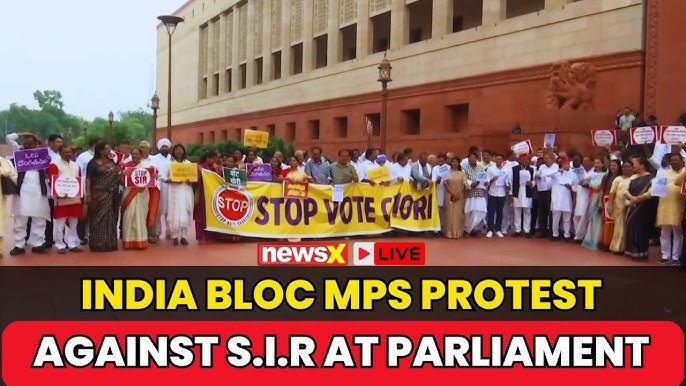
A Nationwide Storm with Political Undercurrents on Electoral Roll Revision
Electoral Roll Revision 2025 has raised an acrimonious debate in the entire country. The opposition parties treat it as a way to eliminate minorities and introduce the NRC. The Election Commission justifies it as a measure to remove illegal voters. The timeline of the SIR, just on the eve of Bihar election, has sparked the controversy. The main argument was against the timeframe.
If EC attempts to conduct SIR in such a speed, it can hardly show due diligence to its original motive. Nevertheless, EC Conducts Annual summary revision every year to purify the voter lists. The individual effort may proceed to inclusion or exclusion of voters on special occasions.
Electoral Roll Revision 2025 in Bihar
The most controversial and sensational Electoral Roll Revision in Bihar. According to a report of Times of India, the final figure has increased by 17.87 lakh; from the published draft list on August 1; which had removed 65 lakh names on various grounds. EC reached such a figure by eliminating the dead, migrated, and duplicated voters.
The final tally had added 21.53 lakh new voters, and removed 3.66 lakh names; resulting in a net gain of 17.87 lakh voters since the draft roll. Here the reasons for exclusion must be noted which are death, migration, or duplication. Any sensible citizen must acknowledge these issues have spearheaded all over India and they need immediate addressal.
The inception of Jan Suraaj party of Prashant Kishor and the participation of Aam Aadmi Party (AAP) has given the Bihar assembly election a new dimension. Rather Bihar is waiting for an intensified electoral battlefield.
Electoral Roll Revision 2025 in Apex Court
The apex court has clearly mentioned that the Election Commission can unleash their authority of Special Intensive Revision (SIR) as per their constitutional rights. They also showed due diligence to the demands of Prashant Bhushan and other opponents’ opinion.
The Supreme Court has accepted the demands of Publicly releasing voter lists and restoration of search options. And directed the EC accordingly. Which clearly resolves their demands of Transparency also.
ECI vs Opposition parties
ECI has announced a nationwide rollout of the SIR in a phased manner. The ECI held a conference with Chief Electoral Officers from all states in September 2025 to review preparedness for the nationwide revision.
The upcoming 2026 will watch the Assembly elections in a host of states; like Assam, Kerala, Puducherry, Tamil Nadu, and West Bengal. So, EC’s will be likely targeting these states for the SIR, immediately.
The opposition parties have raised fears about the Electoral Roll Revision process. They say that the requirement for extensive documentation could disproportionately exclude marginalized communities, migrants, and underprivileged people from the voter lists.
Critics have alleged that BJP is in an attempt of exclusion of Minorities, mainly Muslims to safeguard their victory with the concept of Hindutva. They also feel that it’s an indirect way of craftiness of National Register of Citizens (NRC). The number of migrant workers has increased rapidly.
The opposition parties allege that the EC is trying to deprive them of their voting rights in their home constituencies. The EC has tried to defend with duplicate voter cards.
SIR in West Bengal
The last Special Summary Revision (SSR) in West Bengal of 2002 witnessed an exclusion of a few lacks of voters. The crux is that the ruling CPI(M) led left parties could increase their lead in the following elections; like Parliament Election in 2004 and Assembly election in 2006.
Ironically, Mamata Banerjee, the Chief Minister of West Bengal has strong resilience against SIR.
Mamata in her usual anti-BJP tone has accused the BJP has influenced the Election Commission in a valiant attempt to manipulate the electoral process.
She has also alleged in a similar tune like other opponents that Electoral Roll Revision is an attempt to implement NRC through backdoor. However, even she has announced “No SIR” in West Bengal.
Mamata Banerjee’s roar against SIR
Mamata Banerjee has also alleged that the BJP is trying to marginalize Bengali-speaking migrants and undermine their identity. In recent times, reports have revealed the hackles of Bengali-speaking people in some states like Tamil Nadu, Orissa, Delhi, and a few others.
Its worthy mentioning that Mamata’s key allegation that the Bengali-speaking are facing issues in BJP-governed states have backfired as the states like Tamil Nadu or Punjab are ruled by the so-called India alliances instead of BJP.
She spearheaded a couple of rallies and promised protection by launching various steps like she has activated its party workers down to the booth level to address the documentation issues. She has also initiated the “ShramoShree” scheme to ensure the return of the migrant workers, but the incentive is so small to attract the migrants in masses.
Mamata Thakur and some other leaders of TMC has started even their offices to issue certificates to safeguard the voters from exclusion.
The critics say that there are many refugees and minority immigrants from Bangladesh and Myanmar, who have illegally procured identity documents from the alleged agents in lieu of money. There are dead voters also.
Sources said that the late Dijen Mukherjee or the Bratya Basu’s deceased father are starkly visible in the voter lists of 2024 electoral roll.
Now, there’s a eerie presence of dead voters across the state and infamous names generally refrain from limelight. Perhaps that is the key reason for Mamata Banerjee to take SIR in the street for political mileage.
She has publicly expressed serious doubts about the efficacy and intent behind the SIR, alleging it is a design by the BJP and the ECI to delete names of genuine voters before the 2026 assembly elections.
Electoral Roll Revision is must
Despite the noise, the reality is that SIR is moving ahead, and West Bengal is on the horizon. The process, if conducted transparently and fairly, could improve the integrity of India’s electoral system. However, the success of SIR will depend not only on the EC’s diligence but also on building trust across the political spectrum.