Strong Indian Judiciary System Is A Need
Dec 18, 2025 - By Ashutosh Roy PoliticsSociety
Golden Legacy of Indian Judiciary System
Indian judiciary system carries a powerful and legendary legacy. Its courageous verdicts have pushed even the most influential leaders to the back foot. Today, the judiciary’s golden legacy seems to be fading under a storm of mistrust. Public trust, once rock solid, is now visibly eroding. People are raising allegations even against the judges which is to some extent a mockery to the rule of law in India. Losing faith in such a crucial pillar of democracy is extremely dangerous for society. There is no doubt that these are Indian judiciary challenges.
Still, we must emphasize that our trust, belief, and respect for the judiciary remain firm and unbroken.
However, we must identify the reasons behind this distrust. We are not legal experts. We can only observe the situation from the viewpoint of ordinary citizens. The 1977 Allahabad High Court judgment against Indira Gandhi is a defining milestone in India’s judicial history. We can also refer to the historic judgments like the revolutionary Shah Bano case in 1985 and the landmark Kesavananda Bharati case of 1973.
These verdicts shaped history in establishing rule of law in India. They represent the true glory and prestige of the Indian judiciary. Supreme court justices some landmark verdicts that have brought about revolutionary change in political and social landscape.
Indian Judiciary System – Delayed action
But what do we see today? The unfortunate parents of R.G. Kar murder victim are still crying in silence while demanding a proper investigation and trial. We cannot ignore one truth, justice delayed means justice denied. A nationwide protest movement erupted. Kolkata and the entire West Bengal witnessed waves of agitation. Yet only Sanjay received punishment.
The CBI reportedly failed to collect enough evidence. The Indian Judiciary System failed to satisfy the helpless parents, who have lost their only child. Can they keep trust on rule of law in India?
Similarly, courts have not convicted anyone in the Saradha scam or the Narada case, as yet. Ordinary people are not fully aware whether the fault lies with the investigating agencies or the judiciary. What people want is simple, the guilty must face strict punishment. Just like the justice delivered in the Nirbhaya case in Delhi.
SSC & Primary Teachers Scam: rule of law in India
Now let us look at the SSC case. A total of 26,000 working teachers and non-teaching staff lost their jobs. Since the authorities could not distinguish the corrupt candidates from the genuine ones, the court cancelled the entire panel.. Yet, many deserving candidates were definitely on that list. They earned their jobs through merit and hard work. The rule of law in India is perhaps laughing silently.
They paid no bribe and had no role in illegal activities. Still, they lost their jobs with just one stroke of the judge’s pen.
On the other hand, those who executed the corruption still live luxuriously. Some travel in VIP red-light vehicles, and others roam around in newly purchased Ferraris or Mercedes-Benz cars. So finally, what happened? A section of honest people became victims, while the real masterminds of corruption did not face any punishment.
A similar situation emerged in the Primary Teachers’ Recruitment case. A lack of sufficient evidence saved their jobs for now. Authorities have been able to expose a few candidates for malpractice. The judges allowed to continue in service partly for humanitarian and social reasons. We do not know whether the Supreme Court will approve such consideration. Notably, the recruitment took place in 2016.
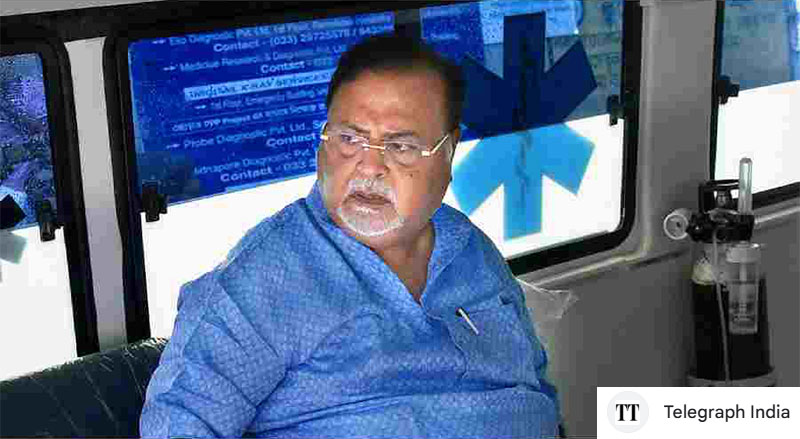
Here too, we saw a cycle, Manik Bhattacharya, Partha Chatterjee, Kuntal, and the “kaku of Kalighat” went to jail and then came out again. We agree that justice hurried means justice buried. But the delay in the current judicial system has reached an alarming stage. The High Court Division Bench took nearly two and a half years to restore the cancelled jobs of 2023. And if the case goes to the Supreme Court now, no one knows when the final verdict will come.
DA Case: Indian judiciary challenges
The DA case is another classical example. After many hearings, spanned over years, the Supreme Court has still not delivered the judgment. Even if the final verdict directs the government to pay the increased DA, many employees who have already retired may suffer in the meantime. Some might struggle to buy medicine or even arrange their daughter’s marriage. Yet the case continues year after year. The Supreme court decisions are still pending. Such pending cases trigger Indian judiciary challenges.
Implementation Problems and Indian judiciary challenges
India has a law for fast-track courts. But its implementation raises serious doubts. Just as vacancies remain unfilled in education, healthcare and even railways, the judiciary also suffers from the same shortage of manpower. Courtrooms exist. Many places have introduced circuit benches as well. But there is still a lack of judges and staff.
The government’s intention is commendable, but the real execution on the ground remains extremely weak.
An unprecedented era of insulting Judiciary System
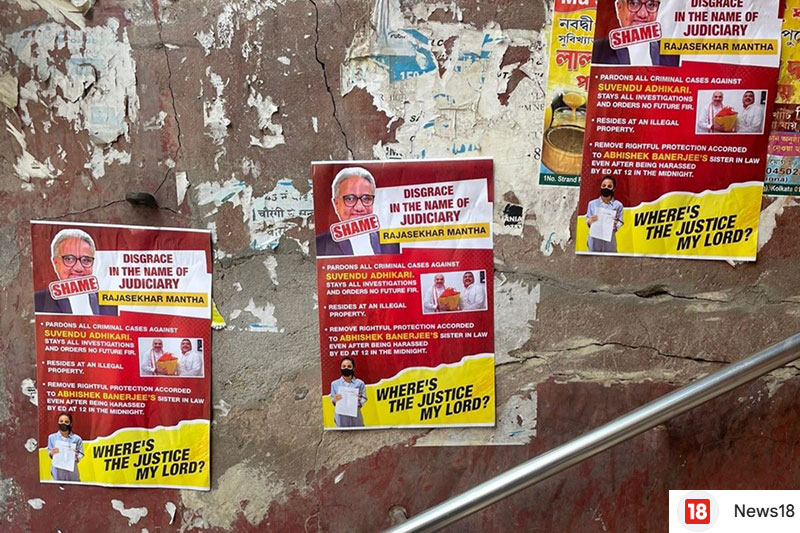
A new and dangerous culture has also emerged, abusing judges in public. Some hooligans put up posters around the residence of a judge in Kolkata. Miscreants openly threw photos of judges on the ground and stamped on them. Yet no one faced punishment. They even blocked and attacked lawyers We must remember that even the worst criminal has the right to legal assistance. Lawyers are the ones who provide that right. These are in betrayal of rule of law in India.
This situation reminds us of Bangladesh’s Chinmoy Krishna Das case. Religious extremists created so much pressure on lawyers that no advocate agreed to defend him. And what are we noticing here? Someone verbally abused a judge, yet the court affirmed that the judiciary is strong enough to withstand such insults. Fair enough. But after that, his followers also began abusing judges.
Where will this dangerous culture end? A strict stance from the beginning could have prevented this escalation.
What is even more shocking is what happened during a recent hearing. When the judge was about to deliver the verdict, and the government’s counsel realized the judgment would go against them, he asked the judge not to pronounce it and pass it on to some other judge. To our surprise, the court stopped the verdict and moved the case to another judge. What we cannot understand is how the state’s Advocate General could make such a demand in the first place.
Allegations against Judges
On the other hand, we know that Justice Soumitra Sen had resigned just before his impeachment. The allegation against him involved misappropriation of public money. Authorities reportedly found a large amount of cash in Justice Verma’s residence during a fire accident. People including some lawyers have accused several judges of delivering verdicts under influence.. The situation in the lower courts is even worse. Local political leaders put immense pressure on judges, and many judges suffer from lack of security. These political leaders raise Indian judiciary challenges.
Moreover, the constitutional laws have empowered the higher courts with the authority to overturn the verdicts of the Lower courts. We have seen a salient example when Rahul Gandhi disqualified as MP after conviction in defamation case. He could restore his position from the Supreme Court. So, the Indian Judiciary system has shown the courage to go against the powerful political lobby.
But if any force influences the judicial process of the higher courts, the consequences become far more devastating. In a country with so much poverty, how many ordinary citizens can afford to approach the High Court or the Supreme Court?
Court cases
If we analyze court cases, we can see two clear categories. Some are purely personal like land disputes, property conflicts, or marital disagreements. But the second category is far more serious. When an individual or a group files a case against the government or a public institution, the impact becomes completely different.
It’s often heard that the state is intolerant to the voices of decent and apply all its power to stop them. The Indian judiciary has consistently strived to protect citizens’ rights.
The SSC case involving 26,000 jobs is a perfect example. That very case determines the future of lakhs of people. Critics have directed the allegations at the government and state institutions. In such situations, unnecessary delay or a verdict delivered under influence can trigger massive social consequences. The same applies to the DA case or the Primary Teachers’ Recruitment case. The future of lakhs of families depends on these verdicts.
Judiciary System: the last resort of citizens
When corruption and preferential treatment spread like wildfire across society, judges cannot remain completely untouched. After all, they are also part of this same society. They eat the same food, mingle with the same people, and watch the same TV channels and social media content.
Yet, because public trust and respect depend on the Indian judiciary system, we hope the judges remain neutral and strict at all times to ensure rule of law in India by resolving Indian judiciary challenges.
Let us be very clear, we have never meant or tried to imply that all judges are dishonest or biased. However, even such suspicion can prove severely damaging. Like Caesar’s wife, the judiciary must stay beyond every suspicion. Political parties must also stop defaming judges. Criticizing a judgment is a constitutional right. But attacking judges personally is not.
We hope the judiciary will also ensure justice toward those who cross ethical boundaries.
FAQ
What is the hierarchy of Indian Judiciary System?
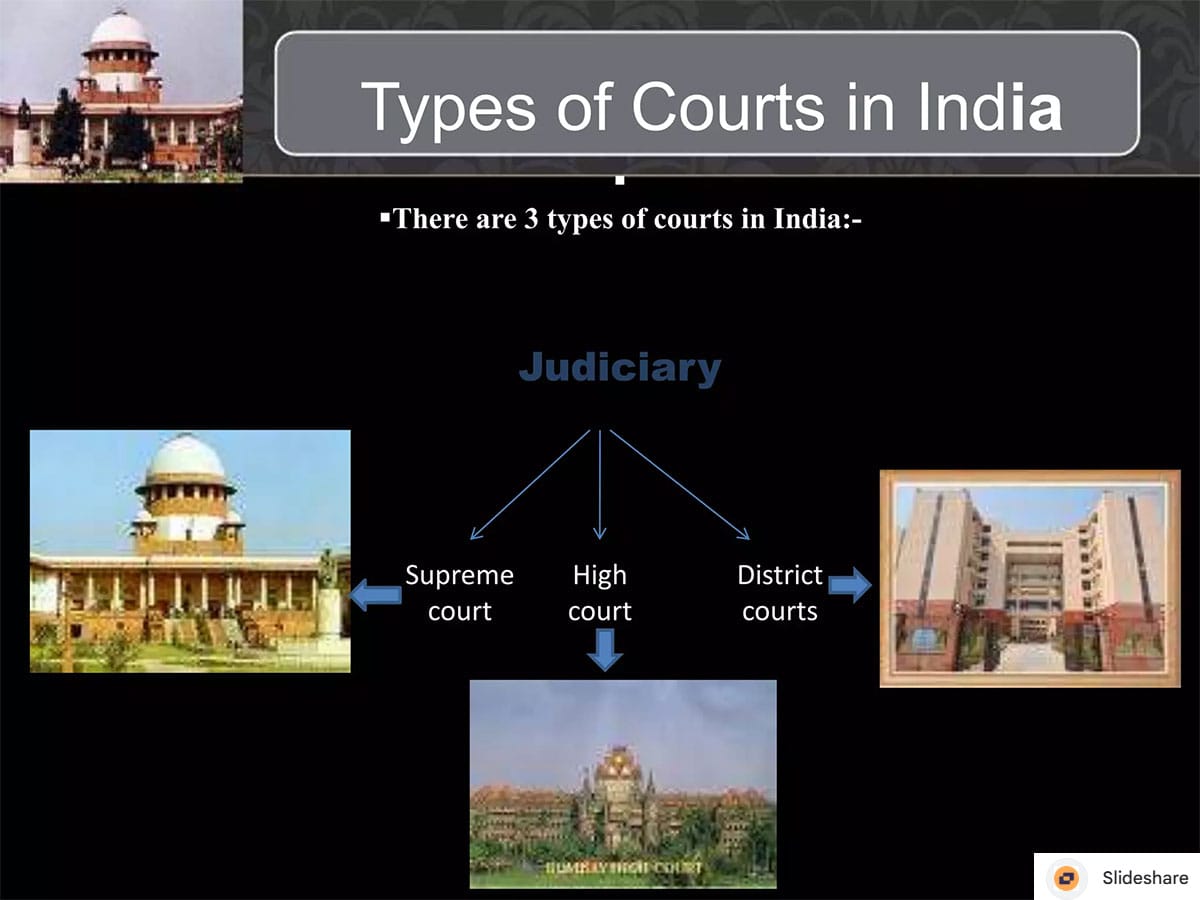
Supreme Court (Apex) ->High Courts->Subordinate Courts
Supreme Court is the highest court in Indian Judiciary System. They are the highest in any constitutional or any issue they utter the final words in the Judicial System. All Courts have to mandatorily follow these orders.
Each state has an High Court in Place, who decides on various cases. High Courts remain responsible to oversee the subordinate courts.
Subordinate Courts comprise of the District & Session Courts, Civil Judge (Junior Division), etc., handling local cases.
What are the main objectives of the Judiciary System?
They uphold the constitutional principles. Even if the center or any state passes any law, which is conflicting to the fundamentals laws and principles of the constitution, they have got the power to nullify the law or send it back to the political executives. They also ensure that no citizen is deprived of fundamental rights. They also Clarify meaning and application of laws. Thus, the rule of law in India has to be established. Facing and addressing the Indian judiciary challenges are the key objectives.
The judiciary remains responsible to settle any intra-state conflict or the conflict between citizen and state or any center-state conflict. These are some of the Indian judiciary challenges.
How is the independence of Judiciary is maintained?
The Supreme Court Chief Justice is appointed by the President of India. This depends upon the recommendation of the collegium. In Practice, the following senior most judge is declared as the Chief Justice of India (CJI). The other judges are recruited based on the recommendation of the CJI. However, the President also consults the senior judges before selection and appointment. Thus the rule of law is ensured, the key Indian judiciary challenges.
What are the main pressure on the System?
The huge backlog is the main pressure and challenge in Indian Judiciary System. In 2025, there are around 4.7 crore pending cases in various subordinate courts and 63 lakhs cases in various High Courts. There are 88,417 pending cases in the Supreme Court itself. So, these are the Indian judiciary challenges in implementing rule of law in India.