Primary Teachers Scam: jobs saved now
Dec 04, 2025 - By Ashutosh Roy Current AffairsElection AnalysisGovernance & AdminRegional UpdatesSocial IssuesSocietyWest Bengal Politics
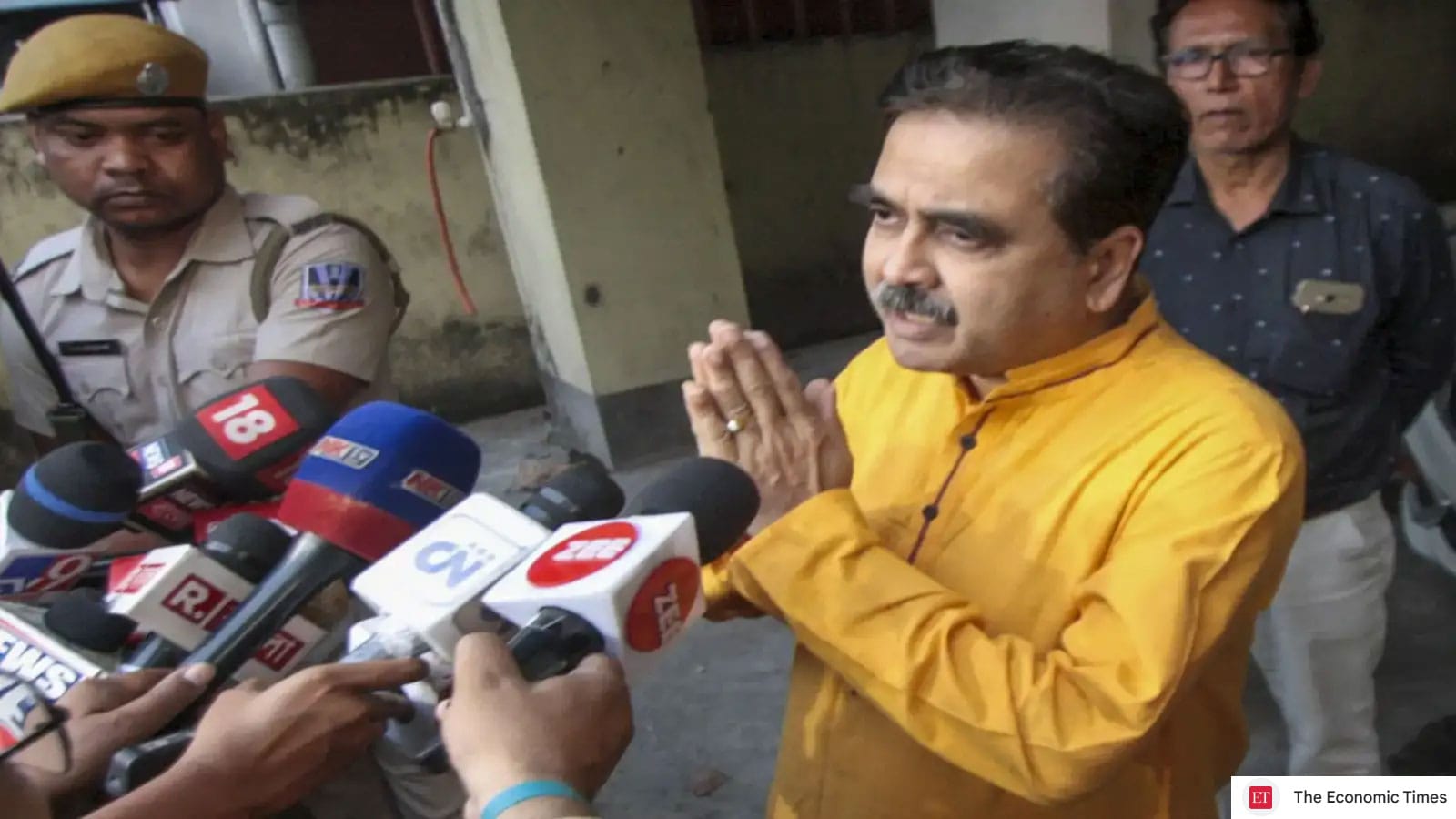
Temporary Relief in Primary Teachers Scam
The landslide judgement of Recruitment through Primary Teachers scam has saved 32000 employees and their families for now. The High Court Division Bench has been kind enough by not cancelling the entire panel by overturning the judgement of Abhijit Gangopadhyay. Unlike the SSC case, which struck off 26000 jobs, the High Court has focused on the consequences. However, the Division Bench has also ensured the continuation of the investigation and other procedures. The West Bengal government has found a shy of relief on the eve of Assembly Election 2026.
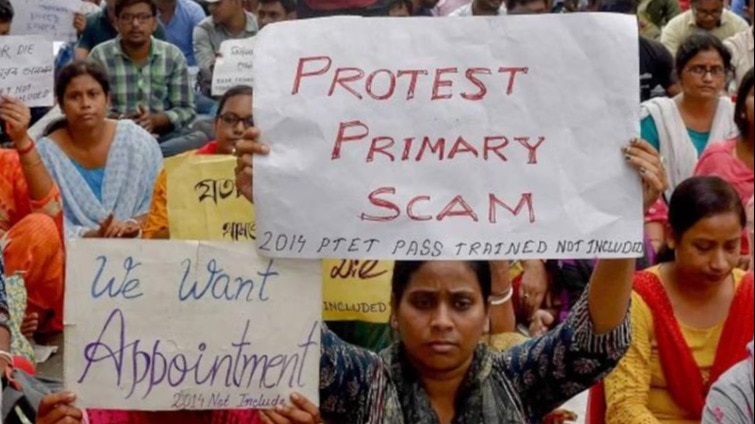
Image Courtesy: India Today
Now let us try to present a comparative analysis between verdict of Justice Abhijit Gangopadhyay of2023 and the Calcutta Division Bench verdict delivered on December 3, 2025. We will also include the SSC case judgment in this purview of the discussion of . West Bengal’s education system suffers from corruption, cash-for-job scandals, and illegal interference by powerful lobbies.
Abhijit Gangopadhyay and Primary Teachers Scam
In his verdict, Abhijit Gangopadhyay mainly emphasized that when institutional corruption surfaces, the court must take a strong position. The court cannot hesitate because of social reactions. The underlying message had been crystal clear.
At that time, ED and CBI arrested many top shots such as Partha Chatterjee, Manik Bhattacharya, Sujay Krishna Bhadra, Ayan Seal, and Shantanu. The ED recovered Crores of rupees from the residence of Partha Chatterjee’s girlfriend. ED and CBI arrested one leader after another. Investigators recovered around ₹150–₹200 crore. CBI and ED accused Partha Chatterjee as the mastermind. He has spent more than three years in custody
It is certain that job seekers did not willingly bribe political leaders. Reports suggested that many candidates arranged the money by selling land, ponds, mortgaging houses, or selling their mothers’ jewelry.
Abhijit Gangopadhyay viewed the case against the backdrop of this unbearable and extreme corruption. He probably believed that the corruption has spelt a disastrous cast on the government and its institutions. Thus, their recruitments hold no legitimacy. Hence, anyone who obtained a job through this corrupt process does not deserve it.
SSC Case in West Bengal
We must not forget that the SSC case in West Bengal was progressing almost in parallel. Allegations of institutional corruption and large-scale selling of jobs also surfaced in the recruitment of around 26,000 teachers and non-teaching staff.
With time, the case went to the Division Bench and later to the Supreme Court. The order cancelling those appointments remained almost unchanged. The Supreme Court did not alter the cancellation order either. Instead, it even directed fresh recruitment in SSC case.
In other words, Abhijit Gangopadhyay wanted the Court to act as a lifeline for the powerless and a fierce watchdog against corruption. He believed that when the government, government-funded institutions, or ruling party leaders are responsible for corruption, the court should not grant any leniency.
Justice Gangopadhay thought the system must receive a strong lesson, so that the government or its institutions would fear violating rules in the future. He became a living icon against the misuse of state power and injustice toward society.
Justice Gangopadhyay remained equally strict and uncompromising in both the primary teachers scam and the SSC case. He seemed resolute in his mission to eradicate corruption from its core.

Image Courtesy: Sanbad Praitidin
It is impossible to believe that his conscience did not ache while cancelling the jobs of 26,000 or 32,000 candidates. The primary teachers scam affected 32,000 positions, compared to 26,000 in the SSC case. But he remained determined to restore the rule of law above everything else.
Verdict of Division Bench in Primary Teachers Scam
When we talk about the Division Bench’s verdict, the first point is that only a small portion of the allegations could be proven with proper evidence. The judges also clearly considered the possible social impact of the judgment.
They worried about the fate of those who had worked for nine years. They weighed the personal and social consequences of cancelling long-held jobs. However, they did not stop the ongoing investigations or any other legal proceedings. They simply gave more importance to the social impact of the court’s verdict.
Difference in application of law
This is probably the core difference between the Division Bench verdict and Abhijit Gangopadhyay’s verdict. Legal experts will decide which one is more balanced in the eyes of law. But for now, it seems neither of them made a mistake. The Primary Teachers scam verdict will also remain as a revolutionary judgement in West Bengal. The difference lies in the approach to applying the law.
Abhijit Gangopadhyay had shown dogged determination to uproot corruption from its core. The Division Bench, on the other hand, gave more priority to the social context.
Another factor may also have influenced the Division Bench, and that too is social.
If 32,000 primary school teachers lose their jobs in a single stroke, the entire primary education system will collapse in West Bengal.
SSC may somehow manage with part-time or guest teachers. But it is extremely difficult to find teachers to run village schools.
We do not want to call either verdict wrong. We also do not want to say that Abhijit Gangopadhyay’s verdict was extremely harsh while the Division Bench verdict was extremely soft. This case will definitely go to the Supreme Court. We will continue to watch closely.
[…] similar situation emerged in the Primary Teachers’ Recruitment case. A lack of sufficient evidence saved their jobs for now. Authorities have been able to expose a few […]
[…]Primary Teachers Scam: jobs saved now See Why did the Division Bench give a shy of relief by overturning the Abhijit Gangopadhyay verdict on Primary Teachers scam? Explore the deeper implications.[…]
[…]Primary Teachers Scam: jobs saved now See Why did the Division Bench give a shy of relief by overturning the Abhijit Gangopadhyay verdict on Primary Teachers scam? Explore the deeper implications.[…]
[…]Primary Teachers Scam: jobs saved now See Why did the Division Bench give a shy of relief by overturning the Abhijit Gangopadhyay verdict on Primary Teachers scam? Explore the deeper implications.[…]