Challenge of Caste-based Reservation system
Nov 01, 2025 - By Ashutosh Roy Election AnalysisGovernance & AdminNational PoliticsSocial IssuesSocietyWest Bengal Politics
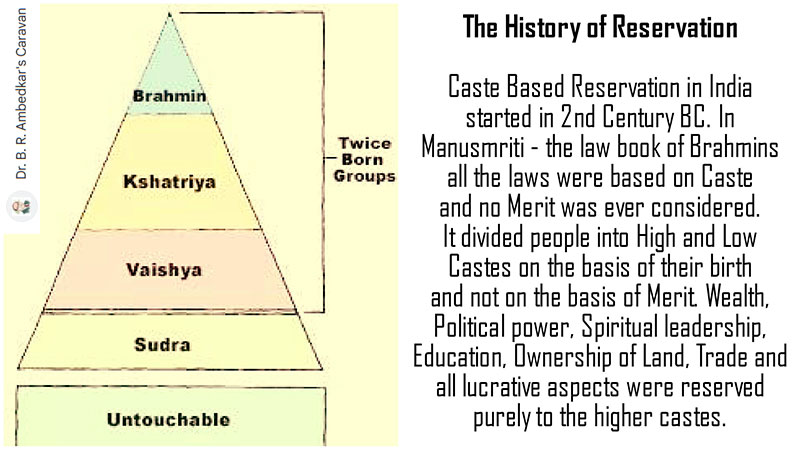
Caste-based Reservation: The root
The Indian caste system originated in the ancient Vedic era with the varna system, a functional division of labor based on occupation. Rig-Veda introduced the four main varnas, Brahmin, Kshatriya, Vaishya, and Shudra. The holistic purpose was to define the roles in the society. But arrogant Brahmins began practicing untouchability. Remember, we are talking about an age when Brahmins were far more educated and enlightened than others. Such dominance of the Brahmins has started pushing the others into backward classes. And while developing the constitution, it did not go unnoticed. The caste-based reservation is the brainchild of Indian Constitution.
Caste-Based Reservation: SC and ST
In fact, the reservation system was a measure to the historical injustice towards the backward classes. The initial reservations were only for SC and ST [Articles 15(4) and 16(4)] and that too for 10 years. They made provisions of reservations in Educational Institutions and Government Jobs.
The controversial Mandal Commission report paved the way to the reservation for Other Backward Classes (OBC) in 1990. EWS (Economically Weaker Sections) reservation in India became law in 2019 via insertion of Articles 15(6) and 16(6).
Arun Jaitley, then Finance Minister, asserted that the Supreme Court’s 50% reservation cap applied only to caste-based quotas. He said the cap would not affect reservations for the Economically Weaker Section (EWS).
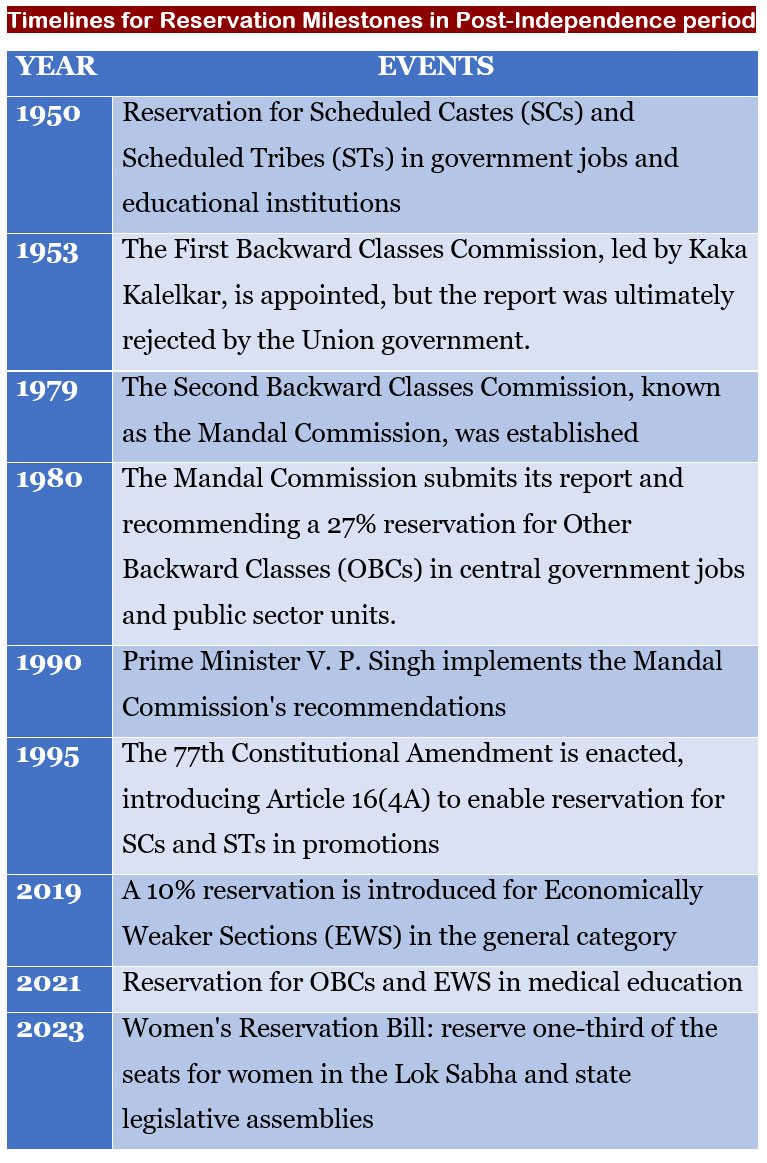
We still do not know whether the government conducted any social survey, or how many, before making the amendments. Now the reservation rules have been prevailing for infinite time and perhaps the political motivations and insecurity have taken the driver’s seat.
Its worthy mentionable that the quota-based reservation system has been prevailing in various other countries in different forms. We can refer to Brazil, US, UK, Finland, Malayasia, Canada, South Africa to name a few. Significantly, no other country has a caste-based reservation system like India’s one.
Caste-based Reservation in West Bengal
Now let’s come to the current reservation policy in our homeland, the state of West Bengal. The state reserves seats in higher education institutions for Scheduled Castes (22%), Scheduled Tribes (6%), Other Backward Classes (OBC-A: 10%, OBC-B: 7%), Persons with Disabilities (3%) and Economically Weaker Sections (EWS:10%).
Such quota system castes a serious impact on the General Category candidates by narrowing down their quotas. It’s worthy mentionable that even the reserved category candidates will appear in the Unreserved lists, if they occupy by merit.
The Court Verdicts
In 1992 the landmark Indra Sawhney case, the Supreme court also established a 50% cap on reservations, except in extraordinary circumstances. The sane verdict also contains the concept of Creamy layer, which excludes the economically advanced sections of the OBCs from reservation benefits.
The 1992 judgement had been a landmark one, which has become compulsion on every states. Many states had tried to implement Economic Reservation before the EWS amendment, however, they were subsequently quashed by Courts.
Call to Action
The time has come to reassess the necessity of the caste-based reservation system. We must deeply review our social structure and measure the real upliftment of backward communities. This reassessment is long overdue, even after 75 years of independence.
We should not forget that reservation is not a poverty alleviation scheme, but it is a scheme to bring the backward communities to the front. If a reserved category candidate becomes a city dweller over the generations, should he also be given the preference?
If the General Quota, which has got the highest occupation, shrinks, wont it lead to a social imbalance? The political parties dare to touch the reservation as they use it as a weapon for electoral victory, but it is bound to affect the social harmony. This old-torn populist strategy may become boomerang for them only.
Who will bell the cat?
Indian Constitution framers aimed to uplift the socially and educationally backward classes to the frontlines. Unfortunately, in India. the reservation system took a caste-based form instead of being rooted in economic or class-based.
[…] constitution provisioned caste based reservation for Scheduled classes and Scheduled tribes only and that too for ten years. Now, the caste […]
[…]Challenge of Caste-based Reservation system Compelling in-depth analysis of caste-based reservation system’s pros and cons, its societal impact, and why the debate remains heated today. Read the article.[…]