The hidden Identity Politics in Bengal now
Dec 07, 2025 - By Ashutosh Roy Election AnalysisGovernance & AdminPoliticsSocial IssuesSocietyWest Bengal Politics

Humayun Kabir’s Babri Masjid and the Peak of Identity Politics
Indeed, overwhelming response. For example, people are carrying bricks on their heads to the site. In fact, Donations are pouring in voluntarily. Hence, Humayun had to take permission from the bank to increase the cash deposit limit. In addition, A flood of biryani feasts followed. Consequently, National Highway NH-12 became blocked. Thus, Identity Politics has now reached its peak.
In summary, this was the foundation-stone ceremony for the new mosque in Beldanga of Humayun Kabir, designed in the style of the Babri Masjid.
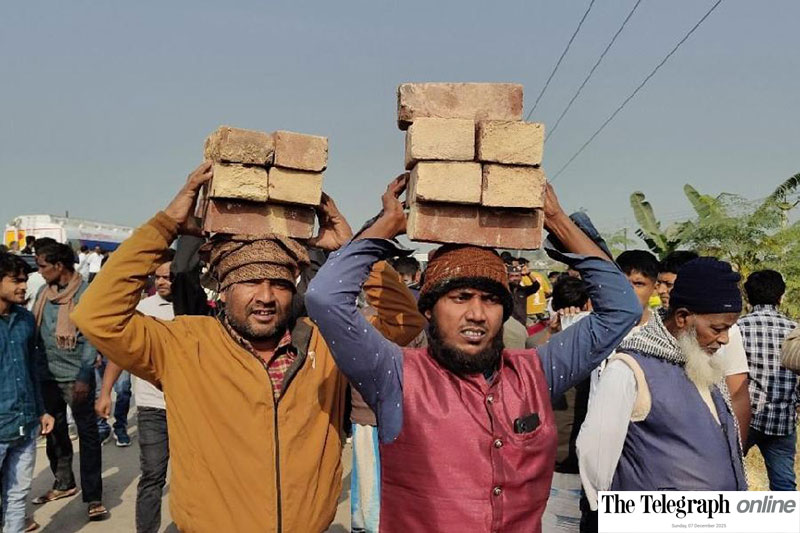
Spontaneous response
Additionally, People came from different places, mostly Muslims. Crowds from other communities also joined. Furthermore, Humayun Kabir said that the central government did not build the promised mosque next to the Ram Temple in Ayodhya. So he completed that task in Murshidabad.
He added that Identity Politics has become the norm in this state, and even the Chief Minister has taken the lead by building several temples.
Therefore, he is building this mosque for the neglected Muslims. Furthermore, he reinstated that building a mosque is not unconstitutional. No law in India prohibits the construction of a temple or a mosque. So, Humayun Kabir attempted to fuel the sentiment of Muslim community by bringing Babri Masjid.
The spontaneous crowd and excitement put a wide smile of success on Humayun Kabir’s face. His chest swelled with pride, as if it were 56 inches.
The administration deployed a large police force and paramilitary units. No unrest took place anywhere. Mamata Banerjee successfully ensured security as per the court’s order. Humayun had 200 personal volunteers on the road.
Humayun Kabir, once known only in Raninagar, has now come into the spotlight not just in Murshidabad district but across West Bengal and even on a national stage.
He needed exactly this kind of political image. He achieved that goal completely.
Identity Politics: Electoral Strategy or Social Divide?
Specifically, West Bengal is a religiously sensitive state. This has been true since Independence. Polarization may have existed earlier, but people of this state had never seen such extreme expression before. The arrival of the BJP and its declared Hindutva agenda widened the gap with the 30–35% Muslim population in the state.
However, Mamata Banerjee launched many cheap welfare schemes for her trusted Muslim vote base. Additionally, she introduced the Imam allowance and increased the budget for madrasas. Even, she intentionally relaxed law-and-order enforcement in cases involving Muslims. Yet the socio-economic condition of Muslims did not improve at all.
The report of the Pratichi Trust highlighted this clearly. Even then, Muslims voted overwhelmingly for Mamata Banerjee out of fear of the BJP. Mamata, in return, continued doing only vote-bank politics. How much this new mosque will cost her in terms of Muslim votes — the future will reveal.
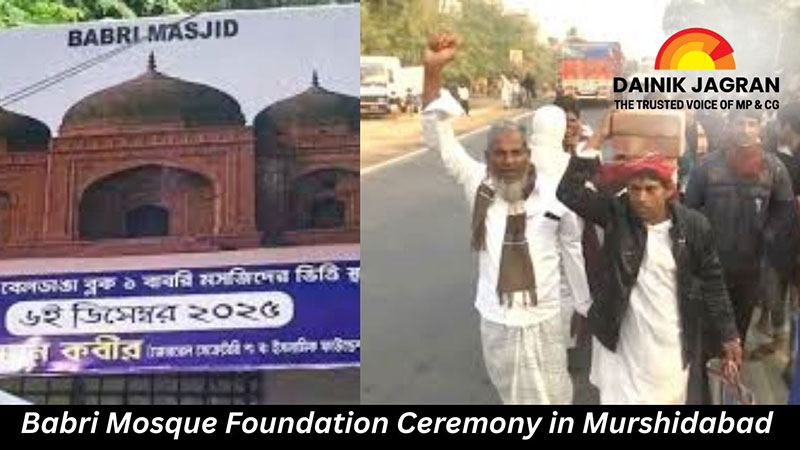
Humayun Kabir, known for switching parties, has already announced his own party. Whether he or his party will support Trinamool in the future, or whether he will return to Trinamool, is still unknown. But Humayun wanted importance, and he received far more than he expected.
No one knows how building a grand, Babri Masjid–style mosque will improve the lives of Muslims. There is no point asking this question. Religious frenzy does not allow space for such practical questions. Perhaps people had forgotten Babri Masjid today.
Unfortunately, West Bengal is now busy with temple–mosque politics. Because Identity Politics comes before everything else.
A Political Game Plan that divides
For the last two months, Humayun Kabir spread banners and posters across Murshidabad for this Babri-style mosque. Mamata Banerjee took no action during that time. She did not even want to speak to Humayun. In other words, she allowed it to continue instead of nipping it in the bud.
When the publicity reached its peak and the inauguration day was almost here, she suspended Humayun. No one knows whether Mamata Banerjee’s delayed realization was intentional and calculated. But today, Humayun Kabir has succeeded. And Identity Politics has succeeded along with him. That is our misfortune.
In this very Bengal, Kazi Nazrul once said, “Hindus and Muslims are two flowers on the same stalk.”
[…]The hidden Identity Politics in Bengal now The Identity Politics is reshaping West Bengal politics as Humayun Kabir inaugurates Babri Masjid with overwhelming response. Explore the deeper implications.[…]