ECI Warning: A Big Jolt for West Bengal DMs
Feb 14, 2026 - By Ashutosh Roy Current AffairsGovernance & AdminPoliticsRegional UpdatesWest Bengal Politics
Key Highlights
- The ECI warning to DMs has triggered a major political and administrative controversy in Bengal.
- The Election Commission warned that faulty verification may lead to personal accountability and legal action against officers.
- All documents and decisions will remain digitally stored for up to five years, raising career risks for IAS officials.
- Allegations include invalid document uploads, blank pages, unreadable images, and political remarks by some DMs.
- The warning came just before the SIR deadline, raising questions about timing and intent.
- The State Government has strongly opposed the Special Intensive Revision (SIR) from the beginning.
- Several parties filed multiple court cases, including a case in the Supreme Court, over the SIR dispute.
- Election Commission has summoned the Chief Secretary to Delhi to explain alleged non-compliance with Commission directives.
- The Election Commission appointed Special and Micro Observers, despite initial staff shortages from the State Government.
- Critics question whether re-verifying crores of voter data is practically possible within a limited timeframe.
- Concerns remain about an alleged administrative–political nexus in the state.
- Ultimately, the real test will be the 2026 elections — whether the ECI’s strict stance ensures a free, fair, and violence-free vote.
Why Did the ECI Issue a Strong Warning to DMs in Bengal?
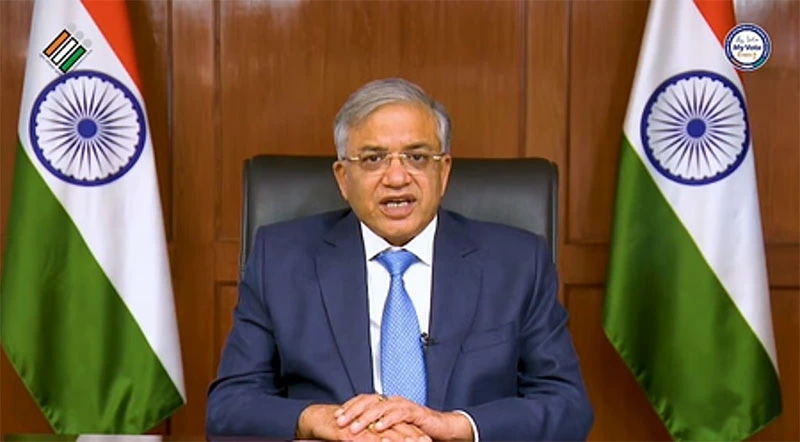
Finally, on 13 February, a warning came from the Chief Election Commissioner to senior officers involved in the Bengal elections. Voters of West Bengal feel the SIR process in the state demanded this ECI warning much ago.
In fact, The Election Commission sent the message directly to the District Magistrates. Moreover, the CEC even named some District Magistrates while issuing the warning.
Why ECI Warning to DMs?
The Election Commission clearly stated that every document and every decision will be stored in the system. If faulty verification allows an ineligible person and the ECI can detect in the future, the authorities will hold the concerned officers personally responsible. In other words, officers will face direct accountability for any verification errors.
In addition, these records may remain preserved for up to five years. As a result, the careers of these IAS officers could face problems even in the future. Furthermore, The ECI may initiate legal action against them.
Once again, the Commission emphasized this point clearly. If incorrect verification allows an unqualified person to pass, the authorities will hold the concerned officials personally accountable.
Naturally, an important question has arisen. Why did the Election Commission issue this warning so late, when the hearing process is ending today, on 14 February?
Reports also suggest that the officers have completed most of the work already. However, some document uploads are still pending. Meanwhile, the scrutiny process will continue for a few more days.
After this strong step by the Election Commission, the State Chief Electoral Officer, Manoj Agarwal (not Manoj Panth), may feel some pressure. After all, this is only the Special Intensive Revision stage. The real challenge is the West Bengal Assembly Election 2026 is still ahead.
What Serious Irregularities Were Found in the SIR Process?
During the video conference, officials also presented certain evidence. As a result, the discussion became more serious and focused.
What Were the Main Allegations?
- BLOs/ EROs/ AEROs/ DEOs have uploaded and verified Faulty and unacceptable documents.
- Officers have uploaded even Newspaper cuttings, blank pages, and unreadable images as official documents.
- Some District Magistrates allegedly made political statements.
Earlier, on 21 March 2026, the Election Commission of India removed four non-IAS District Magistrates . However, this is the first time that the Election Commission has publicly identified and warned specific District Magistrates in such a strong manner.
Therefore, many observers believe this step is unusual and significant.
In fact, it has often been alleged that in this state, an unhealthy nexus exists between the government, administration, police, and the ruling party. The subversive IAS Officials remain directly responsible for such a massive voter list irregularities. The people of West Bengal has raised this concern even before. Now, the situation once again appears to highlight that issue.
The issue is simple, the Special Intensive Revision (SIR) is not happening properly in West Bengal. So, the expectation of the end result, which is nothing more than a fault-free voter list is fading away.
Meanwhile, The ECI has summoned the Chief Secretary, Nandini Chakraborty, to Delhi. She will have to explain why the Commission’s instructions were allegedly not followed.
Naturally, the current Chief Secretary may consult her predecessor, Manoj Panth. Notably, Manoj Panth is now serving as the Chief Minister’s Personal Secretary after retirement. He faced the wrath earlier from the same Chief Election Commissioner.
Thus, the political and administrative tension surrounding the election process seems to be increasing.
Why has the Bengal Government Opposed the SIR from the Beginning?
From the very beginning, the State Government has strongly opposed the SIR (Special Intensive Revision). In fact, this opposition has continued consistently.
At first, the government clearly stated that it would not allow the SIR to take place in Bengal. As a result, several parties including the ECI filed multiple court cases. Moreover, yesterday, the Trinamool Congress filed another case in the Supreme Court.
Meanwhile, the Chief Minister repeatedly wrote letters to the Election Commission. In addition, she and senior Trinamool leaders continuously issued warnings and strong statements against the process.
However, the Election Commission moved forward. It appointed Special Observers as well as Micro Observers to monitor the process closely.
Is ECI warning out of continuous non-cooperation?
On the other hand, when the State Government initially did not provide staff for the revision work, it led to further legal disputes. Eventually, just a few days ago, the State Government provided 8,500 Group B Officers.
Nevertheless, the problem started much earlier. It began during the distribution of enumeration forms. Since then, several procedural concerns have been raised.
Even BJP State President and current MP of the upper house Shamik Bhattacharya attacked the CEC.
Now, a crucial question remains. Is it practically possible to re-verify the data of crores of voters within such a short time?
Therefore, the debate around the SIR is not only political but also administrative and logistical.
Is the ECI Playing Tough Or Just Playing to the Gallery?
Is this turning into mere “playing to the gallery”? Many people are now asking this question.
Earlier as well, the Election Commission had seen the State Government oppose moves like suspending officers or filing FIRs against them. In fact, the ECI Summoned the then Chief Secretary, Manoj Panth, to Delhi. However, the state Government didn’t file any FIR ultimately.
Moreover, Special Commissioner Murugan had faced protests, and his car was vandalized. At that time, many observers felt that the Commission remained silent. Therefore, critics now question why the strong warning is coming only at this stage.
We can not but blame the Election Commission also. They had lack of preparation. They have changed rules in the midway and sent orders by WhatsApp or even through Video Conference. The ECI did never bother to make them public.
Will the ECI Warning Ensure a Violence-Free 2026 Election?
Meanwhile, the SIR process is almost over. So naturally, people want to know whether this ECI warning will have any real impact. Ultimately, the real test will come during the elections.
If the Commission’s strict stance helps ensure a peaceful and violence-free vote, then the people of West Bengal will certainly welcome and appreciate it.
Therefore, the focus should now shift from warnings and statements to actual implementation on the ground.
Key Takeaways
- Why does the Election Commission start hauling on the DROs / DMs now?
- Why did the Election Commission remain inactive when even the CEO and observers sent several complaints?
- Didn’t the Election Commission keep an eye on the media, where such irregularities have been shown repeatedly?
- Did the EC become suddenly proactive due to Mamata Banerjee’s appearance in the Supreme Court?
- Were they really prepared to offer a pure voter list to the citizens of West Bengal?
[…]ECI Warning: A Big Jolt for West Bengal DMs ECI warning to DMs sparks major controversy in Bengal’s SIR process. Explosive allegations, political clashes, and big questions over free & fair 2026 elections[…]
[…]ECI Warning: A Big Jolt for West Bengal DMs ECI warning to DMs sparks major controversy in Bengal’s SIR process. Explosive allegations, political clashes, and big questions over free & fair 2026 elections[…]
[…]ECI Warning: A Big Jolt for West Bengal DMs ECI warning to DMs sparks major controversy in Bengal’s SIR process. Explosive allegations, political clashes, and big questions over free & fair 2026 elections[…]
[…]ECI Warning: A Big Jolt for West Bengal DMs ECI warning to DMs sparks major controversy in Bengal’s SIR process. Explosive allegations, political clashes, and big questions over free & fair 2026 elections[…]
[…]ECI Warning: A Big Jolt for West Bengal DMs ECI warning to DMs sparks major controversy in Bengal’s SIR process. Explosive allegations, political clashes, and big questions over free & fair 2026 elections[…]
[…]ECI Warning: A Big Jolt for West Bengal DMs ECI warning to DMs sparks major controversy in Bengal’s SIR process. Explosive allegations, political clashes, and big questions over free & fair 2026 elections[…]
[…]ECI Warning: A Big Jolt for West Bengal DMs ECI warning to DMs sparks major controversy in Bengal’s SIR process. Explosive allegations, political clashes, and big questions over free & fair 2026 elections[…]
[…]ECI Warning: A Big Jolt for West Bengal DMs ECI warning to DMs sparks major controversy in Bengal’s SIR process. Explosive allegations, political clashes, and big questions over free & fair 2026 elections[…]
[…]ECI Warning: A Big Jolt for West Bengal DMs ECI warning to DMs sparks major controversy in Bengal’s SIR process. Explosive allegations, political clashes, and big questions over free & fair 2026 elections[…]
[…]ECI Warning: A Big Jolt for West Bengal DMs ECI warning to DMs sparks major controversy in Bengal’s SIR process. Explosive allegations, political clashes, and big questions over free & fair 2026 elections[…]
[…]ECI Warning: A Big Jolt for West Bengal DMs ECI warning to DMs sparks major controversy in Bengal’s SIR process. Explosive allegations, political clashes, and big questions over free & fair 2026 elections[…]