LPG Crisis: The Powerful Election 2026 Plot
Mar 31, 2026 - By Ashutosh Roy Current AffairsElection AnalysisGovernance & AdminNational NewsPoliticsRegional UpdatesSocial IssuesWest Bengal Politics
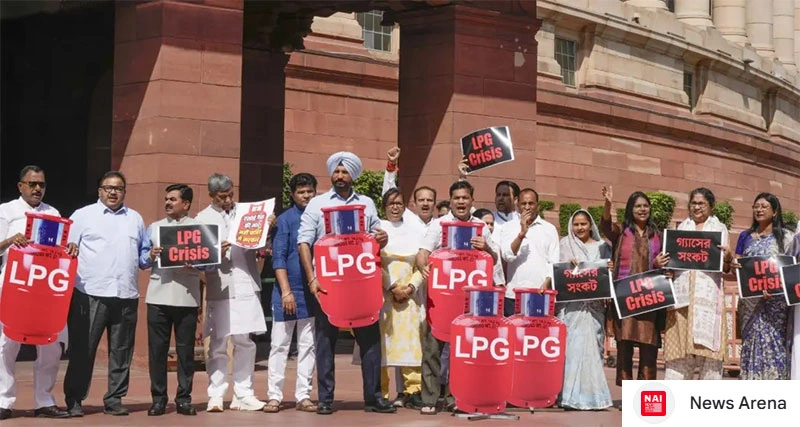
LPG Crisis: The Truth Behind the Shortage
The LPG crisis is sparking widespread fear across the country today. While many believe the supply has naturally run dry, the reality is much more complex. This situation is actually a manmade crisis designed to serve specific interests before the upcoming elections on the backdrop of Iran War.
First, unscrupulous distributors are stalling deliveries to inflate their own distributor profit. They hold back essential stocks to create an artificial vacuum in the market. Consequently, desperate families are forced to pay black-market prices just to keep their kitchens running.
Furthermore, a strong political issue has emerged as parties use this scarcity to build their election agenda.
Candidates are trading blame while the public remains caught in the crossfire. This political friction only adds fuel to the fire of public resentment.
In addition, social media fake news is accelerating the chaos. Viral rumors about price hikes and total stockouts are spreading like wildfire on every platform. These unverified posts trigger massive social panic, leading to long queues and unnecessary hoarding.
Ultimately, this crisis is a mix of greed and political strategy. Understanding these hidden layers is the only way to navigate the panic. We must look past the headlines to see who truly benefits from this manufactured shortage.
The Importance of the Strait of Hormuz
The Strait of Hormuz is located about 1,500 kilometers away from Mumbai. Interestingly, many people in Bengal were previously unaware that 25% of India’s oil imports pass through this narrow waterway.
However, the situation changed rapidly due to the sudden joint attacks by the US and Israel, followed by Iran’s retaliatory response. Consequently, these geopolitical tensions have forced everyone to pay closer attention to the region.
Furthermore, we now have a much clearer understanding of the risks involved in navigating this route. Thanks to drone footage shared across television and social media, we have finally seen just how difficult and dangerous it is to transport goods through the Strait of Hormuz.
Rumors Vs Reality: LPG vs. PNG: Supply & Strategic Outlook
First of All, let us state the real situation and initiatives taken by the Government of India to face such a drastic calamity. We have collected Data from the Official Press Release.
| Category | LPG (Liquefied Petroleum Gas) | PNG (Piped Natural Gas) |
| Current Status | No Shortage. Supply is secure and stable. | Strategic Transition. Promoted for being cheaper and safer. |
| Daily Production | 50 TMT (Ramped up by 40%) | 92 MMSCMD (Domestic production) |
| Import Dependency | Required: 30 TMT (Now producing more than importing) | Lower dependency compared to LPG |
| Daily Requirement | 80 TMT (Approx) | 191 MMSCMD |
| Infrastructure | 22 import terminals (Up from 11 in 2014) | 300+ Geographical areas (Up from 57 in 2014) |
| Consumer Reach | 50 lakh cylinders delivered daily | 1.5 crore+ domestic connections |
| Current Reserves | 800 TMT secured enroute; 1 month supply arranged | Long-term energy strategy (not a crisis response) |
Is the LPG Crisis Really That Serious?
The LPG (liquefied petroleum gas) crisis often sounds alarming. However, in many cases, the problem is not just the actual shortage but also how people react to it. Let’s break it down in simple terms.
Key Points to Understand the LPG Crisis
- Social panic plays a big role
In many modern, human-made crises like sudden LPG shortages, panic matters more than real supply issues. As a result, fear spreads faster than facts. - Hoarding creates the real problem
When distributors store LPG to increase profits, supply in the market drops. Consequently, people start believing there is a shortage. - Rumors make things worse
Unverified news on social media spreads quickly. Because of this, people rush to buy and stock LPG, even when it is not necessary. - Self-fulfilling crisis effect
Initially, there may be no real shortage. However, due to panic buying, demand suddenly increases. As a result, a real shortage is created. - Trust in institutions decreases
Such crises weaken public trust in government and systems. Therefore, people feel insecure and rely less on official information. - The poor suffer the most
It has hit the Vulnerable groups hardest. Since they have limited resources, they cannot handle price hikes or supply disruptions easily.
Keynotes of LPG Crisis
Above All, the LPG crisis is not always as severe as it seems at first. More often, panic, misinformation, and hoarding turn a manageable situation into a serious problem.
Therefore, staying informed and avoiding unnecessary stockpiling can help reduce the impact of such crises.
Impact of Social Media on the LPG Crisis
In today’s digital world, social media plays a powerful role in shaping public perception. During an LPG crisis, online panic can quickly turn a normal situation into a serious problem. Let’s understand how this happens.
How Social Media Creates Human-Made Problems
- Artificial Scarcity (Fake Shortage)
- Even when LPG supply is normal, rumors can trigger panic buying. As a result, if 100% of consumers rush to buy cylinders on the same day, the system cannot handle the sudden demand.
- Consequently, a crisis that was initially false becomes real.
- Profit Exploitation (Unfair Gains)
- When distributors notice digital panic, they may intentionally hoard LPG. Then, they sell it at higher prices in the black market.
- Therefore, some people directly profit from public fear and confusion.
- Political Weaponization (Used for Politics)
- Different groups may use the LPG crisis to blame the current government. As a result, Oppositions have camouflaged and presented a simple supply issue as a political conspiracy.
- This can influence voters and shape public opinion during elections.
Keynotes on Impact of Social Media Rumors
In brief, social media can turn a small issue into a major LPG crisis. Panic, misinformation, and manipulation often create more damage than the actual supply problem. Therefore, it is important to verify information and stay calm to avoid worsening the situation.
LPG Crisis and Distributor Profits: What’s the Real Connection?
During an LPG crisis, most people focus only on the shortage. However, behind the scenes, distributors can turn this situation into a highly profitable opportunity. In many cases, human behavior and market manipulation play a bigger role than actual supply issues.
How Distributors Profit During LPG Crisis
- Artificial Scarcity & Hoarding
- When fear of a crisis begins, often due to election rumors or social media misinformation, distributors may intentionally stockpile LPG cylinders.
- As a result, they claim that regular supply has not arrived, creating a fake shortage in local markets.
- Then, when panic peaks, they sell the stored cylinders in the black market at much higher prices.
- Consequently, consumers end up paying far more than the government-fixed rate.
- Diversion to Commercial Sectors
- During a household LPG shortage, the price gap between subsidized domestic cylinders and non-subsidized commercial cylinders increases.
- Therefore, distributors may divert domestic cylinders to hotels, restaurants, or small industries.
- Since commercial users are willing to pay more to keep their business running, distributors earn extra profit.
- Meanwhile, the price difference is often hidden and kept unofficially.
- “Panic Premium” (Extra Charges Due to Fear)
- Fear works as a powerful selling tool. For example, when fake news spreads that LPG prices will double after elections, people focus more on availability than cost.
- As a result, distributors start adding extra charges like “delivery fees”. “service charges”, or “convenience fees”. These charges are not part of the official bill.
- However, when collected from thousands of customers, they quickly turn into large, untaxed profits within a short time.
Economic Impact Table: Crisis vs. Normal Operations
| Feature | Normal Operations | Manmade Crisis Period |
| Sales Volume | Steady/Predictable | Extreme Spikes (Panic Buying) |
| Price Control | Strict Government MRP | “Flexible” (Black Marketing) |
| Stock Turnover | Fast | Slow (Strategic Hoarding) |
| Consumer Behavior | Price Sensitive | Availability Focused |
Keynotes on LPG Crisis and Distributor Profits
In conclusion, an LPG crisis is not just about supply shortages. Instead, it often becomes a profitable business model driven by human actions, fear, and greed.
Therefore, awareness and transparency are essential to prevent such exploitation and protect consumers.
LPG Crisis in the 2026 Elections: A Powerful Political Weapon
The LPG crisis has become a major political issue in the Bengal Elections 2026. Although it started as a supply problem due to conflicts in West Asia, it has now turned into a strong narrative used by different political groups to influence voters.
How the LPG Crisis Is Used in Politics
- Opposition’s “Empty Promises” Campaign
- Opposition parties like Indian National Congress, Aam Aadmi Party, and Trinamool Congress are using the crisis to question the government’s energy policies.
- As a result, they are protesting with empty LPG cylinders and promoting slogans like “Empty cylinders, empty promises“.
- Moreover, they are criticizing schemes like Pradhan Mantri Ujjwala Yojana, claiming that despite promises of smoke-free kitchens, many women are again forced to use firewood or induction stoves.
- In states like West Bengal and Bihar, the crisis is being presented as a failure of the central government.
- Additionally, local leaders warn that fuel prices may rise sharply after the elections.
- Government’s “Strong Leadership” Defense
- On the other hand, the ruling party and the Petroleum Ministry are presenting the crisis as a global challenge, not a failure.
- According to them, instability in the Gulf region has affected many countries. However, India remains stable due to strong and forward-looking leadership.
- Furthermore, ministers claim that long queues are caused by fear-driven panic buying, not an actual shortage.
- They also state in Parliament that there is no real supply deficit, but we can see even extension of booking timelines.
- To ease public anger, the government has reduced excise duty on petrol and diesel. However, critics argue that this is only a pre-election move to gain public support.
- Regulatory Crackdowns as Political Messaging
- The government has launched high-profile enforcement actions to show strict control over the situation.
- For example, raids in cities like Delhi and Jaipur have led to the seizure of thousands of LPG cylinders from hoarders.
- As a result, these actions serve two purposes: punishing “greedy distributors” and reassuring the public that the government is protecting their interests.
Keynotes on LPG Crisis in the 2026 Elections
Ultimately, the LPG crisis is no longer just a supply issue. Instead, it has become a key part of political narratives, public opinion, and election strategies.
The Government has clearly notified that the domestic refinery production has been jumped up by 40%, which is more than 60% of our requirement against a total daily requirement of around 80 TMT
Therefore, how this crisis is perceived may influence voter decisions as much as the actual ground reality.
Mamata Banerjee’s Response to the LPG Crisis
The LPG crisis has become a major political issue ahead of the 2026 West Bengal elections. Mamata Banerjee has actively turned this situation into a key campaign topic. She is highlighting it as a failure of the central government while also strengthening her pro-people image through protests and administrative actions.
Key Political Moves by Mamata Banerjee
- Street Politics: “Cylinder Rally”
- After the election dates were announced, Mamata Banerjee led a massive protest rally in Kolkata.
Thousands of - Trinamool Congress supporters joined with LPG cylinder cut-outs and black flags.
- She described the crisis as a “man-made disaster” created to harass people before elections.
- Moreover, she raised a key concern: if refilling takes 35 days, how will families cook?
- After the election dates were announced, Mamata Banerjee led a massive protest rally in Kolkata.
- Allegations of Election Manipulation
- She directly linked the LPG shortage to political strategy.
- According to her, the central government may be intentionally creating scarcity.
- She also warned about a possible “fuel lockdown” during elections, which could restrict people at home.
- Along with Abhishek Banerjee, she cautioned voters that although prices seem controlled now, they could rise sharply up to Rs. 2000 per cylinder after the final voting phase.
- Administrative Actions & “State vs Centre” Narrative
To counter the alleged failure of the centre, she took visible administrative steps at the state level.
- She held high-level meetings at Nabanna with oil companies and district officials to ensure uninterrupted LPG supply for hospitals, schools, and households.
- Additionally, she instructed authorities to prevent locally produced cylinders from being sent বাইরে (outside the state).
- She also ordered strict action against hoarding and black marketing, stating that illegal stockpiling will not be tolerated.
- Police leadership has been directed to conduct raids, although reports of major arrests remain unclear.
- Welfare Image Reinforcement
- She is also promoting state welfare schemes like Lakshmir Bhandar as financial support for women.
- This is especially important during rising living costs and the ongoing LPG concerns.
- As a result, she positions these schemes as a safety net for households.
Key Notes on Mamata Banerjee’s Politicization of LPG Crisis
Thus, Mamata Banerjee is using the LPG crisis not just as an economic issue but as a strategic political tool. Through protests, strong statements, and administrative actions, she is shaping public opinion and reinforcing her position ahead of the 2026 elections.
Iran Grants Oil Passage to Key Allies
Iran has officially permitted its friendly nations including China, Russia, India, Pakistan, Iraq, Bangladesh, and Thailand to send oil tankers through the Strait of Hormuz. This development comes as a major relief for global energy stability.
The Challenge of External Conflicts
However, it is important to recognize that this situation is largely beyond our country’s control. Even though we are not responsible for the underlying conflict, maintaining total transparency remains a challenge.
Political Reactions and Public Demand
Meanwhile, the domestic political response has been divided. On one hand, the central government has been hesitant to acknowledge the depth of the crisis. On the other hand, opposition parties have used the situation primarily as a tool to criticize the government.
Ultimately, the citizens of the country want the truth. There is a growing demand for the government to present clear, honest information regarding how this global tension impacts us.
Key Takeaways
- The LPG crisis is often driven more by panic and rumors than actual supply shortage.
- Social media misinformation can quickly turn a normal situation into a real crisis.
- Artificial scarcity is created when people rush to buy and distributors hoard stock.
- Distributors may exploit the crisis for profit through black marketing and hidden charges.
- Commercial diversion of domestic LPG increases shortage for regular households.
- Fear-based pricing or “panic premium” adds extra financial burden on consumers.
- The crisis weakens public trust in government systems and institutions.
- Poor and vulnerable groups suffer the most due to rising costs and limited access.
- Political parties like Indian National Congress, Aam Aadmi Party, and All India Trinamool Congress are using the issue to target the central government.
- The government defends itself by calling it a global supply challenge, not a failure.
- Regulatory raids and crackdowns are used to show action and control.
- Mamata Banerjee has turned the crisis into a major election issue in West Bengal.
- Protests like “cylinder rallies” and strong statements are shaping voter perception.
- The crisis is now a mix of economics, public behavior, and political strategy.
People Also Ask (FAQs)
What is causing the LPG crisis in 2026?
The LPG crisis is caused by a mix of global supply disruptions, panic buying, social media rumors, and local hoarding. As a result, even a small issue can turn into a major shortage.
Is there a real LPG shortage or just panic?
In many cases, the shortage begins with panic rather than reality. However, once people start bulk buying, a real shortage is created.
How does social media affect the LPG crisis?
Social media spreads unverified news quickly. Therefore, it increases fear and leads to panic buying, which worsens the situation.
Why do LPG distributors benefit during a crisis?
Some distributors take advantage by hoarding cylinders and selling them at higher prices. In addition, they may add unofficial charges, increasing their profits.
What is artificial scarcity in LPG supply?
Artificial scarcity happens when supply is available but restricted intentionally or due to panic buying. Consequently, it creates a false impression of shortage.
How does the LPG crisis affect common people?
The crisis leads to higher prices, delayed delivery, and stress. Moreover, low-income families suffer the most as they cannot afford price hikes.
How is the LPG crisis used in politics?
Political parties use the issue to blame each other and influence voters. For example, parties like All India Trinamool Congress and Indian National Congress criticize the central government’s policies.
What is Pradhan Mantri Ujjwala Yojana and why is it mentioned?
It is a government scheme that provides LPG connections to poor households. However, critics argue that access is less useful if refills become expensive or unavailable.
What steps is the government taking to control the crisis?
The government is conducting raids on hoarders, monitoring supply chains, and reducing fuel taxes. As a result, they aim to stabilize the situation.
What actions has Mamata Banerjee taken?
She has organized protests, held administrative meetings, and ordered strict action against hoarding. Additionally, she is using the issue as a key election topic.