Final Voter List 2026 Out: A Big Win of EC
Mar 02, 2026 - By Ashutosh Roy Current AffairsPolitics
Key Highlights: Final Voter List 2026 – West Bengal
- The Final Voter List 2026 for West Bengal was officially published on 28 February 2026, as promised by the Election Commission of India.
- The publication came after months of political tension, protests, and legal battles.
- Despite initial technical difficulty in downloading on the first night, the list is now easily accessible from the official ECI website (eci.gov.in).
- The voter list shows clear and transparent status categories:
- “Deleted” for removed names
- “Under Adjudication” for pending scrutiny
- Blank box (no embossed remark) means valid voter
- Around 60.06 lakh names are currently under the “Adjudication” category and the judicial officers are scrutinizing them.
- The Supreme Court of India had to intervene multiple times to ensure the Special Intensive Revision (SIR) process continued properly.
- The Court even used its special constitutional powers under Article 142 to appoint judicial officers for supervision.
- In contrast to other states, West Bengal witnessed unusual resistance and repeated attempts to delay the process.
- Mamata Banerjee publicly opposed the SIR process even before it began.
- Abhishek Banerjee and leaders of the Trinamool Congress staged protests and legal challenges against the revision exercise.
- Reports indicated vandalism at several BDO offices and protests outside the Election Commission office in Kolkata.
- The State Government engaged High-profile lawyers such as Kapil Sibal to argue against the process in court.
- Despite heavy pressure and multiple court cases in the Calcutta High Court and Supreme Court, the Election Commission published the list on schedule.
- Therefore, many observers see the timely release of the voter list as a major institutional victory that reinforces electoral transparency in West Bengal.
Final Voter List 2026: A Landmark Moment for Democracy in West Bengal
The Final Voter List 2026 for West Bengal is now live. The ECI officially published it on 28 February 2026, exactly as scheduled. Therefore, this moment deserves attention. After months of turmoil, protests, court battles, and political pressure, the Election Commission of India has finally delivered what it had promised.
Although I personally faced difficulty in downloading the list even at 9:30 PM on the day of publication, the larger picture remains clear. I had to call the Booth Level Officer (BLO) for assistance. However, the very next day, I could download the Final Voter List smoothly from the official website. This improvement itself shows that the system is functioning.
Most importantly, the transparency in the list stands out. If a voter’s name has been removed, the status clearly shows “Deleted.” If the matter is under review, it appears as “Under Adjudication.”
On the other hand, if there is no embossed remark inside the box, it means you are a valid voter. Such clarity leaves little room for confusion or manipulation.

How to download final voter list PDF?
Anyone who has not downloaded the list yet can easily visit https://www.eci.gov.in
and follow the simple steps. The process is user-friendly and accessible.
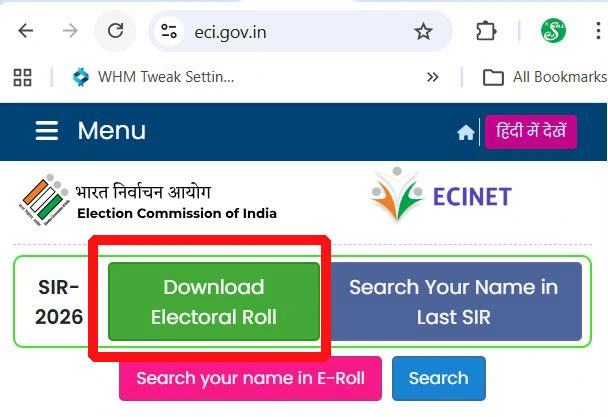
However, the names can be still included by Form 6 subject to proper verification and authentication till the last date of nomination filing.
Why Is This a Massive Victory for the Election Commission?
This publication is not just a routine administrative act. Rather, it is a triumph of institutional integrity. The Election Commission of India (ECI) had assured the public and the judiciary that it would publish the Final Voter List on time. Despite continuous pressure, it kept its word.
Significantly, in most other states, the Election Commission of India has already published final voter lists without much controversy. However, West Bengal witnessed extraordinary resistance. Therefore, the timely publication here becomes even more meaningful.
The Supreme Court had directed the Commission to complete the process properly. In response, the ECI complied and moved forward.
Eventually, the ECI could publish the list on schedule. In a climate of hostility, this punctuality becomes a symbol of administrative courage.
The Role of the State Government: Obstruction Instead of Cooperation
However, the bigger question remains: why did this process become so complicated in West Bengal?
From the very beginning, the resistance was visible. Mamata Banerjee had publicly stated, even before the start of the Special Intensive Revision (SIR) process, that “we won’t allow it in Bengal.” Such a statement from a Chief Minister sends a clear signal to party workers and administrative officials.
Once the SIR process began, protests and rallies by the Trinamool Congress became frequent. On one hand, the Chief Minister personally appeared before the Supreme Court to argue against the process.
On the other hand, Abhishek Banerjee staged symbolic protests, even displaying allegedly “dead-marked” voters publicly.
Therefore, the intention to create pressure was evident.
How could Street Protests, Vandalism, and Silence of Administration become routine?
Moreover, they did not limit their resistance to speeches or legal arguments. Several disturbing incidents occurred during the process.
Under the banner of “BLO Adhikar Mancha”, many individuals, who were reportedly not actual Booth Level Officers, surrounded the Election Commission office in Kolkata. Shockingly, the police remained inactive. Such silence raises serious questions about administrative neutrality.
Moreover, when the Chief Election Commissioner asked to take action against a few state officers, the Government remained reluctant as well.
Furthermore, reports suggested that a Trinamool Congress MLA led vandalism at BDO offices. Several BDO offices were allegedly ransacked. Instead of maintaining order, the local administration appeared hesitant. Consequently, the environment became tense and intimidating.
These actions did not strengthen democracy. Instead, they weakened public trust.
Why did the Bengal SIR turn to an Endless Court Battles?
In addition, the legal battlefield became crowded. Hundreds of cases were filed in the Calcutta High Court and the Supreme Court of India.
Delegations of MPs led by Abhishek Banerjee visited the ECI office in Delhi. Later, even Mamata Banerjee met the Commission with her team.
The state government appointed some of the most expensive and high-profile lawyers, including Kapil Sibal and Abhishek Manu Singhvi, to argue against the process.
The latest episode reportedly took place in the Supreme Court on 27 February 2026. Therefore, even on the eve of publication, attempts were made to challenge or delay the process.
However, despite these efforts, the Election Commission did not retreat.
Why did the Supreme Court Apply Art. 142?
At one point, the situation became so complicated that the Supreme Court had to intervene repeatedly. Eventually, it invoked special powers under Article 142 of the Constitution to appoint judicial officers for supervising the SIR process. The Calcutta High Court finally appointed judges for the SIR process.
Such an extraordinary measure clearly indicates that the normal administrative mechanism was not functioning smoothly. When the highest court of the country must step in to ensure voter list revision, the seriousness of the crisis becomes evident.
Currently, around 60.06 lakh names reportedly fall under the “Adjudication” category.
Judicial officers are scrutinizing these names carefully. They will publish updates as and when decisions are made. This structured process strengthens credibility.
Can constitutional institutions withstand political pressure?
Finally, the contrast is sharp. On one side stands a constitutional body striving to maintain transparency. On the other side stands a state government that appeared desperate to stall the process.
The clear marking of “Deleted” or “Under Adjudication” shows openness. The absence of hidden remarks prevents confusion. Therefore, the voter list now reflects a more accountable system.
In conclusion, the publication of the Final Voter List 2026 in West Bengal is not just a routine event. It represents resilience. It demonstrates that constitutional institutions can survive political pressure.
Despite obstruction, protests, vandalism, and legal warfare, the Election Commission fulfilled its promise. Therefore, this moment can rightly be called a massive victory for the Election Commission, and, more importantly, for democracy itself.
Political Impact on the 2026 Bengal Election
When the Election Commission of India started the Special Intensive Revision (SIR), the TMC opposed it. In contrast, the BJP welcomed it. Their goals were very different.
The Trinamool Congress wanted maximum inclusion in the voter list. It did not want any names removed. On the other hand, the BJP strongly supported removing ineligible names.
The reasons are simple. The TMC, as the ruling party, did not want names of dead voters or permanently shifted voters to be deleted. It allegedly believed its strong booth-level network could use those names for false voting.
Moreover, the TMC wanted illegal immigrants to stay on the voter list. It sees minorities as its core vote bank.
In contrast, the BJP gets very little support from the Muslim vote bank. It also does not have the same grassroots strength to use dead or shifted voters for false votes.
Therefore, if we look at simple arithmetic, the outcome seems to favor the BJP. However, Mamata Banerjee is a veteran politician. She understands public mood better than many other leaders in India. Furthermore, she knows how to turn a difficult situation into her advantage through strong political messaging.
The SIR process has already created anxiety among many citizens. If Mamata Banerjee presents this as a case of central government injustice, it may influence voters.
The Final Voter Lists of West Bengal has erupted political slugfest.
Mamata Banerjee is staging a Dharna on March 06, 2026 to protest against excluded and pending Adjudication cases.
At the same time, we have seen many election forecasts fail in reality. Therefore, it is unwise to predict what voters are truly thinking. The final outcome will depend on their silent decision.
FAQ: Final Voter List 2026 – West Bengal
1. When was the Final Voter List 2026 for West Bengal published?
The Final Voter List was officially published on 28 February 2026 by the Election Commission of India (ECI), as per its declared schedule.
2. Where can I download the Final Voter List?
You can download the list directly from the official website of the Election Commission:👉 https://www.eci.gov.in
The process is simple. You just need to select your state, district, assembly constituency, and polling booth details.
3. Why is this publication considered a major victory?
This publication is seen as a major institutional victory because the process faced strong political resistance, protests, and multiple legal challenges.
Despite pressure and court battles, the ECI published the list on time. Moreover, the Supreme Court of India intervened several times to ensure that the Special Intensive Revision (SIR) process continued properly.
4. What does “Deleted” status mean in the voter list?
If your name is marked as “Deleted,” it means your name has been removed from the voter roll after verification.
5. What does “Under Adjudication” mean?
If your name shows “Under Adjudication,” it means your case is currently under scrutiny. Judicial officers are reviewing such entries. Around 60.06 lakh names reportedly fall under this category, and updates will be published gradually.
6. How do I know if I am a valid voter?
If your name appears in the list without any embossed remark or special status box, it means you are a valid voter.
7. Why did the Supreme Court intervene in the voter revision process?
The situation became highly controversial due to political opposition and administrative complications. Therefore, the Supreme Court of India stepped in multiple times.
At one stage, it reportedly used its special powers under Article 142 of the Constitution to appoint judicial officers to supervise the revision process.
8. Did political parties oppose the Special Intensive Revision (SIR)?
Yes. Leaders of the Trinamool Congress publicly criticized and protested against the SIR process.
Mamata Banerjee had expressed opposition even before the process began, and Abhishek Banerjee led delegations and protests during the controversy.
9. Were there court cases related to this issue?
Yes. Multiple petitions were filed in the Calcutta High Court and the Supreme Court. The legal battle continued until the final publication.
10. What makes this voter list different from previous ones?
The biggest difference is transparency. Clear status labels like “Deleted” and “Under Adjudication” reduce confusion.
Therefore, many observers consider this Final Voter List 2026 a significant step toward electoral clarity and institutional accountability in West Bengal.