
What Is the Real History of 21st July Martyrs’ Day?
People in West Bengal have watched the 21st July Martyrs’ Day event since 1994.
Back then, Mamata Banerjee was a rebellious opposition leader. During those early days, people actually saw families of victims on stage.
However, things changed rapidly over time. The event slowly transformed into a pure political platform. Speeches mainly focused on the misrule of the previous government.
How Did 21st July Shaheed Dibas Become a Grand Show?
| Phase | Main Event Focus | Audience Experience |
|---|---|---|
| Early Years (1994) | Honoring victim families | Opposition protest against government violence |
| Current TMC Era | Grand power display & entertainment | Music, dance performances, and political speeches |
After Mamata Banerjee came to power, the event 21st July Martyrs’ Day became an annual grand festival. Today, the gathering features:
- Popular music and dance shows (like “Paglu Dance”)
- Poetry readings by loyalist writers
- Fiery political speeches
- A massive display of TMC party power
- A Platform for Showing Deprivation against the Central Government
- Election Campaign and personal propaganda
The party uses crowd size to measure its public support.
At Knowledge Mart, we look deeper into these crowds. Readers must not think this massive gathering is completely voluntary.
Local leaders engage in shameless competition to bring people. Many rural citizens attend only due to threats and pressure from the ruling party.
Is the Crowd at 21st July Shaheed Dibas Truly Voluntary?
Let us share a real incident from the past when Mamata Banerjee was still an opposition leader.
On a Krishnanagar local train, a young boy was traveling with his father from Sealdah railway station. When asked why he came to Kolkata, the innocent child simply said he came to visit the city. His father took him to the Birla Planetarium and Victoria Memorial.
They also ate a free lunch of Dim-Bhat (egg-rice).
The poor rural father probably did not realize what seed he planted in his young son’s mind. Was it local political pressure? Or was it just free train travel and a free meal?
Unfortunately, that innocent child was exposed to ugly political games at a tender age.
This incident is not an exception.
Year after year, this Mamata Banerjee political drama blocks the entire city of Kolkata under the name of 21st July Shaheed Dibas.
Why Did Mamata Banerjee Hide the Commission Report on 21st July Martyrs’ Day?
After coming to power, Mamata Banerjee formed a judicial commission headed by retired Justice Susanta Chatterjee. The commission submitted its detailed inquiry report to the government in 2014.
However, Mamata Banerjee never released this report to the public or the assembly floor. Over the years, her administration spent taxpayer money on several inquiry commissions.
At Knowledge Mart, our analysis shows that most of these official reports remain hidden from the public today.
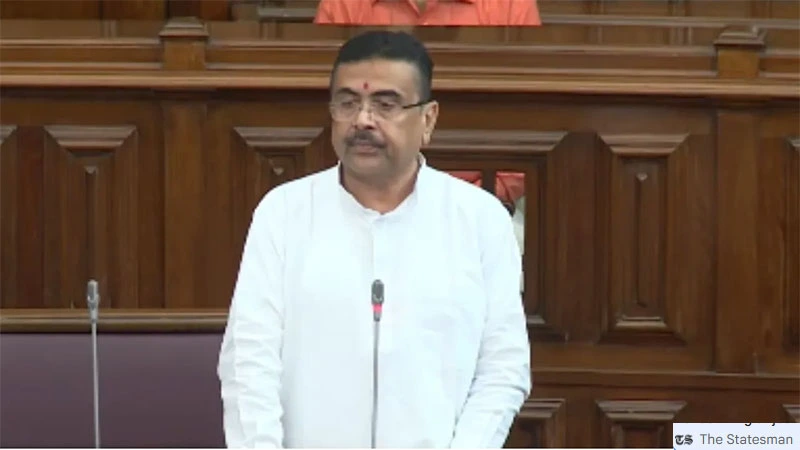
On 20th July 2026, Chief Minister Suvendu Adhikari finally made this report public inside the West Bengal Legislative Assembly.
While driven by political strategy, his action served the public interest by revealing long-suppressed facts about 21st July Shaheed Dibas.
What Key Explosive Findings Did Suvendu Adhikari Reveal?
| Key Issue | Commission Findings & Suvendu Adhikari’s Claims |
|---|---|
| State Cooperation | The TMC government and Kolkata Police (Lalbazar) withheld crucial documents from the commission. |
| Witness Summoning | The commission summoned Left Front leaders like Buddhadeb Bhattacharjee and Biman Bose, but never called Mamata Banerjee. |
| Bias Allegations | Late Congress leader Pankaj Banerjee boycotted the panel, stating it could not be impartial while key officer Manish Gupta served as a TMC minister. |
| Compensation Gap | The panel recommended Rs. 25 lakh for victim families. The TMC administration paid only Rs. 2 lakh to deceased families and Rs. 15,000 to the injured. |
Here are the primary revelations brought forward from the hidden judicial report:
- Lack of Government Help: Neither the state government nor Lalbazar police headquarters cooperated fully with the commission.
- Selective Questioning: The panel interrogated former Chief Minister Buddhadeb Bhattacharjee, Biman Bose, and senior bureaucrats, but completely bypassed Mamata Banerjee.
- Protecting Key Ministers: Suvendu Adhikari stated the TMC government hid the report primarily to shield former bureaucrat and TMC minister Manish Gupta.
- Unprovoked Firing Confirmed: The report reaffirmed that police firing under the previous Left government was largely unprovoked.
Watch the Video of Political Analysts Biswanath Chakraborty, how he finds it as the master stroke of Suvendu Adhikari.
Is Mamata Banerjee Political Drama Depriving Real Victim Families?
The financial breakdown highlights a stark contrast in government spending. While the state government spends massive funds on local festivals and club donations, it shortchanged the 1993 police firing victims:
The judicial commission explicitly recommended Rs. 25 lakh for families of the deceased and Rs. 5 lakh for the injured.
Instead, the TMC administration handed out just Rs. 2 lakh to victim families and a mere Rs. 15,000 to those injured during the rally.
Closing his statement, Suvendu Adhikari asserted that those leading the annual rally have lost the moral right to honor these martyrs.
At Knowledge Mart, observers note his strategic political move: encouraging victim families to file fresh FIRs and seek full compensation through official legal channels.
How Did Madan Mitra Flip His Stance Following the Speech?
Immediately following the assembly address, observers witnessed another round of high-voltage political drama. During the original judicial commission hearings, TMC leader Madan Mitra had directly blamed former Chief Minister Buddhadeb Bhattacharjee for the 1993 firing.
However, inside the assembly, Madan Mitra did a complete 180-degree turn. Praising the announcement on the floor, he thanked the speaker, compared the recovery of the report to exhuming a suppressed truth, and officially demanded a government white paper on the matter.
Similarly, long-time associate Firhad Hakim suddenly displayed a awakened conscience. At Knowledge Mart, political analysts note that such dramatic shifts reflect how deeply internal party dynamics are shifting. As a result, 21st July Martyrs’ Day has turned to a dirty political blamegame.
Does Any TMC Faction Have the Moral Authority Over 21st July Shaheed Dibas?
| TMC Faction / Group | Current Strategy for 21st July | Moral Standing Analysis |
|---|---|---|
| Mamata Banerjee Camp | Attempting to hold traditional rallies to show crowd strength. | Lost moral high ground after keeping the inquiry report hidden for over a decade. |
| Rebel Factions & Rivals | Organizing parallel events to cash in on brand value. | Exploiting historic martyr sacrifices purely for current intra-party power struggles. |
The core message delivered on the floor was unmistakable: no group within the current Trinamool Congress hierarchy holds the moral right to speak on 21st July Martyrs’ Day.
Today, all three emerging factions within the party are attempting to capitalize on the brand value of 21st July Shaheed Dibas. Instead of genuine respect for victim families, the event has turned into a contest for organizational control.
If these leaders possessed true political ethics or self-respect, none of them would step out on the streets to claim the legacy of this tragic day.
You can watch Madan Mitra’s latest political stance on YouTube for further media context on these assembly developments.
What Was the Role of Manish Gupta in the 1993 Firing?
During the 1993 incident, Manish Gupta served as the Home Secretary of West Bengal. Later, when questioned before the judicial panel, he claimed he was entirely unaware that police firing was taking place.
This denial raises serious questions about administrative accountability:
- How could a top bureaucrat claim ignorance about firing in the heart of the city?
- Why did senior officials fail to take immediate responsibility for civilian deaths?
- Was bureaucratic compliance already taking root before the current era?
While state administration back then differed from today’s era of overly obedient bureaucrats (like Alapan Bandyopadhyay, Manoj Pant, or Rajeev Kumar), political influence still swayed top decisions. High-ranking officials systematically avoided taking responsibility for police actions.
Why Did Mamata Banerjee Protect Manish Gupta?
| Timeline | Manish Gupta’s Role | Political Strategy & Rewards |
|---|---|---|
| 1993 Firing | Home Secretary of West Bengal | Claimed ignorance regarding police firing actions. |
| 2011 Elections | TMC Candidate for Jadavpur | Fielded against former CM Buddhadeb Bhattacharjee as a political surprise. |
| TMC Cabinet Era | State Power Minister & Rajya Sabha MP | Appointed Power Minister and later awarded a Rajya Sabha seat. |
Instead of holding former officials accountable, Mamata Banerjee turned Manish Gupta into a key political ally. She fielded him against Buddhadeb Bhattacharjee in Jadavpur during the 2011 elections. After his victory, she appointed him Power Minister and later sent him to the Rajya Sabha.
At Knowledge Mart, our analysis suggests that suppressive actions surrounding the commission report were directly tied to this relationship:
Publishing the inquiry report officially would have exposed her own cabinet minister, Manish Gupta. Because Mamata Banerjee rarely admits political missteps, hiding the report was her easiest way out.
Who Holds Moral Accountability for Taxpayer Money Spent on Commissions?
Cabinet governance operates under collective responsibility. Even if the Chief Minister hesitated to act, former ministers should have pressed to release the findings to the public.
Setting up inquiry panels relies entirely on public tax revenue. When governments suppress official findings to protect political allies, they betray public trust. Both the leadership and the silence of former cabinet members remain accountable to the citizens of West Bengal.
You can read further news coverage on Justice Susanta Chatterjee Commission findings to understand how top officials were evaluated in the report.
What Is the Final Message to Suvendu Adhikari and Bengal Politics?
In conclusion, a clear appeal must be made to the Chief Minister Suvendu Adhikari and the political leadership of West Bengal.
Today, the real political relevance of 21st July Martyrs’ Day is effectively dead. Its brand value has been completely eroded by decades of opportunistic political drama. Practically speaking, conducting a fresh, unbiased investigation after more than thirty years is no longer realistic.
At Knowledge Mart, our perspective is straightforward: dragging this issue further only serves to muddy the state’s political waters for short-term gain.
Why Should Bengal Move Beyond 21st July Shaheed Dibas?
| Political Reality | Public & Economic Needs |
|---|---|
| Annual city blockades, political posturing, and factional fights. | Focus on industry, jobs, commercial investment, and economic progress. |
| Exploiting historic tragedies for party crowd strength and power display. | Permanent relief for ordinary citizens from forced rallies and road closures. |
The modern public in West Bengal is far more interested in industrial growth, employment, and economic progress than in endless political circus shows. Cheap political tactics must yield to true development.
If political leaders truly care about the state’s future, they should work toward a concrete administrative policy:
The state should officially phase out and stop the annual political blockade known as 21st July Shaheed Dibas. Freeing ordinary citizens and businesses from this yearly disruption would be the best possible reward for the people of Bengal.
You can watch media analysis on Suvendu Adhikari’s assembly statements for further updates on these ongoing political debates.
Knowledge Mart Keynotes: Ending the Politics of Tragic Heritage
At Knowledge Mart, our analytical assessment concludes that public events built on historical tragedies must undergo strict institutional evaluation. When political agendas override original intent, public utility disappears.
The annual 21st July Shaheed Dibas has reached a critical structural impasse:
- Loss of Institutional Purpose: The original objective, seeking justice for victim families, was compromised when findings of the official inquiry commission were kept hidden from the public record for over a decade.
- Economic and Civic Friction: Halting economic activity and shutting down transit infrastructure in Kolkata costs small businesses, daily earners, and logistics networks millions of rupees every year.
- Shift in Public Priorities: Modern governance metrics favor industrial investment, job creation, and infrastructure development over competitive street mobilization.
Watch the video of veteran Journalist Sumon Chattopdhyay, who echoes the same message regarding 21st July Martyrs’ Day.
Strategic Policy Recommendation
| Current Practice | Proposed Policy Reform | Expected Public Benefit |
|---|---|---|
| Mass political rallies, urban blockades, and factional mobilization. | State-sanctioned solemn memorial service at a designated site without citywide closures. | Uninterrupted commercial transport, normal traffic flow, and zero loss of working hours. |
| Delayed or inadequate financial settlements for affected families. | Direct distribution of full compensation recommended by judicial panels through official channels. | Legal closure and financial security for families without ongoing political exploitation. |
The Final Word: Genuine respect for fallen citizens requires justice and institutional integrity, not annual urban disruptions. Banning political blockades under the banner of historical rallies is an essential step toward a modern, growth-oriented West Bengal.
10 Key Takeaways from the 21st July Martyrs’ Day Gimmick
- The Hidden Report Exposed: Chief Minister Suvendu Adhikari dropped a major bombshell by leaking the suppressed 2014 Justice Susanta Chatterjee Commission report inside the West Bengal Assembly.
- 30 Years of Political Drama: What began in 1994 as a solemn event honoring victim families in the name of 21st July Martyrs’ Day has devolved into an annual political festival complete with music, dance, and power flexes.
- Forced Rallies & Coercion: Local TMC leaders actively pressure rural citizens and use free travel or food as bait to artificially inflate crowd sizes for 21st July Shaheed Dibas.
- Unprovoked Firing Confirmed: The official judicial report reaffirmed that police firing on Youth Congress workers during the Left Front regime in 1993 was largely unprovoked.
- Bypassing Key Witnesses: While former Chief Minister Buddhadeb Bhattacharjee and top bureaucrats were interrogated, the judicial commission inexplicably never summoned Mamata Banerjee.
- Shielding Former Officials: Suvendu Adhikari alleged the TMC government deliberately hid the report for over 12 years to protect former Home Secretary and TMC minister Manish Gupta.
- Shortchanging Martyr Families: Despite recommending Rs. 25 lakh for deceased families, the TMC administration handed out a paltry Rs. 2 lakh, spending taxpayer funds on local clubs and festivals instead.
- Complete Political Flips: TMC leaders like Madan Mitra made a dramatic 180-degree turn in the Assembly, shifting stances overnight to fit current internal party narratives.
- No Moral Authority Left: Fighting across three distinct factions, no group within the ruling party retains the moral right to exploit the brand value of 21st July Martyrs’ Day.
- Demand to End City Blockades: Knowledge Mart calls on political leaders to stop using historical tragedies for political gain and permanently end annual citywide blockades in favor of real economic development.