Mass Voter Deletion: The Ultimate Truth
Mar 27, 2026 - By Ashutosh Roy Current AffairsElection AnalysisPoliticsRegional UpdatesWest Bengal Politics
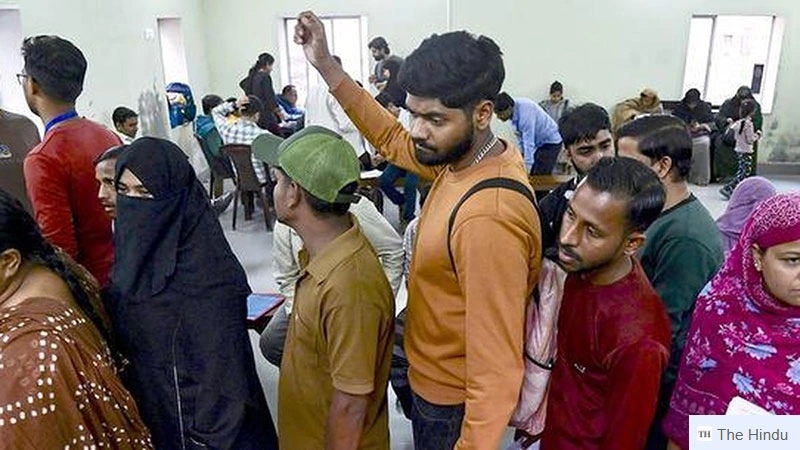
West Bengal Voter List Controversy: 13 Lakh Names Deleted: What’s Really Happening?
The electoral roll is the backbone of any democracy. However, in West Bengal, that system is now under intense scrutiny. A major controversy has erupted over mass voter deletion under the “adjudication” category.
As of 25 March 2026, officials from the Chief Electoral Office revealed a shocking figure. Authorities reviewed around 32 lakh voter records. Out of these, nearly 40%, which is about 13 lakh names, were deleted. Shouldn’t we call it a Mass Voter Deletion?
The Election Commission of India says this is a routine clean-up. It calls the process a Special Intensive Revision (SIR). The goal is simple: remove duplicate and deceased voters and improve database accuracy.
As a result, officials claim the updated voter list will be more reliable and transparent.
However, Trinamool Congress and some opposition leaders strongly disagree. They argue that this is not just a clean-up. Instead, they describe it as a “targeted purge” before Assembly Election 2026.
Moreover, critics claim the deletions affect specific groups more than others. In particular, they point to women and minority communities. Because of this, allegations of institutional bias are growing louder.
There is a booth in Basirhat, where 340 names have been deleted. There are allegation of major deletions in the minority dominated booths.
At the center of the issue is a key question: why did 60 lakh records show under “Logical discrepancies“?
There are a few possible reasons.
- Many believe this reflects a documentation gap. In other words, some citizens may lack proper or updated paperwork required by new digital systems.
- The process itself may be under strain also. Booth Level Officers (BLOs) must verify millions of voters within tight deadlines. At the same time, they must follow evolving technical guidelines.
- As a result, errors and inconsistencies may have increased during verification leading to such Mass Voter Deletion.
So, what is really happening in Voter Lists of West Bengal?
On one hand, ECI insists this is a necessary step to improve electoral accuracy. On the other hand, critics warn it could impact voter rights.
Ultimately, the controversy raises a larger concern. Is this a routine database correction or a sign of deeper systemic issues in voter verification?
Mass Voter Deletions Trigger Political Turmoil in West Bengal
Naturally, these large-scale deletions have created intense political unrest in West Bengal before the election 2026. As a result, tensions continue to rise across the state. The Mass Voter Deletion has been spread over every district, particularly in bordering areas.
Why the SIR Process Became So Controversial?
From the very beginning, the Special Intensive Revision (SIR) process has faced constant controversy. In fact, the situation has only become more complicated over time.
- The state government strongly opposed the process.
- At the same time, leaders from Trinamool Congress openly criticized it.
- Many TMC Ministers & Leaders even issued public warnings and threats against its implementation.
Because of this, the entire SIR exercise turned into a highly complex and politically charged process before Bengal Elections 2026.
Meanwhile, legal challenges added another layer of conflict. Different parties repeatedly approached the courts.
- Sometimes, the Trinamool Congress filed cases.
- At other times, the state government or individual political leaders took legal action.
- Even Mamata Banerjee appeared in the Supreme Court as a people’s representative.
As a result, the situation reached a deadlock. The ongoing disputes slowed down the process and increased uncertainty.
Eventually, the matter drew sharp remarks from the judiciary. The Chief Justice pointed out a key issue.
He stated that the SIR process is happening in many states. However, nowhere else has it faced this level of disruption.
Therefore, his observation highlights how uniquely contentious the situation has become in West Bengal.
Why Has the Role of Election Commission Come Under Scrutiny?
The Chief Minister, Mamata Banerjee has been constantly lashing upon the Election Commission for showing anti-voter attitude. She also alleged that the Election Commission is Working under the direction of the Central Government (BJP).
Above all, the Election Commission has transferred or ousted a lot of top of IAS and IPS Officers including the Chief Secretary and the DGP of the state.
As the Battle for Bengal 2026 between TMC and BJP has already kicked off, the political turmoil has started. The Mass Voter Deletion has fueled to the holistic election campaigns.
Why Did Politics Try to Stop the SIR Process in West Bengal?
At the core of the controversy lies a strong political claim. Critics argue that Trinamool Congress tried its best to stop the Special Intensive Revision (SIR) process.
The reason, they say, is strategic. The party allegedly wanted elections to continue using the 2024 voter list. As a result, questionable or ineligible names would remain on the rolls.
According to the claims of the critics, keeping such names could benefit the ruling party. Critics allege this creates room for electoral malpractice, including false voting. But can such a Mass Voter Deletion be justified?
Moreover, many people in West Bengal often talk about post-afternoon voting irregularities. In particular, allegations of voter intimidation after 4 PM frequently surface during elections.
Therefore, critics argue that ensuring more names on the list could make such practices easier.
Pressure on Booth Level Officers Raises Concerns
At the same time, reports suggest pressure on Booth Level Officers (BLOs). Because of this, some claim that the BLOs had to add names even without proper verification. Critics say that they had to work under pressure of TMC canon fodders.
As a result, even individuals who may not qualify as eligible voters allegedly appeared on the rolls.
Administrative Influence and Oversight Questions
Another key concern involves administrative influence. Critics claim there is close coordination between local administration, such as SDOs, BDOs, and District Magistrates, and the ruling party.
Because of this, they argue that irregularities could go unchecked.
However, the Election Commission of India eventually stepped in.
It introduced stricter monitoring measures, including the appointment of Special Observers and Micro Observers.
Additionally, the ECI reduced the powers of Electoral Registration Officers (EROs) to ensure better oversight. There had been allegations from the Chief Election Commissioner, Gyanesh Kumar that some AEROs and EROs have uploaded even fake or illegible documents. He showed evidences in a video conference.
The situation took a major turn when the matter reached the Supreme Court of India.
Even Mamata Banerjee personally appealed in court to cancel the process. However, the it could not yield anything.
Instead, the court invoked Article 142 of the Constitution. As a result, it appointed judicial officers to supervise the entire process.
13 Lakh Names Removed: What Can They Do?
Following this, around 60 lakh names went into the adjudication category. Judicial officers worked extensively and reviewed 32 lakh records.
Out of these, nearly 13 lakh names were removed. This is very sarcastic on the eve of 2026 Bengal Elections.
However, affected individuals still have the right to appeal. The Calcutta High Court has already set up 19 appellate authorities.
Despite these provisions, a critical question remains. Can ordinary or marginalized citizens realistically file appeals within such a short time?
Additionally, Mamata Banerjee has promised legal support for affected voters during campaign rallies.
When even a former justice of the Calcutta High Court faces exclusion and expresses his concerns over the Appeal procedure and Appellate Tribunals, commers, it alarms the commoners.
However, in practice, providing legal aid to such a massive number of people within a limited timeframe may prove extremely difficult.
Does Everyone have Access to Justice for Electoral Reform?
Ultimately, the issue goes beyond politics. It raises a deeper concern about access to justice.
While authorities aim to clean the voter list, the challenge lies in ensuring that genuine voters are not left out.
Questions Raised Over Election Commission’s Role in Voter Deletion Row
However, this entire process has also raised serious questions about the role of the Election Commission of India. As a result, concerns about transparency and accountability are growing.
- How Could the Server or Election Commission Software Fail During List Publication?
- Why the Election Commission fail to release the Deleted Voters List on Time?
- Couldn’t There be a Gender-Wise Data Disclosure? (Meanwhile, Mamata Banerjee has alleged that women voters were selectively targeted.)
- How Did a Booth Level Officer’s Name Get Deleted? (Moreover, critics argue that the Election Commission should have conducted proper background checks before appointing BLOs.)
- Why Are Minority-Dominated Booths Seeing Higher Deletions?
- How can a former Judge of the High Court face the Exclusion?
Transparency Now the Biggest Challenge
Taken together, these issues point to one major concern is the lack of transparency.
While the Election Commission of India aims to ensure a clean voter list, it must also maintain public trust.
Therefore, unless the ECI does not clearly answer these questions, the controversy is unlikely to fade anytime soon.
Higher Standards Expected from a Constitutional Body
At this point, the debate goes beyond politics. The real issue concerns a constitutional institution like the Election Commission of India.
Therefore, many believe it should have acted with greater caution. Transparency and credibility are not optional. Rathre, they are essential. Because of this, even small lapses raise big questions about trust.
At the same time, it is important to remember the core purpose of the SIR process.
The goal is not only to remove ineligible voters. It is equally about adding eligible citizens to the electoral roll. In other words, the process must stay balanced and fair.
In this context, we must raise a comment about Suvendu Adhikari’s statement.
He publicly celebrated the deletions. However, many observers found this reaction inappropriate. Because at this stage, the full picture is still unclear. As a result, his reaction sparks criticism.
After all, those removed from the list may not belong to any single political group.
In fact, it is still uncertain how this Mass Voter Deletion will impact political outcomes.
For example, in several border regions of West Bengal, voting trends suggest that the Bharatiya Janata Party has been gaining ground.
Therefore, assuming that deleted voters supported only one party may be misleading.
The Final Word: Wait and Watch
Ultimately, the situation is still evolving.
For now, all sides must wait and observe how the process unfolds. Only time will reveal whether the SIR exercise in Bengal strengthens democracy or deepens the controversy.
How to check voter name removed?
You may Apply either online or submit a fresh Form 6. You may also appeal physically at the office of the District Magistrate (DM), Sub-Divisional Magistrate (SDM), or Sub-Divisional Officer (SDO).
10 Key Takeaways
- The voter list controversy in West Bengal has intensified after nearly 13 lakh names were deleted during the SIR process.
- The Election Commission of India claims the exercise aims to remove duplicate and deceased voters to improve accuracy.
- However, opposition parties, especially Trinamool Congress, have called it a targeted purge. The fact of life deletions Mass Voter Deletion has affected common citizens.
- Political resistance, public protests, and repeated legal challenges made the SIR process highly controversial from the start.
- The Supreme Court of India intervened and appointed judicial officers to oversee the process using Article 142.
- Around 60 lakh names went into adjudication, and 32 lakh were reviewed, leading to about 13 lakh deletions.
- Affected voters can appeal, and the Calcutta High Court has set up 19 appellate tribunals.
- Concerns about transparency have grown due to server failures, delayed lists, and lack of gender-wise data.
- Allegations of bias include higher deletions among women and minority communities, though detailed data is not publicly clarified.
- The controversy highlights a bigger issue: balancing clean electoral rolls with fairness, access to justice, and public trust.
People Also Ask (PAA)
What is the SIR process in West Bengal?
The Special Intensive Revision (SIR) is a voter list update exercise conducted by the Election Commission of India. It aims to remove duplicate, deceased, or ineligible voters and add eligible citizens to improve electoral accuracy. The Mass Voter Deletion in West Bengal has erupted political rows.
Why were 13 lakh voter names deleted?
Authorities reviewed around 32 lakh records in West Bengal. As a result, the Judicial Officers removed 13 lakh names due to “logical discrepancies”, such as missing or incorrect documentation.
Why is the Mass voter deletion process controversial?
The process is controversial because opposition parties, including Trinamool Congress, allege targeted Mass Voter Deletion. They claim certain groups, like women and minorities, were disproportionately affected.
Did the Supreme Court intervene in the SIR process?
Yes, the Supreme Court of India stepped in and used Article 142. As a result, judicial officers were appointed to oversee the verification and adjudication process.
Can deleted voters get their names back on the list?
Yes, affected voters can file an appeal. The Calcutta High Court has already created multiple appellate authorities to handle these cases.
Why are there concerns about transparency?
Concerns arose due to server failures during list publication, delayed release of deleted names, and lack of detailed data such as gender-wise breakdowns.
Were women voters specifically targeted?
Mamata Banerjee has alleged that women voters were selectively removed. However, the Election Commission of India has not released separate gender-based data to confirm or deny this claim.
What role did political parties play in the controversy?
Different parties took strong positions. While the All India Trinamool Congress opposed the process, leaders from the Bharatiya Janata Party supported stricter voter verification.
What are the main concerns for ordinary voters?
The biggest concerns include wrongful deletion, lack of awareness about appeals, and difficulty accessing legal help—especially for marginalized communities.
Will this controversy affect future elections?
It could. The outcome depends on how fairly the process is implemented and whether public trust in the Election Commission of India is maintained.
[…]Mass Voter Deletion: The Ultimate Truth Why were 1.3M names axed from the voter list? We explore the political debate, documentation failures and the reality behind the mass voter deletion controversy[…]