Proven Truth Behind the BJP-TMC Setting
Jan 21, 2026 - By Ashutosh Roy Election AnalysisNational PoliticsPoliticsWest Bengal Politics
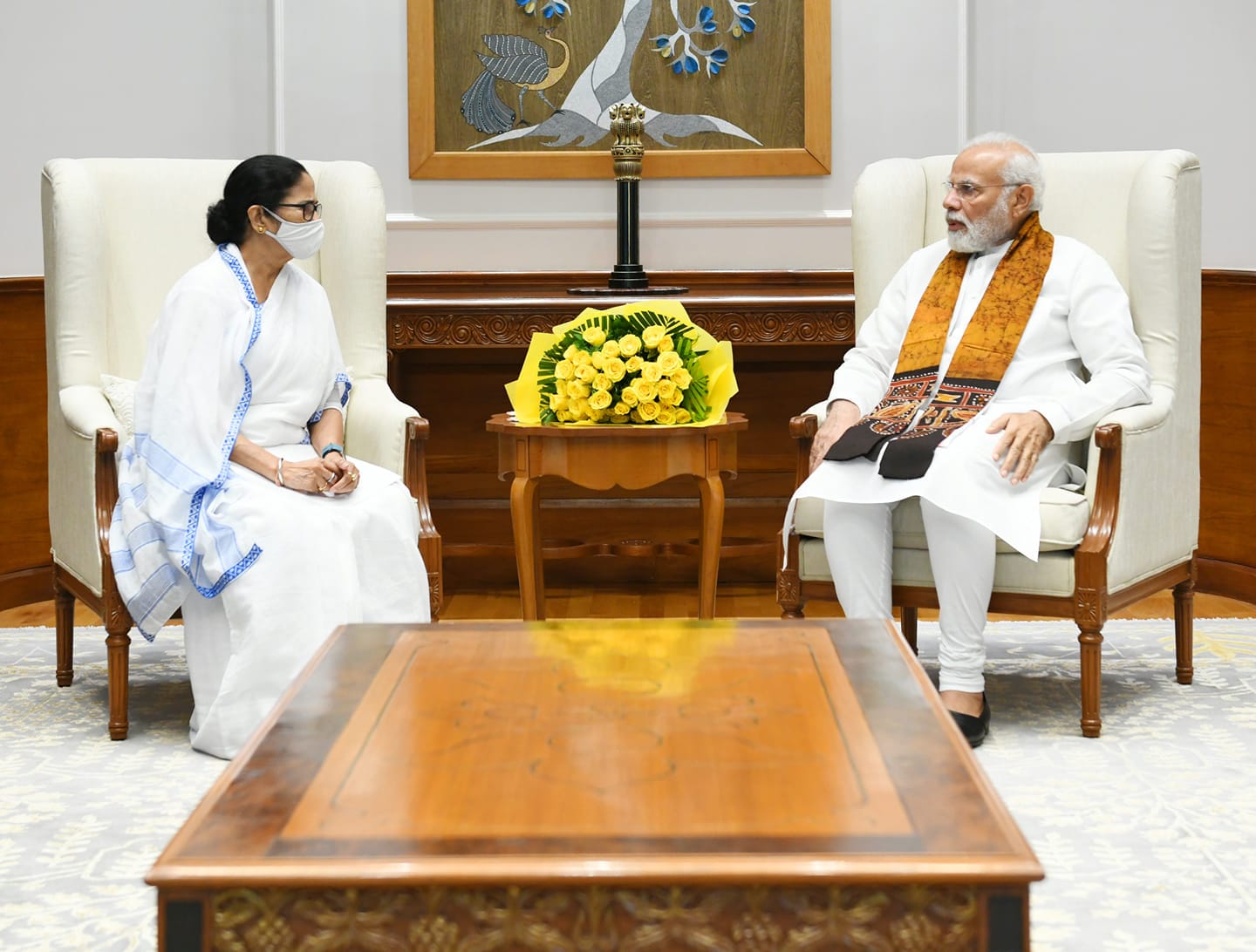
Why Is the BJP-TMC setting Growing?
The BJP-TMC setting theory has become a widely discussed topic in West Bengal politics. No one knows who first coined this term. However, today, not only ordinary Bengalis but also a large section of BJP workers and supporters believe in this theory. The TMC will bubble with enthusiasm.
Do Delayed Probes Fuel Suspicion in BJP-TMC setting?
As a result, a deep sense of distrust and resentment has grown in the Bengali mind. There may be some basis behind this belief. However, the perception that has developed could have serious and damaging consequences for society. Over time, such perceptions have strongly influenced society and politics.
India’s national politics and Bengal’s political landscape are no exception. However, a dangerous idea has now taken root. Many people believe that no matter how much wrongdoing or corruption political leaders commit in West Bengal, no action will be taken against them. As a result, the impact is long-term and deeply harmful.
BJP-TMC setting sparks controversies in West Bengal Politics
Is Justice Selective in Bengal?
Gradually, people lose faith in social order and the rule of law. Because of this, a mindset develops where citizens start finding fault in everything. In other words, people begin to feel that laws and investigations apply only to common citizens, not to those at the top of society.
Consequently, the outcome is bound to be extremely negative for society and democracy. The same people often accept certain popular narratives without question.
A few relevant examples make this clear.
- First, there was the allegation that Rajiv Gandhi was involved in the Bofors kickback scandal. This belief spread widely and shaped public opinion for years.
- Second, many people believe that Mamata Banerjee is the sole protector of Muslims, while the BJP is seen as a “bogeyman” by the Muslim community.
- Third, Abhijit Gangopadhyay is often viewed as not just a judge, but as someone uncompromising in exposing corruption within the government or institutions under the legal system.
In short, these narratives show how fixed perceptions, once formed, become accepted truths, even without constant scrutiny or fresh evaluation.
Today, the BJP-TMC setting has turned into a widely accepted belief.
Mamata against soft stance of Congress against CPM
Those above the age of forty may remember a similar phase in the past. At one time, people repeatedly accused the Indira Congress of being too soft against the CPI(M) in West Bengal.
Because of this perception, some state Congress leaders were even given a label, “watermelon”. That meant green on the outside (Congress) but red on the inside (CPI-M).
In reality, this perception became a major driving force behind Mamata Banerjee leaving the Congress. However, there was one key difference back then. At that time, corruption allegations of today’s scale did not exist.
The current accusations have affected and harmed millions of people in West Bengal, making the situation far more serious and damaging.
Are Agencies Losing Credibility due to BJP-TMC setting?
At present, many people believe that the BJP-TMC setting is influencing corruption investigations. This belief grows stronger when central agencies delay probes for months, or when the Supreme Court hearing in the DA case gets postponed and verdicts remain reserved.
As a result, in the public mind, the rule of law slowly gives way to the rule of the rulers. People do not want to separate courts, central agencies, and investigations. They want clear justice and punishment. For example, people felt a sense of closure in the Delhi Nirbhaya case because the culprits were punished.
Who Gains From Long Investigations?
However, in West Bengal, a case that cost 26,000 people their jobs tells a different story. In that case, the main accused or the powerful figures behind the crime do not face punishment.
One after another, ministers and almost all top officials of the education department go to jail, yet for unknown reasons the investigation does not move beyond a certain point.
Abhishek Banerjee is summoned several times. Then everything goes silent again.
Even after gold seizures by Customs, no clear trial or punishment follows. If this continues, people will naturally lose faith in the long arm of the law. That loss of trust is deeply dangerous for democracy and society.
Is Politics Above the Law?
Central government investigations or arrests over state-level corruption are not new in India. A common allegation exists that whoever comes to power uses central investigating agencies against political opponents.
In the recent past, we have seen high-profile actions against Jharkhand Chief Minister Hemant Soren and Delhi Chief Minister Arvind Kejriwal. These agencies appeared especially active in both cases.
From a political perspective, one can argue that Hemant Soren, as an ally of the Congress, may have become a target of political vendetta. Perhaps nobody can ever forget the process of arrest of the Ex-Minister Chidambaram. This aligns with the stated policy of Narendra Modi and the BJP to make India “Congress-free.”
Similarly, Arvind Kejriwal emerged as a potential future challenger to the BJP.
After winning power in Delhi and Punjab, and even securing seats in Gujarat, the BJP may naturally view him as a long-term political threat.
Is TMC a safe target for BJP?
From that angle, the Trinamool Congress appears much safer. The party seems content with holding power in West Bengal alone. At the same time, it has repeatedly created obstacles for opposition unity, whether during the passage of key bills or within the INDIA alliance.
Instead, by fielding candidates in Goa, Meghalaya, and Tripura, the TMC has split opposition votes, indirectly benefiting the BJP.
This raises a basic question: Can a party gain power in states where it has no real organization, simply by breaking a few leaders away from the Congress?
Mamata Banerjee is a highly shrewd and experienced politician. Most importantly, she rose from grassroots politics and understands how elections are actually won.
As a result, critics once again revive the BJP-TMC setting theory. They argue that Mamata Banerjee acted like a chess piece on the board to weaken the Congress, reinforcing the belief that this political “setting” exists.
Is the BJP-TMC setting theory to keep CPM out of power?
Now, let us examine some key reasons behind the allegation that the Trinamool Congress has directly or indirectly helped the BJP in the Lok Sabha and Rajya Sabha. On several occasions, the TMC has aided the BJP by staying absent, by not voting, or by refusing to participate in Joint Parliamentary Committees (JPCs).
As a result, these actions have strengthened the perception that the TMC plays a supportive role for the BJP at crucial moments, further fueling the BJP-TMC setting narrative in national politics.
- Criminals Neta Bill / 130th Amendment (2025)
- Waqf (Amendment) Bill, 2025 (April 2025)
- The Delhi Services Bill (August 2023)
- Vice Presidential Election (August 2022)
- Revocation of Article 370 (August 2019)
Is Public Trust Collapsing?
In reality, whom a political party supports openly or quietly is not the main concern for ordinary people. What matters far more is justice for crimes. People have begun to believe that the BJP-TMC setting often protects the powerful figures behind crimes. This belief has only grown stronger over time.
Abhijit Gangopadhyay, as a judge, had once ordered one CBI probe after another with remarkable speed. Today, however, even his voice carries clear disappointment. He openly stated that the Centre does not seem very eager to remove Mamata Banerjee from power.
As a result, such statements further deepen the public perception that political understanding, not justice, drives key decisions.
The “setting theory” has now reached an extreme level. Even after the attack on Suvendu Adhikari’s convoy, social media was flooded with memes claiming that this attack was also a joint drama by the BJP and the TMC.
In Bengal, the BJP’s ideological enemy is the CPI(M), backed by the RSS iron-clad principles of Hindutva. At the same time, Mamata Banerjee’s real political battle is also against the CPI(M).
Therefore, the argument goes that the election spotlight must stay firmly on Suvendu Adhikari. This ensures that 85–90 percent of votes rotate mainly between the BJP and the TMC. The goal is clear: those votes must not shift to the CPI(M) or the Congress. That too is part of political strategy.
Will Justice Come in Time?
However, the people of West Bengal want something far more basic and urgent. They want justice and punishment for large-scale corruption. It must not turn into a situation where justice delayed is justice denied.
Thus the latest ED vs Mamata power struggle is not only an acid test for the BJP on the eve of 2026 Bengal election, but also a true test for the center to prove their integrity to the commoners of West Bengal
[…]Proven Truth Behind the BJP-TMC Setting Why do many believe the BJP–TMC setting gain grounds and protects powerful leaders in West Bengal Politics? A deep look into delayed probes and public anger.[…]
[…]Proven Truth Behind the BJP-TMC Setting Why do many believe the BJP–TMC setting gain grounds and protects powerful leaders in West Bengal Politics? A deep look into delayed probes and public anger.[…]
[…]Proven Truth Behind the BJP-TMC Setting Why do many believe the BJP–TMC setting gain grounds and protects powerful leaders in West Bengal Politics? A deep look into delayed probes and public anger.[…]