Killings of Dipu Das to Chandan: A New Look
Dec 25, 2025 - By Ashutosh Roy Current AffairsGovernance & AdminPoliticsRegional UpdatesSocietyWest Bengal Politics
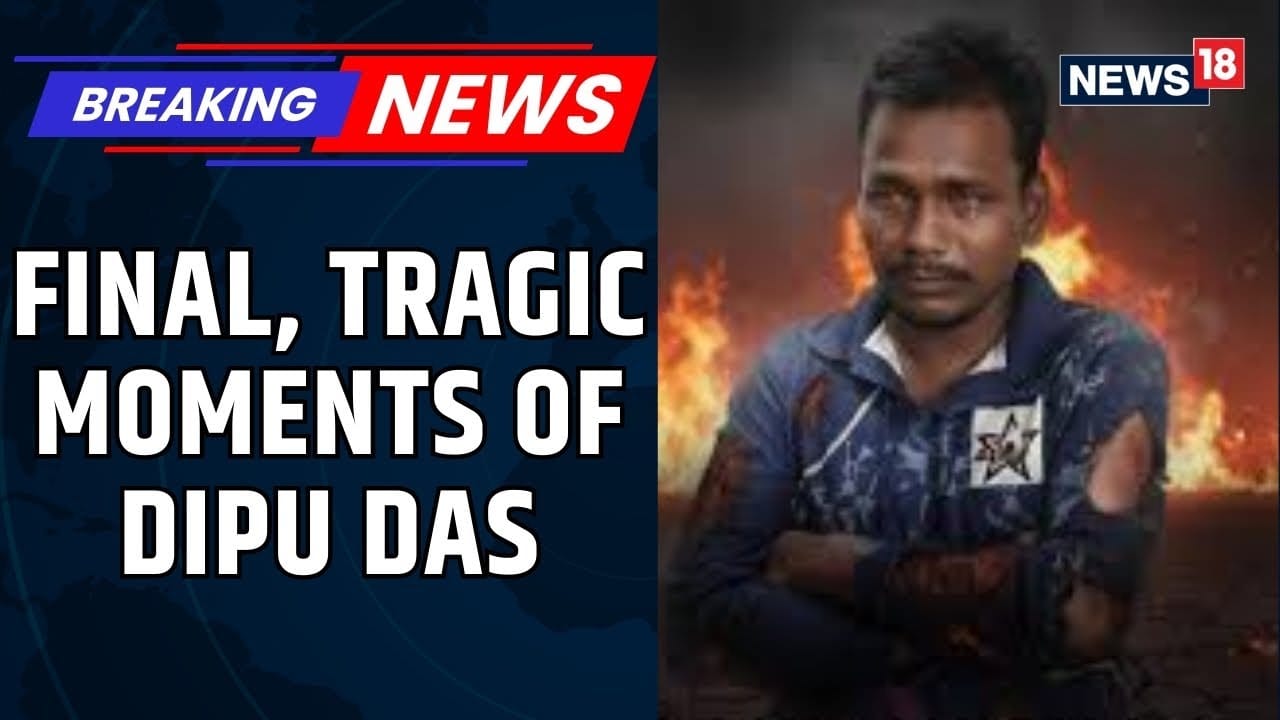
Political and religious killings in West Bengal and Bangladesh: Dipu Das to Chandan Das
There is a saying that a crow does not eat another crow’s flesh. However, we so-called civilized humans can easily kill other humans. Whether it is Hargobind and Chandan Das of Shamsherganj or Dipu Das of Bangladesh, their brutal murders clearly show how intense anger or excitement controls human behavior.
As a result, the mask of civilization falls off our faces. Then, what appears before our eyes in the most naked form is chaos. Ironically, the same person who cries out in pain over a small cut while trimming nails can, in a moment of madness, brutally kill another human being.

Courtesy: News 18 Bangla
Psychologists can explain the mindset behind such killings. However, here we want to focus only on religious or political murders. For example, the brutal lynching of a father and son in Shamsherganj, Murshidabad, happened during a protest against the amended Waqf Act.
Initially, the West Bengal Police said the murders happened due to personal enmity. Later, the Chief Minister formed a Special Investigation Team (SIT).
As a result, the trial ended within eight months. The Jangipur fast-track court delivered the punishment. Thirteen People have faced the life imprisonment sentence. Notably. most of them are in their twenties.
Meanwhile, attackers brutally killed Dipu Das in Bangladesh, who belonged to the same community. Therefore, people in West Bengal are also raising their voices, demanding justice for his murder.
Minority Attacks in Bangladesh: Dipu Das is the latest addition
The attacks on minorities in Bangladesh over the last one and a half years are similar to ethnic cleansing in history. In other words, this is religious fundamentalism. People kill others by spreading madness in the name of religion. Dipu Das and his family are citizens of Bangladesh.
Moreover, this is not only about brutal lynching of Dipu Das. We have repeatedly seen many people to become the victims of such mob lynching in this way. We have also seen attacks and vandalism at Hindu religious places and even Chhayanaut.
Indeed, We must strongly criticize these acts. However, at the same time, we cannot forget our own history. In Odisha, India, religious extremists burned Graham Staines and his two sons alive. When people turn religious emotions into tools for murder, we must understand one thing. There is a bigger conspiracy behind it.
This is not just religious intolerance. In fact, it may be a dirty attempt to divert attention. Perhaps those in power are failing to solve serious real-life problems. Therefore, they are using religion to shift public focus.
If we look at today’s Bangladesh, this becomes even clearer. The Yunus government faces many problems, which have become burden to the famous economist.
As a result, public anger can erupt into mass protests against this caretaker government of Dr. Yunus at any moment.
Political Killings in West Bengal: A Long and Dark History
Political killings have a long history in West Bengal. However, they are happening more frequently now. Especially before and after elections. Yet, this violence now continues beyond election periods.. It continues even at other times.
Meanwhile, we hear about peaceful, bloodless elections in other states. Even states like Bihar or Uttar Pradesh, once known for violence, report such elections today. In contrast, West Bengal seems to be moving in a worse direction than before.
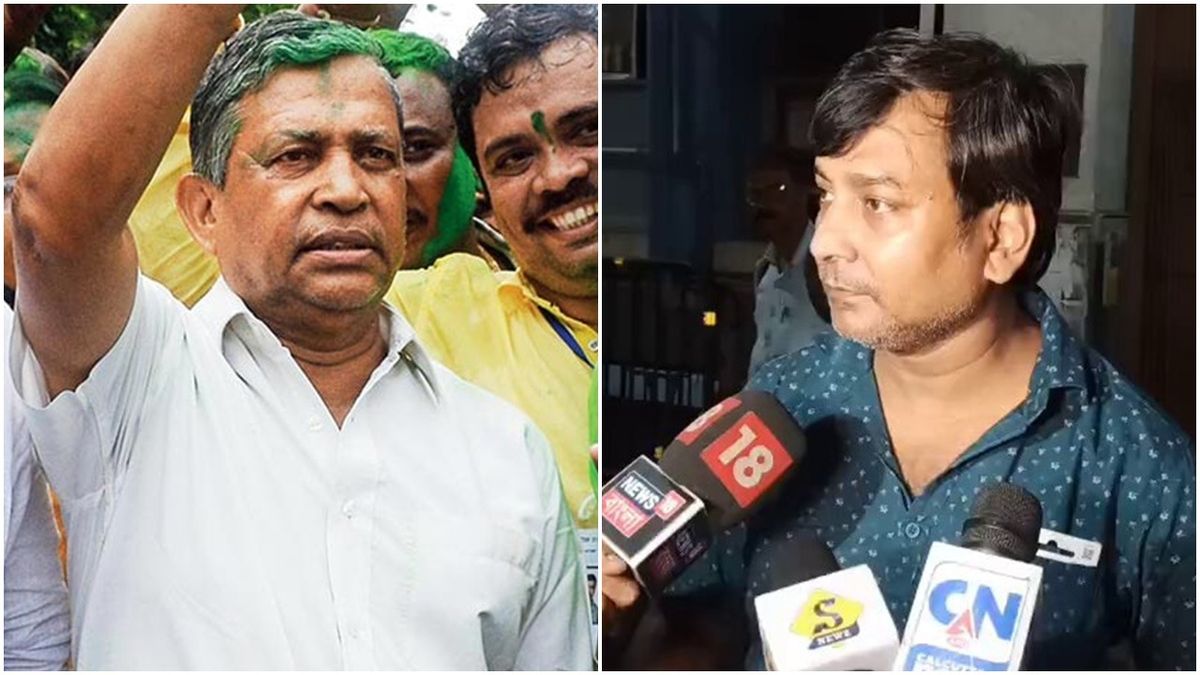
Courtesy: Indian Express Bengali
As a result, shocking incidents keep occurring. For example, during a victory procession of Trinamool Congress, a bomb killed Tamanna Khatun, a young girl from an opposition-supporting family. Similarly, after the Trinamool Congress victory, attackers brutally murdered BJP worker Abhijit Sarkar in Kolkata’s Kankurgachi.
Such incidents are not very rare and deeply disturbing. In all these cases, the role of the police cannot be beyond question. Likewise, from the very beginning, the police role in the Shamsherganj incident also appeared suspicious.
Fast Trials Are Not Enough either in Dipu Das or Samserganj
The Shamsherganj murder drew wide attention for many reasons. First, the Waqf issue triggered it. Second, it involved the killing of a Hindu by Muslims. Most importantly, the brutality of the crime shocked everyone.
The trial ended quickly. However, we must ensure that “justice hurried is not justice buried.” That said, what happens after the crime is one aspect. The role of the police, the administration, and the courts comes later.
But the rule of law works best when it creates fear before a crime happens.
It is the duty of the rule of law to create that fear. If criminals feel confident that the long arm of the law cannot touch them, lawbreaking increases in society. Therefore, before murders, injuries, or arson take place, it is the duty of those in power to enforce the rule of law.
This responsibility applies equally to the Yunus government in Bangladesh and the Trinamool government in West Bengal.
Mamata Banerjee and West Bengal Politics
Now let us see what Mamata Banerjee actually gained from this issue. First, the Das family did not accept the compensation of ₹10 lakh each that Mamata offered.
Meanwhile, Suvendu Adhikari brought them from there and arranged their stay in Salt Lake. Seeing that the situation was slipping out of her control, Mamata formed a Special Investigation Team (SIT).
As a result, the Fast Track Court completed the trial quickly. Within just eight months, the court sentenced the accused to life imprisonment. Justice Amitabh Mukhopadhyay delivered the verdict. However, both sides have said they will approach the higher court. Therefore, the legal process will likely drag on for a long time.
In contrast, Mamata fell behind due to Suvendu Adhikari’s swift actions. Moreover, reports say the accused raised slogans against the Trinamool Congress outside the court. So, did Mamata regain even a little trust from the Hindu community? On the contrary, even her traditional support base became angry with her.
Therefore, in the end, Mamata was left holding only a pencil.
Appalling Conditions of Muslims
Another important point deserves attention. All the accused are very young, in their early twenties. They are also all Muslims. This clearly shows that the condition of Muslims has not improved since the Sachar Committee report of 2009. Instead, lack of education and poverty are pushing many youths in the wrong direction.
Finally, if educated Muslims and community leaders can explain these realities to their fellow community members, it will benefit everyone and lead to the welfare of society as a whole.
[…]Killings of Dipu Das to Chandan: A New Look Think deeper how Brutal murders of Dipu Das to Chandan linked to religion and politics raise concerns on imposition of rule of law in West Bengal and Bangladesh[…]
[…]Killings of Dipu Das to Chandan: A New Look Think deeper how Brutal murders of Dipu Das to Chandan linked to religion and politics raise concerns on imposition of rule of law in West Bengal and Bangladesh[…]
[…]Killings of Dipu Das to Chandan: A New Look Think deeper how Brutal murders of Dipu Das to Chandan linked to religion and politics raise concerns on imposition of rule of law in West Bengal and Bangladesh[…]
[…]Killings of Dipu Das to Chandan: A New Look Think deeper how Brutal murders of Dipu Das to Chandan linked to religion and politics raise concerns on imposition of rule of law in West Bengal and Bangladesh[…]