New labour Codes 2025: Phenomenal Changes
Nov 26, 2025 - By Ashutosh Roy Current AffairsGovernanceNational NewsNational PoliticsSocial IssuesSociety

Revolutionary Changes in Labour laws
We may call new labour Codes 2025 as revolutionary like GST. The way it has attempted to safeguard the employees and bring a wider segment under the bracket, its unparallel. Political parties and old trade unions did raise such concerns, but only in fragments. So, this kind of consolidation is welcome. Mamata Banerjee has to keep a close observations on the changes in existing labour laws.
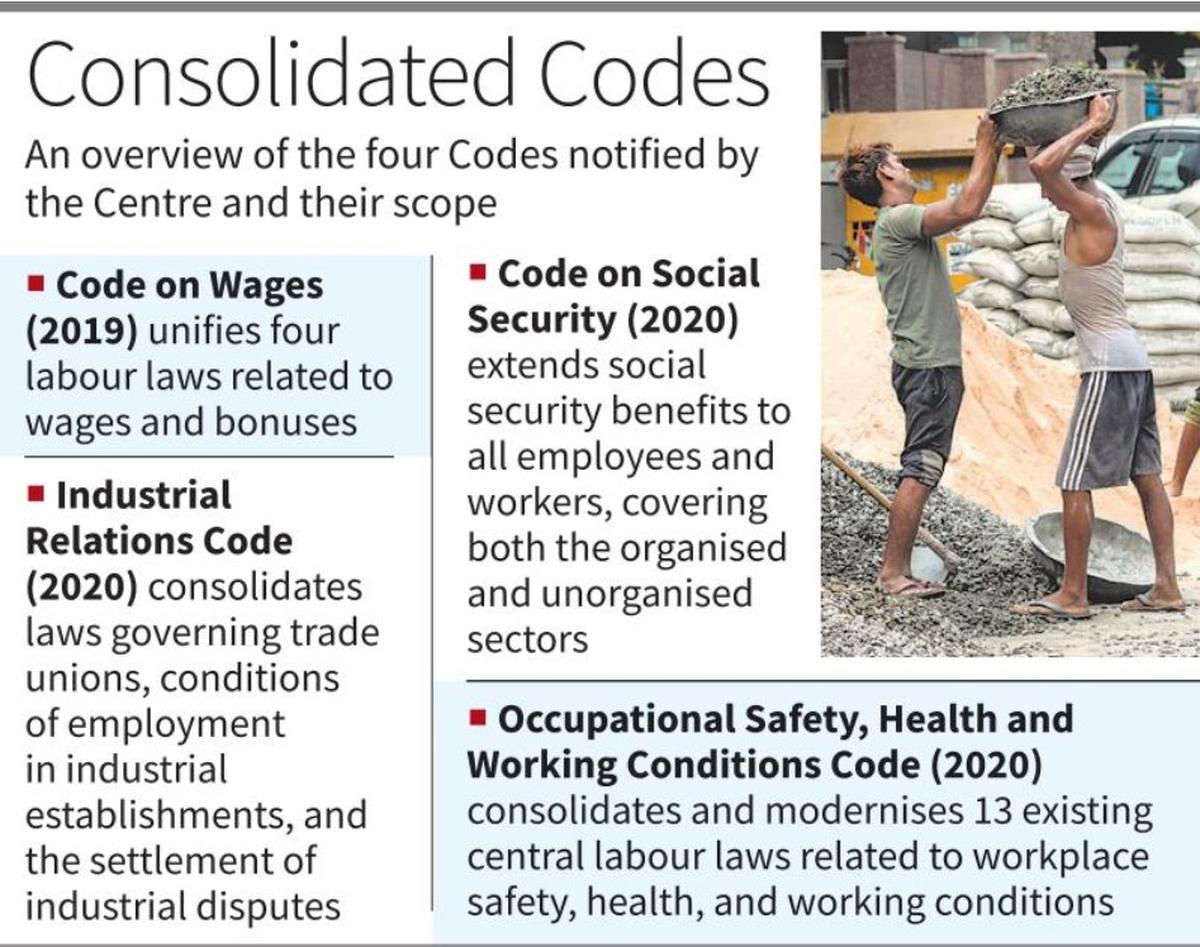
Image Courtesy: The Hindu
The National Floor Wage is mandatory. Even the State Governments have to strictly adhere to these Floor Wage. Mamata Banerjee may have to worry! It meets the long-standing demands of the trade unions. This protects employees from unfair wage disparities. Fixing the weekly limit at 48 working hours can also curb exploitation of workers. The mandatory double rate of voluntary over-time has given the workers a breathing space.
Trade Unions against labour laws
West Bengal, especially, has remained the silent spectator of radicalism of trade unions over the decades. Such a hilarious situation has forced a lot of industrialists to shut down their Bengal chapter and fled to other states.
While safeguarding the employees, it has also reduced the importance of trade unions. Rather, the codes have enforced a compulsory notice period of 15 days for any strike. We noticed that many workers use mass casual leave as a disguised form of strike.
The new codes now include this practice within the definition of a strike. The industry welcomes this effort. Sudden work disruptions hurt their delivery schedule and damage their reputation.
Labour Codes 2025 – transformational Change
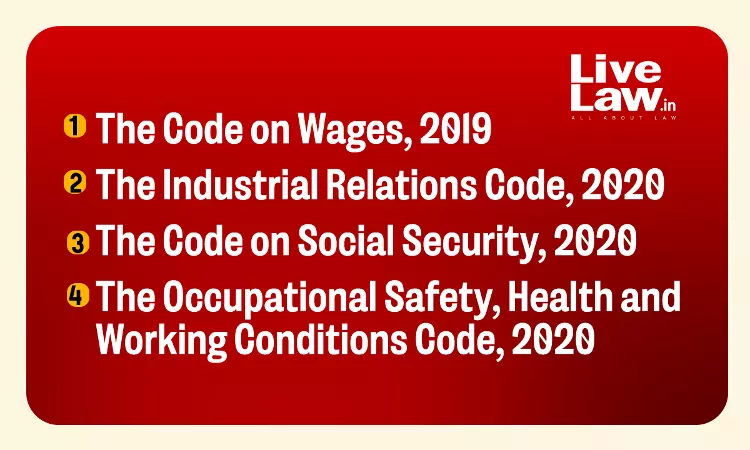
Image Courtesy: Live Law
The transformational change becomes vivid when the government has unified 29 labour-related central laws into four extensive Labour Codes.
The authorities have to issue appointment letters for all and strictly adhere to the date of salary disbursement. The letters must contain the detail job roles, wages, and social security. The limited coverage of mandatory social security used to keep the gig and platform workers under panic.
Now, they all including the unorganized sector workers have also come under the coverage. This is a phenomenal change in labour laws.
On the other hand, it has imposed an additional cost burden to the employers, where it limits at 5%. We all know that the gig workers drive briskly just to boost their earnings. The social security coverage will appear as a blessing on them.
Another significant move is to reduce the gratuity eligibility time period from 5 years to 1 year. So, the job hoppers may slightly remain in peace!
Work-from-home is now formally recognized in the service sector on a mutually agreeable basis. This aligns with global trends that emerged during the COVID period.
Security and Safety in Labour Laws
As the Government has emphasized on security and safety, it can slightly affect their pay package. The 50% of CTC will come under the basic salary, which means the apportionment of Provident Fund may be a little higher. But it will remain for their future security only.
The new labour codes 2025 formally recognize Fixed Term Employment (FTE) or Contractual Workers as a legitimate form of hiring. What may really worry Mamata Banerjee is this: they must receive the full benefits of permanent workers.
This includes leave, medical support, and social security. So, the para teachers or Civic volunteer spreading across the states will find a shy of relief.
Today, even the media houses also engage a lot of contractual with minimum salaries. Unfortunately, the formal trade unions seldom raise hue and cry for them.
The most striking, yet predictable change is the freedom for women to work night shifts. The authorities are to guarantee safety measures.
Mamata Banerjee and New Labour Codes 2025 on women’s night shifts
So, when Mamata Banerjee tries to restrict women’s night shifts it hardly accentuates the positive aspects of her administration. Rather, it erupts political slugfest. The trade unions shouldn’t protest vehemently notwithstanding its true facets.
The employers will also find it as a paradigm shift as they have to submit only One Unified Annual Return as compliance formalities.
This is quite new, and its true effect will become clear later, after actual implementation. For now, it appears the Labour Code 2025 can maintain a balance between employers and employees.