Decline of Strong CPI(M): A deeper analysis
Oct 11, 2025 - By Ashutosh Roy National PoliticsPoliticsRegional UpdatesSocial IssuesWest Bengal Politics
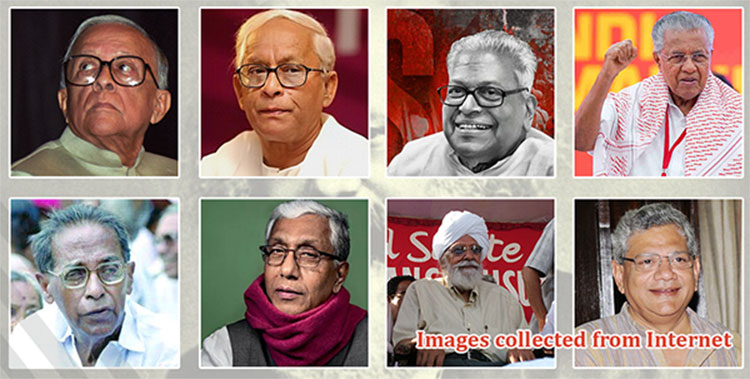
A Case for Ideological Reassessment
The Communist Party of India (CPI) split in 1964 because of an internal ideological conflict. From that split came the Communist Party of India (Marxist), or CPI(M). In West Bengal, CPI(M) soon became the dominant Left force and overshadowed its parent party.
It ruled the state for long 34 uninterrupted years and sent the largest share of West Bengal’s MPs to the national parliament. CPI(M) stayed visible and powerful, while the original CPI quietly faded away
Whether it is CPI or CPI(M), their survival is now a serious question. We once saw their cadres dominate the political space during their rule.
The fall of the party CPI(M) that was built on strict principles and rigid ideology is now a topic of deep debate in political science.
Many argue that the problem is not ideology alone, but the leaders’ drift away from the party’s original values.
People once watched cadres roam through Kolkata, beating drums to collect small donations. Later, the same cadres began showing off luxurious lifestyles. This sudden change raised strong doubts and damaged their credibility in the public eye.
The ideology needs flexibilities
Their rigid ideals and inflexible principles often slip into authoritarian behavior, even when they believe they are defending noble values. History shows that extreme ideology can easily turn into tyranny. The politburo and the central committee were designed to strengthen the party, but eventually they became a heavy political burden.
The leaders like Nripen Chakraborty, Saifuddin Choudhury, Somnath Chatterjee had to face expulsion more for a autocracy. The new generation ideologue Prakash Karat had dared to criticize even the party founders and famous senior leaders like Jyoti Basu and V. S. Achuthanandan.
In fact, Somnath Chatterjee’s theory was to uphold constitutional role of a speaker is above party politics. None can claim that Chatterjee didn’t toe to the party line until he had taken oath as a speaker.
Jyoti Basu’s “Historic Blunder” was criticized by theoretical leaders, who could never win even a municipal election. What an audacity for a mere youth to criticize a leader of such legendary stature!
Such autocracy and unwillingness to accept fresh ideas depending upon the evolving situation had turned the party almost to a living fossil.
CPI(M) on the decline
CPI(M)’s influence has dropped sharply. In 1962, the party won nearly 10% of the national vote. By the 2019 and 2024 general elections, its vote share fell to just 1.8%. It has already lost its two major strongholds, West Bengal and Tripura. Kerala is now the party’s only remaining base.
Under Chief Minister Pinarayi Vijayan, CPI(M) broke the state’s usual pattern of alternating governments. Still, Kerala is a swing state, so the party’s long-term future there is uncertain.
Outside these three states, CPI(M) has only a limited presence in places like Bihar, Tamil Nadu, and Rajasthan, as well as in a few pockets of Uttar Pradesh and Maharashtra.
The rise of other left-wing groups , such as CPI(ML) (Liberation) and CPI (Maoist), has further weakened CPI(M)’s position. In 2004, the party had 43 MPs in the Lok Sabha; now it has only 4. Its stagnant or shrinking membership has made the situation even worse.
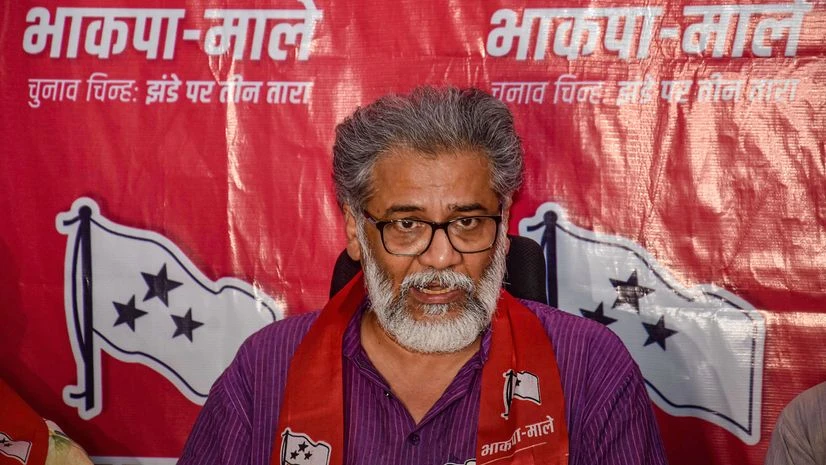 "Decline of Strong CPI(M): A deeper analysis 2")
Image Courtesy: Business Standard
Another relevant question remains, why have so many groups emerged from the same Left ideology? The CPI(M) itself was born because of ideological differences with CPI. Later, more groups appeared, including CPI(ML) and CPI (Maoist).
If every disagreement leads to a split, then the strength of the ideology itself becomes questionable. Otherwise, another new faction may appear tomorrow.
It would be better for all Left groups to sit together and agree on a minimum common agenda instead of working separately, to stay relevant in national politics.
Marxism – an international purview
Today, only a few countries are still ruled by Marxist parties, mainly China, Cuba, Laos, North Korea and Vietnam. Cuba’s economy is struggling with a deep recession, high inflation and severe shortages of essential goods.
Laos is recovering, but its economy continues to face major challenges. North Korea runs a fully state-controlled command economy, and it has shown some recent growth.
Vietnam stands out with a fast-growing, mixed, socialist-oriented market economy. It has successfully moved from a low-income to a middle-income country.
CPI(M) in West Bengal
CPI(M)’s rule in West Bengal also faced these problems. Over time, the government was accused of becoming authoritarian, slow in policy reforms, and disconnected from changing social realities.
In India’s complex society, Marxism focused too much on class struggle and ignored other key factors such as caste, religion, gender, and culture. These factors now shape political behaviour more strongly than class.
As caste-based politics grew and right-wing forces gained influence, the Left’s class-based agenda became even more marginal.
The highly polarized politicking of today’s West Bengal leave hardly any space for secular parties like . The CPI(M) in West Bengal is also accused of their soft corners for the minority community. Critics argue that the illegal immigrants had been their core vote bank over the years.
Notably, Buddhadeb Bhattacharya had to come back from his own statement related to Madrasah, under the pressure of Muslim community and his party.
Today’s highly polarized politics in West Bengal leaves very little space for secular parties like CPI(M) and Congress. Many accuse CPI(M) of showing excessive favour toward the minority community. Critics also claim that illegal immigrants became one of its main vote banks over the years.
A notable example is when Buddhadeb Bhattacharya was forced to withdraw his statement about madrasah education due to pressure from both the Muslim community and his own party.
Ideology vs election politics
CPI(M)’s rigid ideology has also left the party unprepared for changing political realities. Party leader Prakash Karat made a major strategic mistake by withdrawing support from the UPA-II government over the Indo-U.S. nuclear deal.
Congress leader Pranab Mukherjee warned him about the possible electoral loss in West Bengal, but Karat chose ideological purity instead of a practical alliance.
This decision pushed Congress toward an alliance with Trinamool Congress. That shift helped TMC defeat CPI(M) in the 2011 West Bengal assembly election, ending its 34-year rule.
Since then, the party has never recovered. In Bengal, CPI(M) failed to win even a single seat in recent parliamentary and assembly elections.
The outbound leaders
Ritabrata Chakrabarty, the promising youngster, who orchestrated various rallies, meetings, changed his colour suddenly. He was a disciple of Buddhadeb Bhattacharya and got the seat in the Rajya Sabha. His luxuries as MP didn’t escape the microscopic lenses of the leaders. He had to face the expulsion and joined the arch-rival TMC.
How can the unwavering commitments to values come down? It is not only one Ritabrata, the leaders like Khagen Murmu, Rajjak Mollah enlisted their name in the same school of thoughts.
It’s time for the CPI(M) think tank to go back to the drawing board and ask why so many veteran leaders left the party. In West Bengal, leaders like Laxman Seth, Moinul Hasan, and Tapas Chatterjee switched sides.
The party tried to revive itself by promoting young leaders like Ipshita, Sayandip, Meenakshi, Satarup, and Srijan. But the results have been disappointing. The key post holders are still the septuagenarians.
Is it possible for them to give the space for the new generation thinkers? Rather, have they become the real baggage of the party because their faces are enough to reinstate the aerogant legacy in the peoples’ minds.
Indian Economic Liberalization
India’s economic liberalization in the 1990s under Dr. Manmohan Singh changed the socio-economic landscape. The growth of the MSME sector and a market-driven economy reduced the appeal of old socialist ideas.
Still, some Marxist arguments, like surplus value and labor exploitation, remain relevant because many workers continue to face exploitation in different sectors.
But the key question remains: Are these ideas strong enough to change the mindset of people who had to face the wrath after years of CPM high-handedness?
Future of CPI(M) in West Bengal
In conclusion, ideologies, like institutions, must evolve. They must be revisited, refined, and, when necessary, restructured to meet the demands of changing times.
The central question remains: Is the CPI(M) in West Bengal and the larger communist movement in India, are willing to adapt and reform in response to new socio-political realities, or will it continue to cling to outdated dogmas?
The future of leftist politics in India depends on its ability to change. Only by adapting can it regain relevance in today’s complex and fast-changing political landscape.
[…]Decline of Strong CPI(M): A deeper analysis Uncover the transformative decline of CPI(M) in West Bengal. An in-depth analysis of voter dynamics, strategic errors, ideologies, and political realignment.[…]
[…]Decline of Strong CPI(M): A deeper analysis Uncover the transformative decline of CPI(M) in West Bengal. An in-depth analysis of voter dynamics, strategic errors, ideologies, and political realignment.[…]
[…]Decline of Strong CPI(M): A deeper analysis Uncover the transformative decline of CPI(M) in West Bengal. An in-depth analysis of voter dynamics, strategic errors, ideologies, and political realignment.[…]
[…]Decline of Strong CPI(M): A deeper analysis Uncover the transformative decline of CPI(M) in West Bengal. An in-depth analysis of voter dynamics, strategic errors, ideologies, and political realignment.[…]
[…]Decline of Strong CPI(M): A deeper analysis Uncover the transformative decline of CPI(M) in West Bengal. An in-depth analysis of voter dynamics, strategic errors, ideologies, and political realignment.[…]