
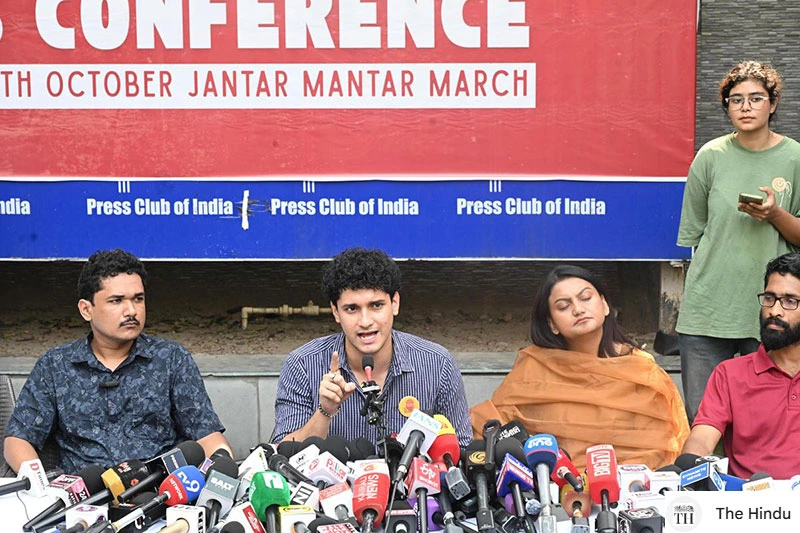
Jantar Mantar Protest: Banned & Shifted!
The Jantar Mantar Protest—an issue that currently has the capital and the entire nation in a state of turmoil. Open any newspaper, turn on any television broadcast, or scroll through your daily feed, and you will see the Jantar Mantar protest site dominating the headlines. But, for anyone who knows the political geography of New Delhi, this centuries-old astronomical observatory was never originally intended to be the central stage for public agitators.
Once upon a time, public dissent had a very different physical address. Perhaps many can recall the 1981 Kisan Rally and 1988 Farmer Mobilization in the Boat Club.
As legal challenges over the Jantar Mantar protest ban head through the Supreme Court and Delhi High Court, understanding why this venue became Delhi’s epicenter of dissent requires a look into its past.
Why the Jantar Mantar Protest Rules Changed
- The Jantar Mantar Protest site dominates national headlines today, but Delhi’s core venue for political dissent originally operated at the sprawling Boat Club lawns in front of India Gate.
- Massive farmer rallies in 1988 led by Mahendra Singh Tikait, along with heightened security during the 1993 Ram Janmabhoomi movement, forced the Narasimha Rao government to ban large Boat Club demonstrations.
- Unlike mature global democracies that allow public assembly directly facing executive centers, India’s administrative machinery has consistently pushed protest venues further away from Lutyens’ Delhi.
- The sudden ban at Jantar Mantar stemmed from informal Supreme Court observations regarding public noise and traffic congestion, which executive authorities quickly turned into a rigid notice.
- Exercising the constitutional right to peaceful assembly under Article 19(1)(b) has been systematically constrained by administrative convenience rather than balanced urban management.
- Recent demonstrations witnessed high drama as spirited youth activists outmaneuvered standard police tactics, scaling gates, playing hide-and-seek, and hoisting the national flag.
- Law enforcement agencies accustomed to making routine, symbolic arrests of elderly politicians found themselves completely unprepared for unpredictable, mobile youth energy.
- By utilizing live social media streaming and iconic national symbols, young demonstrators effectively prevented authorities from deploying immediate unrestricted brute force on camera.
- The heavy-handed state response—including sending young protesters straight to Tihar Jail—has triggered a major political realignment, uniting leaders like Rahul Gandhi, M. K. Stalin, Arvind Kejriwal, and Mamata Banerjee.
- We emphasize that suppressing democratic friction through venue bans or arrests fails; long-term civic peace requires genuine political dialogue rather than administrative force.
From the Boat Club to Jantar Mantar: A Changing Geography of Dissent
To understand why the rules around street demonstrations keep changing, one must look back at how Delhi’s protest culture evolved. Before the early 1990s, virtually every major rally took place along the sprawling Boat Club lawns directly facing India Gate. It was a prime location—visible, expansive, and sitting right at the doorstep of power.
Timeline of Delhi’s Protest Venues:
- 1950s – 1993: Boat Club (Near India Gate)
- 1993 – Present: Jantar Mantar (Parliament Street)
- Designated Alternatives: Ramlila Maidan, Burari Ground, and CBD Ground
The political dynamic changed drastically in late 1988. Farmer leader Mahendra Singh Tikait brought nearly half a million farmers to the Boat Club, filling Lutyens’ Delhi with tractors, bullock carts, and makeshift camps for days.
A few years later, in 1993, amid heightened security concerns surrounding the BJP’s Ram Janmabhoomi–Babri Masjid movement, the government decided it could no longer allow such massive gatherings in front of Parliament. Prime Minister P. V. Narasimha Rao’s administration restricted collective demonstrations at the Boat Club and relocated all political demonstrations to Jantar Mantar Road.
Watch how Mahendra Singh Tikait’s 1988 Boat Club rally reshaped Delhi’s political landscape in this historical retrospective video of BBC.
In mature global democracies, high-profile protest venues often sit directly at the physical center of government authority—be it opposite the White House in Washington, D.C., along Parliament Square in London, or across central avenues in Paris. In India, however, administrative comfort has repeatedly pushed public dissent further away from executive corridors.
Size was never Jantar Mantar’s primary advantage; immediate accessibility was. A handful of determined citizens standing along Parliament Street could make enough noise to dominate prime-time news headlines and echo directly through legislative halls just down the road. Protesters chose the Jantar Mantar Protest site not for its physical capacity, but for its unmatched ability to capture national attention.
That immediate proximity to power made it the natural stage for the most significant public struggles in recent memory—whether it was the massive citizen uprising following the Nirbhaya tragedy, Tamil Nadu farmers bringing rural agrarian distress straight to the capital’s doorstep, or India’s Olympic wrestlers taking a public stand for sports governance in 2023.
Judicial Observations and the Sudden Blanket Notice
For nearly three decades, peaceful assembly at Jantar Mantar continued as a mainstay of urban activism. That relative stability shattered when an official notice ordered an abrupt halt to demonstrations at the venue.
Behind this sudden administrative shift lay an informal observation from the Chief Justice of the Supreme Court, who mused whether alternative venues could be designated for long-term sit-ins to ease traffic congestion and noise pollution.
A Systemic Habit: Whenever judicial observations align conveniently with state interests, executive machinery moves with extraordinary swiftness to enforce them as rigid policy.
Rather than balancing the right to protest under Article 19(1)(b) with civic management, authorities seized upon the opportunity to issue a sweeping notice banning public gatherings along Jantar Mantar Road.
For detailed reporting on recent administrative actions, read The Hindu report on Jantar Mantar de-notification.
Symbolic Standoffs, High Drama, and “Out of Syllabus” Youth
What unfolded following the ban read less like routine law enforcement and more like the script of a dramatic OTT thriller. Young activists scaled security gates, entered restricted premises, and unfurled the national flag.
What followed was an intense game of hide-and-seek with the police. Officers were run ragged across central Delhi before making arrests.
Much like regional police forces across various states, the capital’s police force is rarely called upon to chase down fleeing suspects or street criminals on foot; many officers have grown accustomed to desk duties and static security. Over time, state apparatuses have grown comfortable making routine, symbolic arrests of elderly opposition leaders or veteran parliamentarians who willingly board police buses without resistance.
Comparing Protest Dynamics:
- Traditional Agitations: Scheduled marches, static sit-ins, senior leadership surrendering willingly, and predictable police management.
- Youth-Led Agitations: Fluid, highly mobile movements, tactical evasion, real-time social media broadcasting, and unpredictable strategy.
Trying to contain this fiery youth energy proved to be entirely outside the police force’s standard playbook. Demonstrators ran off with vehicle keys, dodged barricades, and outmaneuvered police units—all while continuously broadcasting live video footage across social media platforms. By employing the national flag as a core symbol of their movement, the youth created a delicate situation where brute force risked looking fundamentally unpatriotic on camera.
Tihar Jail Remands & Opposition Unity: What Comes Next?
This ongoing standoff over the Jantar Mantar Protest is fundamentally symbolic. The arrested activists undoubtedly knew their actions would lead to detention. Yet, the administration’s harsh response—sending these young protesters straight to Tihar Jail—raises troubling questions about executive overreach.
Is invoking severe detention protocols against student protesters a proportionate response, or simply an act of administrative panic?
For live reactions and political statements from CJP activists, watch this video report on CJP’s reaction to Jantar Mantar de-notification.
This heavy-handed crackdown has triggered a swift political backlash. Prominent opposition figures—including Rahul Gandhi, M. K. Stalin, Arvind Kejriwal, and Mamata Banerjee—have voiced public support for the demonstrators.
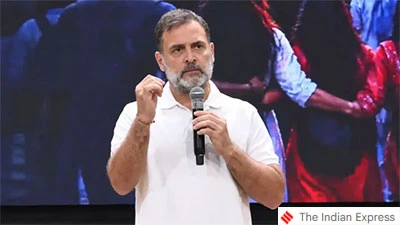
The sudden Jantar Mantar Protest Ban has sparked a major political storm, with opposition leader Rahul Gandhi vowing to defend the fundamental right to dissent.
Notably, while the Congress had previously maintained a deliberate distance from CJP-led rallies, the administration’s aggressive crackdown has backfired—uniting opposition groups and creating a far tougher political challenge for Delhi’s ruling authorities.
Political Realignment: Is the political opposition coalescing around genuine public support generated by youth-led movements, or is public sentiment uniting around the opposition?
This dynamic brings a critical question to the fore: Is the political opposition coalescing around genuine public support generated by youth-led movements, or are these agitations providing a convenient rallying point for anti-incumbent political consolidation?
Regardless of the political calculus, one fact remains clear: suppressing young voices through detention orders will not eliminate dissent. If the administration continues to close down historic venues like Jantar Mantar, protests will simply spill over into scattered locations across the capital.
The state must recognize that democratic friction cannot be resolved through brute force—it requires genuine, transparent political dialogue.
Watch the explosive comments of Mahua Moitra, TMC MP.
A Dream of Dialogue: Beyond Political Battlegrounds
Imagine a quiet, informal meeting inside the Prime Minister’s residence—a private discussion between Narendra Modi, Rahul Gandhi, and CJP founder Abhijeet Dipke, completely away from the media glare. Picture them emerging together, hands on each other’s shoulders with smiling faces, ready to make a ground-breaking announcement: the Jantar Mantar protest has been called off, and all grievances concerning electoral rolls and Chief Election Commissioner Gyanesh Kumar have been resolved unanimously.
Unfortunately, such a scene remains an impossible dream in today’s political climate. Instead of seeking genuine consensus, political leaders continue to turn public dissent into an endless battleground—leaving ordinary citizens to bear the brunt of the fallout.
Knowledge Mart Final Thoughts
At Knowledge Mart, we believe that democratic governance thrives on active civic participation rather than administrative suppression. Shifting protest venues from the Boat Club to Jantar Mantar, and now attempting to push demonstrations out to distant peripheries like Burari, reveals a persistent systemic impulse: treating public dissent as a logistical nuisance rather than a fundamental constitutional right under Article 19(1)(b).
The recent standoff between young activists and law enforcement proves that physical barricades cannot stop public expression in the digital age. When state authorities respond to youth-driven energy with heavy-handed detentions and Tihar Jail remands, it only amplifies the movement and galvanizes political unity across opposition parties.
For deep dives into urban governance, civil rights, and democratic accountability, explore our Governance & Admin section and follow our ongoing coverage under Social Issues. True stability in the capital will not come from de-notifying protest sites, but from opening meaningful channels of political dialogue.