
INDIA Bloc Betrayal: Why Unity Failed
For those celebrating the INDIA Bloc’s unity after such a long wait, I have a simple message: hold your horses, my friends. The real test is still ahead. The INDIA Bloc betrayal discussed here is not about one isolated incident. It is about a pattern of rivalries, changing positions and broken promises that has repeatedly raised doubts about the alliance’s future.
Nobody can deny that a strong opposition is essential for democracy. A government must be questioned, challenged and held accountable. Without a credible opposition, democracy gradually loses its balance. The media, too, must remain alert and fulfil its responsibility as the fourth pillar of democracy.
After years of political drama, shifting loyalties and behind-the-scenes manoeuvres, trusting the INDIA Bloc has become increasingly difficult. Who will walk out next? Who will return when political circumstances change? And who is already planning a separate move while publicly claiming to stand united? Nobody can say for sure.
The problem is not that opposition parties have different ideologies or regional interests. That is perfectly normal in a democracy. The trouble begins when every leader wants control but nobody is willing to compromise. When everyone has an eye on the throne, how can a coalition succeed?
This has been one of the biggest weaknesses of the INDIA Bloc alliance from the beginning. Its leaders knew they needed to unite against the BJP, but they struggled to agree on leadership, seat-sharing and political responsibility. Standing together for photographs was easy. Standing together when personal and party interests were at stake proved much harder.
That is how the INDIA Bloc betrayal has turned the alliance into a wail of losers.
INDIA Bloc: 10 Key Lessons from Its Political Failure
- The INDIA Bloc was formed to challenge the BJP, but personal ambitions and internal rivalries weakened its unity. The INDIA Bloc betrayal has become a recurring feature of its politics.
- Opposition leaders failed to settle the leadership question, leaving the alliance without a clear direction.
- Congress’s big-brother attitude and repeated seat-sharing disputes damaged trust among its allies.
- Mamata Banerjee’s decision to contest independently in West Bengal showed how regional interests could outweigh national opposition unity.
- The SP-Congress alliance in Uttar Pradesh showed that better coordination can make a real difference in an election.
- Opposition votes cannot simply be added together, but unity can influence voters and make electoral contests more competitive.
- The absence of several TMC and Congress MPs during the 2026 Women’s Reservation Bill vote raised questions about coordination and political commitment.
- The FCRA Bill episode raised further questions about how opposition parties coordinate their response to contentious legislation.
- Parties that cooperate nationally but fight one another in state elections must explain their strategy to voters.
- Without a shared vision, public trust and credible leadership, the INDIA Bloc risks remaining a collection of rival parties rather than a strong democratic alternative.
The Leadership Question: Who Would Lead the INDIA Bloc?
Even before the 2024 Lok Sabha election, the opposition alliance struggled to settle its leadership arrangements. Nitish Kumar was discussed as a possible convener, while Congress president Mallikarjun Kharge eventually became the grouping’s chairperson. Mamata Banerjee’s reservations exposed the lack of agreement among its partners. Readers can revisit the Indian Express report on the leadership decision.
My objection is neither to Kharge’s appointment nor to whether Nitish Kumar deserved the post. The bigger question is why such a basic organisational decision became a source of tension. Mamata is an experienced leader with a strong regional base, and she has every right to demand respect for her party. But demanding respect is different from expecting every important decision to suit one’s political calculations.
The same standard applies to Congress and every regional party. The INDIA Bloc needed a leader who could bring its partners together without making the alliance look like an extension of one party. Instead, even the question of who would coordinate the opposition became a political contest.
Personal ambition can weaken a coalition long before an election campaign begins.
From Bengaluru to Mumbai and Delhi, the Problems Continued
The meetings in Bengaluru, Mumbai and Delhi were meant to demonstrate opposition unity. But questions about leadership, seat-sharing and the relationship between national and regional parties kept returning. Given the long rivalry between the TMC and the Left in West Bengal, expecting them to forget their differences overnight was unrealistic. Congress, too, had its own electoral interests to protect.
We all know that the Left and the BJP are bitter ideological enemies. The Left once described the BJP-led Central Government as a “government of uncivilized barbarians“—a remark attributed to Jyoti Basu. In Bengal, political rivalry can have consequences on the ground, from attacks on party offices to restrictions affecting political and cultural activities, including the functioning of bookstores. Such incidents, whenever they occur, show how bitter political hostility can become.
I still find it difficult to understand how a top BJP leader once held meetings with Jyoti Basu, both in Delhi and at Kolkata’s Brigade Parade Ground. How do two parties that are bitter enemies in public politics find common ground when circumstances demand it? Perhaps that is simply how politics works. Equations change, and today’s enemy may become tomorrow’s negotiating partner when political needs change. That is not necessarily a crime. After all, politics is often described as the art of the possible.
Still, if these parties wanted a national alliance, they needed to decide where cooperation was possible and where they would contest separately. That required honest discussions and advance planning, not repeated negotiations over the alliance’s very existence.
Abhishek Banerjee’s meetings with opposition leaders after the 2024 Lok Sabha election also raised questions about the alliance’s direction. The pattern of INDIA Bloc betrayal continued to attract attention. There is nothing wrong with one partner speaking to another. But when important discussions take place through separate channels, it is reasonable to ask whether the main alliance is functioning effectively.
The INDIA Bloc never developed a sufficiently strong mechanism for resolving internal disputes. Each leader protected their own political space while the alliance struggled to find common ground.
The opposition needed a unifying figure with the stature and reach of Jayaprakash Narayan or Vishwanath Pratap Singh. Rahul Gandhi has played an important role in opposition politics, but leading one’s own party and bringing a broad coalition together are two different challenges. The INDIA Bloc has yet to show that it fully understands this distinction.
Congress and Its Big Brother Attitude
Congress must also answer for its own political blunders. It cannot escape responsibility for the INDIA Bloc betrayal. As the largest national opposition party, it should bring allies together rather than leave them guessing about its intentions. Yet its conduct in Bengal, Bihar and Tamil Nadu raises serious questions about its commitment to opposition unity.
Three episodes deserve particular scrutiny:
- West Bengal (2024): Congress failed to reach a seat-sharing deal with the Trinamool Congress and contested alongside the Left, while Mamata Banerjee’s party fought alone. Did Congress’s approach indirectly help Mamata and the TMC by keeping the opposition divided? Its motives cannot be established from the outcome alone, but the breakdown of seat-sharing talks exposed the alliance’s failure to agree on a common strategy.
- Bihar (2025): While the NDA had settled its seat-sharing arrangement, the Mahagathbandhan remained stuck in prolonged negotiations. Tejashwi Yadav’s RJD and Congress eventually reached an agreement, but the delay created confusion and raised doubts about their preparedness. Why did the alliance take so long to settle a basic electoral arrangement? The Indian Express reported on the delayed agreement.
- Tamil Nadu (2026): Soon after the Assembly election, Congress broke with M.K. Stalin’s DMK and backed Vijay’s TVK in forming the government. Having fought the election alongside the DMK, Congress changed sides within days of the results. The move drew sharp criticism from its former ally. The Indian Express reported on the split.
These decisions may have involved their own political calculations, but they raise a wider question: can allies trust Congress to stand by them when circumstances change? No alliance is permanent in politics, and parties have the right to reconsider their partnerships. However, timing, consistency and respect for allies matter.
Politics is not a personal hobby. Every partner has its own voters, strength and political interests. Congress cannot expect loyalty from others while treating compromise as a one-way street. If the INDIA Bloc is to become a credible national alternative, Congress must recognise the importance of its allies. Cooperation is a shared responsibility, not a favour.
Only when opposition parties are treated as equal partners, and Congress abandons its big-brother attitude, can further INDIA Bloc betrayal be prevented.
West Bengal: Six Seats That Raise a Difficult Question
In the 2024 Lok Sabha election, the BJP won several West Bengal seats where the combined vote of its opponents exceeded the BJP’s tally. Six constituencies deserve particular attention: Raiganj, Balurghat, Maldaha Uttar, Tamluk, Purulia and Bishnupur. The official figures are available in the West Bengal election results document and the Indian Express constituency-wise results.
Could better coordination have changed the outcome in some of these seats? It is a fair question.
Television pundits will remind us that votes do not work through simple arithmetic. I agree. A voter who supports one party will not automatically vote for another simply because their leaders have formed an alliance. But that is not the whole story. A united opposition can influence voters, change the mood of a contest and make an alternative appear more credible.
The INDIA Bloc betrayal has ultimately contributed to this political failure. TMC’s victory may have been expected, but the opposition alliance has fallen apart in West Bengal, exposing how little unity it had on the ground.
The elections of 1977 and 1989 show why political unity matters. It cannot guarantee victory, but dismissing its influence would be equally mistaken. The Bengal elections of 2011 and 2026 can also be examined in the context of public demand for political change and the opposition’s ability to turn that demand into electoral gains.
In 1977, opposition parties united after the Emergency and defeated Congress, producing India’s first non-Congress government at the Centre. Jayaprakash Narayan played a major role in bringing different political forces together. Readers can explore the history of the 1977 election. For a visual account, see this video on the Emergency era.
The lesson is not that the INDIA Bloc could have copied 1977 and guaranteed the same result. It is that cooperation can create possibilities that separate parties may struggle to achieve.
In Bengal, the opposition failed to coordinate effectively where it might have mattered. We cannot prove that all six seats would have changed hands simply by adding votes. But the possibility deserved serious consideration. The question is why the opposition did not explore it more effectively.
Mamata Banerjee’s Political Calculations
Mamata Banerjee has built the TMC into a powerful regional party. Her political instincts and ability to mobilise supporters cannot be dismissed. But her approach to national opposition politics raises questions about consistency. In my view, Mamata Banerjee’s political choices have been one of the major reasons behind the INDIA Bloc betrayal.
In West Bengal, TMC has often preferred to fight alone rather than make room for Congress and the Left. In Assam and Meghalaya, too, it has challenged Congress’s position by contesting elections in its own right. Every party is free to make its own political choices, but this raises an obvious question: what is the value of the INDIA Bloc if its members compete against one another whenever it suits them?
Mamata Banerjee now appears to be returning to the opposition alliance after suffering major political setbacks. She has lost power in West Bengal, and the future of her party has become uncertain. To make matters worse, the Election Commission has frozen TMC’s original name and symbol for the time being. Whether this return to the INDIA Bloc marks a lasting change of strategy or another temporary adjustment remains to be seen.
Mamata’s political journey has been marked by shifting alliances, including periods of cooperation with both Congress and the BJP. Given that history, it is fair to ask how long her present alignment will last. Will she remain with the INDIA Bloc when circumstances change, or will political convenience once again take priority over opposition unity?
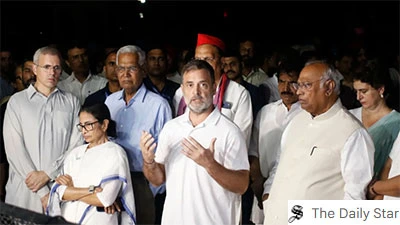
Mamata has supported the broader opposition effort while expressing reservations about Congress’s leadership and the role of the Left. Such differences are understandable, but they need a clear resolution. Friendly exchanges between Mamata Banerjee and Rahul Gandhi may help build personal relationships, but they cannot replace political cooperation.
A coalition cannot run on affection, public appearances or occasional meetings. It needs clear rules on leadership, seat-sharing and parliamentary coordination. Above all, its members must accept those rules even when a decision does not suit them personally.
West Bengal Political Landscape: Big Fights
The FCRA Bill: A Test of Political Trust
The FCRA Bill, 2026, raises questions about the TMC’s role in opposing the Modi government. When the opposition claims to challenge the government over contentious legislation, any abstention that reduces pressure on the ruling party deserves scrutiny. Did TMC’s stand weaken the opposition and make the government’s task easier? Voters have every right to ask.
However, the claim that TMC’s abstention gave the Modi government a parliamentary walkover could not be independently verified. The Indian Express report on the FCRA Bill provides the relevant parliamentary context.
The central issue is political trust. When the opposition claims to challenge the government, its actions must match its words. If a party takes a different position from its allies, it should explain why.
The Women’s Reservation Bill: What Happened in Parliament?
The parliamentary episode involving the Constitution (131st Amendment) Bill, 2026, deserves separate attention. On 17 April 2026, the Lok Sabha voted on the constitutional amendment linked to the government’s proposal to advance women’s reservation alongside changes involving delimitation. The bill received 298 votes in favour and 230 against, failing to secure the required two-thirds majority.
According to The Indian Express report on the final voting figures, 11 MPs were absent, including seven from TMC and two from Congress. Their absence deserves scrutiny, especially because the INDIA Bloc had discussed a common approach to the legislation.
However, the context matters. TMC had indicated before the vote that it could not guarantee full attendance. Reports recorded opposition objections to the delimitation provisions, while TMC said it supported women’s reservation but opposed the government’s approach to delimitation. The NDTV report on the opposition’s discussions records concerns raised before the vote.
Does this settle every question about TMC’s conduct? No. The absence of seven MPs during such an important vote naturally invites questions. But the record alone does not prove that TMC deliberately helped the government or entered into a secret arrangement with the BJP. Nor can the bill’s defeat be blamed on TMC’s absences alone. The proposal failed to secure the required majority, and opposition parties had objected to its provisions.
My criticism is broader. An alliance that claims to be united must explain how its members will coordinate on major parliamentary questions. If a party cannot ensure attendance or chooses a different strategy, it should explain its decision to the public. The same standard applies to Congress and the Left.
Political trust depends on transparency, consistency and accountability, not speculation about secret deals.
Arvind Kejriwal Has Made His Position Clear
Arvind Kejriwal has publicly stated that the INDIA Bloc was formed for the 2024 Lok Sabha election and that AAP would not continue its alliance with Congress in the same way afterwards. His position was reported by Hindustan Times.
One may disagree with his reasoning, but a clearly stated position allows voters to judge a party. The INDIA Bloc needs this kind of clarity rather than vague assurances followed by fresh disputes. If the alliance is only an arrangement for a particular election, its leaders should say so. If they want a lasting national platform, they must explain what it stands for and how its members will work together.
The Left’s Double Challenge: Kerala and Delhi
The phrase “Kerala mein masti, Delhi mein dosti” captures the contradiction critics see in the relationship between the CPI(M) and Congress. In Kerala, they are fierce electoral rivals. Nationally, they have often worked together against the BJP.
Some call this hypocrisy; others see it as the practical reality of Indian politics. Political rivals can cooperate on selected issues without pretending their ideological differences have disappeared. The problem begins when leaders fight bitterly in one place and present themselves as partners elsewhere without explaining the distinction.
The Left and the BJP have deep ideological differences. Congress and the Left, meanwhile, have their own history of conflict in West Bengal despite cooperating in national opposition politics. These contradictions do not make cooperation impossible, but they demand honesty.
If parties are free to fight one another in state elections while cooperating nationally, they must explain how the arrangement works. Otherwise, voters are left wondering whether the alliance rests on shared principles or simply on the immediate need to challenge a common opponent. Politics is the art of possibility, but that does not mean every reversal should escape scrutiny.
Regime Change, Youth Movements and the Opportunity Ahead
Calls for regime change have added another layer to the debate. Some activists and political figures have argued that India needs a major political shift, while BJP leaders have condemned such language and accused the opposition of encouraging instability. In a democracy, changing the government through elections is a legitimate objective. It is not the same as trying to overturn the constitutional system through extra-constitutional means.
Perhaps carried away by youthful enthusiasm, Nehra Vohra may have called for a Bangladesh-style template. I do not believe India is ready for regime change on the Bangladesh model just yet. However, the idea has also received support from national figures such as Prashant Bhushan and Prakash Raj. As expected, BJP leader Shahnawaz Hussain strongly condemned it. That is the familiar divide in politics: what one side presents as a call for change, the other sees as a threat. You can watch the collage in this India Today video.
My point is simple: strike while the iron is hot. Youth and student movements have created an opportunity for the opposition. Still, the INDIA Bloc often looks less like a united political force and more like a collection of parties struggling to recover from setbacks. The opportunity remains, but the alliance must first put aside its narrow interests.
I do not believe India is ready for a Bangladesh-style political upheaval, nor should the opposition assume that public anger will automatically translate into electoral success. India has its own institutions and democratic processes. The opposition should build public support through constitutional means rather than treat street anger as a substitute for political organisation.
Still, young people are raising serious concerns about employment, education, freedom of expression and public accountability. If the INDIA Bloc wants to connect with them, it must offer credible answers to everyday problems rather than simply appear at demonstrations or issue statements. Young people must be heard, not treated as a ready-made vote bank.
The BJP will defend its record, but the opposition must challenge it with facts, sound policies and a credible alternative. The opportunity is there, but it will not last forever. Public anger can fade, and frustrated voters may eventually look beyond the established opposition. If the INDIA Bloc wants to turn public discontent into a serious political challenge, it must stop wasting time on internal rivalries and start acting with purpose.
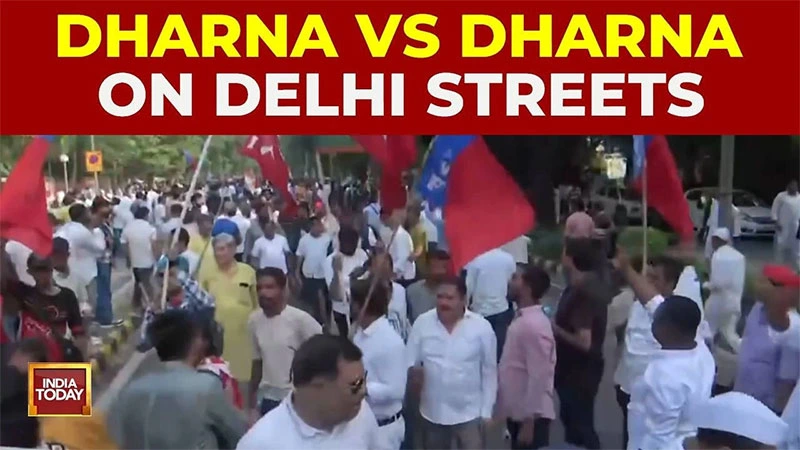
One way forward could be to build on the growing momentum of public protests, such as the Delhi CJP Protest. But protest alone cannot bring lasting change. The opposition must listen to people’s grievances, stand firmly for democratic rights and turn public anger into a clear political agenda. The INDIA Bloc betrayal must be addressed at its roots, and the time to act is now.
Conclusion: The INDIA Bloc Must Put Unity Before Ambition
The INDIA Bloc was formed because opposition parties recognised that a divided contest could help the BJP. That was a sensible starting point. But recognising the need for unity is only the first step. The real test comes when parties must share seats, accept compromises, respect one another’s regional strength and support common decisions even when those decisions are not ideal for every partner. The INDIA Bloc betrayal is ultimately a case of political opportunism.
Congress must abandon the belief that its national identity gives it automatic authority over every ally. Mamata Banerjee and other regional leaders must recognise that national cooperation requires consistency. The Left must explain how its state-level battles fit into its national strategy. Every party must be prepared to answer difficult questions about its own conduct.
The examples of Uttar Pradesh in 2024, the divided opposition in West Bengal and the shifting positions of alliance partners point to the same lesson: cooperation requires more than a common opponent. Hopefully, Mamata Banerjee and her party have learned from the latest electoral debacle that INDIA Bloc betrayal can become politically disastrous even for those who believe they can manage it.
The INDIA Bloc needs a leader who can bring its partners together, but leadership alone will not solve its problems. It also needs a common programme, a fair process for resolving disputes and a commitment to transparency. Above all, its leaders must understand that an alliance cannot exist only when it serves their personal ambitions.
At present, the opposition looks more like a collection of parties trying to recover from setbacks than a united force ready to offer an alternative. That image can change, but only through serious political work. It is encouraging to see that the United Alliance has extended its support to the CJP’s Tiranga March.
My message to the INDIA Bloc is simple: strike while the iron is hot. Listen to the public, give young people a reason to believe in you, and stop treating every disagreement as a battle for personal supremacy. Otherwise, there will be more meetings, speeches and photographs of leaders standing shoulder to shoulder, but the dream of a united opposition will remain out of reach.
Democracy needs a strong opposition. The INDIA Bloc must prove that it can overcome its rivalries before its promise of unity becomes another betrayal.