
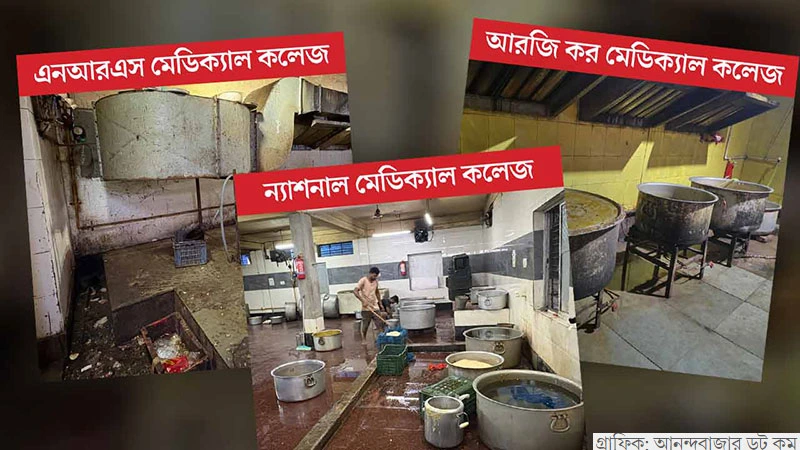
Unmasking the Shocking Reality of Government Hospital Kitchens
We were already shaken by the recent food safety raids, but what came out afterwards was even more disturbing. Paying more for food does not always mean that it is safe. Now, reports from government hospital kitchens are raising an even more uncomfortable question: are the places where patients go to recover actually maintaining basic food hygiene?
When someone is seriously ill or undergoing major surgery, a public hospital is often the last safety net for the family. People enter those gates trusting doctors, nurses and the system around them. Recovery needs more than medicines and surgery. Clean surroundings, proper hygiene and decent food matter too.
Still behind the crowded wards and freshly painted hospital buildings, the kitchen can tell a very different story. We also know far less about the condition of many private hospital kitchens, which is another issue that deserves attention.
Inspections have reportedly found workers bathing inside food preparation areas and open spice containers kept close to dirty or overflowing drains. These are not minor housekeeping problems. A kitchen serving food to sick patients cannot be treated like an ordinary workplace.
Administrations change, political parties take charge, ministers change and promises change. But if the same basic problems continue inside government hospital kitchens, then something is clearly wrong with the system.
Under Mamata Banerjee’s tenure, West Bengal saw a major expansion of blue-and-white government hospitals and super-specialty facilities. But the question has always been whether these buildings are properly staffed and equipped after the inauguration ceremony is over.
The former Chief Minister’s own decision to return to Kolkata for treatment after injuring her leg in Midnapore was widely discussed at the time. It naturally raised questions about the confidence that senior political leaders themselves have in some of the facilities created outside Kolkata.
The recent investigation by Government Hospital Kitchen of Anandabazar Online makes the issue harder to ignore.
What Really Goes On Inside Government Hospital Kitchens
People have complained about state hospitals for years. The usual complaints are familiar: shortage of beds, long queues, staff shortages and delays in treatment. But there is another part of hospital life that gets very little attention. What exactly reaches a patient’s food tray three times a day?
Reports from government hospital kitchens have described workers bathing, washing clothes and cleaning their feet close to areas where food is being prepared. In some places, separate washing facilities appear to be inadequate. That is a serious problem when the same space is being used to prepare meals for patients.
Stoves and rice boilers have reportedly been found close to blocked or foul-smelling drains. Deep fryers and other cooking equipment are sometimes kept in poorly maintained areas.
Even Saradwat Mukherjee, the health minister of West Bengal has visited government hospitals, and the irregularities being documented should give the department enough reason to look beyond one-off inspections.
Then there is the condition of the ingredients. Reports have pointed to rotten vegetables, damp storage areas and raw spices kept uncovered. Turmeric, salt and other masalas should not be sitting exposed in dirty containers. Raw potatoes and onions left to deteriorate in damp corners are hardly what anyone would expect from a kitchen serving hospital patients.
These may sound like small details when compared with surgery or emergency treatment. They are not. Food is part of the patient’s daily care.
Food Safety Raids: Drama vs. Ground Reality
Whenever public anger rises, authorities announce an inspection drive. Inspectors enter kitchens, photographs are taken, reports are prepared and the matter receives attention in the media.
Sometimes the findings are serious. Reports have mentioned rotten eggs, sour milk and mouldy curd in places where food is prepared for patients. Similar concerns have been reported by several news outlets. When the health minister expresses concern over the condition of a hospital like RG Kar, the obvious question is what happens after the inspection is over.
There have also been concerns about old cooking oil being reused for too long, poor water storage and food being handled without proper protective clothing. Claims about contamination, including E. coli, need to be properly tested and documented rather than simply repeated. But where a kitchen fails basic hygiene standards, action should not depend on whether a television camera happens to be present.
This is where many inspection drives fall short. A contractor may be fined. An official may issue a warning. The minister may demand a report. All of that is useful, but only if someone checks again a week or a month later.
The real problem begins when the inspection becomes the end of the story. Footage of such inspection raids can be seen on various YouTube News Channels.
Substandard Meals and Poor Health Outcomes
Hospital food should help a patient recover. That does not mean every meal has to be elaborate. It simply has to be safe, reasonably nutritious and suitable for someone who is already unwell.
Unfortunately, complaints about hospital food often paint a different picture. Dal can be extremely watery, rice may be poorly cooked, and the quality of oil or spices may be questionable. A patient who is already weak should not have to worry about whether the meal itself will cause another stomach problem.
Poor nutrition can affect recovery, particularly among patients who are already vulnerable or unable to eat properly. Foodborne illness can make matters worse and may keep a patient in hospital for longer.
For a poor family, the situation is even more difficult. They may not have the money to buy every meal from outside. They depend on whatever the hospital provides.
That is why hospital food cannot be treated as an insignificant part of the system. It is one of the basic services a patient is entitled to receive.
The Corruption Machine Behind Public Kitchens
Governments change. Political parties change. Ministers change. But some institutional problems survive all of them. Don’t get shocked! That is the way how West Bengal Health Care System has been going on over decades.
It would be too easy to blame one political party for every failure inside the government hospital kitchens. The larger issue is weak supervision, poor accountability and a system in which contractors can sometimes operate without enough scrutiny.
Meal preparation in public hospitals is often outsourced through tenders. Price obviously matters, but food safety cannot be reduced to a race to the bottom. If a contractor quotes an unrealistically low price, there has to be a question about how that contractor plans to provide proper food with proper staff and proper ingredients.
There are also allegations in different sectors of local political influence affecting government contracts. Such allegations should be investigated wherever they arise. If a contractor has political backing, no hospital administration should be afraid to take action against that contractor.
Private restaurants face licensing and food-safety requirements. Hospital kitchens should not be treated as a lesser concern simply because they operate inside government premises.
Dietitians and hospital administrators also have a role. If internal complaints are raised, they should be recorded, investigated and followed up. A report should not disappear simply because it is inconvenient for the institution.
Infrastructure is another part of the problem. Damp rooms, damaged walls, leaking pipes, poor refrigeration and inadequate storage make proper food preparation difficult. Staff training matters as well. A kitchen cannot maintain good hygiene if workers are not given proper facilities and basic food-safety training.
Dr. Suryakanta Mishra was the Health Minister during the Left Front regime. His successor, Mamata Banerjee, came into the health ministry without a background in medical science. Fortunately, the Indian Constitution does not prescribe a specific educational or professional qualification for becoming a minister.
The new government has now placed a practising physician, Dr. Saradwat Mukherjee, in charge of Health. That gives people a reasonable expectation that technical problems in the health system will receive closer attention. But the results, not the designation, will ultimately decide that.
Similar food-safety concerns have also surfaced during wider inspections of eateries and food establishments, as reported by The Telegraph.
Fixing a System That Is Deeply Broken
One-day raids and occasional fines will not solve a problem that has developed over years. The tendering process needs a closer look. Authorities should consider realistic minimum prices for meals, proper quality standards and strong action against contractors who repeatedly fail inspections.
A contractor who keeps violating food-safety rules should not simply receive another warning and continue with the same contract.
The kitchens themselves also need investment. Rusted vessels, damaged floors and poor storage facilities cannot produce a reliable food-safety environment. There should be clean work surfaces, sealed storage, proper refrigeration and separate washing facilities for workers.
Bathing or washing clothes inside food preparation areas should obviously have no place in a hospital kitchen.
State authorities should also consider making FSSAI certification mandatory for every public hospital kitchen and using CCTV in cooking and storage areas, with access for senior administrative officials. The relevant safety standards can be checked through the FSSAI Official Website.
There is another simple reform that could make a difference: independent oversight. Resident doctors, dietitians and patient representatives could be given a role in periodic inspections. Unannounced checks would be far more useful than visits that everyone knows about in advance.
Contractor payments could also be linked to compliance. If the kitchen fails a serious inspection, there should be a financial consequence that actually matters.
We have come to know that the Adani Group is building up a new hospital in New Town. New hospitals are welcome, but the immediate concern remains the condition of the existing public hospitals where thousands of people already seek treatment every day.
What Should the New Government Do?
For years, there have been questions about the functioning of the health department. The RG Kar episode brought many of those concerns into the public domain. There have also been allegations and complaints involving medicines, treatment, influence and different interest groups.
At the same time, Bengal has opened new hospitals and added new equipment in different places. But can a building alone does not make a hospital functional? There are facilities where staff shortages remain a problem. In some cases, machines exist but trained operators are not available. Patients can then end up being sent outside for tests that should ideally be available inside the hospital. There are allegations that the doctors recommend the patients to certain agencies, in lieu of commission. In the recent past, even blood black market has drawn our attention.
Now the government hospital kitchens have become another part of that larger debate.
The health minister has been visiting hospitals and checking conditions on the ground. That is certainly welcome. But surprise visits have their limits.
A minister arrives, problems are pointed out, officials are questioned and instructions are issued. Cameras flash, TV channels make breaking news. Then everyone goes back to their routine. Unless somebody returns later to check whether those instructions were actually followed, little changes.
Bengal needs a regular and credible audit system. It should examine staffing, medicines, equipment, diagnostics, sanitation, food and patient services. The inspection should result in a written report, a deadline for correction and a follow-up inspection.
We would urge the new government and the new health minister to make this a priority. Opening hospitals and installing expensive equipment is only the beginning. The real test is whether a patient can walk into a government hospital and receive the treatment and basic services promised there.
An Ayushman Bharat card may help a patient access healthcare, but it cannot replace a doctor, technician, functioning machine or essential medicine. Before celebrating another scheme or another inauguration, the government should make sure the system behind it actually works.
That means regular inspections, transparent audits and accountability that does not disappear after the headlines fade.
Final Thoughts: Recovery Starts on the Plate
You can learn a lot about a healthcare system from the way it treats patients who have the least power to complain. A bedridden patient cannot inspect the kitchen before eating. They have to trust the hospital.
That is why reports of uncovered spices, poor storage, workers bathing near food preparation areas and other hygiene failures should not be brushed aside as routine administrative lapses.
Safe food is not a luxury for a hospital patient. It is part of treatment.
I really fail to comprehend how a hospital superintendent can continue in the same position when serious irregularities are found under his or her watch without a proper explanation being sought.
The answer should not be another inspection followed by another promise. There has to be a system in which responsibility is fixed, corrective action is recorded and the same kitchen is checked again.
If the new government wants to show that Bengal’s healthcare system is genuinely changing, this is one area where results can be seen without a press conference.
10 Key Takeaways
- Hospital food cannot be treated casually: For a patient, food is part of care. It has to be safe, clean and fit to eat.
- Basic hygiene should come first: Washing or bathing inside or close to a food preparation area is simply not acceptable in a hospital kitchen.
- Look at how food is stored: Vegetables, spices, raw ingredients and other supplies need proper storage. Leaving them exposed creates an obvious risk of contamination.
- Bad food can hurt recovery: Patients are already fighting illness. Giving them poor-quality or unsafe food can only make matters worse.
- A raid cannot be the end of the story: Officials may inspect a kitchen and record violations, but the real test comes afterwards. Were the problems fixed? Was the kitchen checked again?
- Contractors must answer for what they serve: Companies running hospital kitchens handle public money and patient food. They should face serious consequences when standards are repeatedly ignored.
- The lowest bid is not always the best deal: If a contractor cuts corners simply to meet an unrealistic price, patients eventually pay the price. Cost matters, but food quality cannot be sacrificed.
- Kitchen facilities need proper attention: Refrigeration, clean worktops, safe storage and separate washing areas are not luxury additions. They are basic requirements for a hospital kitchen.
- The new Health Minister has a responsibility to deliver: Dr. Saradwat Mukherjee is a practising physician, which naturally raises expectations. But his medical background alone will not solve the problem. His work will have to show results.
- Regular checks matter more than occasional drives: Bengal needs routine inspections, proper records and clear responsibility. A few high-profile raids will not fix a system unless someone remains accountable afterwards.