
How to check status of Ayushman Bharat Card online?
Open the NHA Beneficiary Portal in your web browser
or
Download the Ayushman App from the Play store.
Both are self-guided. So if you follow the steps like OTP and others, you will get to know your Ayushman Bharat Status. Even you can download the Ayushman Bharat Card also.
Ayushman Bharat Finally rolls out in Bengal: What a Relief!
Ayushman Bharat is finally operational inside West Bengal, tearing down a decade of bitter center-state political conflict that held millions of vulnerable families hostage to administrative ego.
The barrier didn’t just bend on August 16, 2026, it finally collapsed. Bengal officially opened its long-locked doors to the world’s largest public health assurance umbrella. A great Relief for the citizens of Bengal.
But as political handlers rush to claim victory in front of flashing news cameras, a cold, bitter question remains for the rest of us.
Why did the people of West Bengal have to suffer through years of endless political warfare just to get basic medical security?
Who pays for the ruined family finances, the auctioned ancestral plots, and the high-interest informal loans taken out while politicians argued over card designs and scheme names?
Why was a life-saving medical safety net weaponized as an arena for political dominance?
When virtually every other state across India signed the agreements years ago, Bengal’s administration chose stubborn denial. Today, as registration desks pop up across Kolkata, Siliguri, and Asansol, celebration isn’t enough. We need direct accountability.
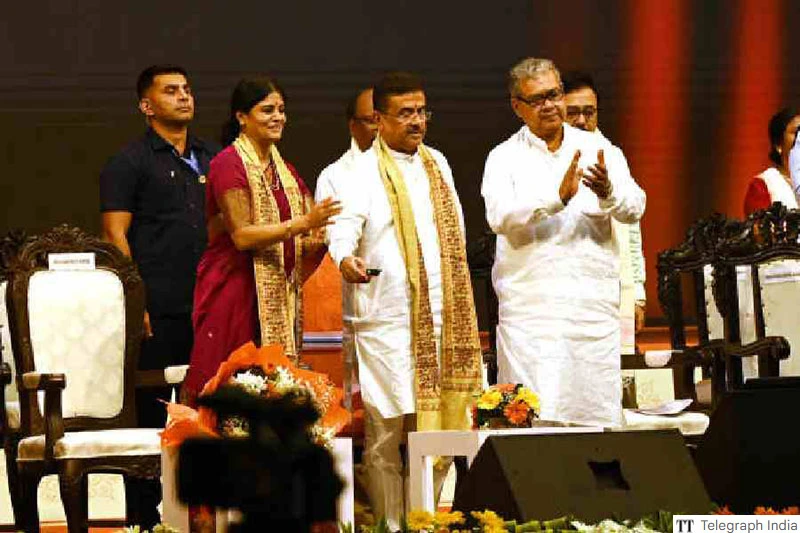
The Chief Minister marked the official launch of Ayushman Bharat. Ayushman Diwas has been observed in the state. Watch the video footage.
The Jinx Breaks: Ending Years of Toxic Federal Warfare
Governance should build hospitals, staff emergency wards, and clear supply lines for cheap medicine. It should never burn down access to public care. Though for years, the toxic feud between Nabanna and North Block locked low-income households out of national healthcare networks. We can always recall how these high-stakes political showdowns developed over time. It’s really an irony that even illegal immigrants used to get Swasthya Sathi Cards in West Bengal during the past regime.
August 16 proved something vital: constitutional federalism is not an excuse for perpetual obstructionism. You don’t need a single-party rule or a “double-engine” political setup to grant basic rights to the public. What you need is basic human empathy and administrative sanity.
Healthcare isn’t a gift handed down by politicians. It is a core constitutional right. Even if state administrators had legitimate grievances regarding cost-sharing ratios or branding space on the plastic cards, the proper response was aggressive negotiation across committee tables – not shutting the door on 6 crore citizens.
Look at the GST Council. Finance ministers representing vastly different political ideologies sit in the same room, argue over tax brackets, fight for their regional revenue, and negotiate workable compromises under India’s federal framework. Why wasn’t that exact model used for Ayushman Bharat? Blocking a critical financial lifeline for the most marginalized communities served no public good. It was raw, unadulterated political stubbornness.
The previous government under Mamata Banerjee followed a similar approach. It was not limited to Ayushman Bharat. The Mamata Banerjee government often created hurdles in the implementation of several Central schemes, particularly those that could have given the BJP political mileage.
Take, for example, the pending Metro Railway work at Chingrighata or the colour scheme for houses built under Pradhan Mantri Awas Yojana (PMAY). In several cases, the state government tried to create parallel schemes or claim credit for Central initiatives, even when it placed additional pressure on the state’s finances.
In the process, political considerations often appeared to take priority over efficient implementation, while the state’s already strained finances continued to suffer.
Swasthya Sathi vs Ayushman Bharat: A Brutal Reality Check
To defend its refusal of the central scheme, the West Bengal government heavily marketed its home-grown alternative, Swasthya Sathi. Official press releases claimed the state card was broader, more inclusive, and completely self-sufficient. But ask anyone who actually tried standing at a private hospital billing counter with a relative in critical condition.
The ground reality revealed severe structural flaws:
- Widespread Private Rejections: Private nursing homes and specialty centers regularly turned away Swasthya Sathi cardholders. Low package rates set years ago, combined with massive state clearance delays, forced private hospitals to quietly claim “no beds available” or demand upfront cash payments.
- Zero Portability for Migrant Labor: West Bengal sends hundreds of thousands of workers to southern and western industrial hubs. While Swasthya Sathi claimed coverage at select out-of-state centers like CMC Vellore, its national footprint was essentially zero. When a worker from Murshidabad fell ill in Bengaluru or Mumbai, the state card became useless plastic. In contrast, Ayushman Bharat offers seamless access across tens of thousands of empanelled hospitals nationwide.
- Ballooning State Debt: Unpaid dues owed to private medical facilities under Swasthya Sathi piled up fast. As state deficits expanded, hospital beds for cardholders continued to disappear.
| Operational Feature | Swasthya Sathi (State Scheme) | Ayushman Bharat (PM-JAY) |
|---|---|---|
| Pan-India Portability | Restricted mainly to West Bengal with rare exceptions. | Universal access across 38,000+ empanelled hospitals. |
| Private Hospital Acceptance | Plagued by rate disputes and admission refusals. | Standardized national pricing and centralized clearing systems. |
| Senior Citizen Safety Net | Capped within standard family package limits. | Dedicated top-up coverage for seniors aged 70+, regardless of income. |
| Fiscal Structure | 100% state burden, leading to payment bottlenecks. | 60:40 shared funding between Centre and State. |
Swapping a national healthcare grid for a cash-strapped local substitute was an ideological gamble played with human lives. The gaps in that decision showed up every day at emergency ward desks.
A comparison of approximate burden on state exchequer for Ayushman Bharat vs Swasthya Sathi
| Metric | Ayushman Bharat (PM-JAY) | Swasthya Sathi |
|---|---|---|
| Families compared | 1.43 crore | 1.43 crore |
| Annual cover per family | Rs. 5 lakh | Rs. 5 lakh |
| Centre’s contribution | Approx. Rs. 1,000 crore | Rs. 0 |
| West Bengal’s contribution | Approx. Rs. 667 crore | 100% |
| Total estimated/actual scheme cost | Approx. Rs. 1,667 crore | Approx. Rs. 1,220–1,605 crore |
| State cost per family | Approx. Rs. 466 per year | Approx. Rs. 853–1,122 per year |
Note: The Swasthya Sathi estimate is based on West Bengal’s reported expenditure and beneficiary coverage. The PM-JAY state share is an estimate based on the Centre’s expected contribution of nearly Rs. 1,000 crore and the 60:40 Centre-State funding pattern.
It’s worth mentioning that Abhishek Banerjee, the MP of Diamond Harbour initiated sebaashray health camp, where serious scams have been exposed. Nobody bothered to question why another parallel health system is launched in one constituency, when his aunt Mamata Banerjee is the Health Minister of the state.
Suvendu Adhikari also took a similar approach. During his visit to Falta, he said that if the BJP wins the by-poll, it would introduce a Special Falta Package, which would include a promise to upgrade the rural health centre into a 100-bed hospital. Nobody could also ask him, why such a special package for Falta.
In short, the political leaders have kept playing politics over healthcare, while the poor and ordinary people of Bengal have gained very little.
Why Should Bengal’s Citizens Suffer for Political Battles?
The core question hanging over this entire saga is straightforward: Why were ordinary citizens treated as collateral damage in a political war of nerves?
When a daily wage earner in Paschim Bardhaman or a tea worker in Jalpaiguri faces a sudden medical emergency, they don’t care whose photo is printed on the health card. They don’t care whether Kolkata or New Delhi takes the political credit. They care about one thing: getting their family member treated without going bankrupt.
For nearly ten years, political posturing replaced practical governance. Arguments over logos, banner colors, and administrative dominance took priority over public health. While leaders traded barbs in television studios, thousands of families took on high-interest loans from local moneylenders or sold off their small businesses just to clear private hospital bills.
This long delay wasn’t a brave defense of state rights. It was administrative neglect disguised as political principle. The smooth adoption of Ayushman Bharat on August 16 shows that the initial refusal was completely unnecessary. If it could be integrated today, it could have been done years ago.
If you want to have a deeper insight on Ayushman Bharat in Bengal, you can browse this article.
Insurance vs Infrastructure: The Real Healthcare Dilemma
The central Government spent around Rs. 7,179 crore Ayushman Bharat – Pradhan Mantri Jan Arogya Yojana (AB-PMJAY) in the Financial Year 2024-25. The amount is not insignificant. If we keep a provision of spending even half of it for building hospitals or improve the infrastructure, it is not very small. So, if we can make a proper annual plan, the long-term impact will be highly beneficial.
While launching Ayushman Bharat brings immediate financial relief to millions, it brings us face-to-face with a much deeper question: Can an insurance card ever replace real, brick-and-mortar health infrastructure?
Health insurance cards look great on campaign posters. They offer clean, easy numbers for political speeches. But an insurance card cannot perform emergency surgery. It cannot build a regional cancer hospital, stock empty pharmacy shelves, or place a qualified doctor in a rural primary clinic.
These insurance schemes seem like an attempt to fix the problem on the surface without addressing its root causes. In many ways, they are driven by vote-bank politics.
Look at the millions of people in West Bengal districts who do not get proper treatment at rural hospitals. They travel for 8–10 hours to Kolkata, crowd into SSKM Hospital, and stand in long queues just to get a ticket. Some may receive only basic treatment before catching a train back home.
Think of the patient aged 70 years, who is travelling straight from Maynaguri right up to Kolkata. Then add the cost of medicines. Most of these expenses are not covered by insurance companies.
Many patients also come to hospitals and are forced to wait because there are no beds available. I am not even getting into the issue of middlemen or corruption here. The RG Kar incident has shown this problem very clearly.
My point is simple: we have built shiny new blue-white buildings, but there are no doctors. There may be an X-ray machine, but no one to operate it. Medicines may be available, but they have already expired. We often see such shocking reports on television channels.
The real problem is not just insurance coverage. We need to fix the basic healthcare infrastructure first. We must understand clearly that Ayushman Bharat is just another insurance coverage.
Nobody should question that despite the “so called” exemplary healthcare system of Bengal why Abhishek Banerjee still has to travel abroad for his eye treatment.
1. The OPD Nightmare
Insurance schemes like Ayushman Bharat primarily cover secondary and tertiary hospital stays. They step in when a patient is admitted to a hospital bed. But what about everyday medical needs? The long, exhausting lines outside Out Patient Departments (OPDs) every morning consist of ordinary people needing diagnostic tests, early screenings, basic consultations, and routine prescriptions.
What about the medicines? Most of the medicines that we consume on daily basis are not covered by the Medical Insurances.
An insurance card doesn’t shorten a four-hour wait outside an OPD counter. It doesn’t fix broken diagnostic machinery in district hospitals. It doesn’t stop overworked junior doctors from burning out during 36-hour shifts in crowded wards.
2. Capital Outlays vs Corporate Subsidies
When governments rely almost entirely on insurance models, billions of public tax rupees flow straight into private hospital chains and insurance firms. While this offers short-term relief during major health crises, it systematically underfunds public healthcare assets.
If those same funds were invested directly into state-of-the-art public hospitals, expanding medical colleges, building modern regional diagnostic hubs, and guaranteeing free medicine supplies, the entire population would benefit universally – whether they hold a card or not.
A functional country needs strong public hospitals first and financial insurance second. Insurance should be a backup safety net, not the primary foundation of public health.
The Road Ahead: Execution, Transparency, and Audits
Now that the political stalemate has broken, West Bengal faces a massive operational challenge: actual execution. Rolling out a unified national health system across millions of households requires tight administrative control.
Key Steps Needed for Success:
- Cracking Down on Middlemen: The state must enforce strict, transparent card distribution. Local middlemen and political touts must not be allowed to charge illegal fees to illiterate rural families under the pretext of printing or issuing Ayushman Bharat cards.
- Rigorous Hospital Audits: State and central health teams must conduct regular, surprise audits of private nursing homes. Inflated bills, unnecessary procedures, and fake admissions designed to bleed public funds must be met with immediate cancellations of hospital empanelment.
- Upgrading Government Wards: State facilities must not use central insurance coverage as an excuse to neglect basic upkeep. Public medical colleges across Kolkata, Siliguri, Malda, and Midnapore need immediate capital upgrades to manage the incoming flow of patients.
- Clear Public Communication: As the administration manages both Ayushman Bharat and local state frameworks simultaneously, transparent communication is essential to prevent confusion at hospital admission desks.
Knowledge Mart Inclusion
At Knowledge Mart, our commitment is to look past political propaganda, examine real-world outcomes, and hold administrative systems accountable to the citizens they represent.
The formal launch of Ayushman Bharat in West Bengal on August 16, 2026, is a massive win for millions of residents who were cut off from national healthcare networks for years. Expanding access to thousands of empanelled hospitals across India will save lives and protect families from sudden financial ruin.
However, Knowledge Mart explicitly highlights that the long history of this delay remains a dark mark of administrative failure. For years under the Mamata Banerjee regime, ordinary families suffered severe financial distress and health risks simply because state leadership prioritized branding disputes, political egos, and center-state friction over human life.
When political posturing takes precedence over human suffering, vulnerable citizens pay the ultimate price. While Knowledge Mart welcomes this late realization, we urge our readers never to forget the years lost. True democratic accountability means judging leaders not by campaign slogans, but by whether they protect their people when it matters most.
10 Key Takeaways
- Historic Rollout in West Bengal: On August 16, 2026, West Bengal officially launched the central Ayushman Bharat (PM-JAY) health assurance scheme, ending years of center-state political deadlock.
- Massive Beneficiary Base: The scheme provides Rs. 5 lakh per family per year in cashless healthcare, directly benefiting roughly 1.5 crore families (around 6 crore citizens) across the state.
- Parallel State Coverage: To ensure complete coverage, the state introduced the Mukhyamantri Swasthya Bima Yojana alongside Ayushman Bharat to cover families outside central eligibility parameters.
- Universal Coverage for Seniors: All residents aged 70 and above automatically qualify for Ayushman Bharat coverage, regardless of their financial or socio-economic background.
- Pan-India Medical Mobility: Unlike regional state schemes, West Bengal beneficiaries can now access cashless hospitalization across more than 38,000 empanelled public and private hospitals nationwide.
- Expanded Medical Treatments: The dual-scheme setup covers 1,950 medical and surgical procedures across 24 specialties, including high-cost treatments like knee and hip replacements.
- Pre and Post-Hospitalization Care: Coverage includes diagnostic tests, doctor fees, and medications from 3 days prior to hospital admission up to 15 days after discharge.
- Anti-Fraud Oversight: State health nodal teams will run bi-weekly review meetings to audit private hospital bills, prevent bed rejections, and enforce strict operational compliance.
- Insurance vs. Infrastructure Reality: While health cards provide crucial financial protection, health experts stress that insurance alone cannot replace fundamental public investments in hospital beds, doctors, and primary OPD facilities.
- Demanding Political Accountability: The resolution underscores that essential public welfare and healthcare rights should never be delayed or weaponized due to political branding disputes and administrative ego clashes.