
5 Questions on Blood Black Market That Seek Answers
- How did a blood black market manage to grow in West Bengal without triggering timely administrative action?
- Who are the people running the network, and how are they able to approach vulnerable donors and patients?
- Why are blood and plasma reportedly being moved across state borders when their sale is subject to strict regulation?
- How much money is actually changing hands in the illegal blood trade, and where does that money ultimately go?
- If schoolchildren and ordinary families are also getting drawn into this network, how deep has the blood black market really penetrated West Bengal?
Blood Black Market: The Dark Trade Inside Hospital Corridors
Blood Black Market operations turn life-saving human veins into cash registers, stripping away medical ethics in the process. Picture standing outside a hospital emergency room at midnight while a loved one fights for breath inside. Suddenly, a guy slips out of the shadows, whispering that he can get you a bottle of blood right now – if you pay cash, no questions asked. This nightmare unfolds daily across healthcare facilities.
At Knowledge Mart, we look way past superficial press releases to expose the dangerous blood business networks thriving on desperation.
The Dark Reality Behind The Fake Blood Bank Racket Cases
In fact, the blood black market is now seen as an almost inseparable part of society. There are two sides to it. On one side are the families of critically ill patients, for whom nothing is more valuable than a bottle of blood. On the other side are some blood donors who are in desperate need of money. So, the demand exists on both sides.
It is a cruel example of a purely transactional relationship. Values, ethics and laws are pushed aside, leaving behind only an illegal exchange of money and blood. What is even more disturbing is that this illegal, risky and unethical trade continues openly under the very nose of the police, administration and healthcare workers.
During the Trinamool Congress era, the cut-money culture became almost a tradition in West Bengal. Society gradually started accepting it as a kind of “speed money”. Unfair and illegal transactions became an unwritten rule.
In much the same way, the blood business is now taking place openly, almost everywhere in India, right before our eyes.
If we want to unearth the Blood Black Market, we need to find answers and resolutions, as well. You may be shocked. Take a deep breath. Explore NDTV’s Operation Blood Exposes Black Market Outside Hospitals.
Those who led a strong movement against the NEET paper leak and forced Dharmendra Pradhan to resign also dream of becoming doctors in the future. But when they enter the healthcare system, will they retain the same revolutionary spirit, or will they eventually become part of the very system they once opposed?
We must not forget that serious allegations were also raised against a large number of doctors in the RG Kar case. This raises a disturbing question: has a significant section of the noble medical profession become part of an unethical business system?
That is perhaps one of the biggest misfortunes of India today.
Still, let us return to the main issue and try to look deeper into it.
What Drives Paid Donor Exploitation in Hospital Blood Banks?
A terrified father runs back and forth between hospital counters. He holds a crumpled requisition form. Time is running out fast for someone on the operating table. But instead of immediate help, hospital staff hand him a cold ultimatum: “Bring us a replacement donor right now, or we won’t release the next bottle”.
This pressure cooker situation plays out constantly and works as the triggering event of Blood Black Market. Certain hospitals have made it compulsory that the patient’s family must arrange a donor for the second bottle, or worse, even the very first bottle of blood.
When a family is stranded in an unfamiliar city, lacks local contacts, or can’t find a matching blood group on short notice, panic kicks in hard.
That moment of panic is pure gold for middlemen. Listen to a victim’s voice.
Slinking around right in front of major reputed hospitals, organized touts operating in blood donor networks watch the gates like hawks. They know how to spot a crying mother or a confused teenager instantly. These agents walk over casually and drop a quick offer: guaranteed blood units in exchange for fast money.
I have seen even the hotels near such big hospitals have got links to such touts. Just ask for it. They will arrange everything. And you just need to pay the money. There are allegations that the people even in the hospital are engaged with this tout racket. But the donor can be bought – that’s the reality.
While talking to such a donor, I could gather, the person earns more than Rs. 10,000 per month after paying the tout’s commission. You will be more shocked that he is also a well-educated guy.
Now, you can certainly ask: why should someone indulge into such illegal touts operating in blood donor networks? The answer is also simple, when it comes to a life and death situation of a kith and kin, he is forced to keep the legality, morality, ethics on the back seat. Social values can never come in fore for dying person. That’s how black blood market continues and people remain as silent spectators.
We can find just by Looking at the numbers, black market blood pricing during medical emergency reaches the hilt. We have heard at the time of Covid.
If you remember, illegal trafficking of human organs, also came into broad day light during notorious RG Kar episode.
For people stuck in severe poverty, selling their own blood becomes a quick way to make both ends meet. The broker sits right in the middle, squeezing profit out of the donor’s empty stomach on one side and the family’s terror on the other.
Fake Blood Bank Racket Cases and the Underground Network
This isn’t just about a couple of local street hustlers making a quick buck. It has morphed into a full-scale, underground business spanning multiple districts.
Recent court filings and police raids into fake blood bank racket cases reveal how deep the rot goes. An unauthorized blood supply network in India usually works by dodging basic safety checks, skipping disease screenings, and completely ignoring mandatory cold-chain storage rules.
- Unscreened Blood Units: Rogue brokers cut corners by skipping expensive blood tests for HIV, Hepatitis B, Hepatitis C, and syphilis.
- Corrupted Supply Chains: Stolen or illegally sourced blood bags end up in dirty household fridges, destroying fragile cells long before transfusion.
- Inter-State Smuggling Operations: Massive quantities of blood and plasma are allegedly being shipped across state borders in secret to secure higher prices.
- Gifts and Incentives Racket: Underground outfits lure donors with illegal rewards, giving out cash, home appliances, or electronic gadgets instead of keeping donation strictly voluntary.
- Targeting the Vulnerable: Shocking reports show that tout groups have even targeted underage kids and young teens. Middlemen hand over tiny sums – like Rs. 200 for the agent and Rs. 500 for the teenager – luring young people to donate again and again.
- Hospital Gate Dominance: Brokers claim specific hospital entrances as their personal turf, standing between frantic buyers and illicit blood supplies.
When the blood black market reaches even schoolchildren, it reveals the alarming scale of the crisis and the reach of an organised network of clever touts. The bigger question is: Why did the administration remain silent and inactive?
We didn’t hear about such illegal black market blood pricing during medical emergency in the past. Such incidents have come up in last 5/6 years, when the healthcare system of West Bengal has reached the rock bottom.
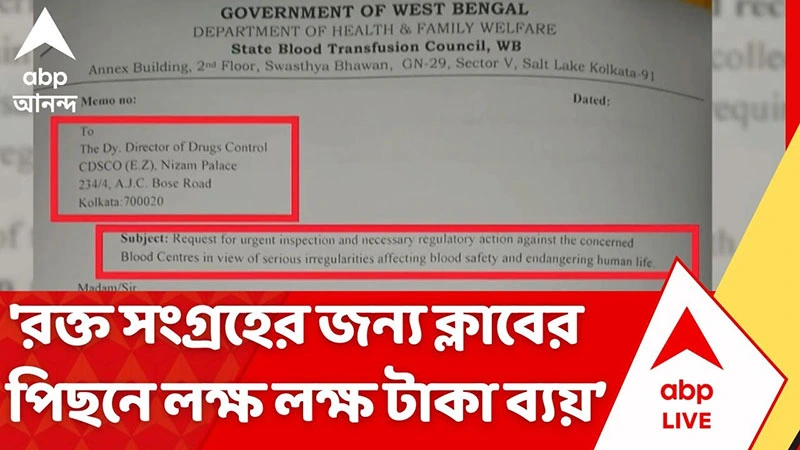
Health authorities in West Bengal have already cracked down on several private blood banks over illegal blood trading allegations. Officials seized records, froze operations, and launched formal court cases against rogue centers. Still, as long as structural gaps exist, these syndicates simply adjust and reopen under new names.
There are adequate safety norms mentioned in rule book, check out rules from India’s Drugs Standard Control Organization (CDSCO).
Legal Battlegrounds on Commercial Blood Donor Racket
The courtrooms of the Kolkata High Court are becoming the frontline of this battle. Petitioners in recent legal filings argue that the failure to track blood inventory amounts to a violation of the fundamental Right to Life under Article 21 of the Indian Constitution.
Key legal and judicial developments include:
| Jurisdiction Level | Legal Focus | Judicial / Regulatory Directive |
| High Court PILs | State Accountability | Directing Swasthya Bhawan to submit inventory audits of private blood banks. |
| Drugs & Cosmetics Act | Enforcement | Strict cancellation of blood banking licenses for non-compliance. |
| Inter-State Coordination | Smuggling Prevention | Mandating 7-day prior approval for bulk transfers of blood components. |
Health Department directives now mandate that no bulk transfer of blood or plasma can occur without notifying state blood transfusion councils at least seven days in advance. Courts are closely watching whether regulatory authorities enforce these mandates or let private operators off with minor penalties.
Dismantling the Supply Chain: Actionable Solutions
Smashing this trade takes more than just dragging a few street agents off to jail. We need to dismantle the system that created them.
1. Eliminating Forced Replacement Donor Rules
Hospitals must scrap compulsory replacement policies immediately. When an institution forces a frantic family to find a donor during an emergency, they hand that family directly to the touts waiting outside. Hospitals need to rely on public blood reserves and voluntary community drives rather than forcing families to bargain on the street.
2. Strict Vigilance and Hospital Responsibility
How do we stop touts operating right outside major medical facilities? Hospitals can’t just throw up their hands and pretend the street outside isn’t their problem.
- Medical centers must install active security cameras around waiting halls, gates, and parking lots.
- Any hospital employee found tipping off street brokers should be fired on the spot and prosecuted.
- Local police teams need dedicated, 24/7 patrols around hospital zones to break up broker clusters.
3. Aadhaar-Linked Centralized Donor Tracking
A single, nationwide digital donor portal tied to Aadhaar numbers would shut down professional blood sellers almost overnight.
How can it work?
The system may lock a donor’s profile for 90 days automatically, stopping people from selling blood every week and ruining their own health. The Identity checks ensure brokers can’t exploit minors anymore by verifying age, as mentioned in the Aadhaar.
It can be even better if every single unit gets a unique barcode linked to a verified donor, keeping illegal bags out of hospital blood banks completely.
4. Direct Administrative Oversight (IAS Cadre Supervision)
To keep touts operating in blood donor networks from quietly taking over community donation drives, state governments must step in hard. Appointing senior IAS officers or district administrators to oversee and audit donation camps ensures absolute transparency. Direct government eyes guarantee every collected unit goes straight to official state registers instead of slipping out the back door.
Unfortunately, our opposition parliamentarians often treat walk-out as a strategy in the parliament by wasting tax payers’ money to build up pressure on the ruler, but they hardly attempt to force the Government to discuss such a burning issue on center-state conflict.
Knowledge Mart Special: The Fight Against Blood Business
This public health crisis cannot be solved overnight, but continuous public awareness paired with aggressive legal enforcement can rebuild broken trust.
The Blood Black Market thrives on institutional loopholes, regulatory silence, and human panic. When hospitals force replacement donors, they inadvertently create a thriving business for street touts. When monitoring fails, organized syndicates profit by smuggling stolen plasma across state lines.
At Knowledge Mart, we maintain that human blood must remain a sacred gift of life – never an illegal commercial commodity.
Protecting public health demands ending mandatory replacement donor rules, enforcing strict Aadhaar-based digital tracking, and purging middlemen from hospital gates forever.
For direct news coverage on health department raids and state investigations into regional blood bank rackets, watch this ABP Ananda Report on Blood Bank Operations.
This report shows footage of law enforcement officers and health inspectors carrying out surprise raids on unauthorized blood banking networks across state lines.
Key Takeaways:
- Raw desperation drives the entire Blood Black Market. When hospitals panic families with sudden donor demands, street brokers step right in to sell cash-for-blood solutions.
- Major structural loopholes keep this illegal trade alive. Unregulated brokers freely bypass essential disease screenings for HIV or Hepatitis just to cut costs and boost profit margins.
- Networks behind the illegal unauthorized blood supply network in India routinely sneak illicit units across district borders. Some even lure teenagers into donating repeatedly for meager Rs. 500 payouts.
- Recent court probes and fake blood bank racket cases have finally forced health authorities to act. Several regional private centers face suspended licenses and active legal charges.
- Police raids alone won’t end the crisis. Real change requires hospitals to scrap compulsory replacement donor policies during emergency care.
- Pairing policy reform with Aadhaar-linked digital tracking forces a mandatory 90-day rest period for donors. Adding direct oversight from IAS officers at donation drives helps lock down the supply chain for good.
- WB health department uncovers alleged Rs 100-crore blood bank scam.