
Does Mamata Show Power even in Silent 21 July?
The standard roaring chants at Dharmatala felt missing, replaced by an eerie stillness as Kolkata woke up to a Silent 21 July.
For decades, July 21 meant a sea of supporters flooding the streets of Kolkata. It was an iconic spectacle of sheer political muscle. But this year, the political terrain has fractured into rival stages.
The original party leadership at Kalighat held its gathering under tight venue limits, while the rebel faction led by Ritabrata Banerjee gathered separately. In between, Congress and opposition groups staged their own events.
Still, beneath the unusual silence, one political reality stood out clearly: Mamata’s popularity still forms the core emotional anchor of the party’s grassroots base.
Mamata Banerjee in her usual fashion has blamed the state BJP Government. Watch the ANI Video in YouTube.
Why Did the 21 July Rally Crowd Shift This Year?
For the first time in recent memory, the annual event split into multiple parallel tracks across Kolkata:
- Kalighat TMC: The original nucleus under Mamata Banerjee, operating under restricted gathering limits.
- Rebel TMC Group: Led by Ritabrata Banerjee, positioning itself near Mayo Road.
- Opposition Camps: The Congress and BJP pushing aggressive counter-narratives across Bengal.
Many political observers wondered how people would volunteer to join Mamata’s silent 21 July 2026 rally, especially after the fiery Assembly face-off ignited by BJP leader Suvendu Adhikari just a day prior.
The answer lies in loyalty. Despite structural shifts and political turbulence, a dedicated core base continues to view Mamata Banerjee as the central figure of the movement.
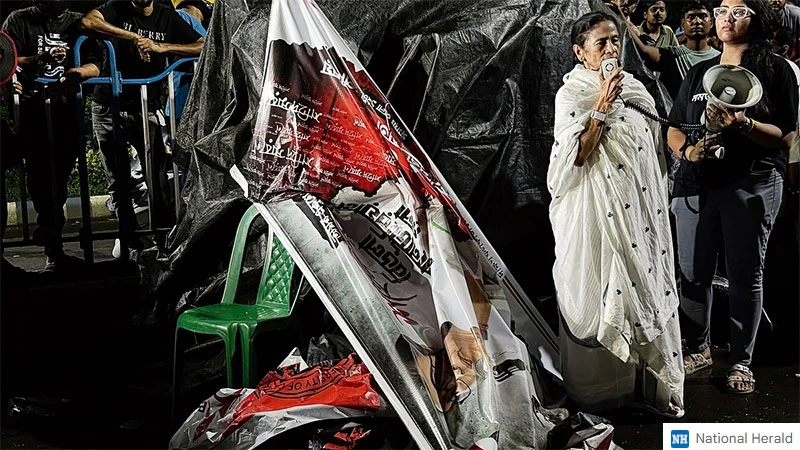
Mamata Banerjee accused BJP-backed operatives of vandalizing event stages and using state police to intimidate the martyrs’ families on the eve of Silent 21 July, allegations the BJP firmly denied.
What Drove People to the 21 July Rally Crowd?
A crucial question dominating newsrooms today is whether the crowd turns out purely out of emotion or due to political habit.
| Political Factor | Real Impact on 21 July Turnout |
|---|---|
| Grassroots Loyalty | Deep personal connection to “Didi” remains high |
| Local Cadre Network | Effective neighborhood mobilization |
| Factional Confusion | Caused smaller overall turnout across venues |
| Opposition Pressure | Strong Assembly speeches stirred debate |
Do People See Victim-Card Politics?
Critics argue that Mamata Banerjee frequently relies on victim-card politics to rally her supporters during internal party crises. They point out that whenever party squabbles peak, the rhetoric shifts heavily toward “outsider conspiracies” or “betrayal”.
However, her loyal supporters view it differently. For her cadre, her fierce, battle-tested persona remains her primary appeal. Analysts at Knowledge Mart note that while casual voters may tire of high-pitched political drama, the core loyalist views her as an enduring fighter.
2025 vs. 2026: 21st July Martyrs’ Day Rally Comparison
To understand how drastically the landscape changed, let us look at the numbers and logistics side-by-side:
| Comparison Metric | 21st July 2025 (Traditional Mega Rally) | 21st July 2026 (“Silent” / Fractured Rally) |
|---|---|---|
| Primary Rally Venue | Victoria House, Esplanade / Dharmatala | Birla Planetarium flank, Maidan (Court Restricted) |
| Party & Event Dynamics | Single unified show of strength under Trinamool Congress (TMC) | Split into 3 parallel events (Kalighat TMC, Rebel TMC, Congress) |
| Primary Leadership Focus | Mamata Banerjee as ruling Chief Minister & unified chairperson | Mamata Banerjee leading original Kalighat base amidst internal rebellion |
| Rebel / Opposition Events | Low-key symbolic observances by opposition parties | Ritabrata Banerjee (Rebel TMC at Mayo Road) & Subhankar Sarkar (Congress at Shahid Minar) |
| Crowd Size & Scale | Unrestricted “Sea of People” (Lakhs flooding central Kolkata) | Restricted gathering (Court order capped at Approx 3,000 participants) |
| Traffic & City Impact | Central Kolkata completely halted; major traffic diversions state-wide | One-way traffic maintained on Chowringhee Road; minimal city disruption |
| Cultural & Stage Program | High-decibel speeches, musical performances, and cultural shows | Sombre, quiet, speech-focused assembly without music or pomp |
The TMC Factions and Congress also attempt to show of strength even in Silent 21 July 2026.
Is Turnout Driven by Spontaneity or Systemic Pressure?
A sharp debate exists surrounding party rallies in Bengal: Do people join out of genuine zeal, or is it driven by local influence and party machinery?
- The Opponent’s Claim: Opposition parties assert that administrative influence and local party cadres drive the numbers at these rallies.
- The Ground Reality: While organizational muscle plays a role in any large event, muscle alone cannot generate long-term emotional loyalty.
Even on a Silent 21 July, the spontaneous attendance at the Kalighat gathering demonstrated that her personal appeal cuts through organizational friction.
You can watch ground-level visual coverage and video reports directly on the Anandabazar Patrika YouTube Channel or review the extensive photo story coverage on Anandabazar Patrika’s Photogallery Page.
Can the Rebel Group Win Without Mamata’s Image?
The rebel faction led by Ritabrata Banerjee may gain ground in legislative debates or contest party symbols. They may even receive subtle, indirect encouragement from the BJP camp to weaken the ruling structure.
But an important question remains: Can they win popular mandates without her face?
- Symbol vs. Mass Appeal: The rebels may fight for the party symbol, but the emotional support base remains tied to Mamata Banerjee.
- The Crowd Puller: Ritabrata Banerjee and other rebel leaders offer administrative critiques, but they lack the massive crowd-pulling capability that defined Trinamool’s history.
- Electoral Reality: Winning a state election in West Bengal requires connecting with millions of rural and urban voters, a domain where Mamata’s popularity remains a distinct asset.
Why the BJP Should Take Note of the Firebrand Image
The BJP must carefully evaluate the evolving landscape of West Bengal politics.
Even if critics claim her overall popularity has faced dips, Mamata Banerjee retains a unique firebrand persona that keeps a passionate core base firmly behind her.
Underestimating her political resilience during moments of quiet or internal friction has proved miscalculated for opposition strategists in the past. Even in a subdued event like this year’s Silent 21 July, her ability to hold the center stage remains undeniable.
Knowledge Mart Final Thoughts: A Critical Look at 21st July Drama
At Knowledge Mart, we analyze political events beyond the surface-level spectacles. The 2026 Martyrs’ Day rally highlighted a significant shift in Bengal’s political narrative.
What was historically a solemn commemoration of the 1993 police firing victims has increasingly evolved into an annual display of political posture and factional rivalry leading to Silent 21 July.
Key Notes on the West Bengal Political Landscape
- Exploitation of History: The emotional significance of 13 martyrs is frequently leveraged for political defense and internal party discipline.
- Governance vs. Spectacle: The continuous reliance on victimhood narratives risks overshadowing core governance challenges facing the state.
- Indisputable Leadership: Despite the internal rifts, political maneuvering, and rival rallies, Mamata Banerjee remains the sole indisputable leader capable of commanding the party’s core foundation.
The dramatic split on Silent 21 July may have fragmented the physical venues, but politically, the original grassroots core still rests firmly with its founding leader.
Moral Questions and the Tough Road to Political Revival
Since the largest crowd gathered at Mamata Banerjee’s stage without any help from the police administration, she may certainly feel encouraged. However, after Suvendu Adhikari’s explosive disclosures standing in the Assembly yesterday, does she hold any moral right to observe this Silent 21 July or participate in the martyrs’ tribute?
Perhaps it is now time for her to stand before a mirror and ask a fundamental question: her political drama may have brought her personal political gains, but what has it truly given to Bengal?
In other words, what has she actually done for Bengal? Self-criticism is necessary for everyone.
The fiery way Mamata Banerjee continues to target the BJP suggests that a dream of political revival might be awakening within her. In addition, with Abhishek Banerjee by her side, whose public acceptance remains negligible, can she ever truly reclaim her 1990s firebrand image? Time alone will answer, but the road ahead remains exceptionally tough.
10 Key Takeaways:
- Unprecedented 4-Way Fractured Rally: For the first time in history, West Bengal marked Silent 21 July across distinct rival venues instead of a single mega showcase at Victoria House.
- High Court Enforces Strict Limit: The Calcutta High Court restricted Mamata Banerjee’s Kalighat TMC rally near Birla Planetarium to a capped gathering of approx 2,500 participants.
- Battle for the “Real TMC” Legacy: The rebel faction led by Ritabrata Banerjee staged a parallel show of strength at Mayo Road, claiming majority MLA backing.
- Congress Reclaims Historical Roots: The West Bengal Congress hosted its own event at Shahid Minar, asserting ownership over the original 1993 Youth Congress movement.
- Assembly Probe Report Trigger: Suvendu Adhikari tabled the 1993 police firing inquiry findings right before the Silent 21 July rally, accusing previous leadership of exploiting martyr families.
- Massive Traffic & Route Shifts: One-way traffic rules on Chowringhee and designated parking zones prevented traditional central Kolkata gridlock.
- Sombre Tone Over Grand Spectacle: Court restrictions and factional friction transformed the event from a high-decibel cultural extravaganza into a quiet, speech-focused assembly.
- Rebels Rally Martyr Families: The dissident TMC group brought several 1993 martyr family members onto their Mayo Road stage to challenge political legitimacy.
- Mamata’s Firebrand Persona Endures: Despite legal limits and party rifts, Mamata Banerjee maintained her overnight venue inspections and core grassroots appeal.
- Crucial Precursor to State Dynamics: The 21 July split establishes a new political baseline between established leadership and rising opposition blocs in West Bengal.