
The Price of Indecision: Unmasking the Ongoing Bengal DA Crisis
For over a decade, state officials in Nabanna and Bikash Bhavan provided little beyond broken promises, litigation delays, and stalling tactics. On the ground across West Bengal’s educational institutions, progress remained stalled for years. The West Bengal DA Crisis has reached the hilt. Hundreds of thousands of teachers and non-teaching staff in government-aided institutions faced continuous delays in receiving their statutory Dearness Allowance. What began as a budgetary disagreement quickly escalated into a complete breakdown in state management.
As market inflation rose and household expenses climbed, everyday living costs put severe pressure on family budgets. Despite these economic realities, the educators tasked with teaching West Bengal’s youth were repeatedly forced to wait through deliberate delay in court hearings, stalled committee reviews, and vague press briefings without any definite timeline.
1. The Unsettled Arrears: A Decade of Broken Timelines
For years, the state’s public posture relied on a familiar rationale: pointing to previous administrative debts and structural deficits. While earlier fiscal decisions created challenges, political history cannot serve as an indefinite defense. Subsequent administrations had more than enough time to come up with a realistic payout plan. They had got 15 years in hands but could only increase the state loan burden from ₹1.92 lakh crore to ₹8.15 lakh crore.
Yet, state authorities repeatedly refrained from publishing a transparent, phased roadmap to clear outstanding West Bengal DA Arrears.
When educators advocate for their accrued allowance, they are demanding contractually earned compensation rather than a discretionary bonus. Through years of legal proceedings addressing whether Dearness Allowance is a legal right in West Bengal, appellate courts established unambiguous clarity. Both the Calcutta High Court and the Supreme Court affirmed that Dearness Allowance constitutes a legal right designed to shield real wages against inflation. By withholding statutory DA adjustments, the state effectively eroded its employees’ purchasing power month after month.
Past executive decisions to issue isolated 3% or 4% incremental hikes prior to election cycles did little to bridge the substantial gap with central government benchmarks. While state funds were mobilized for public events and promotional campaigns, assertions of depleted coffers lost credibility among public servants.
If there’s one striking contrast between the past administration and the new one, it’s tone. Where the previous government treated employee demands with outright hostility, the new leadership is at least willing to show some sympathy. Nobody in West Bengal can forget how Mamata Banerjee once dismissed protesting state employees—telling them to stop ‘barking’ (Gheu Gheu Korben na) when they asked for their rightful Dearness Allowance.
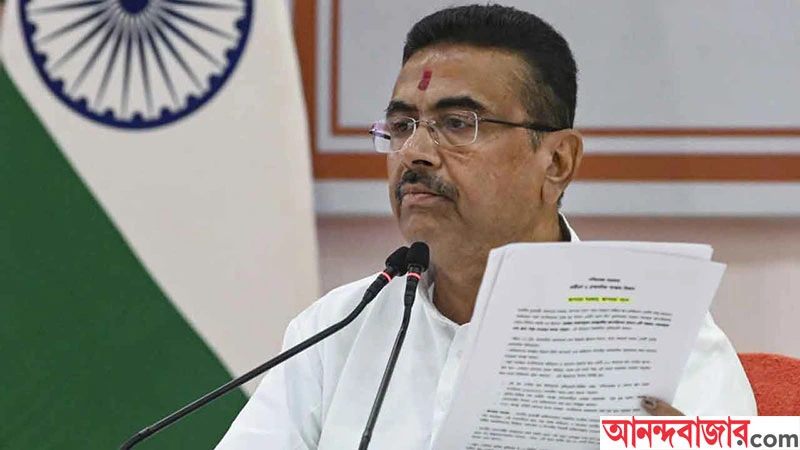
Following recent political shifts, the state government under Chief Minister Suvendu Adhikari moved to address the Bengal DA Crisis by announcing a 20% increment, elevating state DA to 38% in an effort to narrow the Central vs West Bengal DA Rate Gap. However, the multi-year backlog of historical arrears remains a critical issue for thousands of school staff.
“Dearness Allowance isn’t a gift or state charity. It’s an essential part of an employee’s salary tied directly to inflation. Pushing it off indefinitely is just a penalty on public servants”.
2. The Malhotra Committee: Resolution or Judicial Roadblock?
When the Supreme Court set up a judicial panel headed by retired Justice Indu Malhotra, stakeholders anticipated a definitive resolution. The panel was commissioned to audit total outstanding liabilities, evaluate state fiscal capacity, and set a firm, binding payment schedule, which should be kept in good spirit.
Teachers remain skeptical as committee proceedings could be used as an administrative buffer. Whenever union representation intensifies or compliance deadlines near, state legal representatives frequently cite pending panel evaluations to request extensions, prolonging final resolution.
This protracted timeline impacts grant-in-aid and government-aided school staff most severely. While core administrative cadres occasionally receive partial releases, school personnel are routinely forced to re-engage in litigation to ensure equal treatment. At its core, the widening pay gap between Bengal state teachers and central school faculty (such as Kendriya Vidyalaya faculty) reached record levels, weakening morale across regional classrooms.
We must understand that the teacher of a Kendriya Vidyalaya and that of a Government-aided School go to the same fish market to buy fishes. The market hardly distinguishes between the two teachers.
Educational organizations continue to seek explicit assurances: Will the administration fully implement the Justice Malhotra Committee’s final recommendations across all educational cadres, or will administrative reviews continue to delay complete disbursement?
Comparative Overview: Structural Metrics of the Bengal DA Dispute
| Key Area | Current Reality for Teachers | Required Action |
|---|---|---|
| Legal Status | Confirmed as a statutory legal right by higher courts. | Enforce DA as a binding obligation, not a discretionary grant. |
| Total Backlog | Estimated state liability exceeding ₹41,000 Crores. | Publish a multi-year fiscal plan to clear historical dues. |
| Share for Teachers | Substantial proportion owed directly to school staff. | Set aside dedicated funds without administrative diversions. |
| Central Gap | Historical percentage shortfall compared to Central DA standards. | Maintain a clear schedule to ensure long-term pay parity. |
3. From Court Directives to Concrete Implementation
The legal record spans over a decade. The Calcutta High Court consistently ruled in favor of state employees, dismissing fiscal constraint arguments as grounds for withholding statutory pay. The Supreme Court upheld the same core rule: financial hardship cannot be cited indefinitely to deny employees their legally accrued entitlements.
Since originating in 2016, this dispute traversed the West Bengal Administrative Tribunal (WBAT), multiple High Court divisions, and the Supreme Court. The matter remained before the apex court for several years. Even following clear judicial directives, operational execution has faced persistent delays. Employee coalitions, led prominently by the Sangrami Joutho Mancha, have maintained continuous advocacy throughout this period.
State leadership previously referenced clearance of pending DA on Teachers’ Day during earlier announcements.
The focus must now shift entirely from courtroom arguments to administrative execution. The education system cannot function effectively while its workforce remains financially stressed. The human impact is evident: numerous retired teachers passed away while awaiting their accrued pensions and arrear settlements, while active teachers continue to manage medical expenses and family commitments under financial constraint.
While past governance strategies extended the crisis through legal challenges, recent policy shifts under the new administration included direct dialogues with the Sangrami Joutho Mancha. Partial disbursements were initiated for core civil servants, but complete resolution for aided teaching and non-teaching personnel remains pending.
Required Administrative Steps:
If the administration wants to rebuild trust lost under the previous regime, it must act quickly. The teachers expect them to publish an explicit, date-bound schedule for clearing all accrued West Bengal DA Arrears. The government must also ensure complete parity across all cadres, making sure teaching and non-teaching staff receive their payouts at the exact same time as administrative employees. Unlike the previous Government, the current administration must cease further appellate appeals against employee-favorable rulings to comply with judicial mandates.
Essential External Reporting & Resources:
Detailed Legal Rulings: For comprehensive analysis of Supreme Court orders and observations regarding West Bengal DA arrears, reference the Verdictum Supreme Court DA Directives.
Ground Reporting & Context: View a comprehensive report covering state financial arguments and employee demonstrations via this West Bengal DA Crisis Ground Report & Legal Update.
For additional video reporting, reference Supreme Court Orders West Bengal to Clear Dearness Allowance.
What Next: Resolving the Backlog
Resolving the Bengal DA Crisis is fundamental to administrative integrity and institutional credibility. Educators across West Bengal demonstrated significant patience while maintaining classroom instruction through years of uncertainty.
Long-term resolution requires moving past historical comparisons and procedural delays. The state government must deliver transparent execution, fulfill its statutory obligations, and clear all pending dues to its workforce.
10 Key Takeaways on Bengal DA Crisis:
- Legally Enforceable Right: The Supreme Court affirmed that receiving Dearness Allowance (DA) is a legally enforceable right, not a discretionary benefit or bounty granted by the state government.
- Arrear Period Covered: The court directed the West Bengal government to pay pending DA arrears accrued over the 11-year period between 2008 and 2019.
- Immediate 25% Payout Mandate: The bench ordered the state to release an initial 25 percent of the total outstanding DA arrears to employees as an immediate installment.
- Formation of Indu Malhotra Committee: A high-level committee chaired by former Supreme Court Judge Justice Indu Malhotra was constituted to determine total arrears and establish a binding payment schedule.
- Massive Financial Scale: Total outstanding DA dues owed by the state government are estimated at approximately ₹41,000 crore.
- Model Employer Duty: The court emphasized that the state must act as a “model employer” to protect its workforce against inflation and preserve their basic standard of living.
- Inclusion of Retirees: All government employees who retired during the multi-year period of this litigation are explicitly entitled to receive their full accrued arrear benefits.
- Financial Autonomy vs. Statutory Right: The court ruled that state financial constraints cannot be used as a primary justification to deny employees their accrued DA Arrears.
- Strict Oversight & Compliance: The state government was directed to submit formal status reports tracking installment releases for direct judicial compliance monitoring.
- Alignment with High Court Verdict: The judgment upheld the core findings of the Calcutta High Court, resolving years of legal appeals brought by state employee unions.