
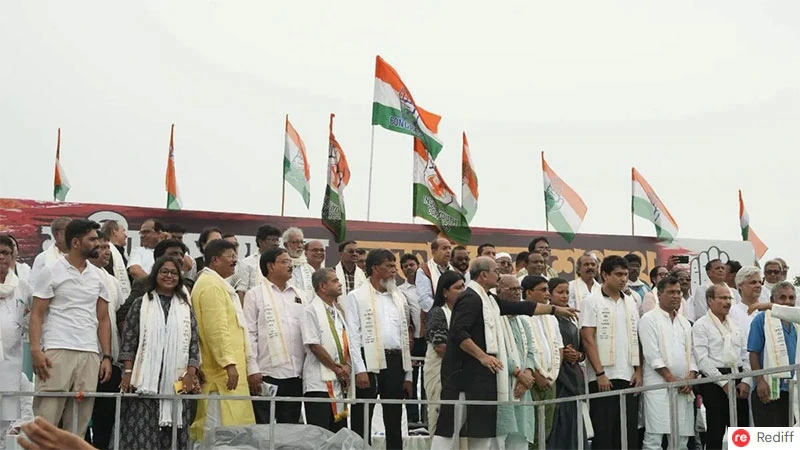
How 21st July Bengal Politics Changed in 2026
The landscape of 21st July Bengal Politics underwent a major transformation on 21st July 2026 after 15 long years of severe public disruption and complete traffic blockades.
In past years, massive political rallies blocked critical roads across Kolkata. Party workers forcibly occupied reserved train seats. Routine public buses were systematically pulled off routes through fear and intimidation.
However, the political atmosphere changed completely on 21st July Bengal Politics 2026.
- No Unannounced Holidays: School and college classes ran normally without forced closures.
- Smooth Commutes: Office workers reached their workplaces safely and on time.
- No City Shutdown: Supporters attended rally venues, but Kolkata did not face a complete shutdown.
- Relief from Extortion: Villagers and small businesses saw a major drop in local collection demands.
Comparing Local Rallies to National Practices
Why Political Rallies Should Not Paralyze Life
A healthy political system allows public events without stopping everyday life, a topic regularly analyzed on Knowledge Mart.
Political parties should let people decide whether to join a rally. Sadly, local traditions have rarely offered this freedom during West Bengal politics 21st July events.
| City/Region | Political Rally Culture | Impact on Daily Public Life |
|---|---|---|
| Kolkata (Past Years) | Total road blockades, forced bus seizures | Severe traffic paralysis and complete shutdown |
| Hyderabad / Vellore | Orderly rallies guided by traffic police | Traffic holds briefly, then moves normally |
| Kolkata (2026) | Better managed, minimal public harassment | Normal public transit and working offices |
What Changed Between 2025 and 2026?
Think back to the 21st July Martyrs Day Rally in 2025.
Very few people could reach their offices on time. Buses, auto-rickshaws, and toto rickshaws vanished from the roads as political groups prepped for TMC 21 July rally updates.
As Bengalis, we often take pride in our political awareness. Still, we frequently tolerated extreme disruption in the name of political programs.
Key Takeaways for Bengal’s Future
- Focus on Public Convenience: Political events can happen without blocking emergency services or daily workers. 21st July Bengal Politics and strong administrative measures have proved it.
- Changing Political Power: The Bengal Power War 21 July dynamic shifted as citizens demanded better governance and fewer road blockades.
- Analytical Coverage: Platforms like Knowledge Mart track these administrative shifts closely to provide unbiased updates on 21st July Bengal Politics.
21st July Bengal Politics: Who Held Power Where?
| Faction / Camp | Leader | Location | Key Narrative | Power Signal |
|---|---|---|---|---|
| Mamata Camp (Official TMC) | Mamata Banerjee | Birla Planetarium, Kolkata | “We are the original TMC” | Controlled rally, limited crowd, defensive tone |
| Ritabrata Faction (Rebel TMC) | Ritabrata Banerjee | Mayo Road (Gandhi Statue) | “Real TMC vs Kalighat control” | Parallel rally close to Mamata camp |
| Congress Revival Camp | State Congress Leadership | Shahid Minar, Kolkata | “1993 Martyrs belong to Congress roots” | Attempt to reclaim historical ownership |
| NCPI Camp (New Power Bloc) | Kakoli Ghosh Dastidar | Kolkata + Delhi (Rajghat) | “Take Martyrs Day national” | Multi-city presence, Delhi expansion |
21st July Bengal Politics: Martyrs Day 2026 Bengal Split Explained
- From Unity to Division: One rally split into four power centres.
- Political Legitimacy Battle: Each faction claimed ownership of the 21 July legacy.
- Crowd Optics Changed: No single dominant mega rally.
- National Expansion: Delhi event added a new political dimension.
- High-Voltage Keyword: Martyrs Day 2026 Bengal Split reflects fragmentation in Bengal politics.
Ritabrata Chattopdhyay in his Tough Talk Explained has tried to draw the comparative study of 21st July Bengal Politics in YouTube Channel.
Key Political Players and Ambitions in 21st July Bengal Politics
To truly understand the evolving landscape of 21st July Bengal Politics, we must first analyze the key opposing factions and their hidden political motives.
We need to observe the loss of power by the Trinamool Congress and the rise of its fractured breakaway factions. Along with this shift, two critical political developments demand equal attention.
- Congress Comeback: After a long absence, the National Congress moved away from closed venues like Netaji Indoor Stadium to host an open, large-scale rally at 21st July Martyrs Day Rally at Shahid Minar.
- BJP State & Central Strategy: Analysts must closely examine the strategic political calculations of the ruling BJP at both the state and central levels.
The Broader Impact of All-Pervading Politics
Everyone recognizes the expanding influence of BJP’s all-consuming political agenda. This strategy affects not just West Bengal, but the entire nation.
We must evaluate these events from a broader national perspective to grasp the true magnitude of the change.
| Political Entity | Key Strategy / Action | Impact on Bengal Power War 21 July |
|---|---|---|
| Trinamool Factions | Internal division and loss of centralized control | Fragmented authority across rally venues |
| National Congress | Staged an open rally at Shahid Minar | Reclaimed public space for traditional opposition |
| BJP (State & Central) | Calculated power positioning across India | Reshaped the overall national and regional political balance |
Key Insights on Political Shifts
- Breakaway Factions: Split political outfits alter party loyalty and voter trust across districts.
- Shift in Power Dynamics: The ongoing Bengal Power War 21 July reflects deeper structural changes within regional political alliances.
- Independent Analysis: Platforms like Knowledge Mart continue to deliver objective breakdowns of all critical TMC 21 July rally updates and regional strategy changes.
Controversy Surrounding the 21st July Martyrs Day Rally Observance
A major debate erupted in 21st July Bengal Politics after rebel leaders led by Kakoli Ghosh Dastidar observed Martyr’s Day at Rajghat in New Delhi.
This group recently aligned with the NCPI and staged their commemoration away from Kolkata.
Many political analysts consider holding a Martyr’s Day event for police firing victims at Mahatma Gandhi’s memorial highly ironic and controversial.
Watch the video of famous journalist Sumon Chattopadhyay and how he criticizes the dirty tricks of 21st July Martyr’s Day event 2026. You will find a phenomenal change in 21st July Bengal Politics.
Unanswered Questions About the 1993 Police Firing
Does dying in a police clash automatically qualify a person for martyr status? Historical records raise difficult questions about the actual events of July 21, 1993.
Former West Bengal Home Secretary Manish Gupta submitted detailed reports regarding the violence during that protest:
- Violent Elements Identified: Official reports submitted to authorities indicated that armed, intoxicated individuals had joined the march.
- Police Casualties: Over 200 police personnel sustained injuries during the clashes.
- Weapons Recovered: Law enforcement officers recovered pipe guns, country-made revolvers, and crude bombs from the crowd.
Why were deadly pipe guns present at a political rally? As the former Youth Congress President leading the 1993 march, Mamata Banerjee must answer for these violent elements.
| Event / Aspect | Official Historical Record | Political Controversy Today |
|---|---|---|
| Rally Weapons (1993) | Pipe guns, revolvers, and bombs seized by police | Organizers never explained why weapons were present |
| State Compensation | State government compensated victims of unsafe alcohol | Rally organizers avoided taking blame for violent attendees |
| Delhi Observance | NCPI leaders paid floral tribute at Rajghat | Critics call comparing rally victims to national martyrs absurd |
Unfortunately, people have been constantly focusing on 21st July Bengal Politics, which has turned out almost to a glamour show in the recent years.
Misusing Rajghat for Political Advantage
Using Rajghat, a shrine dedicated to Mahatma Gandhi, for this political ritual disrespects India’s genuine freedom fighters.
- National Disrespect: Legendary martyrs like Khudiram, Binoy, Badal, and Dinesh sacrificed their lives for national liberation, not political power struggles.
- Shrinking Credibility: Equating political rally clashes with national martyrdom damages the core ethics of West Bengal politics 21st July.
- Deep Analysis: Outfits like Knowledge Mart evaluate these political shifts to keep readers informed with accurate TMC 21 July rally updates and unbiased commentary.
Congress Returns to Open Public Rallies at Shahid Minar
For the first time in years, the National Congress stepped out of indoor spaces like Netaji Indoor Stadium to host an open public gathering at Shahid Minar for 21st July Bengal Politics.
Congress leaders openly accused the Mamata Banerjee administration of denying them permission for outdoor rally grounds in past years. During their speeches, speakers repeatedly emphasized the sacrifices of the 1993 martyrs.
Leaders across various Congress factions shared a single stage to criticize the BJP’s national policies and map out future anti-BJP alliances.
- Strong Public Attendance: Despite heavy rain and muddy ground conditions, a large crowd gathered at Shahid Minar.
- Minority Participation: A noticeable turnout of voters from minority communities caught the attention of political observers.
- Youth Enthusiasm: Active participation from young supporters delivered a major morale boost to party workers.
The Tea Vendor Story: Measuring Crowd Size
An anecdote involving a local tea vendor clearly illustrates the impressive turnout at the Congress gathering.
During the first hour, the vendor tried selling tea near the Ritabrata Banerjee-led Trinamool faction’s venue on Mayo Road. Facing poor sales, he relocated to the Congress rally at Shahid Minar.
Perhaps, 21st July Bengal Politics has given that breathing space to National Congress.
His sales surged immediately upon arriving at the Congress venue. The vendor confirmed that his single-hour earnings at Shahid Minar completely recovered his earlier losses and generated a solid profit.
| Rally Venue | Host Organization | Public & Economic Impact |
|---|---|---|
| Mayo Road | Ritabrata Faction (Rebel TMC) | Lower turnout, resulting in slow sales for local vendors |
| Shahid Minar Ground | National Congress | High turnout, driving strong local vendor sales and strong youth presence |
| Cathedral Road | Kalighat TMC (Mamata Banerjee) | Main political gathering center in central Kolkata |
Key Takeaways from the Congress Gathering
- Reclaiming Public Spaces: The move to Shahid Minar signals a strategic effort by Congress to rebuild its grassroots footprint during West Bengal politics 21st July events.
- Evolving Alliances: Emerging shifts during the Bengal Power War 21 July indicate stronger competition among anti-BJP political forces.
- Independent Commentary: Platforms like Knowledge Mart follow these ground-level updates to deliver comprehensive analysis on every 21st July Martyrs Day Rally.
Fractures Within Trinamool Factions and Empty Chairs at Mayo Road
To truly grasp the chaotic reality of 21st July Bengal Politics, one must look directly at the intense rivalry between rival Trinamool factions.
At the Ritabrata Banerjee-led faction’s venue on Mayo Road, arrangements were grand, but rows of plastic chairs remained completely empty. Popular leaders known for bringing massive crowds failed to deliver real grassroots numbers.
- Port Area Failure: Senior leader Firhad Hakim failed to mobilize expected supporters from his Port constituency.
- Kamarhati Shortfall: Veteran politician Madan Mitra could not fill venue seats with followers from Kamarhati.
- Solitary Success: Only Javed Khan managed to bring a modest gathering from the Topsia region.
Opposition leader Ritabrata Banerjee was never a traditional crowd puller; his reputation was built as a CPM youth leader in New Delhi. He quickly learned that the cadre-based discipline of Left parties differs completely from Trinamool’s leader-centric structure.
The empty venue proved a harsh political reality: having top leaders on stage does not guarantee that grassroots workers will follow.
Internal Infighting Overshadows Martyr Commemoration
Without party flags or Mamata Banerjee’s image, leaders like Madan Mitra and Firhad Hakim faced their true individual public support bases.
Instead of honoring martyrs, the Mayo Road stage degenerated into aggressive political attacks and personal mudslinging.
| Leader / Faction | Key Stage Action / Target | Impact on Bengal Power War 21 July |
|---|---|---|
| Ritabrata Banerjee | Attacked Mamata over the suppressed Sushanta Chatterjee Commission report | Shifted focus from martyrs to state-level administrative failures |
| Firhad Hakim | Targeted Abhishek Banerjee and central party control | Exposed deep organizational splits inside the party |
| Grassroots Cadres | Abstaining from attending factional rallies | Signaled declining trust in split political leadership |
Key Insights on Factional Politics
- Leaders Without Cadres: High-profile names lost crowd-pulling power once detached from the core party banner.
- Sushanta Chatterjee Report: Raising the unreleased judicial inquiry report exposed long-standing administrative covers.
- Unbiased Reporting: Outfits like Knowledge Mart analyze these internal power struggles to give readers objective commentary on TMC 21 July rally updates and the evolving Bengal Power War 21 July.
Mamata Banerjee’s Rally Proves Her Continuing Relevance
Despite heavy legal restrictions, Mamata Banerjee demonstrated her ongoing influence in 21st July Bengal Politics by drawing substantial crowds to Cathedral Road.
The High Court had restricted attendee numbers to just 2,500 and permitted closure on only one lane of traffic. However, massive public turnout forced authorities to shut down both sides of Cathedral Road.
Operating without state police machinery or local enforcers, Mamata Banerjee attracted far larger numbers than the competing Ritabrata Banerjee faction on Mayo Road.
- Street-Level Pull: Proved her capacity to attract voluntary crowds without official administrative backing.
- Factional Advantage: Outperformed rival Trinamool factions in overall venue attendance.
- Uncontested Command: Reaffirmed her standing among grassroots loyalists despite recent political setbacks.
Shifting Stances on National Alliances
Facing political isolation, Mamata Banerjee renewed calls for opposition unity under the INDIA alliance, a stark contrast to her earlier “go it alone” stance during elections, where she frequently criticized Congress leader Rahul Gandhi and Left parties.
Political analysts note that past shifts have weakened her credibility with potential alliance partners, leaving recent call-outs unreturned.
| Political Strategy | Past Election Approach | Current Political Stance |
|---|---|---|
| National Alliances | Pursued solo election campaigns; criticized Congress and Left forces | Appealed for opposition unity under the INDIA coalition banner |
| Rally Messaging | Focused on state governance and party achievements | Centered on factional rivalries and targeted party opponents |
| Media & Public Relations | Aggressive stance toward independent journalists and media outlets | Confrontational behavior toward YouTube reporters during live coverage |
Internal Friction and Family Succession
Tensions surfaced publicly during an exchange between Mamata Banerjee and Kalyan Banerjee on stage, with organizational control surrounding Abhishek Banerjee remaining the core issue.
Watch the details in the YouTube Video of TV 9 Bangla.
Her actions confirmed that Abhishek Banerjee remains central to her long-term political succession plans despite ongoing party friction.
- Missed Opportunity for Reconciliation: Using the event for political confrontation rather than addressing past administrative missteps limited her broader public appeal.
- Media Pressure: Reports of supporters confronting independent digital journalists highlighted ongoing media tensions.
- In-Depth Commentary: Platforms like Knowledge Mart cover these developments to provide balanced insights into the evolving TMC 21 July rally updates and the broader Bengal Power War 21 July landscape.
BJP’s Political Calculations in 21st July Bengal Politics
Analyzing the BJP’s strategy reveals how the party navigates both benefits and risks in the evolving landscape of 21st July Bengal Politics.
At both national and state levels, the BJP’s desire to fragment the Trinamool Congress has been clear for a long time.
Nationally, the party values crucial MP support to pass key bills in Parliament. Locally, the goal remains reducing Mamata Banerjee’s influence in the West Bengal Legislative Assembly.
This approach aligns with the BJP’s aggressive strategy of creating an opposition-free political environment across the country.
Watch the YouTube Video of political Analyst Biswanath Chakraborty to understand BJP’s probable strategy in 21st July Bengal Politics.
Legal Battles, Sympathy, and Public Sentiment
When Mamata Banerjee is forced to seek court approval for rally permissions or face physical attacks on supporters, public perception can shift toward sympathy.
Media outlets highlighted incidents where stage infrastructure was vandalized. While direct BJP involvement remains unconfirmed, Chief Minister Suvendu Adhikari understands the dynamics of political sympathy firsthand, having turned repeated legal challenges into political momentum.
- Legal Battles: Suvendu Adhikari filed over 104 court petitions in last five years as the Leader of Opposition to secure basic political rights and meeting permissions.
- Public Sympathy: Overly aggressive targeting can turn a struggling leader into a victim, boosting their public support.
- Strategic Patience: Allowing a weakened opposition leader to stay active can offer long-term political benefits for the ruling party.
| Political Entity | Primary Political Rival | Long-Term Strategic Objective |
|---|---|---|
| BJP (State Unit) | Ideological opposition from the Left alliance | Establish dominance while managing opposition strength in the assembly |
| Trinamool Congress | BJP and internal breakaway factions | Retain grassroots support and maintain central leadership authority |
| Left Front | Ideological opposition to the BJP and TMC | Rebuild cadres and reclaim lost electoral ground |
Numbers and Ideology: The Final Equation
Ideologically, the BJP considers the Left parties its primary long-term ideological opponent in Bengal rather than a weakened Trinamool Congress.
A reduced Trinamool leadership lacking legislative majorities poses fewer long-term threats because numerical strength ultimately decides power in a democracy.
- Opposition Balance: Maintaining a managed opposition prevents alternative political coalitions from gaining momentum.
- Electoral Dynamics: The ongoing Bengal Power War 21 July continues to reshape traditional voting patterns and district-level alliances.
- Analytical Coverage: Outfits like Knowledge Mart follow these legislative shifts closely to offer objective commentary on West Bengal politics 21st July developments.
Controversy Over Assembly Speeches and Political Priorities
During the Assembly session on 22 July, Chief Minister Suvendu Adhikari launched a direct attack against Abhishek Banerjee without uttering his name.
Abhishek Banerjee previously targeted the Chief Minister during the 21st July Martyrs Day Rally. Such attack has certainly erupted political rows in 21st July Bengal Politics. However, sharp verbal retaliation from the top administrator raised several strategic questions.
- Unnecessary Visibility: Direct criticism from the Chief Minister gives unintended political priority to an opponent who has lost broad acceptability.
- Indirect Attacks: Referring to opponents without naming them weakens formal legislative debate standards.
- Shifting Focus: Escalating personal feuds distracts public attention from core state governance issues.
Elevating Political Opponents in 21st July Bengal Politics
Publicly responding to secondary political figures risks restoring their relevance in mainstream debates.
| Action | Assembly Context | Impact on West Bengal Politics 21st July |
|---|---|---|
| Targeted Rhetoric | Unnamed attacks during official speeches | Keeps sidelined leaders in news headlines |
| Personal Rivalries | Revisiting rally conflicts on the floor | Elevates political profile of opposing factions |
| Strategic Response | Focusing on governance over verbal duels | Maintains legislative authority and administrative focus |
Key Strategic Lessons
- Avoid Free Publicity: Senior leaders should avoid giving unnecessary platform space to fading political figures.
- Focus on Governance: Legislative debates yield better results when centered on public policy rather than personal retaliation on almost irrelevant 21st July Bengal Politics.
- Continuous Analysis: Platforms like Knowledge Mart evaluate these political exchanges to keep readers informed on every shift in 21st July Bengal Politics.
Knowledge Mart Exclusive: Final Takeaways on 21st July Bengal Politics
The events of 21st July 2026 marked a decisive turning point in West Bengal’s political history. What was once a unified show of strength has fragmented into competing rallies, court battles, and shifting ideological strategies across every major party.
At Knowledge Mart, our objective remains providing clear, data-backed analytical coverage on 21st July Bengal Politics without political bias.
Core Structural Shifts Reshaping Bengal
- Citizens Demand Normalcy: The dramatic drop in forced closures and road blockades proves that public tolerance for severe political disruption has reached an all-time low.
- Factional Fragmentation: Splinter groups and breakaway leaders now face a harsh reality: stage presence without grassroots organization fails to pull crowds.
- Changing Opposition Dynamics: The resurgence of the Congress at Shahid Minar and the BJP’s long-term strategic positioning indicate a multi-layered contest for Bengal’s political future.
| Key Strategic Area | Historical Pattern (Pre-2026) | New Reality (2026 Onward) |
|---|---|---|
| Public Transport & Mobility | Total city paralysis, bus seizures, forced holidays | Normal transit, functioning offices, managed rallies |
| Party Unity & Command | Single centralized rally led by TMC top brass | Multiple competing rallies across central Kolkata venues |
| National Alliances | Unilateral state-level dominance | Calculated appeals for coalition support under the Bengal Power War 21 July banner |
Looking Ahead
As the regional landscape evolves, the key question is no longer who can hold the biggest rally, but who can deliver governance, public safety, and institutional accountability.
Stay tuned to Knowledge Mart for ongoing expert analysis, ground-level reports, and critical updates on West Bengal politics 21st July developments.
10 Key Highlights: 21st July Bengal Politics Exploded
- Kolkata Unblocked for First Time in 15 Years: Schools stayed open, commuters traveled freely, and roads remained unblocked on 21st July 2026.
- Congress Reclaims Shahid Minar: Stepping out of indoor venues, the National Congress pulled a massive, rain-braving crowd with heavy youth and minority participation.
- Factional Rallies Flop on Mayo Road: Senior leaders like Firhad Hakim and Madan Mitra faced vast rows of empty chairs, proving crowd-pulling power fails without the core party banner.
- Mamata Retains Grassroots Pull Despite Restrictions: Overriding strict High Court limits of 2,500 people, Mamata Banerjee drew large crowds to Cathedral Road without police or administrative backing.
- Controversial Rajghat Protest Sparks Outrage: Rebel leaders paid tribute to 1993 police-firing victims at Mahatma Gandhi’s memorial in Delhi, drawing sharp criticism for comparing political clashes to national martyrdom. But 21st July Bengal Politics has turned into a mockery for the Delhi Political Circle.
- Unanswered Questions Over 1993 Violence: Historical reports from former Home Secretary Manish Gupta re-emerged, highlighting Pipe Guns, crude bombs, and 200 injured police officers during the original 1993 march.
- Internal TMC Feuds Overshadow Martyr Tributes: Stage speeches turned into fierce personal attacks, with Ritabrata Banerjee targeting the suppressed Sushanta Chatterjee Commission report. Was the 21st July Bengal Politics a blame-shifting game leaving the martyrs aloof?
- Abhishek Banerjee Remains Core of Succession Battle: Public exchanges between Mamata Banerjee and Kalyan Banerjee re-confirmed that Abhishek remains central to the party’s future command structure.
- BJP’s Strategic Opposition Balancing: The ruling central party weighs the benefits of a weakened TMC against its primary ideological rival in Bengal, the Left Front.
- Knowledge Mart Analysis Confirms Turning Point: Bengal voters are increasingly prioritizing daily normalcy and public convenience over aggressive street-level political dominance.
Frequently Asked Questions: 21st July Bengal Politics
What is the historical origin of the 21st July Martyrs Day Rally?
The annual 21st July Martyrs Day Rally commemorates the 13 Youth Congress workers who died in police firing on July 21, 1993. At the time, activists marched toward Writers’ Building in Kolkata demanding photo voter ID cards. After forming the Trinamool Congress in 1998, Mamata Banerjee made this event her flagship political program.
Consequently, state political narratives continue to revolve around 21st July Bengal Politics.
How did 21st July Bengal Politics change in 2026 compared to previous years?
For over 15 years, July 21 meant total city shutdowns, severe traffic jams, and closed schools. However, on 21st July 2026, Kolkata experienced normal traffic movement, open schools, functioning workplaces, and reduced public harassment due to strict judicial oversight and administrative changes.
Why were there multiple political rallies on 21st July 2026?
Following recent political shifts and factional divisions, three major political entities held separate events across central Kolkata:
- Birla Planetarium Ground: Hosted the Mamata Banerjee-led Trinamool faction following Calcutta High Court directives.
- Mayo Road (Gandhi Statue): Hosted the rebel Ritabrata Banerjee faction claiming to represent the original party.
- Shahid Minar Ground: Hosted the National Congress as they reclaimed their historical association with the 1993 movement.
What was the Sushanta Chatterjee Commission controversy?
The Sushanta Chatterjee Commission was a judicial inquiry set up to investigate the 1993 police firing. In 2026, the long-suppressed official findings were tabled in the State Assembly. Opposition leaders used the unreleased details to question past administrative decisions during West Bengal politics 21st July debates.
How does Knowledge Mart cover developments in West Bengal politics?
Platforms like Knowledge Mart provide independent, data-backed analysis on regional governance, electoral shifts, and live TMC 21 July rally updates.
Knowledge Mart focuses on objective reporting to keep readers informed about the ongoing Bengal Power War 21 July.
| Question Topic | Key Fact | Political Impact |
|---|---|---|
| Rally Location | Moved from Esplanade to Birla Planetarium and Mayo Road | Reduced severe traffic bottlenecks in central Kolkata |
| Congress Participation | Held first major outdoor rally at Shahid Minar in 15 years | Reclaimed historical ownership of the 1993 movement |
| Court Restrictions | High Court capped gathering sizes and managed traffic lanes | Prioritized public convenience over political disruption |