
New West Bengal Cabinet Challenges Kolkata Bias
The political landscape of West Bengal is undergoing a massive, irreversible shift. Suvendu’s Ultimate Bengal Cabinet shows a drastic change in the realm of West Bengal Politics. In addition, the formation of West Bengal Council of Ministers represents a critical milestone in this journey.
For decades, the corridors of state power remained trapped within a select Kolkata elite only. Historically, under the Trinamool Congress (TMC) regime also, North Bengal and remote tribal belts felt deeply neglected.
Indeed, Kolkata-centric MLAs traditionally bagged all the heavyweight ministries, leaving rural border areas behind.
Consequently, this centralization created a massive developmental gap between the capital city and the rest of Bengal.
However, the newly formed BJP government is actively working to dismantle this long-standing regional discrimination through a calculated governance restructuring.
BJP Government in West Bengal: The Structural Breakdown
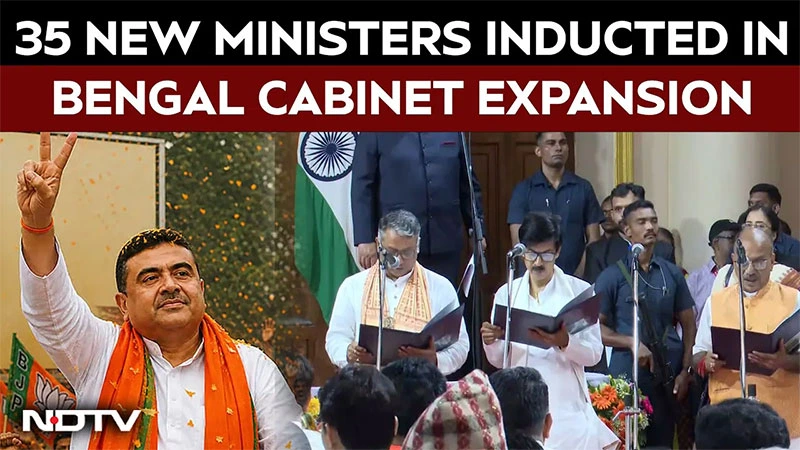
On Monday, Governor R.N. Ravi administered the oath of office to 35 new ministers at Lok Bhavan, expanding the state cabinet. Chief Minister Suvendu Adhikari was present at the grand event consequently, which began solemnly with the singing of Vande Mataram and the national anthem.
Chief Secretary Manoj Agarwal officially announced the names of the leaders joining what analysts are calling BJP Government in West Bengal. As a result of these 35 new inductions, the total strength of the West Bengal cabinet has now reached 41 ministers.
This West Bengal cabinet expansion is not just about numbers; it rather represents a fundamental re-balancing of political gravity across the state.
To understand the complete breakdown of West Bengal Council of Ministers, review the structural hierarchy below:
| Cabinet Stage & Category | Number of Ministers | Key Responsibilities & Portfolios |
|---|---|---|
| Initial Core Phase (May 9) | 6 (Including CM) | Home & Hill Affairs, Finance, Rural Development, Municipal Affairs, Food, Tribal Welfare |
| New Full Cabinet Rank (June 1) | 13 | Senior organizational leaders and regional heavyweights across urban and rural belts |
| Ministers of State (Independent Charge) | 3 | Targeted independent portfolios focusing on youth, culture, and localized development |
| Ministers of State (MoS Rank) | 19 | Grassroots representation, female faces, and border district administrators |
| Total Active Council Strength | 41 | Three short of the maximum constitutional limit of 44 for the 294-member Assembly |
Political Analyst Applauds New Bengal Cabinet Expansion
Political analyst Biswanath Chakraborty praises the new cabinet selection. He highlights a major shift away from traditional Brahminism and political elitism.
According to Chakraborty, this new cabinet breaks old political molds in three distinct ways:
- Regional Diversity: Mamata Banerjee’s previous cabinets focused heavily on South Kolkata. In contrast, this new lineup mimics the Left Front’s model by focusing on district-based representation.
- True Inclusion: The selection reaches beyond the elite, highly educated class to include truly marginalized communities.
- Fresh Blood: The administration strategically blends seasoned veterans with promising newcomers.
The Bottom Line: While time will test the efficiency of these new ministers, this cabinet selection marks a revolutionary political shift.
Is North Bengal Finally Getting Its Fair Share of Power?
For years, regional leaders argued that the TMC administration systematically ignored the strategic and economic needs of North Bengal.
Moreover, development funds for crucial tea garden belts and hill infrastructure were slow to arrive. In addition, local voices from these northern districts rarely made it into the top-tier state planning boards.
The rollout of Suvendu’s Ultimate Balanced Cabinet directly challenges this legacy of regional deprivation also. By appointing prominent northern voices like Shankar Ghosh (Siliguri), Manoj Oraon (Kumargram), and Deepak Barman (Falakata) to full Cabinet rank, the administration sends a clear signal to voters.
Additionally, leaders like Kaushik Chowdhury (Raiganj), Anandamay Barman (Matigara-Naxalbari), and Bishal Lama (Kalchini) have joined the ranks as Ministers of State (MoS).
This heavy regional representation ensures that North Bengal is no longer treated as a political afterthought. Instead, these lawmakers now hold the keys to major administrative decisions that will shape the region’s economy. As a result, the old narrative of “Kolkata rules, North Bengal suffers” is quickly fading from the political discourse.
The specific lawmakers driving this northern revival within BJP Government in West Bengal are detailed in the index below:
| Minister Name | Constituency Represented | Assigned Rank in Government |
|---|---|---|
| Shankar Ghosh | Siliguri | Full Cabinet Minister |
| Manoj Oraon | Kumargram | Full Cabinet Minister |
| Deepak Barman | Falakata | Full Cabinet Minister |
| Kaushik Chowdhury | Raiganj | Minister of State (MoS) |
| Anandamay Barman | Matigara-Naxalbari | Minister of State (MoS) |
| Bishal Lama | Kalchini | Minister of State (MoS) |
For live media coverage detailing the exact timings and political analysis of these individual appointments, you can check the live tracking on The Hindu Live Cabinet Expansion Coverage.
How Does the New Cabinet Empower Junglemahal and Tribal Communities?
The vast, red-soiled forest tracts of Junglemahal have long suffered from chronic underdevelopment and a severe lack of local job opportunities. Previous governments often viewed the region purely through a security lens rather than focusing on economic empowerment.
To fix this structural imbalance, the newly expanded ministry features significant representation from historically marginalized tribal communities.
For instance, Rajesh Mahato from Gopiballavpur takes charge as a Minister of State with Independent Charge. Similarly, Amiya Kisku (Nayagram) and Jewel Murmu (Habibpur) join the governance team as Ministers of State.
These appointments build upon the initial foundation laid during the government’s very first swearing-in phase. Significantly, tribal leader Khudiram Tudu had already taken his oath as part of the core cabinet back on May 9.
By placing these grassroots leaders into highly influential roles, West Bengal Cabinet Expansion 2026 aims to bring Junglemahal directly into mainstream development discussions.
Consequently, local youths can look forward to targeted welfare schemes and infrastructure projects tailored to their specific regional needs.
A concise overview of the leaders anchoring the Junglemahal and Tribal welfare strategy is presented below:
| Leader Name | District / Constituency Focus | Core Focus Area |
|---|---|---|
| Rajesh Mahato | Gopiballavpur | Independent Department Administration |
| Amiya Kisku | Nayagram | Forest Belt Welfare & Local Employment |
| Jewel Murmu | Habibpur | Tribal Education & Infrastructure Tracking |
| Khudiram Tudu | Core Phase Appointee | Backward Classes Welfare and Minority Affairs |
Who Are the Female Faces in West Bengal Cabinet Expansion 2026t?
Critics frequently pointed out that past state administrations relied heavily on urban, male-dominated political networks. This fresh cabinet expansion strongly counters that trend by giving significant responsibilities to women from diverse socio-economic backgrounds.
Importantly, Malati Rava Roy from Tufanganj has secured a vital position as a Minister of State with Independent Charge within West Bengal Cabinet Expansion 2026.
In addition, the line-up of Ministers of State features a strong, capable contingent of women leaders who won tough rural seats.
The prominent female faces included in this governance expansion are:
- Moumita Biswas Mishra representing the crucial district of Burdwan South.
- Purnima Chakraborty bringing an urban perspective from Shyampukur.
- Gargi Das Ghosh managing interests from the historical constituency of Kandi.
- Kalita Majhi representing the grassroots working class from Ausgram.
- Sumana Sarkar leading local development initiatives from Balagarh.
These strategic appointments ensure that rural women, suburban workers, and grassroots organizers have a direct line of communication to Nabanna.
Moreover, these leaders bring invaluable ground-level experience that will heavily influence future health, education, and social welfare policies.
Who Made the Cut as Full Cabinet Ministers?
The grand swearing-in ceremony saw 13 MLAs take the oath as full, high-ranking Cabinet Ministers. The final list demonstrates a carefully calculated balance between experienced organizational hands and fresh regional voices.
- Kolkata & Urban Belts: Tapas Roy (Maniktala), Arjun Singh (Noapara), Saradwat Mukherjee (Bidhannagar), Swapan Dasgupta (Rashbehari), and Kalyan Chakraborty (Khardaha). These urban leaders bring decades of legislative experience, ensuring that the state’s commercial capital remains steady and economically vibrant.
- South & Coastal Bengal: Arup Kumar Das (Kanthi South). His presence solidifies the administration’s hold on the economically vital coastal and agricultural belts of the south.
- Rarh & Border Districts: Gourisankar Ghosh (Murshidabad), Jagannath Chattopadhyay (Suri), Ajay Poddar (Kulti), and Dudhkumar Mondal (Mayureswar). These districts share borders and unique security challenges, making their inclusion vital for state stability.
- North Bengal Hills & Plains: Shankar Ghosh, Manoj Oraon, and Deepak Barman are key anchors in Suvendu Adhikari Cabinet.
Most of these newly appointed ministers arrived at Lok Bhavan wearing traditional, elegant Bengali dhoti-panjabi, accompanied by their families.
Top state leaders, including West Bengal BJP President Samik Bhattacharya, Union Minister Sukanta Majumdar, Dilip Ghosh, and Agnimitra Paul, attended the event to support the incoming team.
To verify the comprehensive list of all 35 members inducted during this round, read the complete journalistic log at the Indian Express Full Ministerial List Report.
What are the Next Critical Steps for the West Bengal Cabinet?
Chief Minister Suvendu Adhikari originally took his oath on May 9 at the historic Brigade Parade Ground alongside five core ministers. Portfolio assignments are already fully active for that initial group, which includes Agnimitra Paul, Dilip Ghosh, Nisith Pramanik, Ashok Kirtania, and Khudiram Tudu.
Therefore, the focus now immediately shifts to distributing specific ministerial portfolios to the 35 newly sworn-in members of Suvendu Adhikari Cabinet.
According to reliable government sources, the Chief Minister has called an official, mandatory cabinet meeting at Nabanna on Wednesday. The state expects a formal announcement regarding individual ministerial portfolios immediately following the conclusion of this high-profile meeting.
Specifically, by shifting the political center of gravity away from Kolkata and distributing power across North Bengal, Junglemahal, and rural districts, this state cabinet optimization faces its next big test.
Finally, the challenge will be turning this diverse regional representation into real, tangible economic growth for every citizen of West Bengal.
That was one of the primary motives of such a massive mandate in West Bengal 2026 Assembly Elections, besides.
In addition, to understand about the political context and historical backdrop leading up to this structural changes, one can explore the baseline report on Hindustan Times Bengal Cabinet Expansion Analysis.
However, for official government circulars, legislative orders, and portfolio gazette notifications as they are published, monitor the official portal of the Government of West Bengal.
10 Key Takeaways:
- First BJP Ministry Expansion: West Bengal officially expanded its first-ever BJP-led state cabinet finally on Monday under the banner of West Bengal Council of Ministers.
- Thirty-Five New Ministers: A total of 35 new lawmakers took their oaths of office at Lok Bhavan.
- Forty-One Total Members: Consequently, this major expansion raises the state’s total ministry strength to 41 members.
- Dismantling Kolkata-Centric Rule: Crucially, the new layout actively breaks the old TMC tradition of favoring Kolkata-centric MLAs.
- North Bengal Gains Power: Moreover, the administration heavily prioritized leaders from North Bengal to minimize years of regional neglect.
- Junglemahal Strategic Representation: Additionally, the calculated inclusion of key leaders from Junglemahal adds immense administrative value.
- Prominent Female Leaders: At the same time, powerful female faces secured critical positions to ensure strong gender representation.
- Three Administrative Tiers: For structured governance, the 35 inductees are divided into 13 Cabinet Ministers, 3 MoS (Independent), and 19 MoS.
- Portfolios Coming Wednesday: However, Chief Minister Suvendu Adhikari will distribute individual department portfolios during a Nabanna meeting this Wednesday.
- Top Leadership Attendance: Finally, key political heavyweights like Sukanta Majumdar, Dilip Ghosh, and Agnimitra Paul attended the ceremony to show solid solidarity.
People Also Ask (PAA)
1. Who is the current Chief Minister of West Bengal?
Suvendu Adhikari serves as the current Chief Minister of West Bengal. He took the official oath of office on May 9, 2026. Consequently, his administration marked the beginning of the first-ever BJP-led government in the state.
2. How many ministers are in the West Bengal cabinet?
The West Bengal cabinet now contains 41 active ministers. This total includes the Chief Minister alongside 35 newly appointed lawmakers. As a result, the state administration sits just three members short of its maximum constitutional limit.
3. Which leaders from North Bengal joined the new cabinet?
Prominent northern lawmakers Shankar Ghosh, Manoj Oraon, and Deepak Barman joined the administration as full Cabinet Ministers. In addition, grassroots leaders Kaushik Chowdhury and Anandamay Barman took oaths as Ministers of State. This move intentionally grants historic administrative power to the northern districts.
4. Who distributes the ministerial portfolios in West Bengal?
Chief Minister Suvendu Adhikari holds the executive power to allocate individual portfolios. He finalized the initial core group assignments in early May. Subsequently, the administration scheduled a full cabinet meet at Nabanna this Wednesday to distribute the remaining departments.