
What Caused the Historic Bengal Victory?
The Historic Bengal Victory of BJP has triggered a massive shift in West Bengal’s political landscape. In addition, this landmark win signals a complete transformation for the region. Nevertheless, this powerful political wave seemed impossible just six months ago.
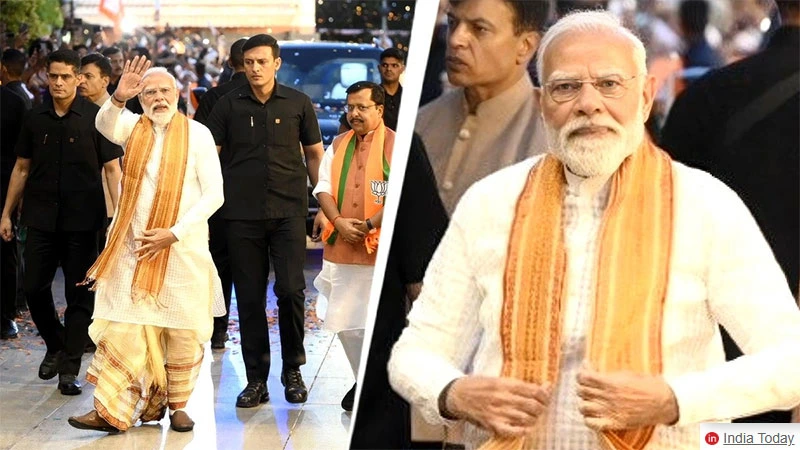
Watch Narendra Modi’s Victory Speech on 04 May, 2026.
So, Should We call it a Tectonic Shift of Bengal Politics?
BJP Growth in West Bengal Assembly Elections (2006–2026)
| Election Year | BJP Seats Won | Total Seats | Position |
|---|---|---|---|
| 2006 | 0 | 294 | Marginal player |
| 2011 | 1 | 294 | Entry into Assembly |
| 2016 | 3 | 294 | Minor presence |
| 2021 | 77 | 294 | Main Opposition |
| 2026 | 207 | 294 | Ruling Party |
Why Did the Political Tide Turn So Quickly?
Moreover, several critical factors fueled this momentum. Specifically, the electorate expressed deep dissatisfaction with the previous administration. Consequently, the BJP capitalized on a strong anti-incumbency sentiment across the state.
The public raised a sharp, clear voice against the long-standing regime. However, Bengal Citizens focused on several key grievances, including:
- Widespread Corruption: In addition, Deep-rooted issues within the administrative ranks.
- Systemic Nepotism: Meanwhile, Public frustration over unfair political favoritism.
- Extortion and Crime: Growing concerns regarding safety and illegal financial demands.
- Violence Against Women: A demand for better protection and justice also.
- Targeting of Commoners: General outrage over the mistreatment of everyday people.
However, the situation of transformation of power has become complicated as Mamata Banerjee refused to step down even after this historic debacle. Subsequently, Political Analysts, Biswanath Chakraborty strongly criticizes Mamata Banerjee’s such an unethical stance.
Yogendra Yadav, the renowned psephologist and the Social Worker, has however pointed out at anti-incumbency factor and Bengal Voter List Controversy in NDTV Poll Analysis.
Can They Deliver? Understanding BJP’s Challenge
While the win is monumental, it also marks the beginning of BJP’s Challenge in governance. Hence, the party must now address the very issues that led to the previous government’s downfall.
Moreover, maintaining this newfound support requires immediate action on campaign promises. Thus, transitioning from an opposition force to a governing body remains a significant hurdle.
Therefore, the people of West Bengal are watching closely to see if this shift leads to lasting peace and prosperity.
What Are the Four Pillars of the Historic Bengal Victory?
However, the BJP built its Historic Bengal Victory on a solid foundation of four major strategic pillars. In short, these key focus areas allowed the party to dominate the 2026 West Bengal political landscape:
- SC Consolidation: Gaining massive support from Scheduled Caste communities.
- ST Dominance: Securing a stronghold in Scheduled Tribe regions.
- Urban and Mixed-Seat Expansion: Winning over city dwellers and diverse constituencies.
- District-Level Sweeps: Clearing out the opposition in vital regional hubs.
Did the Minority Myth Finally Break?
Over the years, a narrative suggested that the BJP could not win in minority-heavy areas. However, this election proved otherwise.
On the other hand, in a surprising turn, the BJP won 18 minority-dominated seats, challenging the long-standing claims made by Mamata Banerjee and the TMC.
Furthermore, several parties split the Muslim vote bank that the TMC relied on for 15 years. This fragmentation included:
- CPM and Congress
- Humayun Kabir (AJUP)
- Indian Secular Front (ISF)
Consequently, this split made the path to victory much easier for BJP candidates. Much like the 2006 elections where a divided opposition helped the Left, the 2026 results showed that a fractured vote bank can topple even the strongest ruling party.
Vote Share (%) in West Bengal Assembly Elections
| Year | Indian National Congress | Trinamool Congress | Left Front |
|---|---|---|---|
| 2001 | 8.7% | 30.7% | 49.3% |
| 2006 | 14.5% | 26.6% | 50.2% |
| 2011 | 9.1% | 38.9% | 41.0% |
| National Congress & Trinamool Congress had a pre-poll Alliance in 2011 | |||
Why Did Hindu Voters Consolidate?
While the Muslim vote split, the Hindu vote consolidated. Specifically, middle-class and upper-middle-class voters turned out in high numbers. Thus, many felt a deep sense of insecurity regarding:
- Illegal Migration: Concerns over unchecked border crossings.
- Demographic Changes: Shifts in the population of border districts.
Because of these fears, many voters viewed the BJP as the only viable option for stability.
What Is the Biggest Remaining BJP’s Challenge?
Despite the win, a significant challenge for the BJP remains. To ensure long-term harmony and steady development, the party must now work to win the trust of Muslim voters.
Since minority communities are scattered across the state, their sense of discomfort could slow down progress. Therefore, the BJP’s next big task is to bridge this gap and foster a more inclusive environment for all citizens.
How Did Identity Politics Reshape the Historic Bengal Victory?
Historically, West Bengal avoided caste-dominated politics. However, the 2026 Bengal election results show that this has changed.
The Historic Bengal Victory relied heavily on SC consolidation and ST dominance, proving that identity-based support is now a deciding factor.
Why Is Identity Politics a Double-Edged Sword?
During the previous TMC regime, identity politics became deeply ingrained in the state’s fabric. Today, several groups are vocal about their specific demands, including:
- Rajbanshi and Matua communities
- Kurmi and Santali fractions
- Adivasi (Indigenous) Groups
Additionally, West Bengal has witnessed several riots and civil disorder in the recent past.
While these groups helped secure the win, bringing every fragment together for state development is a massive BJP’s Challenge.
The party must now pivot from campaign promises to unified governance.
Will Ayushman Bharat Launch Immediately?
Prime Minister Narendra Modi has already set a high bar for the new administration. During victory celebrations, he announced that Ayushman Bharat would receive the green signal in the very first assembly session.
Moreover, this move aims to provide immediate relief to millions who were previously excluded from the central healthcare scheme. Consequently, the pressure is on the new government to prove it can move at rocket speed.
How Will the Government Address Matua Citizenship?
A significant portion of the Matua community faced voting hurdles and felt deprived of their rights. Specifically, the Prime Minister promised to fast-track their citizenship during the campaign.
To maintain trust, the BJP must now:
- Deliver on Citizenship: Resolve long-standing legal and administrative barriers for the Matua segment.
- Ensure Inclusion: Guarantee that no legitimate resident is left out of the democratic process.
Ultimately, the BJP must act quickly to satisfy these diverse groups while maintaining overall state harmony.
How Did the BJP Sweep Urban and Rural Bengal?
The Historic Bengal Victory was not limited to just one region. Instead, the party showed incredible strength across urban, rural, and mixed constituencies.
This widespread support indicates that even the middle class, traditionally Left supporters, shifted their loyalty to the BJP in 2026.
What Do the Final Numbers Reveal?
The data shows a clear preference for change across all geographies. Specifically, the BJP outperformed the TMC in every category:
Estimated Seat Distribution (2026 Bengal Elections)
| Constituency Type | Total Seats (Adjusted) | BJP Seats | TMC Seats | Others |
|---|---|---|---|---|
| Urban | 60 | 42–48 | 10–15 | 0–3 |
| Mixed (Semi-Urban) | 109 | 75–84 | 20–29 | 2–5 |
| Rural | 123 | 70–79 | 35–44 | 2–4 |
| Total (Effective Counted) | 293 | 206 | 81 | 6 |
| Not an official ECI dataset
Built using:
|
||||
Moreover, the massive return of migrant workers played a crucial role. Many returned to vote, perhaps fearing for their citizenship after recent voter roll revisions. However, many also voted to fulfill their aspirations of finding work within their home state.
Can the BJP Stop Outbound Migration?
The most significant BJP’s Challenge now is industrial growth. To keep the support of these voters, the new government must create local jobs and stop the flow of workers leaving the state.
Building big industry is a herculean task ahead because it requires:
- Solid Infrastructure: Modernizing roads, power, and logistics.
- Land Acquisition: Managing large land units without heavy-handed government interference.
- Financial Incentives: Attracting investors who have avoided Bengal for decades.
- End of Cut-Money Culture: Ending the cut-money and syndicate raj to offer them congenial environment
- Local Mafia Culture: Terminating the Local Mafia Culture by taking strong actions against extortionist
Will a Stronger Organization Ensure Good Governance?
While the political wave was strong, the BJP’s grassroots structure still needs work. Specifically, the party could not provide Booth Level Agents (BLAs) in nearly 50% of polling stations.
Consequently, to maintain this victory in the future, the BJP must build a disciplined, cadre-based organization.
Delivering Good Governance is only half the battle; the party must also protect its presence at the booth level to counter their ideological rivals.
Can the BJP End the Syndicate Raj After the Historic Bengal Victory?
The Historic Bengal Victory brings a massive responsibility: cleaning up a system many believe is rotten to the core. For years,
Moreover, West Bengal has struggled with a deep-seated quid pro quo unholy nexus between political leaders, bureaucrats, and police officers.
Hence, breaking this unholy alliance is perhaps the toughest challenge the new government faces.
How Will the BJP Tackle the Cut-Money Culture?
In recent years, speed money or cut-money became a requirement for basic services. From college admissions to receiving payments for Awas Yojana, citizens felt forced to pay bribes. So, to restore public trust, the BJP must now:
- Dismantle the Syndicate Raj: Stop local groups from controlling construction and business tenders.
- Audit Corporation, Municipality and Panchayat Tenders: Investigate widespread allegations of nepotism and financial irregularities.
- Enforce Transparency: Ensure that government benefits reach citizens directly without middleman interference.
Moreover, the Election Commission has already set a standard for strict oversight. Thus, the BJP can now follow this lead to prove that governance can exist without corruption.
Jawhar Sircar, Former Member of Rajya Sabha, Ex-CEO of Prasar Bharati and worked in various top secretariats has also pointed out at Corruption issue in Times Now
Why Is Bureaucratic Reform a Major BJP’s Challenge?
The new administration cannot simply replace every officer or employee overnight. Indeed, ministers at the top cannot watch every transaction across the state. Therefore, the real BJP’s Challenge lies in strategic placement.
Specifically, the party must focus on:
- Selecting the Right Personnel: Placing honest, efficient officers in key positions to drive change.
- Building a Strong Cadre: Strengthening their own organization to monitor grassroots activities.
- Vigilant Governance: Creating a system of checks and balances that discourages unholy alliances.
Ultimately, delivering on the promise of a Corruption-Free Bengal requires more than just a victory.
It demands a special treatment for a system that has been deliberately weakened over the last decade.
Can the BJP Fix the State’s Debt After the Historic Bengal Victory?
The Historic Bengal Victory brings a massive financial challenge. Currently, West Bengal is struggling with a significant debt trap. While the BJP has promised several welfare schemes to help the people, the state’s fiscal health remains a major concern.
Will the BJP Deliver on Its Welfare Promises?
During the 2026 campaign, the BJP released its Sankalp Patra. which included ambitious financial commitments. To win the trust of the voters, the party must now balance these promises with the state’s limited budget. Key promises include:
- Increased Cash Transfers: Doubling the monthly benefits for women to Rs. 3,000.
- Unemployment Support: Providing Rs. 3,000 per month to jobless youth.
- 7th Pay Commission: Implementing the new pay scale for state employees within 45 days.
- Clearance of DA Arrears: Paying back-dated Dearness Allowance owed to government workers.
Moreover, the people of Bengal understand that a sea change won’t happen overnight. However, they expect to see a clear intent to transform the state’s economy immediately.
How Can the State Escape the Debt Trap?
A significant BJP’s Challenge is managing the high interest on existing debt while funding new projects. Many citizens prefer the status quo and are wary of sudden economic shocks. Therefore, the BJP must show a strategic roadmap to:
- Generate Revenue: Move beyond freebies by attracting large-scale industries and investments.
- Ensure Transparency: Stop the leakage of funds to ensure every rupee reaches the intended beneficiary.
- Modernize Infrastructure: Invest in projects that create long-term wealth rather than short-term relief.
Is This the Start of a New Economic Era?
West Bengal has historically relied on welfare-driven politics. Transitioning to a development-focused model will be difficult. Specifically, the BJP needs to convince the middle class that their Sonar Bangla vision is financially sustainable.
Ultimately, while the BJP will be given time to perform, the first few assembly sessions will be critical.
The introduction of Ayushman Bharat and the implementation of the 7th Pay Commission will serve as the first major tests of their governance.
10 Key Takeaways:
- Massive Political Shift: The Historic Bengal Victory marks a complete transformation of the state’s power structure.
- Anti-Incumbency Surge: Voters sent a sharp message against corruption, nepotism, and systemic extortion.
- Minority Myth Broken: BJP secured 18 minority-dominated seats, proving that the old vote-bank math has failed.
- Muslim Vote Split: Fragmentation among the TMC, Left-Congress, and ISF paved a clear path for BJP candidates.
- Hindu Voter Consolidation: Middle-class and border-district voters consolidated due to deep-seated security and demographic concerns.
- End of Identity Politics: BJP must now unite diverse groups like the Matuas and Rajbanshis under a single development goal.
- Rapid Service Delivery: Prime Minister Modi promised to launch Ayushman Bharat in the very first assembly session.
- Urban and Rural Sweep: The party dominated across all geographies, winning over 76% of urban seats.
- The Industrial Hurdle: A major BJP’s Challenge involves stopping outbound migration by bringing big industry back to Bengal.
- Governance Over Cadre: The new administration must replace the Syndicate Raj with a transparent, corruption-free bureaucracy.
People Also Ask (PAA)
How many seats did the BJP win in the 2026 West Bengal election?
The BJP secured a landslide victory by winning 207 seats out of 294 in the West Bengal Assembly. This result gave the party a clear two-thirds majority. Meanwhile, the Trinamool Congress (TMC) saw its seat count drop to 80.
Who will be the next Chief Minister of West Bengal?
The BJP has scheduled the official oath-taking ceremony for May 9, 2026. While the party has not yet officially named the Chief Minister, Suvendu Adhikari, Shamik Bhattacharya, Swapan Dasgupta and Dilip Ghosh are the top contenders.
Suvendu Adhikari notably defeated Mamata Banerjee in her own stronghold of Bhabanipur.
What are the main promises in the BJP’s 2026 Sankalp Patra?
The BJP’s manifesto focus included several major economic and social shifts:
- Healthcare: Immediate implementation of Ayushman Bharat.
- Welfare: Doubling doles for women to Rs. 3,000 per month.
- Employee Benefits: Implementing the 7th Pay Commission and clearing DA arrears.
- Legal Reform: A commitment to implement the Uniform Civil Code (UCC) in the state.
Why did the TMC lose the 2026 West Bengal elections?
Analysts point to a massive wave of anti-incumbency and a significant loss of cabinet ministers. Specifically, 63% of Mamata Banerjee’s cabinet ministers lost their seats. Key factors included public outrage over corruption, a fractured minority vote bank, and strong Hindu consolidation in border districts.
What is the biggest BJP’s Challenge after this Historic Bengal victory?
The most urgent BJP’s Challenge is addressing the state’s debt trap while fulfilling expensive welfare promises. Additionally, the party must dismantle the Syndicate Raj and address reports of post-poll violence to restore law and order across the state.