
5 Key Questions:
- Had the lush green grasses or river’s effervescent waters of Bangladesh suddenly made Sheikh Hasina nostalgic?
- Had she all of a sudden started feeling sentimental for the people, whom she had ruled for more than two decades?
- Was there a fresh set of attacks on Awami League cadres or supporters?
- Did the Bangladesh Government organize any Seminar on Human Rights, where she is invited as a Guest Speaker?
- Has she become suddenly homesick at the age of 80?
Key Snippet: None of the above is correct. It’s the timing and the situation that has prompted Hasina’s return to Bangladesh in December 2026.
Will Sheikh Hasina’s Return to Bangladesh Shift South Asia’s Destiny?
Return to Bangladesh is no longer just a distant rumor whispering across the border; it has suddenly turned into a political thunderstorm that is shaking South Asia to its core.
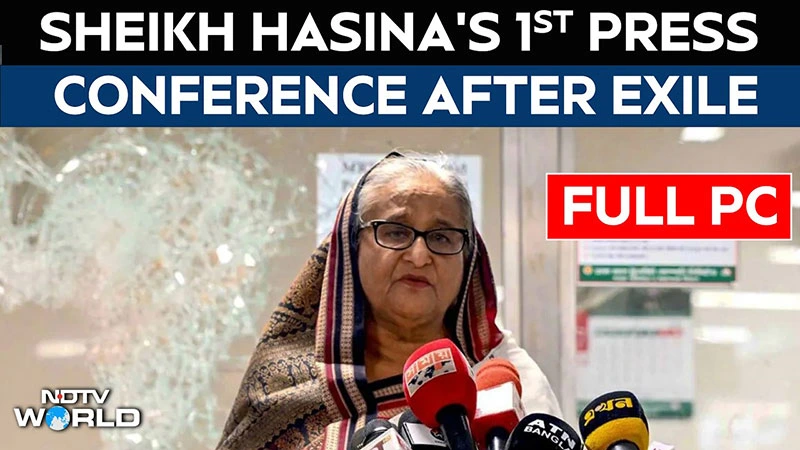
After two years in exile, a promise to return isn’t just talk: it suggests the ground may be shifting again in Bangladesh. Speaking from New Delhi, Sheikh Hasina wasn’t simply addressing supporters.
The tone, the timing – it all felt like a political jolt, echoing far beyond the riverbanks and straight into the heart of Dhaka’s political corridors. The central message of her historic, emotional address was loud, deliberate, and undeniable: a promised December return to her homeland.
She claimed that her country has slid into a dark, lawless abyss over the past two years. “They may arrest me on my return; they may even kill me… still, I have to go back for my people“, she declared with chilling calm during her virtual address.
This was not a standard, polished political speech written by diplomatic aides. It was an unfiltered, high-stakes gamble for political survival and legacy.
Analysts at Knowledge Mart view this breaking development not merely as a temporary news cycle, but as a massive regional turning point. The quiet borderlands of Eastern India and West Bengal are shifting once again.
For months, observers speculated whether the former prime minister would fade quietly into permanent political exile. Her declaration of a December return – timed symbolically with Bangladesh’s historic Victory Month – signals that the Awami League is preparing for a major confrontation on the ground.
Timeline: Background of Hasina’s Return to Bangladesh
To understand how South Asian politics reached this dramatic inflection point, one must trace the timeline of events from the 2024 student-led uprising to her unexpected declaration from India:
| Timeline Period | Key Political Event | Underlying Trigger & Impact |
|---|---|---|
| Jun-Jul 2024 | Student Protests Escalate | High Court quota verdicts spark nationwide civil disobedience and student strikes. |
| Jul 2024 | Nationwide Crackdown | Widespread street violence, internet blackouts, and severe security curfews. |
| Aug 5, 2024 | Resignation & Exit to India | Government collapses; Hasina evacuates to New Delhi within 40 minutes. |
| Aug 2024 | Interim Administration Formed | Muhammad Yunus takes charge as head of the interim caretaker government. |
| Late 2024 | Diplomatic & Legal Escalation | Dhaka files formal extradition demands and issues international arrest warrants. |
| Throughout 2025 | Awami League Banned in Exile | Grassroots cadres go underground while party activities are banned domestically. |
| Late 2025 | Tribunal Death Sentence | International Crimes Tribunal issues a death penalty verdict in absentia. |
| Aug 5, 2026 | Historic Delhi Presser | Hasina breaks two-year silence, vows a dramatic December return. |
Why Is the December Return Causing Total Panic in Dhaka?
The announcement of a planned December return sent immediate, violent shockwaves through the political halls of Dhaka. The ruling establishment in Bangladesh reacted with intense fury and immediate diplomatic outrage.
Within hours of the broadcast, official statements from Bangladesh’s Foreign Ministry condemned the event as a direct violation of bilateral dignity and a threat to regional stability. But why does her proposed Return to Bangladesh trigger such raw, unfiltered fear among her political rivals?
| Political Entity / Faction | Primary Strategic Mandate | Impact on Ground Reality in Bangladesh |
|---|---|---|
| Sheikh Hasina (Exile / Awami League) | Vows a dramatic December return to reclaim political space. | Re-energizes the suppressed Awami League base and activates underground cadres. |
| Tarique Rahman (BNP Government) | Maneuvers through structural turmoil and law enforcement gaps. | Faces massive administrative friction, ongoing public unrest, and severe economic gridlock. |
| Interim / Post-Yunus Transition | Attempted to dismantle past regime structures completely. | Struggles with rising public disillusionment, institutional breakdown, and high inflation. |
The psychological impact of her announcement inside Bangladesh cannot be overstated. Political analysts identify three primary reasons why her speech related to return to Bangladesh disrupted the political equilibrium:
- Re-energizing the Grassroots Base: Awami League leaders, local ward commissioners, and student union cadres have lived under severe suppression or in hiding for two years. Her direct words act as a massive rallying cry, signalling to millions of silent supporters that the party leadership has not abandoned the fight.
- Exposing Systemic Legal & Institutional Instability: By publicly scheduling her arrival date, she directly dares the legal machinery in Dhaka to arrest her at the airport runway, creating an immediate constitutional and law-enforcement nightmare.
- Shifting Global & Diplomatic Attention: The broadcast forced major international news outlets, human rights organizations, and Western foreign offices to re-evaluate the ongoing Bangladesh Crisis and question the democratic legitimacy of banning major political parties.
Hasina clearly received underlying signals from her deep internal communications network back home before making such an open declaration. Her loyalists inside the security apparatus, civil administration, and rural districts have been waiting for a decisive signal.
By setting a public deadline for her homecoming, she effectively turned the political clock into a ticking time bomb for her opponents.
Did New Delhi Silently Facilitate the Delhi Press Conference?
Officially, the Indian Ministry of External Affairs moved swiftly to distance itself from the controversial broadcast. Indian government officials publicly insisted that the Delhi press conference was arranged entirely by a private media entity, the Foreign Correspondents’ Club of South Asia.
They stated firmly that New Delhi had zero official involvement in her remarks and did not endorse any views expressed during the session.
“The government has no role in this event. It is being organised by a private media entity, and the government neither has any role in it nor endorses the views expressed there”.
– Ministry of External Affairs, India
Nevertheless, Hasina’s return to Bangladesh has certainly raised questions about the host country’s indulgence.
The Geopolitical Reality Behind the Curtain
Let us look at the hard diplomatic facts that experts discuss behind closed doors. Can a former foreign head of state living under maximum state security host an international broadcast without implicit government awareness?
- Uncompromising Security Operations: High-profile political figures living in exile on foreign soil are guarded 24/7 by top-tier intelligence and paramilitary agencies. Logistics, communications, and media access are constantly monitored for safety and diplomatic compliance.
- Strategic Diplomatic Levers: India is her official host country. While adhering to formal diplomatic protocols, allowing a secure audio link to reach global journalists sends a subtle, calculated message across the eastern border.
- Countering Regional Hostility: India tolerated intense diplomatic hostility, anti-India rhetoric, and border tensions over the past two years as bilateral ties frayed. Giving Hasina a controlled platform reminds her political opponents in Dhaka that New Delhi holds significant diplomatic and strategic cards.
While formal diplomatic etiquette requires disclaimers to preserve state-to-state channels with Dhaka, regional observers understand the unspoken message clearly. India allowed her voice to be heard loud and clear on the international stage.
Can India really disassociate itself from the speech of Hasina’s return to Bangladesh?
Has the Post-Hasina Administration Ruined Bangladesh?
To understand the core driver behind Hasina’s Return to Bangladesh, one must look closely at the severe economic and social reality grinding down daily life inside the country. The initial euphoria that followed the political change in August 2024 has faded completely into widespread public exhaustion, anxiety, and frustration.
| Critical National Metric | Current Status (2024-2026) | Direct Impact on Average Citizens |
|---|---|---|
| Essential Goods Inflation | Record-high price spikes on rice, oil, and fuel. | Daily commodities have become completely unaffordable for working families. |
| Industrial & Garment Output | Halted infrastructure and factory closures. | Major foreign buyers canceled orders, threatening garment sector revenue. |
| Youth Employment Market | Widespread job market contraction. | Millions of university graduates face severe economic hopelessness. |
| Internal Law & Order | Uncontrolled civic anarchy and police paralysis. | Local police stations remain understaffed, leading to rising violent crime. |
The interim administration under Muhammad Yunus struggled heavily to maintain basic administrative control and restore investor confidence. As political power transitioned toward BNP leader Tarique Rahman, the state inherited an economy locked in severe stagflation.
Essential food item prices reached all-time highs across urban and rural markets alike. Key foreign-funded infrastructure developments ground to a complete halt across vital industrial belts. Unemployment soared, leaving the very youth who fueled the 2024 movement feeling deeply betrayed and disillusioned.
Worse yet, the political apparatus opened visible operational channels toward radical factions, traditional anti-liberation elements, and regional extremist groups. This rapid, troubling pivot away from secular governance left millions of moderate citizens yearning for the economic predictability and physical security they once experienced.
Is Bangladesh Becoming a Pakistani Proxy on India’s Eastern Border?
During the high-stakes press conference in New Delhi, Sheikh Hasina’s son, Sajeeb Wazed, delivered a stern, alarming warning to global security analysts. He openly asserted that Bangladesh was rapidly devolving into an operational military and political proxy for external forces.
The dangerous resurgence of Pakistan’s ISI intelligence network across border districts presents a direct, immediate threat to South Asian peace.
Historical data over four decades reveals a clear, undeniable pattern: whenever extremist-backed political coalitions hold sway in Dhaka, militant cross-border networks instantly revive along the porous international boundary.
- Unchecked Border Infiltration: Radical armed groups gain easy, unmonitored transit routes through difficult riverine terrain and dense border forests.
- Radical Electoral Realignment: Hardline religious factions like Jamaat-e-Islami have established significant political footholds across sensitive border constituencies.
- Severe Regional Security Risks: State-sponsored anti-India rhetoric directly imperils the internal security of West Bengal and India’s vulnerable Northeastern corridor.
For a deeper analytical breakdown of the complex geopolitical maneuvers currently taking place across South Asia, you can watch India Today’s detailed coverage on Hasina’s planned return.
| Historical Timeframe | Phase of Crisis | Prevailing Political Context | Pakistan / ISI Network Activity | Current Security Status |
|---|---|---|---|---|
| Jun-Jul 2024 | Student Protests | Nationwide anti-quota movement. | Infiltration into student groups alleged. | Unverified operational links. |
| Aug 2024 | Regime Collapse | Hasina flees to New Delhi. | Speculation regarding foreign state intelligence. | Confirmed intelligence breach. |
| Late 2024 | Interim Governance | Yunus caretaker administration. | Diplomatic re-engagement with Islamabad. | Observed state-level contacts. |
| 2025 | Political Flux | BNP political rise under Tarique Rahman. | Reactivation of dormant sleeper cells. | Active security monitoring. |
| 2026 | Hasina Vow | Hasina vows a December return. | Heavily contested proxy narrative. | High alert along border zones. |
Why Is a Stable Bangladesh Vital for India and West Bengal?
India stands as the most powerful economic and military nation in South Asia, yet it faced severe strategic humiliation while watching its eastern neighbor descend into civil chaos. For New Delhi, a hostile administration in Dhaka closely aligned with Beijing and Islamabad creates an unsustainable security nightmare along the Siliguri Corridor.
| Security Risk Dimension | Cross-Border Security Vulnerability | Strategic Regional Countermeasure |
|---|---|---|
| Counter-Terrorism & Infiltration | Increased militant movement across porous riverine border zones. | Aggressive acceleration of border fencing, especially in Bengal. |
| Bilateral Economic Corridors | Disruption of transit corridors, rail links, and trade routes. | Reinforcing bilateral economic pacts dependent on political stability. |
| Geopolitical Regional Balance | Expansion of hostile foreign military influence (China / Pakistan). | Supporting secular, democratic governance structures in Dhaka. |
To counter these escalating security threats, India aggressively accelerated border fencing projects, particularly along the border districts of West Bengal. Cross-border smuggling, illegal migration, and militant intrusion directly impact daily civilian life in Bengal’s border towns.
This shared security burden makes a managed, successful Sheikh Hasina Return mutually beneficial for her political party and New Delhi. Her return represents the fastest route toward restoring administrative predictability, neutralizing proxy militant networks, and rebuilding a stable economic partnership between the two nations.
What Challenges Await Hasina Upon Her Return?
Making a bold political vow from abroad is one thing; stepping onto home soil in Dhaka is a completely different fight. The path leading to her proposed Return to Bangladesh is filled with immense personal, physical, and legal dangers.
- Severe Legal Warrants & Convictions: Local courts and the International Crimes Tribunal have issued active arrest warrants and a death sentence in absentia against her. Law ministers in Dhaka have publicly confirmed she will face immediate arrest at the airport.
- Direct Physical Threats: She faces extreme personal danger from active militant factions, radical cadres, and political rivals who view her return as an existential threat that must be stopped permanently.
- Entrenched Institutional Opposition: The current administrative machinery, intelligence heads, and police leadership will use every legal tool and security protocol to block her aircraft from landing or lock her away in solitary confinement immediately.
Though, history demonstrates that Sheikh Hasina thrives under intense political pressure. Having survived assassination attempts, prolonged exile, tragic family losses, and multiple incarcerations over five decades, she views this upcoming confrontation as her ultimate historic mission.
Knowledge Mart Final Thoughts
The dramatic announcement of her Return to Bangladesh is far more than an emotional speech: it is a calculated geopolitical move that could reshape the future of South Asia. The ongoing Bangladesh Crisis has pushed the nation to a dangerous breaking point, ruining economic stability, shattering social order, and bringing dangerous extremist elements directly to India’s doorstep.
Nevertheless, Immigration in West Bengal has been remaining since 1947. India has to focus on it.
At Knowledge Mart, our analytical view remains unwavering: a burning house on your eastern border eventually threatens your own doorstep. India cannot afford a permanent, hostile proxy state on its eastern flank.
Whether her promised December return succeeds in restoring political balance or results in immediate legal imprisonment, one thing is certain, the quiet period in South Asian politics is officially over. The battle for the future of Bangladesh has entered its most decisive and dangerous chapter.
10 Key Takeaways: Sheikh Hasina’s Vowed Return to Bangladesh
- Bold December Return Declaration: Former Prime Minister Sheikh Hasina announced a planned December return to Bangladesh during an international virtual press conference hosted from New Delhi.
- Personal Danger and Absolute Resolve: Hasina explicitly acknowledged severe threats of arrest, life imprisonment, or assassination upon landing, stating that personal safety cannot stop her duty to her nation.
- Mobilization of the Awami League Base: Her direct address acts as a massive rallying cry to reactivate underground Awami League cadres and silent supporters across Bangladesh.
- Official Neutrality vs. Diplomatic Strategy: India’s Ministry of External Affairs officially distanced itself from the event, while Dhaka expressed deep outrage over her speech being broadcast from Indian soil.
- Severe Economic Exhaustion in Bangladesh: The post-2024 landscape in Bangladesh remains burdened by all-time high inflation, halted infrastructure development, and widespread youth unemployment.
- Persistent Anarchy & Governance Struggles: The political leadership in Dhaka continues to face severe friction in maintaining basic civic law and order across major cities.
- Resurgence of Extremist & Proxy Elements: Security analysts warn of increased ISI activity and radical group revival along sensitive border districts.
- Border Security & West Bengal Impact: Heightened cross-border risks led India to accelerate border fencing operations along the West Bengal boundary.
- India’s Core Strategic Imperative: Maintaining trade corridors, border security, and regional stability makes a non-hostile government in Dhaka essential for New Delhi.
- Knowledge Mart Strategic Assessment: Sheikh Hasina’s declaration officially ends two years of political waiting and accelerates diplomatic calculations across South Asia.
Frequently Asked Questions (FAQ)
Q: What is the main point of Sheikh Hasina’s recent address?
A: Sheikh Hasina announced her planned return to Bangladesh in December during an international press conference in New Delhi. She highlighted the country’s decline into lawlessness over the past two years and expressed her commitment to return despite threats of arrest or assassination.
Q: How has the government in Dhaka reacted to Hasina’s announcement?
A: The current ruling administration in Bangladesh reacted with strong condemnation and diplomatic anger. Official statements from the Foreign Ministry labeled the broadcast a threat to regional stability and a violation of bilateral respect.
Q: Did the Indian government organize or endorse the press conference?
A: India’s Ministry of External Affairs publicly clarified that the event was organized by a private media entity – the Foreign Correspondents’ Club of South Asia – and stated that New Delhi played no official role in it nor endorsed the views expressed.
Q: What primary challenges does Hasina face upon returning to Bangladesh?
A: Upon her return, she faces active arrest warrants, a death sentence issued in absentia by the International Crimes Tribunal, serious personal security threats from rival political factions, and heavy opposition from the current administrative and police leadership.
Q: Why is political stability in Bangladesh important to India and West Bengal?
A: Instability in Bangladesh directly affects border security, trade corridors, and regional safety along India’s eastern border. Maintaining a stable and non-hostile administration in Dhaka helps counter cross-border extremist threats and protects economic interests in West Bengal and the Northeastern states.