
Is the Extortion Racket Leading to so Many Councillor Arrests?
Councillor Arrests are no longer isolated headlines. They are becoming a pattern that is too loud, too frequent, and too structured to ignore.
It never starts with an arrest.
It starts with silence.
A builder quietly pays. A businessman avoids confrontation. A local resident looks the other way. Then, over time, this silence becomes a system. And that system, slowly but surely, builds an extortion racket that operates in plain sight.
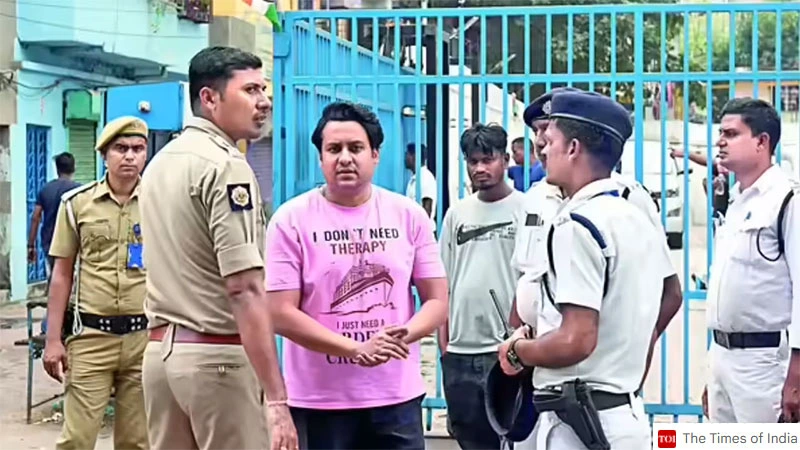
The arrest of former councillor Shams Iqbal in Kolkata’s Garden Reach has once again brought this uncomfortable truth to the surface. But the real question is not about one arrest. The real question is – how many more are part of the same chain?
Read the original report here: Anandabazar coverage of the arrest
Another angle that raised eyebrows: Luxury lifestyle and influence report
According to multiple reports, including this detailed coverage: Indian Express report on extortion case, the allegations involve large sums of money, intimidation, and pressure tactics.
This is not just about corruption. This is about a system where illegal construction, political access, and financial extraction intersect.
Why Are Councillor Arrests Suddenly Rising?
The rise in Councillor Arrests is not random. It reflects a deeper structural issue.
For years, local governance has operated in a grey zone. On paper, councillors are elected representatives responsible for civic administration. In reality, many allegations suggest that the role has expanded into something far more powerful – and far more profitable.
Consider the pattern that keeps repeating:
- Builders seek approvals or look to bypass rules
- Local intermediaries step in
- Payments are negotiated
- Construction continues, often illegally
This creates a parallel system. A system where rules exist, but enforcement depends on influence.
More reports highlight the growing number of such cases: NDTV report on multiple councillor arrests
When similar allegations surface again and again, it stops being coincidence. It becomes a pattern.
A Pattern Too Consistent To Ignore
In recent months, several cases have surfaced involving councillors or former councillors. The allegations may vary slightly, but the core remains the same – extortion, illegal cuts, and misuse of power.
| Date (2026) | Name | Area | Allegation | Key Detail |
|---|---|---|---|---|
| June 29 | Shams Iqbal | Garden Reach | Extortion | Large sum allegedly demanded from businessman |
| June 22 | Ex-councillor | Kolkata | Extortion | Police remand and ongoing probe |
| June 18 | Susanta Ghosh | Arrested from Puri | Illegal cuts | Multi-crore collection allegations |
| June 10 | Swapan Samaddar | Narkeldanga | Threats | Linked with earlier criminal case |
| June 3 | Sachin Singh & Arijit Das | KMC | Extortion | Multiple complaints by locals |
| Early June | Multiple figures | Kolkata | Fraud / Cut money | Triggered public outrage |
Additional report: Arrest from outside Bengal
This table is not exhaustive. It is only indicative. But even this limited snapshot reveals something alarming – the frequency of such cases is increasing.
And frequency often indicates structure.
The Illegal Construction Economy Behind It
To understand the rise in Councillor Arrests, one must understand the economics behind it.
Illegal construction is not an accident. It is a business model.
In a rapidly expanding city like Kolkata, land is valuable. Every extra floor, every additional structure, translates into money. But rules exist. Regulations exist. Permissions are required.
So how do illegal structures still rise?
The answer lies in the network.
- Builders want to maximise profit
- Middlemen facilitate connections
- Councillors provide access or protection
- Payments ensure smooth operations
This is where the Extortion Racket becomes institutionalised.
Payments are not occasional. They are expected.
They may be demanded to:
- Approve construction
- Ignore violations
- Prevent demolition drives
- Allow expansion beyond limits
Over time, this becomes normal. A cost of doing business.
And when something becomes normal, it becomes invisible.
The Lifestyle Gap That Raises Questions
One of the most visible indicators of such systems is lifestyle.
Reports have pointed out the presence of expensive vehicles, high-value assets, and visible displays of wealth among some accused individuals.
This naturally raises questions.
A councillor’s official income is limited. So when lifestyle exceeds income by a large margin, suspicion grows.
This does not prove guilt. But it does create a pattern worth investigating.
Related video coverage: Watch news videos on councillor arrests
The “Prize Posting” Debate
Perhaps the most controversial allegation is that councillor positions are treated as “prize postings”.
This implies that:
- Securing a ticket may require significant investment
- Winning the election is only the first step
- The real goal is financial recovery and gain
This creates a dangerous cycle:
| Invest Secure ticket & fund campaign |
> | Win Gain power & position |
> | Recover Alleged cost recovery channels |
> | Profit Earnings exceed spending |
> | Reinvest Repeat the cycle |
Cycle Insight: Once started, this loop becomes self-sustaining and difficult to break.
If this perception holds true, then the problem is not individual corruption. It is systemic design.
Because the system itself incentivizes misuse of power.
The Political Layer
Another important dimension is political proximity.
Many local leaders operate within larger networks. They are not isolated actors. They are part of a structure that connects local governance with higher levels of political influence.
Some reports suggest close associations between councillors and senior leadership figures. While such proximity is not evidence of wrongdoing, it raises important questions about accountability and oversight.
Does proximity delay action?
Does influence shield misconduct?
These questions remain unanswered.
Impact On Ordinary Citizens
For the average citizen, these developments are not just headlines. They have real consequences.
When illegal construction flourishes:
- Buildings become unsafe
- Fire hazards increase
- Drainage systems collapse
- Urban planning fails
At the same time, when extortion becomes widespread:
- Small businesses struggle to survive
- Honest developers are pushed out
- Public trust erodes
This is why Councillor Arrests matter. Not because of politics, but because of everyday life.
Knowledge Mart High-End Analysis
At Knowledge Mart, this pattern is not viewed as isolated crime reporting. It is seen as a structural signal of deeper institutional issues.
One humble question to the Chief Minister: Many of the arrested councillors are said to be closely associated with former mayor Firhad Hakim, who is no stranger to controversy himself. The real question remains – will Suvendu Adhikari’s police dare to act, or will political equations with the rebel TMC group stall any serious investigation?
Three key insights emerge:
1. Institutional Weakness
Oversight mechanisms appear to have failed over time. Illegal activities continued long enough to become entrenched.
2. Political-Economic Nexus
The overlap between political authority and local economic control has become increasingly visible. Councillors are not just administrators anymore. They are power centres.
3. Delayed Accountability
The clustering of arrests suggests that action is reactive, not preventive. The system responds only after pressure builds.
Councillor Arrests are therefore not the core issue.
They are symptoms.
The real issue is the system that allows such patterns to emerge, grow, and sustain over time.
Until that system is addressed, reformed, and monitored effectively, the cycle will continue.
And every new arrest will only reinforce what people already suspect.
The racket was never small. It was just hidden.
10 Key Takeaways:
- Councillor Arrests are no longer isolated – they signal a deep-rooted extortion ecosystem.
- Illegal construction has emerged as the biggest cash pipeline for local political networks.
- From permissions to protection, every stage allegedly runs on unofficial payments.
- The councillor post is increasingly seen as a ‘high-return investment’, not public service.
- Repeated arrests expose a pattern – not coincidence, but a structured corruption model.
- Luxury lifestyles of local leaders raise serious questions on income vs reality.
- Political proximity may delay action – but cannot prevent eventual exposure.
- Common citizens pay the real price through unsafe buildings and broken urban planning.
- Selective crackdowns risk losing credibility unless the entire network is investigated.
- Councillor Arrests could be the first visible crack in a much larger political machinery.