
Will Bengal Food Raids Really Change the System?
Last Sunday, I walked into my usual haunt in a local bar, hoping for a quiet evening. My peg of teachers arrived, but the small plates of bhujia and fried ginger that usually come with it were missing. I asked the waiter what had happened. He shook his head and told me that the owner had stopped keeping pre-prepared snacks altogether. The reason, he said, was the ongoing Bengal Food Raids across Kolkata and suburbs.
That small change in a familiar place says something about the impact of the current food safety drive. Restaurant owners are clearly feeling the heat. They are also becoming more careful about what they keep in their kitchens. The food safety raids in Kolkata has created a churning.
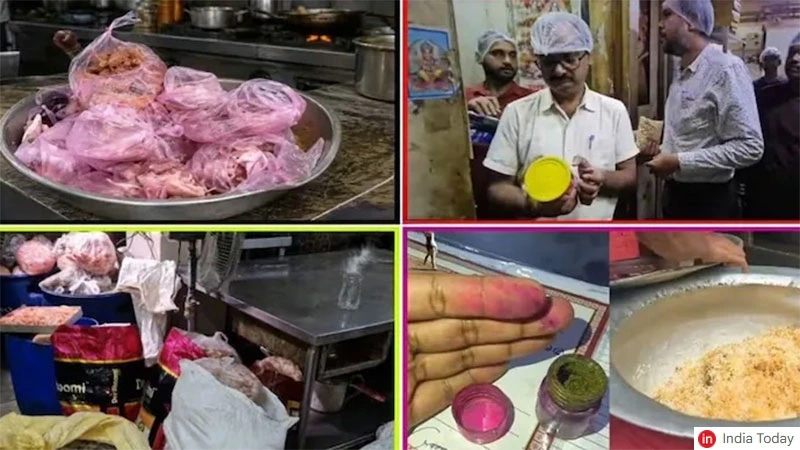
Inside commercial kitchens across Park Street, Tangra and Deckers Lane, inspectors found conditions that should concern anyone who eats outside. Officers opened freezers and found moldy baby corn, dark and repeatedly used cooking oil, and unlabelled meat that had remained frozen far beyond acceptable storage periods. These were not minor lapses that could simply be brushed aside.
This was not a check on one roadside stall or an isolated restaurant. During the first week of September 2026, teams from the state enforcement branch, local municipal corporations and health departments carried out coordinated visits to over 1,700 locations across West Bengal. The inspections covered restaurants in shopping malls, heritage establishments, central production units and neighbourhood sweet shops. Expired food was seized and some kitchens were closed immediately when officials found serious violations. Kolkata food safety inspections have exposed a lot.
The scale of the operation has naturally started a debate in Kolkata. Many people are asking a simple question. Is the health department finally trying to bring some discipline into the food business, or will this become another festival-season exercise that disappears after Durga Puja?
What Bengal Food Raids Uncovered
The speed of the inspection drive caught many restaurant operators by surprise. Teams moved through different municipal areas and districts instead of concentrating only on a few well-known food streets.
Food inspectors recently checked more than 1,730 eateries, sweet shops and processing plants. I happened to be staying at Hotel Kalinga in Malda when an inspection team arrived there as well. Seeing an inspection take place at a hotel outside Kolkata made it clear that the operation was not limited to the city’s better-known restaurant areas. So, it seems food safety inspection in West Bengal has become widespread rather than restraining to Kolkata only. This is good for the citizens of West Bengal.
The Bengal Food Raids uncovered problems on a much larger scale than many customers may have expected. More than 1,525 locations – roughly 88% of those inspected – failed basic hygiene or storage checks. Officials also ordered more than a dozen establishments to shut down or seal their kitchens. More than 900 food samples were collected and sent for laboratory examination.
The findings from individual kitchens were equally disturbing. In Chinatown and Park Street, inspectors found cooked food kept close to raw meat inside crowded freezers. Some sweet shops had trays of fungus-covered sandesh. At several busy restaurants, workers were found reusing deep-frying oil that had become almost black.
These are not merely cosmetic problems. Raw meat and cooked food need to be separated. Food needs to be stored at the right temperature. Cooking oil cannot be treated as something that can be used indefinitely simply because throwing it away costs money. West Bengal restaurant inspections have stirred the restaurants, hotels and bars across the state.
According to The Print’s report on Bengal food safety inspections, significant storage and hygiene violations were recorded across Kolkata, South 24 Parganas, North 24 Parganas and Purba Bardhaman.
Why Does the Durga Puja food safety Matter?
The timing of the raids is important. Durga Puja is approaching, and eating out usually increases sharply during this period. Restaurants, food courts, sweet shops and smaller eateries all prepare for a much bigger customer rush.
That means kitchens start stocking larger quantities of poultry, mutton, fish, dairy products and other ingredients. The problem begins when that extra stock is pushed into storage facilities that were never designed to handle such volumes.
A freezer packed beyond capacity cannot always maintain the temperature required for safe storage. Refrigeration becomes less effective, food remains in storage for longer periods and the chances of contamination increase. The pressure to serve hundreds of customers can also encourage shortcuts in kitchens that already operate with limited space.
Local authorities have conducted checks before major festivals in earlier years. What makes the 2026 drive noticeable is the intensity of the action. Health officials are taking action against establishments found violating rules, including suspension of operations and sealing of kitchens, rather than simply handing out small fines. West Bengal restaurant inspections should be a continuous process.
That creates a very different kind of pressure on restaurant owners. A fine can become another business expense. A sealed kitchen can stop the business completely.
Will the Bengal Food Raids Continue After Puja?
The real test will begin whether the Bengal Food Raids continue through out the year or will remain just a seasonal affair.
The images of officers entering restaurants, throwing away spoiled food and sealing kitchens make for powerful television and social media content. They also reassure customers that someone is finally checking what happens behind the kitchen doors.
But many diners remain doubtful about what will happen once the festive season is over.
There is a familiar pattern in Bengal. Enforcement becomes highly visible before a major festival. Teams conduct inspections, newspapers report violations and businesses become cautious. Then, after the immediate pressure goes away, the system often slips back into its old routine.
Without regular inspections, there is little reason for a badly managed kitchen to maintain the same standards throughout the year. Restaurant owners know when inspections are likely to increase. Some businesses may even find ways to hide problems temporarily rather than fixing them permanently.
The Food Safety Inspection in Nadia have exposed something shocking also shows why occasional inspections are not enough.
The larger question is how some of these establishments managed to continue operating with such poor storage and hygiene practices in the first place. If expired meat could remain in a freezer for weeks, someone should ask why the problem was not detected earlier.
The uncomfortable truth is that regular food inspection has never appeared to be strong enough. During much of the year, inspectors cannot be expected to find every violation, but the department also cannot afford to remain largely dependent on festival-time drives.
I have often felt that some inspectors are more comfortable inside air-conditioned offices than outside inspecting kitchens in the heat. If that culture does not change, Bengal Food Raids will remain raids rather than becoming a proper food safety system.
Are the West Bengal food raids Enough to Protect Consumers?
Dumping spoiled food in front of television cameras may create an immediate impact, but food safety involves much more than what inspectors can see inside a freezer.
Some of the most serious risks require laboratory testing. Synthetic colours in sweets, heavy metals in spices and chemical adulteration in cooking oil cannot always be identified simply by looking at a product.
I have personally tested such coloured food in Itahar. What appears attractive on a plate may not always be safe to eat. That is why laboratory reports matter as much as the inspection itself.
The government has collected more than 900 samples for testing. Now the next step should be clear. Those samples need to be tested quickly, and the results should be made public wherever the law permits. Otherwise, the inspection becomes a dramatic first step with no meaningful conclusion.
A Wider Bengal food safety Drive Is Needed
There are, however, some encouraging signs in the current drive.
For one thing, the inspections have not remained confined to central Kolkata. Teams have operated across the state, from Jalpaiguri in the north to Diamond Harbour and Kanthi in the south. Rural sweet-making centres have also come under scrutiny along with expensive food courts inside major malls.
That wider reach matters. Food safety is not a Park Street issue. A customer buying a sweet in a small town deserves the same level of protection as someone eating at a premium restaurant in central Kolkata.
The decision to suspend operations or seal kitchens during one of the busiest periods of the year has also sent a clear warning to restaurant owners. Losing business during the festive season can hurt far more than paying a routine penalty.
There is another effect that may prove even more important. Customers are now watching.
People who previously walked into a restaurant without thinking about the kitchen are paying more attention to cleanliness, storage, food handling and hygiene certificates. Once consumers start demanding better standards, restaurants have a commercial reason to improve.
That pressure should not disappear when the raids do.
What Would Make the Food Safety Drive Permanent?
The government now has an opportunity to turn the current Bengal Food Raids into something more permanent.
One useful step would be to make hygiene ratings clearly visible at restaurant entrances. Customers should not have to search through government offices or websites to find out whether a food establishment has a history of violations. A simple rating displayed where people can see it would put some responsibility directly in front of the business.
Laboratory testing also needs attention. More than 900 samples have reportedly been collected. If the laboratories take too long to produce results, enforcement becomes weak. A restaurant may continue operating while evidence against it sits in a laboratory.
Cold-chain management is another area that deserves much greater attention. Meat, fish, dairy and other perishable products can become unsafe before they even reach a restaurant if they are transported without proper refrigeration. Checking the temperature only after the food arrives at the kitchen does not tell the whole story.
There should also be a public digital record of inspections. Customers should be able to check whether a restaurant has been inspected, what violations were found and whether the business corrected them. Transparency would create pressure without requiring another raid every few weeks.
The objective should be simple: make compliance part of everyday business rather than something restaurants worry about only when an inspection team arrives.
Is Food Safety Raids 2026 Enough for Consumers?
Consumers also have a role to play, although they cannot replace government inspections.
Start with refrigerated displays. Heavy ice crystals on packaged dairy products or desserts can indicate that the refrigeration unit has been switched off or has experienced repeated power failures. That can break the cold chain and affect the quality of food.
Customers can also pay attention to the condition of ice and water facilities. Clean water is basic, but it is often overlooked when people focus only on the food on the plate.
Pre-cooked meat needs particular attention. An unusually heavy marinade or a strong sour taste can sometimes hide problems with storage or thawing. Customers should not ignore something that tastes or smells noticeably different from what they expected.
If something looks unsafe, the safest option is to avoid eating it. Informing the manager is also reasonable, especially when the concern is serious. Consumers should not feel pressured to finish a dish simply because they have already paid for it.
What Happens Next With Bengal Food Raids?
The real judgment on Bengal Food Raids will come after the festive lights go out.
The current inspections have certainly created pressure. Restaurant owners have been forced to look again at their storage practices, expired stock and kitchen hygiene. Customers, too, are paying more attention.
But one intense inspection drive cannot repair a weak food safety system by itself.
The government needs regular inspections throughout the year. Laboratories need to deliver test results within a reasonable time. Inspection findings should be accessible to the public. Cold-chain transportation needs proper monitoring. Restaurants that repeatedly violate safety rules should face stronger consequences.
Most importantly, food safety should not become a seasonal subject.
People eat outside their homes throughout the year. They buy sweets in January, order biryani in March, visit restaurants during summer and eat street food during the monsoon. Their right to safe food does not begin with Durga Puja and end after the immersion.
If the Bengal Food Raids become the beginning of a year-round food audit system, the current drive could mark a genuine change. If the inspections stop after the festival, they will remain another short burst of enforcement that produced headlines but failed to change the system.
10 Key Takeaways from the Bengal Food Raids
- Large-Scale Inspections: State authorities inspected more than 1,730 food outlets, sweet shops and central kitchens across West Bengal during the first week of September 2026.
- High Rate of Violations: More than 1,525 inspected establishments, nearly 88% of the total, failed basic hygiene or food-storage checks.
- Immediate Action: More than a dozen restaurants and other establishments faced closure, sealing or suspension of operations following serious violations.
- Serious Kitchen Problems: Inspectors found moldy ingredients, unlabelled and expired meat, contaminated storage areas and heavily reused frying oil.
- Pre-Puja Pressure: The increase in food demand before Durga Puja is forcing restaurants and commercial kitchens to store larger quantities of meat, fish, dairy and other perishable products.
- Freezer Overloading: Excessive stock in commercial freezers can interfere with proper cooling and increase the risk of food contamination.
- Statewide Coverage: The inspection drive went beyond Kolkata, reaching areas from Jalpaiguri to Diamond Harbour and Kanthi.
- More Than 900 Samples: Officials collected over 900 food samples for laboratory testing, including checks for possible adulterants, synthetic colours and other harmful substances.
- Questions About Continuity: Many people remain unsure whether the current crackdown will continue throughout the year or lose momentum after the festive season.
- Permanent Reform Needed: Year-round inspections, faster laboratory reports, proper cold-chain monitoring, visible hygiene ratings and a public inspection database are needed if Bengal wants lasting food safety reform.