
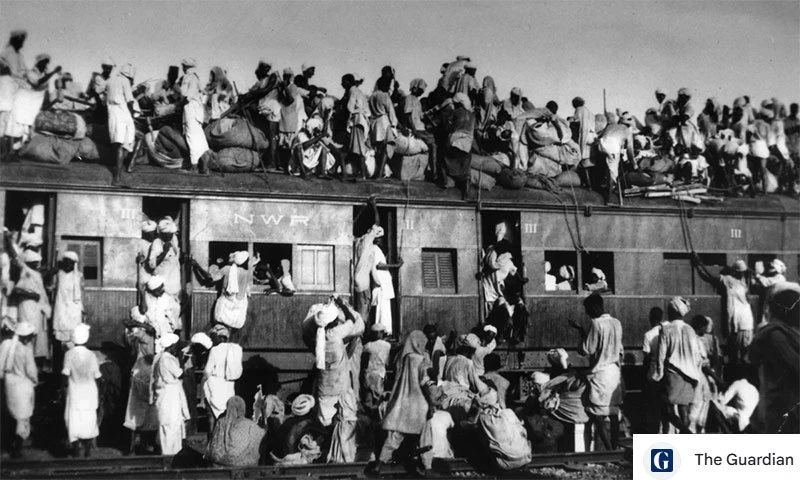
Was Partition 1947 a New Dawn or a Night of Loss?
On the warm night of August 14, families fell asleep dreaming of freedom. The air was filled with the sweet, nostalgic scent of a united homeland. But at midnight, everything shattered. The reality of Partition 1947 tore the country apart.
India gained independence, but the nation paid a tragic price by losing its unity. At Knowledge Mart, we look back at this painful turning point to understand how it reshaped our lives.
Initially, the division created two separate nations. However, the political landscape shifted again over the years.
- 1947: The map split into India and Pakistan.
- 1971: The region changed further, leaving three independent nations: India, Pakistan, and Bangladesh.
- The Human Cost: Millions of people suddenly lost their ancestral homes and became uprooted overnight.
How Did a Single Line Divide Families?
A British official named Sir Cyril Radcliffe drew a border line on a map. You can examine detailed studies on the economic consequences of Partition to see how it reshaped the region. That single stroke of a pen shattered millions of lives.
For instance, consider the heartbreaking story of two brothers at the border. The sudden boundary line instantly separated them. The elder brother stayed on the Indian side, while the younger brother ended up across the new fence.
You can watch historical breakdowns like The Reality of India’s Partition on YouTube to understand how quickly these borders caused chaos.
The table below shows how the history of partition 1947 completely altered local geography and daily lives:
| The Indian Side (West Bengal) | The Bangladesh Side (Jessore) |
|---|---|
| The elder brother lived in Petrapole. | The younger brother moved to Benapole. |
| Located in the North 24 Parganas district. | Located in the Jessore district. |
| The historic waters are called the Ganga river. | The exact same water becomes the Padma river. |
Consequently, all communication between the two brothers stopped. Cousins lost the chance to run and play together in the afternoon sun. A dark shadow of sorrow replaced their shared laughter.
Nature itself felt the divide. The famous river flows peacefully through India as the Ganga river. On the other hand, it instantly changes its identity to the Padma river the moment it crosses the border.
You can read deeper survivor insights at the 1947 Partition Archive to see how these physical borders created permanent emotional divides.
But, the immigration has been continuing even today, may be mostly illegally.
Did Political Leaders Fail the People in 1947?
Political leaders fell directly into the trap of the British “Divide and Rule” policy. As a result, they accepted the devastating split of a united nation.
At the outset, the reality of Partition 1947 became a harsh administrative and political choice paid for in innocent blood.
However, these historic decisions completely ignored the common people. The broader society never truly accepted this forced separation.
Has the Tragedy of Communal Violence Finally Ended?
The sudden boundary lines triggered brutal, bloody riots across both Punjab and Bengal. Sadly, this drastic step failed to bring permanent peace. The dark fire of communal tension still smolders today.
At Knowledge Mart, we actively track how these historical scars continue to shape modern events.
Recent events prove that the ghost of communal division is far from gone:
- Local Flashpoints: Violent outbreaks in areas like Samserganj show that tensions remain high even after religious partition 1947.
- Tragic Realities: The brutal, real-world case of the Dipu Das incident in Bangladesh reveals the extreme danger of modern unrest.
- Unbroken Cycle: The political choices made decades ago still spark hatred in the present day.
Why Do Uprooted Souls Still Long for Home?
Time cannot erase the deep attachment to one’s roots. Displaced people, especially the elderly, still feel a desperate ache to visit their original birthplaces. This painful longing bridges the gap between real life and cinema perfectly.
The table below highlights how media mirrors the deep internal grief of the history of partition 1947:
| The Silver Screen (Art) | The Living Reality (Life) |
|---|---|
| Director Imtiaz Ali beautifully captures this grief in his poignant film, Main Vaapas Aaunga. | Our parents and grandparents carry the exact same emotional scars in their hearts. |
| The character Ishar Singh Grewal expresses a desperate, heartbreaking hunger to return home. | Real-world survivors still weep for the ancestral villages they lost overnight. |
Consequently, the pain remains completely unchanged across generations. The physical borders exist on maps, but the human heart refuses to accept them.
Is National Division a Uniquely Indian Tragedy?
Political divisions are global phenomena. Looking closely at global history reveals that forced borders rarely bring lasting peace. The trauma of Partition 1947 is part of a much broader, painful pattern of global divisions.
At Knowledge Mart, we compare these international conflicts to see how communities handle broken borders.
Historical data shows that drawing lines on a map often leads to severe, long-term consequences:
- The Korean Peninsula (1945): The region split after World War II. Nobody wanted the brutal, three-year war that followed, yet the conflict devastated millions of lives. You can read an in-depth analysis of the origins of the Korean War to understand how sudden splits trigger major military crises.
- Ireland (1921): A British government peace treaty broke the island apart. Decades later, neither side found true happiness or absolute peace under that forced arrangement.
- Sudan (2011): A long, bloody civil war ended with the creation of South Sudan. While the southern population celebrated its new independence, the northern region faced mixed, highly complicated reactions.
Countries Partitioned Since 1900: Timeline & Current Status
| Country/Region | Year / Timeline | Resulting Nations / Entities | Key Reason | Current Status |
|---|---|---|---|---|
| India (British India) | 1947 | India, Pakistan (Later divided into Pakistan & Bangladesh in 1971) | Religious division, end of British rule | Permanently divided; separate nations exist |
| Ireland | 1921 | Northern Ireland (UK), Republic of Ireland | Political & religious conflict | Still divided; Northern Ireland remains in UK |
| Korea | 1945 | North Korea, South Korea | Cold War ideological split | Still divided; ongoing military tension |
| Germany | 1945-1949 | East Germany, West Germany | Allied occupation after WWII | Reunified in 1990 |
| Vietnam | 1954 | North Vietnam, South Vietnam | Post-colonial & Cold War conflict | Reunified in 1975 |
| Palestine (British Mandate) | 1947-1948 | Israel, Palestinian territories | UN Partition Plan | Still unresolved conflict |
| Sudan | 2011 | Sudan, South Sudan | Civil war, ethnic & religious divide | Separate nations; instability continues |
| Yugoslavia | 1991-2006 | Serbia, Croatia, Bosnia, Slovenia, etc. | Ethnic conflict, nationalism | Fully dissolved into multiple countries |
| Czechoslovakia | 1993 | Czech Republic, Slovakia | Peaceful political separation | Stable independent nations |
| USSR (Soviet Union) | 1991 | 15 independent countries | Collapse of communist system | Fully dissolved |
Can Broken Nations Ever Heal and Reunite?
While some borders remain permanent scars, history proves that other divided nations eventually find a way to heal. The deep pain of the history of partition does not always have to last forever.
The table below tracks how different divided nations moved toward successful reunification:
| Country | Year of Split | The Final Outcome |
|---|---|---|
| Vietnam | 1954 | Reunited in 1975 after the devastating Vietnam War. |
| Germany | 1945 | Reunited in 1990 after the historic collapse of the Berlin Wall. |
Consequently, history shows us two completely different paths. Some borders melt away with time, while others turn into permanent geopolitical standoffs.
You can watch archival footage detailing the Fall of the Berlin Wall on YouTube to see how deeply regular citizens celebrate when unnatural borders are finally destroyed.
How Does Economic Weakness Destroy National Sovereignty?
How Does Economic Weakness Destroy National Sovereignty?
The tragic legacy of Partition 1947 left behind deep, lasting scars on the Indian subcontinent. Unfortunately, the painful tradition of religious polarization continues to drive endless displacement.
A devastating wave of migration followed the severe anti-Hindu violence of 1950, forcing millions of refugees to flee Bangladesh for safety in West Bengal and Tripura.
At Knowledge Mart, we analyze how these historical wounds directly trigger modern geopolitical crises.
Today, a dangerous new threat looms over South Asia. Severe economic collapse has completely engulfed both Pakistan and Bangladesh. This systemic weakness allows global superpowers to aggressively exploit the region:
- Aggressive Territorial Expansion: China actively builds massive economic dominance across the subcontinent, threatening the independence of smaller nations.
- Loss of Financial Control: Severe debt traps force vulnerable governments to compromise their own borders for survival.
- The Ultimate Danger: Ongoing economic dependency makes it incredibly difficult for these nations to preserve their true sovereignty.
Are Global Superpowers Buying Up South Asian Sovereignty?
Global powers quickly exploit internal financial ruin to seize strategic military and commercial footholds.
A prime example is the recent corporate and military maneuvering around the strategic Pasni development plan in Balochistan, where financial desperation opens the door for foreign intervention.
The table below shows how economic weakness allows global superpowers to dominate weak nations:
| Target Region | Foreign Power Involved | The Strategic Objective |
|---|---|---|
| Pasni, Balochistan | United States | Developing deep-water ports and accessing critical minerals near China’s flank. |
| Subcontinent Infrastructure | China | Establishing absolute economic dominance through deep debt leverage. |
| The Middle East | Western & Regional Powers | Using direct military force to reshape borders, as seen in the destructive Iran war. |
Consequently, when global giants like the US or China demand access, economically broken nations lack the power to say no.
The history of the 2026 war against Iran stands as living proof of this harsh reality. When massive global powers clash, the sovereignty of weaker nations is simply crushed in the process.
Can We Turn the Pain of Partition into Peaceful Coexistence?
For now, we must accept Partition 1947 as an unchangeable historical truth. No one can rewrite the past or alter the maps drawn decades ago. However, we can absolutely re-evaluate how we look at our shared history.
At Knowledge Mart, we believe that an honest review of our heritage can help ease the long-standing bitterness between neighboring nations.
We do not necessarily need to follow the exact political paths of other divided regions. Instead, we can forge a unique path toward a peaceful future:
- Preserving Unique Identity: Every nation in the subcontinent can fully maintain its own sovereignty and distinct pride.
- Re-evaluating Past Conflicts: Changing how we teach the history of partition can help break the endless cycle of generational hatred.
- The Ultimate Goal: Choosing regional collaboration over hostile geopolitical standoffs brings immense prosperity to the entire subcontinent.
What Can South Asia Learn from Global Reunifications?
We may choose not to merge borders like Germany or Vietnam did. Even so, their peaceful transitions offer vital lessons in building regional stability.
The table below compares these historical examples to show what a cooperative future could look like:
| Historical Path | The Core Strategy Used | The Ultimate Benefit for South Asia |
|---|---|---|
| The German & Vietnamese Model | Complete political and structural reunification. | Shows that deep historical animosity can be dismantled completely. |
| The European Union Framework | Independent borders with highly open trade and shared economic policies. | Allows nations to keep their flags while eliminating economic conflict. |
| The South Asian Dream | Mutual respect, cultural exchange, and robust economic partnerships. | Brings lasting peace and protects the entire subcontinent from foreign debt traps. |
Consequently, peaceful coexistence is the only true way forward for this region. By focusing on shared growth, we can prevent external superpowers from exploiting our deep internal divisions.
You can explore modern research on the future of regional cooperation in South Asia to see how trade and cultural exchange can safely replace decades of bitter geopolitical rivalry.
Knowledge Mart Exclusive: Can the Spirit of Brotherhood Outlast the Borders?
In short, the tragic division of Partition 1947 proved that a single pen stroke could separate land, but it could never truly sever the bonds of human brotherhood. Beyond the political rivalries and concrete fences, a shared heartbeat still unites the people of this subcontinent.
At Knowledge Mart, we believe that the true healing of this history of partition lies in rediscovering our common roots, embracing cultural harmony, and extending a hand of peace across the border.
By choosing the warmth of brotherhood over the ashes of old conflicts, we can finally transform an unhealed wound into a bridge toward a brighter, shared future.
10 Key Takeaways
- The Midnight Trauma: The reality of Partition 1947 instantly destroyed the geographical and social unity of a historic homeland overnight.
- The Human Cost: Sir Cyril Radcliffe’s single stroke of a pen uprooted millions of families, permanently separating siblings across hostile new borders.
- A Three-Way Split: The original geopolitical division of 1947 evolved further by 1971, leaving the subcontinent permanently fragmented into three independent nations.
- Unending Communal Scars: The tragic history of partition failed to bring permanent peace, as modern flashpoints keep the fires of division alive today.
- Generational Longing: Time has failed to erase the deep emotional ache of displaced survivors, whose desperate hunger for their birthplaces mirrors poignant cinema.
- A Global Pattern: Forced national divisions across Korea, Ireland, and Sudan prove that artificial borders consistently trigger long-term humanitarian crises.
- The Sovereignty Threat: Severe modern economic collapse in neighboring nations leaves the entire subcontinent vulnerable to aggressive debt traps by global superpowers.
- Superpower Exploitation: Financial desperation opens the door for massive foreign intervention, putting the hard-won independence of smaller nations at absolute risk.
- Re-evaluating Our Past: While we cannot rewrite the grim events of Partition 1947, an honest review of history is vital to breaking the cycle of hatred.
- The Path of Brotherhood: The ultimate healing lies in choosing regional collaboration and cultural unity over the decades-old bitterness of political borders.