
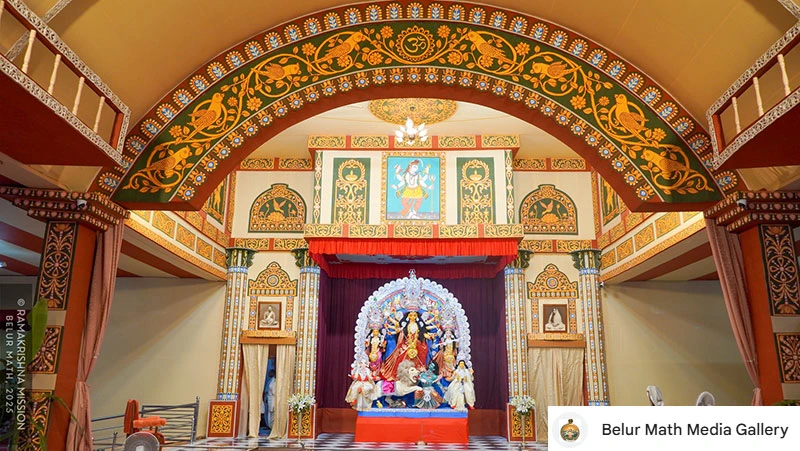
Durga Puja in Bengal: The Lost Magic
Durga Puja in Bengal is much more than a religious festival. It is a time to return home, meet old friends, gather with family and share the joy of being Bengali. Every year, people come back from distant cities and even from abroad to spend a few days with their loved ones. New clothes, good food, pandal-hopping and long conversations with friends are all part of the celebration. People from different castes, religions and social backgrounds join in, often setting their differences aside for a while.
Yet the Durga Puja I remember from childhood was different from the spectacle we see today. Those days were not free from social divisions, commercial interests or political influence. Still, the festival felt simpler to me. We did not worry about corporate sponsors, celebrity appearances, political branding or which leader would inaugurate a particular pandal. As the years passed, money and politics became more visible, and Puja committees increasingly became centres of local influence.
This is a personal account of that change: from the small pleasures of childhood to the growing role of commercial interests and political power in Bengal’s greatest festival.
Durga Puja in My Childhood: A Different Kind of Joy
My memories of Durga Puja begin with Sasthi morning. I would put on a new shirt and shorts, take my toy gun, slip a packet of caps into my pocket and rush to the local pandal. The religious rituals meant little to us children. We wanted to burst caps, meet our friends and enjoy the holidays. The sound of those little explosions was as much a part of Puja as the drums and the smell of incense.
By evening, it was time to wear our new shoes. Newspapers carried large shoe advertisements in the weeks before the festival, and we eagerly waited for the day we could show off our new pair. Unfortunately, the excitement often lasted only a couple of days before blisters appeared on our heels and toes. The pain could be terrible, but taking off the shoes was unthinkable. What would our friends say? At that age, pride mattered more than comfort.
Our house was full of visitors during Puja. My father’s friends, relatives and members of my mother’s family would drop in. The kitchen remained busy, and food was central to the celebration. In the morning, we ate homemade fried lucis, cooked in pure ghee, along with sweets. We had no refrigerator, and cooking was done on coal stoves. Somehow, the household managed everything without the appliances and conveniences we take for granted today.
The Great Sweet Theft of Ashtami
One Ashtami morning remains especially clear in my memory. My father had bought extra sweets so that my mother and aunt could enjoy them at night. Suddenly, my aunt checked the cupboard, which we called the meat safe, and discovered that only two sweets remained. The mystery was easy to solve. My cousin and I had secretly eaten the rest!
My father had to go out again at around ten at night to buy more sweets. The incident still makes me smile. We had no grand event to attend and no celebrity to see. A cupboard full of sweets, a little mischief and the prospect of being caught were enough to make Puja memorable.
After returning from pandal-hopping, my mother would quickly prepare parathas on a kerosene stove. We ate them with whatever vegetable dish was available, usually chhanar dalna, a curry made with curd cheese. Paneer was not as common in our Puja meals as it is today. Our celebrations revolved around home-cooked food, family gatherings and the excitement of going out together.
The next morning, my friends and I would resume bursting caps and compare our pandal-hopping achievements. How many pandals had we visited? Who had seen the most idols? The higher the number, the greater the pride. That was our childhood competition. Nobody needed to give us a prize.
There was also the fun of going around the neighbourhood in groups, visiting people’s homes and eating ghugni, chopped nimki and homemade coconut narus. Some families even added pieces of meat to the ghugni, making it all the more tempting.
On those evenings, dinner at home was out of the question. We went from house to house to celebrate Bijoya Dashami, but after the customary pranam, our eyes would be fixed on the bowl of ghugni! Everyone knew exactly why we had come, and they were more than happy to feed us. Those little pleasures were an inseparable part of the Durga Puja of my childhood.
Why I Preferred Naihati to the Village
My mother’s family lived in a village. Visiting them meant relaxed days and hearty meals, but during Durga Puja I preferred our suburban town of Naihati. Its familiar streets, neighbourhood pandals and the excitement of seeing the idols with friends made the festival feel like our own.
I will never forget the first time my father held my hand and took me to College Square in Kolkata to see the Durga idols. I was stunned by the size of the crowd. Volunteers stood in lines holding long ropes, trying to guide people through the gathering. For a child accustomed to the comparatively familiar surroundings of Naihati, it was an extraordinary sight.
Today, we frequently hear expressions such as crowd management and crowd-control protocols. I sometimes wonder how much the scale of the crowds has changed the experience of Puja. Of course, modern public events need careful planning and proper safety measures. My point is not that the past was better at handling crowds. It is that the festival has grown so much that managing the crowds has become a major part of the experience.
The illuminated pandals of Kolkata filled me with joy. On one occasion, I stayed at my father’s friend’s house in Chetla and went out around eight in the evening to see them. I noticed that many venues in South Kolkata had more open space, while several North Kolkata pandals had to work within much tighter surroundings. Even then, the city offered a remarkable variety of celebrations, each with its own character.
From Potato Chops to Theme Pandals
As I grew older, the festival changed around me. The humble food stalls selling potato chops, fuluri, beguni and oily papad gradually faced competition from stalls selling rolls and chowmein. I do not object to new food becoming part of the festival. Tastes change, and new generations have their own favourites. Yet some old choices have survived. Spicy muri, bhel puri and the ever-popular fuchka remain firmly rooted in Bengal’s street-food culture. Today, we even find fuchka stalls at wedding receptions.
The idols and pandals have changed just as dramatically. Traditional ekchala Durga idols, with the goddess and her children displayed within a single structure, have given way in many places to separate figures. Then came the rise of theme-based Durga Puja pandals, turning neighbourhood celebrations into ambitious displays of art, architecture and design.
There is much to admire here. Artists, sculptors, decorators, electricians and countless other workers bring their skills to the festival. Theme pandals have created opportunities for creative people, and some are now attractions in their own right. I enjoy seeing what they can achieve. My concern begins when the spectacle becomes more important than the people who come to enjoy it.
Readers interested in the history of community celebrations can explore this Indian Express account of the origins of Kolkata’s community Durga Puja. This YouTube documentary on Durga Puja in Kolkata also offers a visual journey through the rituals, idols and pandal-hopping that have become part of Bengal’s festive identity.
Durga Puja in Bengal: From Family Festival to Global Attraction
My experience of Puja did not remain confined to Naihati and Kolkata. Later in life, I travelled with friends and, after marriage, with my wife and child. During Puja holidays, we visited places ranging from Konark to Dharamshala. Wherever we went, we encountered Bengalis. Many hotels displayed signs in Bengali and advertised Bengali food as a special attraction. I found that sight heartwarming. It showed how strongly the festival connects Bengalis to their roots, even when they are far from home.
We often had little choice about when to travel. Work schedules were demanding, and long holidays were rare. The Puja break was one of the few opportunities to take a family trip. Later, as I visited different parts of Bengal, including Darjeeling, Jalpaiguri, Malda, Bolpur, Tamluk and Berhampore, I found the same enthusiasm expressed in different ways. The scale and style varied, but the desire to celebrate was everywhere.
That is the reach of Sarodotsav, the autumn festival. It is not confined to one neighbourhood or even one city. It follows Bengalis wherever they go. In 2021, UNESCO inscribed Durga Puja in Kolkata on its Representative List of the Intangible Cultural Heritage of Humanity. The recognition acknowledged the festival’s artistic creativity, public participation and cultural importance.
But greater recognition also brings new pressures. A festival that attracts millions of visitors draws advertisers, sponsors, tourism businesses and political attention. Money can support artists, create jobs and help organisers meet rising costs. The question is whether the people who make the festival what it is still have an equal place in it.
Durga Puja in Bengal is so deeply rooted in life that it has long found a place in Bengali literature, songs and films. A few days ago, I was watching a YouTube video in which actor Dev applies sindoor to Subhashree’s forehead at the end of the traditional Sindoor Khela on Bijoya Dashami. This is what I mean when I say that Bengalis have an endless romantic attachment to Durga Puja. The festival is not just a religious celebration; it has also become a part of our emotions, love stories and cultural imagination.
When Politics Entered the Puja Pandal
Political involvement in religious celebrations did not begin with the Trinamool Congress. During my younger days, I heard stories about powerful men organising grand Pujas, along with tales of dacoits worshipping Goddess Kali. Bengali literature, including Devi Chaudhurani, also reflects the connections between religion, power and popular imagination. I heard accounts of the famous Puja associated with the underworld figure Fata Kesto as well. Such stories formed part of the world in which I grew up, though stories and documented history should not be confused.
From the Congress era onwards, political leaders and ministers became closely associated with prominent Puja committees. Subrata Mukherjee was identified with Ekdalia Evergreen, while the Biswas brothers were associated with Suruchi Sangha. Somen Mitra and Firhad Hakim were among the political figures linked to major Pujas. A pandal could be more than a place of worship: it could also be a meeting point for local influence, public visibility and social connections.
The Left Front period had a different political culture. In my observation, the Left parties generally did not make the direct organisation of large religious Pujas a central part of their political identity. Their presence was often more visible through bookstalls as they used to believe that religion is nothing but works as opium. Individual leaders’ religious practices, however, sometimes became subjects of public debate.
Subhash Chakraborty’s visit to a Kali temple and Rezzak Mollah’s pilgrimage to Mecca were examples of how the personal beliefs of political figures could attract attention.
The controversy over political bookstalls during the October 2026 Puja season has raised a more troubling question. Reports described attacks, vandalism and obstruction involving CPI(M) bookstalls at several places. The Indian Express reported on the attacks on Left bookstalls, while the Bengali edition covered allegations of vandalism and arson. The reports also recorded political accusations and denials, so responsibility for individual incidents should be established through evidence. Readers can also see the related Knowledge Mart article, CPI(M) Bookstall Attack: Another Shock.
Whatever one’s political views, why should a bookstall become a target during a public festival? A neighbourhood Puja does not give anyone the right to silence peaceful political or cultural expression. If Sarodotsav belongs to everyone, its public spaces must remain open to people who hold different views.
I have often wondered what distinction remains between Sharadotsav, the autumn festival, and Durgotsav, the festival of Goddess Durga, when even the language used to describe the celebrations becomes a political battleground. The names may differ, but the larger question remains: can people participate freely without being pushed into political camps?
The TMC Era: Grants, Money and Political Influence
During the Trinamool Congress era, the relationship between political leaders and Puja committees became more visible. Many committees were associated with influential local leaders. Political connections could help organisers obtain administrative clearances, attract sponsors and manage the practical demands of increasingly ambitious celebrations.
The Mamata Banerjee government also extended financial support to Puja committees and introduced concessions, including electricity-related benefits. Supporters could argue that such assistance helps local clubs, artists and small businesses. Critics could ask whether public money is distributed transparently, whether the benefits reach the wider community and whether political loyalty affects access to support.
I have sometimes wondered, with a touch of irony, whether all these concessions and the growing scale of celebrations have made any difference to the electricity bills ordinary consumers still receive. That is a joke, not a claim about how those bills are calculated.
The serious question is whether public subsidies and private sponsorships are properly accounted for and whether the rules apply equally to all committees.
A government should not be expected to stand aside from every cultural festival. Public support can help preserve traditions and sustain livelihoods. But government funding must not become political ownership. A Puja committee should not have to prove its loyalty to the ruling party to receive legitimate assistance. Taxpayers, meanwhile, deserve clarity about how public funds are used.
Following the change of government in 2026, political competition for influence over prominent Puja committees has remained a matter of public debate. The BJP, which had criticised the previous government on various grounds, is now also part of the political contest over Bengal’s cultural space. When one group replaces another in a committee, the important question is whether local residents have chosen the change or whether it reflects a wider struggle for political control.
The Chorbagan stampede has made the question of public safety even more urgent. Reports on the tragedy of 17 October 2026 described 19 deaths and raised concerns about crowd control, narrow access routes, announcements made during the emergency and the space available to visitors. Subsequent reporting also raised questions about VIP access and paid-entry arrangements.
The Indian Express report on the stampede and possible safety failures outlines the issues under investigation. I have also discussed the tragedy in the Knowledge Mart article Kolkata Durga Puja Stampede 2026: 19 Dead.
It would be wrong to claim that a mere political dispute over control of the Puja committee caused the tragedy. What cannot be disputed is the need for accountability, proper crowd planning and clear answers about what went wrong. No celebration, however grand, is worth the loss of human lives.
Commercialisation: When the Visitor Becomes a Spectator
Let us be fair. A festival of this size cannot run without money. Building pandals, making idols, arranging lights, providing security and managing crowds all cost a great deal. Corporate sponsorship can support artists and organisers, while awards and media coverage can help creative work reach a wider audience. Commercial involvement is not automatically harmful.
But supporting a festival is different from turning it into a branded spectacle. In my recollection, banners and hoardings were present at major Kolkata Pujas in the past, but they were fewer and less intrusive. VIP gates existed too, although they were largely associated with the biggest celebrations and a limited group of guests.
Over time, the line between a necessary security arrangement and a commercial privilege has become harder to ignore.
When access is restricted for long periods, when sponsors occupy prominent spaces, or when ordinary visitors are pushed aside by exclusive arrangements, the character of a public festival changes. People may be allowed to admire a pandal from outside while selected guests enjoy a different level of access.
UNESCO recognition gave Durga Puja a wider global profile, and that achievement deserves celebration. But recognition of a cultural tradition should encourage wider public participation, not create another opportunity to sell privileged access. Sponsorship arrangements, visitor restrictions and any paid-entry system should be clearly explained to the public, especially when they affect access to a festival presented as a community celebration.
There have also been questions about the finances of people associated with prominent Puja committees, including former minister Indranil Sen. The time has not come to call him guilty as nothing has been proved as yet.
The issue, then, is not whether companies should be allowed to sponsor Pujas. They should be able to contribute under clear and fair rules. The concern is whether corporate branding, political publicity, celebrity appearances and exclusive access are pushing ordinary people away from celebrations that their neighbourhoods helped build.
What Have We Lost Along the Way?
I do not want to romanticise the past. Our childhood Pujas were not perfect, and those days had their own limitations. The festival today also has much to offer: remarkable artistic work, better facilities in some places, wider media coverage and employment for thousands of workers. Younger generations are making their own memories, just as we did.
Still, I miss the spontaneity of those days. I miss visiting pandals without wondering who sponsored them, which political leader would arrive or whether a gate would be closed to ordinary visitors. I miss the feeling that the celebration belonged to the neighbourhood rather than to a network of influential people.
The old potato-chop stall and the modern food court can coexist. Traditional idols and theme pandals can stand side by side. Corporate sponsors can help pay the bills, and public grants can support local clubs. None of these developments has to destroy the festival.
The danger begins when money and political influence decide who controls the celebration, who receives recognition and who is left outside.
Durga Puja in Bengal: What We Must Protect
- More than a religious festival: Durga Puja brings families, friends and people from different communities together. That shared experience is part of its cultural value.
- Small memories matter: New clothes, homemade food, bursting caps and counting pandals gave childhood Puja its special joy. Grand spectacles cannot replace every simple pleasure.
- Art deserves recognition: Theme pandals have opened new opportunities for artists and craftspeople. Innovation should add to the tradition, not push ordinary visitors aside.
- Politics did not arrive yesterday: Political figures have been associated with prominent Pujas for decades. The question is whether their involvement serves the community or their own influence.
- Public money needs public accountability: Government grants and electricity concessions may help local celebrations, but the rules and distribution of support should be transparent.
- Sponsorship is not the enemy: Corporate contributions can fund creative work and local employment. Problems arise when commercial interests dominate a public cultural event.
- Access should remain fair: Security arrangements may be necessary, but VIP privileges and paid access deserve scrutiny when they limit ordinary people’s experience of a public celebration.
- Peaceful expression must be protected: Alleged attacks on political bookstalls raise concerns about the freedom to express different views during a festival.
- Safety comes before spectacle: The Chorbagan tragedy is a grim reminder that crowd planning, clear communication and accountability must never be treated as minor details.
- The festival belongs to everyone: Political parties, influential individuals and corporate sponsors may contribute, but none should claim ownership of Bengal’s Durga Puja.
Durga Puja in Bengal Belongs to Everyone
My childhood memories are not an argument for returning to an unchanging past. They remind me of what made the festival meaningful in the first place. We waited for new clothes, ate homemade food, met relatives, walked through crowded streets and proudly counted the pandals we had visited. We did not need a political message attached to every celebration to feel that we belonged.
Durga Puja in Bengal is a religious festival, a cultural tradition, an artistic showcase and an economic event. It can be all these things without becoming the property of a political party or a corporate sponsor. The task is not to stop the festival from changing. It is to make sure that its growth does not take away the freedom and shared enjoyment that have made Sarodotsav special to Bengalis across generations.
I am not asking for commercialisation to be banned or for governments to stop supporting cultural activities. My demand is simpler: Puja committees and the administration must remember that Bengal’s Durga Puja belongs to everyone.
Public money should be accounted for, sponsorship arrangements should be transparent, safety must come before spectacle, and access should not depend on political connections or purchasing power.
When I think of the child rushing to the pandal in a new shirt, with a toy gun in one hand and a packet of caps in his pocket, I remember a kind of joy that required very little. We cannot recreate every detail of that childhood, nor should we try. But we can protect the spirit behind it: the freedom to celebrate together, the pleasure of sharing what we have and the feeling that, for these few days, the festival is ours.
The pandals may grow bigger and the lights brighter. But if sponsorship banners, political rivalries and exclusive gates push that shared spirit into the background, something essential will have been lost.