
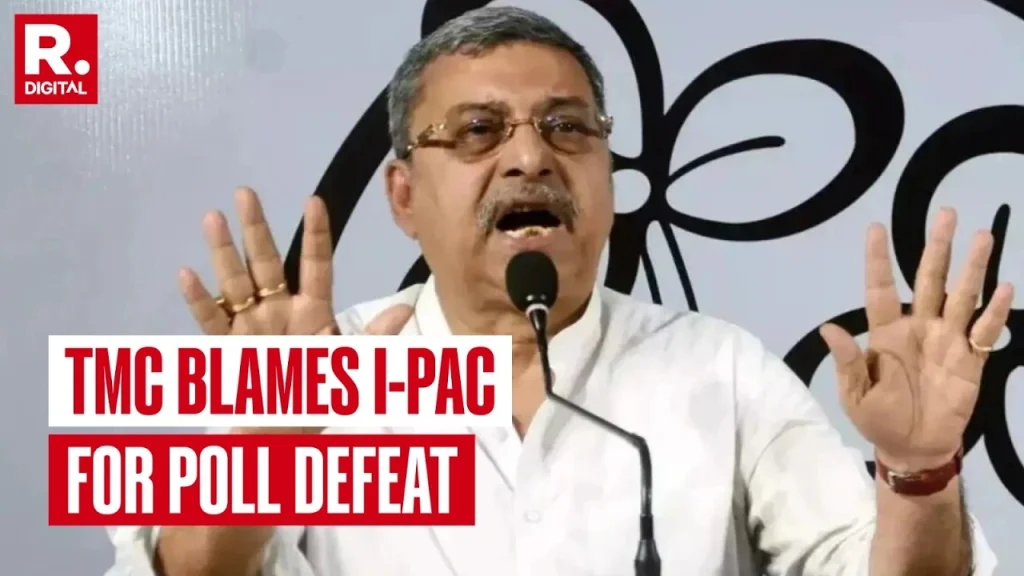
Why Is Rebellion Brewing Inside the TMC?
The Trinamool Congress (TMC) faces an unprecedented internal crisis. Hence Mamata Must Act Now before the organizational structure breaks down completely.
During a recent high-level party meeting, open defiance exploded directly in front of the party supremo. Ritabarata Bandyopadhyay has also openly criticized Abhishek indirectly.
- Internal Targets: While visible local anger targets Jahangir, the actual destination of this frustration points directly at Abhishek Banerjee.
- Public Defiance: Above all, Party insiders no longer restrict their disagreements to closed doors. Instead, leaders actively voice complaints through open media bytes.
- Empty Rallies: This internal division became clear during a protest outside the State Assembly. More than half of the elected TMC MLAs skipped the event entirely.
- Shifting Responsibility: Moreover, Senior leaders like Firhad Hakim and Kunal Ghosh completely distance themselves from internal decisions. As a result, Both refuse to take any responsibility regarding the recent notices linked to Abhishek Banerjee.
Political Career of Mamata Banerjee
| Year / Period | Role / Event | Party | Key Highlights |
|---|---|---|---|
| 1970s | Entry into politics | Indian National Congress | Began as a student leader; rose in Youth Congress |
| 1984 | First major victory | Congress | Defeated Somnath Chatterjee in Lok Sabha election |
| 1989 | Electoral setback | Congress | Lost seat amid anti-Congress wave |
| 1991–1996 | Union Minister (MoS) | Congress | Held key junior ministerial roles |
| 1998 (1 Jan) | Founded TMC | All India Trinamool Congress | Formed regional party after breaking from Congress |
| 1999–2001 | Railway Minister | TMC (NDA) | First tenure; gained national prominence |
| 2001 | Assembly elections | TMC | Challenged Left Front led by Communist Party of India (Marxist) but lost |
| 2004 | Political dip | TMC | Weak Lok Sabha performance (Only Mamata) |
| 2006–2008 | Mass movements | TMC | Led Singur & Nandigram protests |
| 2009–2011 | Railway Minister | TMC (UPA) | Second tenure under Manmohan Singh |
| 2011 | Became Chief Minister | TMC (alliance with Congress and others) | Ended 34-year Left rule in West Bengal |
| 2011–2016 | First term as CM | TMC | Welfare expansion and rural focus |
| 2016 | Re-elected CM | TMC | Strengthened dominance |
| 2021 | Third term as CM | TMC | Defeated Bharatiya Janata Party |
| May 2026 | Electoral defeat | TMC | Lost West Bengal Assembly election; lost CM position |
| 2026–Present | Opposition Party leader | TMC | Retains political influence; leads party in opposition |
Will the Unyielding Leader Break Her Silence?
Only a short while ago, the TMC controlled the state administration with absolute confidence. Even with recent political shifts, they still maintain an explicit legislative presence with 80 seats.
Historically, showcasing such intense dissent right in front of a powerful personality like Mamata Banerjee was considered impossible.
So, the central question remains: Will a fighter who built her career on resistance choose to remain silent today?
How Did Mamata Banerjee Rise to Power in Bengal?
Those who reached maturity over the last few decades witnessed Mamata Banerjee’s journey as a highly successful, relentless grassroots fighter.
Even though critics frequently pointed to an excess of emotion and political drama; initially, people unanimously respected her clear, absolute opposition to the CPI(M) regime. As a result, this consistency earned her the status of the definitive opposition face in Bengal.
- The Ultimate Alternative: The citizens of Bengal accepted her as the primary driver of political change. Despite minor individual disagreements, regular voters viewed her as the single credible force against decades of left-wing governance.
- A Democratic Start: Her initial period in power showed a strong commitment to democratic conventions. Right after taking charge in 2011, she indeed formally requested the Assembly Speaker to grant additional time to opposition benches.
Why Did the TMC Government Face Severe Backlash?
Unfortunately, Bengal soon moved into a completely different historical phase. But, she has always centered her strategy around single leadership. Thus this total control gradually created an administrative style that generated deep resentment across the state.
However, this period became marked by endless financial scandals, public corruption, local violence, and visible minority appeasement policy lines.
- The Entry of Abhishek Banerjee: Amidst this changing political environment, Abhishek Banerjee entered the core team. This rapid rise triggered direct friction with Suvendu Adhikari, which eventually caused Suvendu’s high-profile defection to the BJP.
Did I-PAC Become a Deep State Within Bengal?
Following these internal realignments, political consultancy firm I-PAC secured a permanent role. Significantly, What began as an external advisory firm quickly grew into the primary director of party affairs.
Mamata Banerjee frequently shifted between backing and opposing this corporate intervention, but this dual stance created deep confusion within the ranks.
- Sidelining Old Leaders: Eventually, this setup operated like a virtual deep state within the administration. Veteran TMC leaders felt deeply insulted when corporate data metrics and police reports received more priority than the experience of traditional grassroots workers.
- A Divided House: While specific figures voiced objections publicly, others remained quiet out of deep personal respect for Didi. However, this system split the organization into two distinct factions: the traditional Mamata loyalists and the newer Abhishek camp.
How Did Data Replace Grassroots Politics in Bengal?
Whenever Mamata Banerjee sensed a direct challenge to her personal authority, she would temporarily freeze corporate operations and state publicly that she remained the sole leader. Shortly after, the factions would arrange a temporary peace.
This cycle led middle-level workers also to adopt the compromise slogan: Under Mamata’s leadership, with Abhishek as the commander.
- Data Over Loyalty: Over time, actual connection to the soil of Bengal lost ground to corporate statistics. Soon after, serious extortion complaints surfaced against these political consultants.
- A Legal Blunder: The situation escalated drastically when Mamata Banerjee personally intervened during central agency searches at the residence of I-PAC executive Pratik Jain, drawing sharp attention from the judiciary regarding investigation obstruction.
- The 2026 Disaster: These compounding tactical errors led directly to a major political setback in the 2026 assembly elections. Because of this downturn, Mamata Must Act Now as rebellious leaders are now openly venting their anger against the central leadership.
What Choices Are Left for Mamata Banerjee?
Therefore, in this critical situation, the West Bengal Chief Minister stands at a defining crossroads with only two paths left to choose from.
- The First Option: She can hand over total operational leadership to Abhishek Banerjee and watch the organization collapse entirely.
- The Second Option: Alternatively, Mamata Must Act Now by stepping directly to the front line, collecting her most trusted veteran companions, and leading the organizational cleanup herself.
Can the TMC Ever Wash Away the Stains of Corruption?
Even if she takes complete control, the path ahead remains incredibly difficult. The administration carries heavy damage from continuous corruption scandals and systemic governance failures.
Consequently, today, public sentiment has turned exceptionally hostile, with ordinary citizens frequently chanting anti-corruption slogans the moment they spot regional party leaders on the ground.
Because of this widespread anger, the general acceptability of her leadership among regular voters remains deeply vulnerable. Despite these challenges, she can still make one final, focused attempt to rebuild the party’s image from scratch.
Why Must Mamata Return to the Streets Immediately?
To preserve her political legacy, the TMC leader cannot manage affairs from remote offices anymore.
She must return directly to the streets and practice the active, combative grassroots politics that defined her early career. Only an immediate, visible struggle on the ground offers the TMC a realistic chance at survival.
Regardless of her final choice, time remains extremely short.
A healthy democracy cannot function effectively without a resilient, clear opposition force.
Therefore, to protect both her organization and democratic balance, Mamata must step out and begin her work immediately.
10 Urgent Realities Shaking the TMC
- Insiders Rebel Openly: Dissident leaders now openly challenge Mamata Banerjee during high-level meetings, shattering her historical absolute control over the party.
- Dissent Targets Abhishek: While public anger visibly singles out Jahangir, the internal rebels direct their actual frustration at leadership style of Abhishek Banerjee.
- Grievances Go Public: TMC politicians have abandoned confidential, closed-door party discussions, opting instead to broadcast their structural complaints through open media channels.
- MLAs Skip Protests: More than half of the elected TMC legislators skipped a high-profile State Assembly demonstration, exposing severe organizational fractures on the ground.
- Leaders Wash Hands: Senior figures like Firhad Hakim and Kunal Ghosh explicitly refuse to take any responsibility for the administrative notices sent to Abhishek.
- Corruption Shadows Legacy: In essence, Years of unchecked financial scandals, local violence, and aggressive policy lines have deeply damaged Mamata’s early reputation as a democratic anti-Left fighter.
- Corporate Data Fails: Particularly, the party’s heavy reliance on I-PAC’s corporate metrics severely alienated long-time grassroots workers by prioritizing cold spreadsheets over human loyalty.
- Internal Factions Divide: Erratic adjustments to party authority split the organization right down the middle, creating two competing camps of Mamata loyalists and Abhishek followers.
- Judicial Eyes Focus: Mamata’s direct, personal intervention during central agency searches at an I-PAC executive’s home triggered damaging judicial scrutiny over investigation obstruction.
- Mamata Must Act Now: Following a historic electoral collapse, the supreme leader must immediately ditch corporate strategies, return to aggressive street-level mobilization, and rebuild the party from scratch.