

Key Highlights
- Identity Politics in 2026 has emerged as the central force shaping electoral outcomes in West Bengal.
- Political polarization driven by religion and caste is weakening social unity and collective values.
- Governance failures and lack of development are being masked through aggressive identity-based mobilization.
- Caste and community movements now dominate the political narrative, sidelining class and economic issues.
- Competitive appeasement has triggered a dangerous pendulum effect in state policy decisions.
- Voter list controversies and SIR debates have intensified fears, mistrust, and political manipulation.
- The “us versus them” mindset is replacing inclusive politics, deepening long-term social fractures.
Identity Politics in 2026: The Core Issue
Identity Politics in 2026 has become the torchbearer in West Bengal. If we look at world history, from the African American civil rights movement in the United States to today’s Gaza conflict, identity politics has often acted as a driving force.
Therefore, in the age of globalization, it is almost impossible for a country like India, especially West Bengal, to remain untouched by it.
Any one interested to delve into it, may refer to Why Class Matters by Chris Nineham.
The Role of Governance and Political Intent
At this point, the role of good governance becomes crucial. More importantly, political intent matters. However, when rulers lack administrative competence and chase votes, they often worsen the problem instead of solving it.
As a result, excessive emphasis on separate group identities weakens social bonds. Instead of unity, division grows, and ordinary people suffer.
In today’s West Bengal, The 2026 election has created a situation where differences matter more than shared goals. Consequently, while political parties may gain votes, collective values and common purpose fade into the background.
Governance Failure Fuels Polarization
Moreover, this division no longer stays limited to Hindu–Muslim or religious politics. Across the state, group-based conflicts are rising. Movements by communities such as the Matua, Rajbanshi, and Kurmi have gained a special place in Identity Politics in 2026.
As a result, issues like economic inequality and class struggle have weakened.
When the state prioritizes specific group interests, resentment and conflict increase between communities. This creates a “pendulum effect”. For example, after the government introduced an imam allowance, it soon had to introduce a priest allowance as well.
Similarly, massive public spending on temples may soon lead to demands for mosques built with government funds.
However, India’s secular Constitution clearly discourages direct state involvement in religious affairs. Yet, political leaders often ignore this principle.
When rulers abandon fairness and focus only on appeasing one community after another, society moves toward collapse. Still, Such Communal politics is emerging as the decisive election factor.
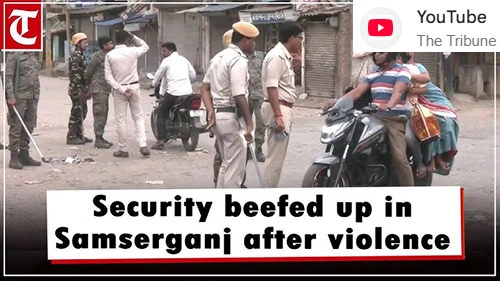
Critics say identity politics in West Bengal has been deliberately amplified. They allege this strategy keeps votes limited to the Trinamool Congress and the BJP. The goal, they argue, is to block the CPI(M), seen as the common enemy.
From Unity to Deep Social Division
Another serious consequence of identity politics is the erosion of class-based unity. Instead of worker–owner conflicts, society now focuses on Hindu–Muslim divisions. If a Muslim worker faces injustice, a Hindu worker may stay silent.
Recently, the brutal killing of Dipu Das in Bangladesh showed how religious identity overpowered class solidarity there as well.
In West Bengal too, incidents like those in Samserganj reveal the damage caused by this divide-and-rule strategy. Historically, landlords used informers by offering them privileges. Today, although monarchy is gone, political rulers often use the same tactics.
When a nation is divided on religious lines, that prejudice stays buried deep in the collective psyche. It flows quietly like an underground current. The ruler, entrusted with justice, must ensure it never rises violently. Instead, we are witnessing the exact opposite.
We have no way of knowing when it will detonate like an atomic bomb. It seems we are all just waiting in a haunting silence.
When they fail in real development, they do not hesitate to use low-quality identity politics to win votes.
Identity Politics in 2026: Political Culture in Decline
West Bengal once had leaders like Jyoti Basu, who openly said riots do not happen without government will, and Buddhadeb Bhattacharjee, who warned against communal violence firmly.
In contrast, today’s TMC politics labels even the Prime Minister or Home Minister as “outsiders” in the state.
Such language was unheard of in Bengal’s political history. Personal attacks and vulgar comments have replaced the tradition of respectful political debate. While these remarks may earn applause, leaders should ask themselves one question: How would I feel if someone attacked me the same way?
Most successful politicians in Bengal, from Jyoti Basu to Mamata Banerjee and Suvendu Adhikari, rose through protest and street politics. However, the moral decline in today’s political evaluation is unprecedented.
If the Prime Minister is an “outsider” in Bengal, then what about the millions of Bengali migrant workers working in other states? Has the ruling party thought about this?
What happens to the pride of Bengali Identity, when they face miserable violence in other states? Mamata Banerjee may come down to the street to fuel the emotions, which ultimately goes in vein.
What is the use of popular street politics when such issues need serious attention of the Government and Administration?
Why are Bengalis forced to flee to other states just to survive? At this rate of brain drain, we’ll be left with nothing but a state of the elderly. Can a government survive on nothing but identity politics and corruption?
Caste and Community Take Center Stage
Such Communal Politics has also created a culture of excessive victimhood. Leaders portray themselves as oppressed so that no one questions them. This trend partly comes from the Left’s legacy. However, even the Left never blocked central projects in the state. Metro Rail was built during their tenure.
Yes, land issues existed. But since the Metro was a central project, the Left did not try to stop it at any cost. They also spoke strongly against border infiltration and unrecognized madrasas.
Today, even land for border fencing is unavailable. BSF camps in Malda remain incomplete, and the Railways must approach courts just to manage traffic at Chingrighata.
Earlier, identity politics existed subconsciously, but the government controlled it. At least no religion received open state support. Can anyone imagine Jyoti Basu leading Eid prayers or inaugurating puja pandals repeatedly?
Arguably, the Taslima Nasrin incident remains the sole blot on the otherwise clean record of the artist-Chief Minister Buddhadeb Bhattacharjee during the Left regime.
Communal Polarization and the 2026 Election
Today, Identity Politics has normalized communal polarization. Riots are happening in the state. The movement against Special Intensive Revision (SIR) reached extreme levels due to this polarization, more bluntly, due to Muslim vote-bank calculations.
When the voter list comes ahead of the governance as the core election narrative, the situation becomes worse. It is widely known that Muslim voters have consistently supported Mamata Banerjee. This support has helped her win successive elections.
When people started fleeing to Bangladesh through Swarupnagar fearing SIR, the ruling party panicked. Seeing that 5.8 million voters were dropped from the draft list, leaders began recalculating their chances of victory.
Since the number of excluded voters exceeded typical victory margins, the strategy became clear: oppose voter list revision by any means.
Why Identity Politics in 2026 Decides Bengal
So, what do we see in West Bengal today? Continuous division of voters into religion- and caste-based sub-groups has badly weakened social cohesion. Instead, an “us versus them” mindset dominates, sometimes political, sometimes caste-based, sometimes openly communal.
The state’s job is to reduce inequality and act firmly when needed. Instead, the rulers encourage division. Meanwhile, real issues remain unresolved, law and order collapse, lack of industry, unemployment, poor education, and rising debt. Cases like Abhaya are only symptoms.
To divert attention from these failures, polarization has become the ruling party’s main weapon. Sometimes it is “central deprivation,” sometimes SIR, irrelevant issues keep the political temperature high. The opposition, instead of offering an alternative development vision, has fallen into the same trap.
The only solace for West Bengal is that they have never entertained any communal politics. Several parties have emerged or participated in West Bengal elections, but none of theme could get any foothold.
We can recall AIMIM (All India Majlis-e-Ittehadul Muslimeen), Indian Union Muslim League (IUML), Indian National League (INL), Welfare Party of India (WPI), Peoples Democratic Conference of India (PDCI). They all participated in election but returned empty handed.
In fact, even BJP had to wait for long for a seat in West Bengal. Badal Bhattachrya perhaps won the first Assembly seat in Ashoknagar Assembly constituency in 1999.
BJP has increased its phenomenal growth by shaking hands with Mamata Banerjee in West Bengal Election. BJP could secure its next entry in West Bengal assembly election in 2014 only.
Conclusion
Though the India Today-CNN Poll, does not show much difference in seat or vote sharing, but there may be a silent revolution. There may come up a plebiscitary call.
Therefore, Identity Politics in 2026 will be the biggest driving force behind the vote. Unfortunately, the ultimate loser will be Bengal and its people.