
Do Expert Lawyers Lose Morals When They Defend Rival Politicians?
The debate is getting louder. Many people now ask a direct question: do expert lawyers lose morals when they defend leaders from rival political parties?
At first glance, it looks uncomfortable. A lawyer criticizes a party in public. Then, the same lawyer appears in court for the same party’s leader. Naturally, people feel confused.
However, the reality is not so simple. Law works on a different foundation. Politics works on emotion and ideology. When these two worlds meet, friction is inevitable.
Let’s break this down with real examples and a balanced view.
Why Do Lawyers Take Cases Across Political Lines?
To begin with, law is a professional service. A lawyer does not act as a political worker inside the courtroom. Instead, the lawyer performs a defined role.
A lawyer must:
- Defend the client
- Protect legal rights
- Present arguments before the court
Because of this, legal representation does not mean political loyalty. In fact, if lawyers start rejecting cases based on ideology, the justice system will suffer.
Moreover, courts depend on strong arguments from both sides. Without that balance, fairness weakens.
Unfortunately, we live in a country where even Former Supreme Court Judge Justice P.N. Bhagwati made this observation that death penalty often becomes a privilege for the poorer section of people.
So, while it may look strange from outside, the legal system actually requires this flexibility.
Real Cases That Trigger the Debate
Ram Jethmalani’s Bold Legal Choices
Ram Jethmalani never hesitated to take controversial cases. He defended Lalu Prasad Yadav in corruption-related matters. He also represented J. Jayalalithaa in high-profile cases.
Interestingly, he openly stated that every accused deserves a strong defense. He did not see any contradiction in his actions.
Kapil Sibal’s Cross-Party Appearances
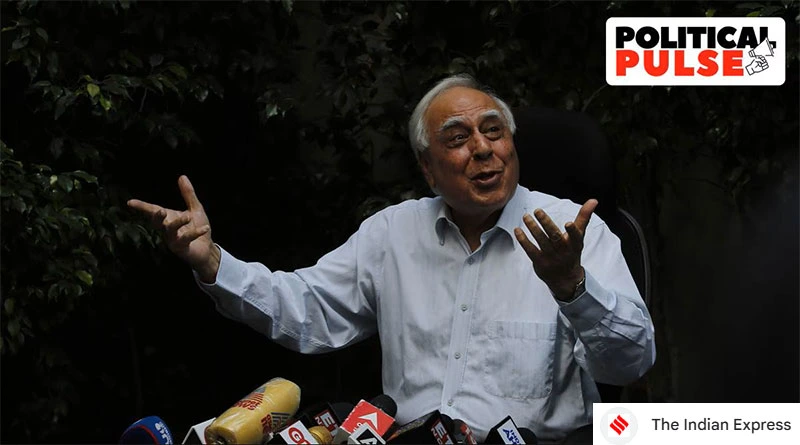
Kapil Sibal provides another example. Though politically linked with the Samajwadi Party, he has appeared for Mamata Banerjee and several leaders from the Trinamool Congress. He had been with Congress for a long.
When he defends Mamata Banerjee even in I-PAC Case, it raises questions about morality.
This clearly shows that legal practice often moves beyond party boundaries.
Abhishek Manu Singhvi’s Dual Engagements
Abhishek Manu Singhvi has also handled cases across political divides. He represented Arvind Kejriwal from the AAP. At the same time, he appeared in matters involving Mamata Banerjee.
They raise PIL even in I-PAC Cases either for Mamata Banerjee or for TMC or for West Bengal Government.
Such examples strengthen the argument that legal roles are independent of political identity in Indian Judiciary System.
Mukul Rohatgi’s Wide Legal Portfolio
Mukul Rohatgi has represented leaders from different political backgrounds. He appeared for Mulayam Singh Yadav as well as J. Jayalalithaa.
His career reflects how top lawyers often work on complex, high-stakes cases without political bias.
Bikash Bhattacharya and the Bengal Context
The debate has now intensified in West Bengal. Bikash Ranjan Bhattacharya, known for opposing the ruling party, recently argued for Aditi Munshi.
He also represented associates of Mukul Roy during Roy’s BJP phase.
As a result, discussions and debates in West Bengal Politics have become sharper.
We are not taking the cases where there is a fight against the issues like the breakdown of federal structure of India or Constitutional Crisis. As these cases really need intense debates in the courtrooms.
So, is Legal Ethics in Politics lost?
Now we return to the central question.
From a legal standpoint, the answer is no.
A lawyer’s duty is not to judge the client. Instead, the lawyer ensures that the client receives a fair hearing. Courts decide the outcome based on evidence and law.
Therefore, when people say do elite lawyers lose integrity, they often mix legal duty with personal belief.
However, this does not mean the concern is meaningless. The issue becomes more complicated when lawyers also act as political figures.
Why Public Perception Tells a Different Story
Even if the law is clear, public opinion does not always agree.
- Strong political polarization
- Emotional reactions to corruption cases
- Media narratives that highlight contradictions
- Public expectations from political leaders
Because of these reasons, people often judge lawyers not as professionals, but as political symbols.
As a result, the same action can be interpreted in two completely different ways.
Ethics vs Perception: A Clear Contrast
| Aspect | Legal Reality | Public Perception |
|---|---|---|
| Role | Professional advocate | Political supporter |
| Morality | Neutral duty | Questionable intent |
| Accountability | Court-driven | Emotion-driven |
| Flexibility | Necessary | Suspicious |
Do Political Lawyers Have Extra Responsibility?
At this stage, the discussion takes a deeper turn.
When a lawyer is also a politician, expectations change. People expect consistency. They expect loyalty to ideology. They expect moral clarity.
So yes, political lawyers do carry extra responsibility.
At the same time, they cannot ignore their professional obligations. Law demands neutrality. Justice demands representation.
Such a legal battle has often come under the scrutiny of judges.
Because of this, a conflict naturally arises.
A Practical Dilemma That Has No Easy Answer
This situation creates a real dilemma.
If a lawyer refuses a case due to political differences, critics may call it bias. On the other hand, if the lawyer accepts the case, critics may question morality.
Either way, criticism follows.
Therefore, the issue is not about right or wrong. It is about balance.
As an example, Kapil Sibal and Kalyan Bandyopadhyay used to be present in the Supreme Court. They regularly raised their voices regarding the adjudication list. On top of it, Mamata Banerjee promised legal help to those victims.
Today, perhaps nobody even remembers that chapter. As a result, we can see the thin line of difference between lawyers and politicians is fading out.
Final Thoughts: Morality or Misunderstanding?
So, do elite lawyers lose integrity? Not necessarily.
They operate within legal ethics but face political expectations and public judgment.
If we view law as a profession, then lawyers are simply doing their duty. If we view them as political figures, then their actions may seem inconsistent.
In reality, both views exist at the same time.
Ultimately, the real challenge is not about morality alone. It is about managing perception, responsibility, and professional ethics together.
And perhaps, that is where the debate will continue.
10 Key Takeaways
- Even, senior lawyers often represent clients across party lines without political bias.
- Legal ethics allow advocates to take any case based on merit, not ideology.
- However, public perception changes when lawyers become political figures.
- Therefore, cases like Ram Jethmalani defending rival politicians raise debates.
- Similarly, Kapil Sibal and Abhishek Manu Singhvi have argued for leaders from opposing camps.
- Meanwhile, Mukul Rohatgi has also represented multiple political interests.
- In addition, Bikash Bhattacharya’s recent appearances add to this pattern.
- As a result, critics question whether expert lawyers lose morals in such roles.
- On the other hand, many argue that legal duty stands above political loyalty.
- Finally, the debate continues over ethics, responsibility, and public perception.
FAQs
Is Legal Ethics in Politics is Lost when defending criminals?
No. Lawyers defend legal rights. Courts decide guilt.
Why do lawyers represent different political parties?
Because legal practice is independent of political ideology.
Is it unethical for political lawyers to defend rivals?
Not legally, but it may affect public perception.
Can a lawyer refuse a case on moral grounds?
Yes, but frequent refusal may conflict with professional duty.
Why are political lawyers judged more strictly?
Because they influence public opinion and represent political values.