
A Politically Uncomfortable Day for Trinamool Congress (January 21, 2026)
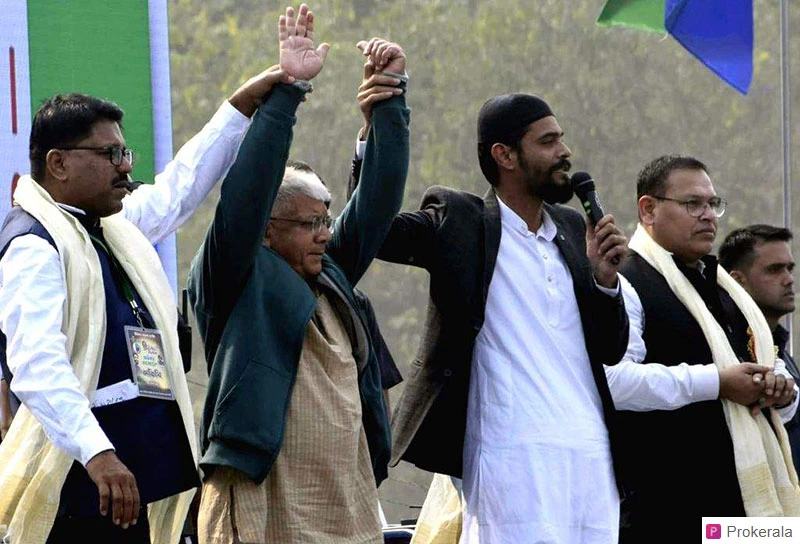
January 21, 2026, turned out to be a highly uncomfortable day for the Trinamool Congress (TMC). On that day, Naushad Siddiqui addressed a massive public rally at Shahid Minar, with an aim to consolidate Muslim Vote.
He is currently the only non-BJP opposition MLA in West Bengal.
However, he has clearly delivered speeches aiming at mobilizing Muslim political consciousness.
Political observers know one thing well. For the last 15 years, the Muslim vote bank has consistently delivered dividends to the Trinamool Congress.
ISF’s Muslim-Centric Reality
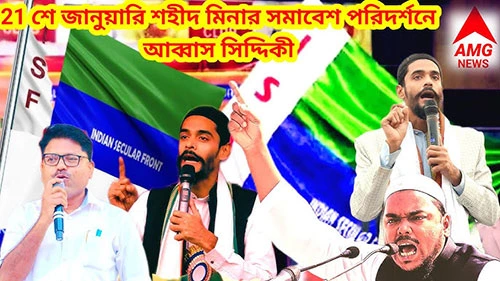
Although ISF, led by Naushad Siddiqui, claims to be secular, the party draws its dominance from the Muslim community and remains heavily influenced by the Pirzada family. Meanwhile, on the same day, Toha Siddiqui openly claimed that TMC’s vote bank is collapsing.
More importantly, what Naushad Siddiqui said from the stage was striking. He clearly stated:
Muslims are dying, Muslims are killing
He explained further. When someone is killed, the victim’s family collapses. At the same time, the police arrest the accused, and their family also collapses. He then added pointedly that such violence does not occur during elections only, implying that this situation is deliberate.
He directly questioned the Chief Minister: Why are you deliberately turning Muslims into goons?
Indeed, we have raised this question multiple times. Is there a proper development of Muslim Community? Several study reports have exposed that the Muslims in West Bengal are in appalling condition.
Muslim Vote as Electoral Game-Changers
Political strategists understand that Muslim voters directly decide election results in at least 90 Assembly seats in West Bengal. In another 20 to 40 seats, they have the power to strongly influence outcomes.
While listening to Naushad Siddiqui’s speech, it felt like an echo of what Humayun Kabir had said in December. Both rallies attracted huge crowds. Of course, crowd size does not always translate into votes, as past experience shows.
However, if this crowd reflects Muslim anger or frustration toward Mamata Banerjee, then the signal is serious.
Mamata Banerjee’s Strategy and Its Consequences
In the name of Muslim development, Mamata Banerjee chose a path of appeasing certain Imams and Muezzins. She introduced state allowances for them. The goal was clear. By keeping them satisfied, they could influence poor and less-educated Muslims to vote for TMC.
However, she unknowingly mounted a tiger’s back. Perhaps even she did not realize it at the time. In West Bengal, playing the communal card can have dangerous consequences. Eventually, she had to announce allowances for Hindu priests as well.
Pressure from BJP and the Hindu Consolidation
The BJP aggressively highlighted Mamata’s Muslim appeasement, while the Left and Congress protested sharply. As a result, she appeared visibly unsettled. She even stood in the Assembly and declared that she is a Brahmin’s daughter and invoked Lord Shiva. In effect, she had to publicly prove her Hindu identity inside the legislature.
Is this appropriate in a secular state? Before this, she had repeatedly offered namaz on Red Road during Eid, wearing a skullcap, and even delivered political speeches there. This firmly established her pro-Muslim image.
Meanwhile, she sensed rapid consolidation of Hindu votes, with Hindutva emerging as BJP’s main political weapon. The path she then chose became even more risky.
Temples, Grants, and Political Messaging to lose Muslim Vote
She began inaugurating one temple after another like the Jagannath Temple, Durgangan, and even the Mahakal Temple in Siliguri. This did not go unnoticed by Muslims.
Additionally, People have been always celebrating Durga Puja in Bengal without state funding. Yet, to control Puja committees, the government began providing grants—starting from ₹10,000 and going up to ₹1.10 lakh last year.
The Final Blow to Muslim Appeasement
Perhaps the final nail in the coffin of her symbolic Muslim outreach came when she first refused to submit Waqf data but later, at the last moment, had to upload Matua community data on the central portal.
Alliances, Contradictions, and 2026 Uncertainty
There is a key difference between Humayun Kabir and Naushad Siddiqui. Naushad publicly claims his party is secular. In contrast, Humayun Kabir has openly demonstrated that his focus is Muslim development and becoming a kingmaker, as symbolised by the Babri Masjid issue.
So, if Humayun Kabir joins the alliance that Naushad Siddiqui called for, can the Left or Congress shake hands with them? Both parties still claim to be secular. Notably, ISF had contested the last Assembly election with the Left-Congress alliance.
At the same time, Humayun Kabir will be a major factor in Murshidabad. Meanwhile, Mausam Benazir Noor’s return to Congress has revived the party in Malda, giving it much-needed oxygen. So, the Muslim Vote in Malda and Murshidabad has raised doubts.
Final Word for Muslim Vote
Politics is the art of possibilities. The election bugle has not sounded yet. However, West Bengal’s political landscape is becoming increasingly volatile. The real outcome will be clear only after the EVMs are opened.