
Swasthya Sathi Scam: Another TMC Welfare Scheme Under the Scanner
Mamata Banerjee had a peculiar habit of turning almost every government welfare scheme into a personal political achievement.
Whether it was Lakshmir Bhandar, Kanyashree or Swasthya Sathi, the publicity machinery never missed an opportunity to tell people how generously her government was looking after them. The advertisements were everywhere, the claims were grand and the chief minister herself was always ready to take the credit. But there was one small matter that apparently received much less attention: accountability.
The Swasthya Sathi Scam has now raised questions that the previous government would probably have preferred not to answer. What was presented as a lifeline for ordinary families has come under scrutiny over questionable medical claims, mismatched hospital bills, suspicious beneficiary records, fake cards and allegations involving private hospitals. The latest revelations are particularly disturbing because this was one of the flagship schemes through which Mamata Banerjee built her political narrative of pro-poor governance.
The scheme promised cashless treatment of up to ₹5 lakh per family. There was nothing wrong with the objective. In a state where ordinary people struggle to afford private healthcare and government hospitals remain under enormous pressure, financial assistance for medical treatment is essential.
But a welfare scheme is not judged by the number of cards distributed or the number of times its chief minister advertises it. It is judged by whether genuine patients receive treatment, whether hospitals submit genuine claims and whether public money is spent honestly. That is precisely where the uncomfortable questions begin.
We have raised our reservations against Free Welfare Schemes irrespective of financial health.
Bardhaman Nursing Home: The Fraud Allegations
The recent developments in Purba Bardhaman deserve particular attention. According to an Ei Samay report dated 28 August 2026, the Health Department’s State Surveillance Team issued a show-cause notice to Ahad Hospital after a medical audit reportedly detected discrepancies in 14 cases. The treatment recorded in hospital documents did not match the Swasthya Sathi packages blocked or claimed by the hospital.
In some cases, patients undergoing postoperative treatment allegedly did not have the corresponding treatment packages blocked. There were also instances where surgical treatment was reportedly shown under medical management packages, raising questions about the way claims were being generated.
The audit also questioned the practice of blocking an unrelated package instead of the appropriate package for a surgical procedure. Another case involved spinal surgery reportedly performed by an orthopaedic surgeon, although the procedure was expected to be carried out by a neurosurgical specialist. The hospital was asked to explain the discrepancies and submit supporting documents. 14 cases with reported inconsistencies in one hospital are certainly not something the Health Department can dismiss as a minor paperwork problem.
And this was not the only controversy involving a Bardhaman hospital. An Anandabazar report published on 25 August 2026 carried allegations by a consumer organisation about inflated bills, questionable use of doctors’ names and irregularities in treatment claims.
The organisation alleged that even ordinary ailments such as fever and cold were being used to justify more expensive procedures and packages. It claimed that bills for packages costing ₹40,000–₹50,000 were being raised to nearly ₹90,000 in some instances.
It also questioned whether a doctor whose permission to perform surgery under Swasthya Sathi had reportedly been restricted was continuing to operate, with bills being generated in the names of other doctors.
These are allegations that require proper investigation, but they raise an obvious question: if such practices were taking place, where was the government machinery responsible for monitoring the scheme? Were hospital inspections merely a formality? Did anybody examine whether the treatment actually provided matched the amount claimed from the government? A hospital cannot be allowed to treat a government-funded insurance scheme as its private cash counter.
Fake Cards, Fake Hospitals and the Latest Revelations
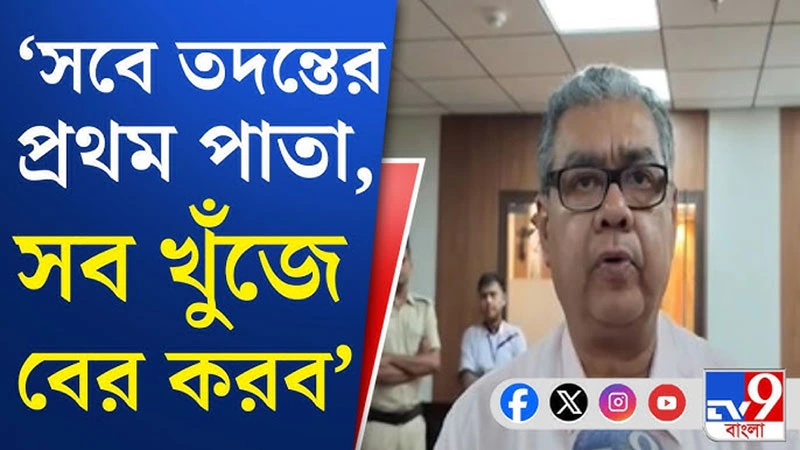
The matter has now taken a more serious turn. On 30 October 2026, the state’s Health Minister, Sharadwata Mukherjee, spoke publicly about suspected financial irregularities in Swasthya Sathi and said that a forensic audit was being conducted.
In an ABP Ananda report, the minister referred to suspected fake cards, fake beneficiaries, fake diseases, fake doctors, forged signatures, fake hospitals and questionable third-party administrators and insurance-related information.
He suggested that the irregularities detected so far might represent only the beginning of a much larger investigation.
The minister’s remarks are serious, although the allegations must be tested through the forensic audit and supporting evidence. A fake card, a fictitious beneficiary and a fraudulent hospital claim are not the same thing, and each needs to be established separately. But if the investigation confirms even a substantial part of what has been alleged, Bengal will have to confront an uncomfortable question about the administration of one of its most heavily advertised welfare schemes.
The issue of missing beneficiaries is equally significant. On 30 October, the Chief Secretary reportedly told journalists that around 20–25 lakh Swasthya Sathi beneficiaries could not initially be traced during verification. Other reports, including one by Indian Express Bangla, referred to more than 30 lakh questionable or untraceable records.
The difference in the reported figures itself makes it important to wait for an official consolidated verification report. An untraceable beneficiary is not automatically a fake beneficiary. People migrate, addresses change, families split and records become outdated. But a database containing millions of records that cannot initially be verified is a serious administrative failure, particularly when public money is involved.
There is another figure that needs careful interpretation. The Telegraph report of 30 October discussed a possible saving of ₹20,000–25,000 crore across several welfare schemes, including Swasthya Sathi, Khadya Sathi and Krishak Bandhu. This is not an established loss or proven fraud figure for Swasthya Sathi alone. The government must establish how many records are genuinely fraudulent, how many are duplicates, how many relate to people who have moved or died, and whether any hospital or intermediary actually received money against fictitious beneficiaries.
If fake beneficiaries were created to facilitate fraudulent payments, those responsible must be identified, whether they are hospital owners, officials, intermediaries or politically connected individuals. Merely deleting questionable names from a database will not answer the larger question of where the money went.
CAG Audit: The Warning Signs Were Already There
What makes the latest revelations more uncomfortable for the former government is that concerns about Swasthya Sathi did not suddenly emerge after the change of guard. The Comptroller and Auditor General had already identified serious weaknesses in the scheme. The CAG Performance and Compliance Audit Report No. 05 of 2025, tabled in the West Bengal Assembly on 25 July 2026, examined the scheme’s implementation up to March 2023, with some subsequent instances also included.
We must salute this Government as they table the CAG reports without hiding them like the previous TMC Government.
The audit raised questions about beneficiary records, hospital empanelment, expenditure and monitoring. Among its findings was a discrepancy between the number of families enrolled and the number of ration-card-holding families recorded. Around 2.43 crore families were enrolled under Swasthya Sathi as of March 2023, while the corresponding ration-card figure was approximately 2.21 crore in August 2023. The CAG also questioned the documentation available to establish compliance with the rule of one card per family in the name of the eldest female member.
There were other findings. The audit reportedly identified 31 hospitals that had been assigned higher grades than their infrastructure, facilities and sanctioned bed strength justified. Since hospital grading influences reimbursement rates, such discrepancies can have direct financial consequences. The audit also pointed to excess expenditure of approximately ₹46.97 crore on enrolment and distribution of smart cards, inadequate grievance redressal and weaknesses in recovering penalties for delayed claim settlements.
Of course, the difference between Swasthya Sathi enrolment and ration-card numbers does not by itself prove that all additional beneficiaries were ineligible. The scheme had a wider eligibility framework. But the CAG’s concern about documentation and verification cannot be brushed aside. When a government spends thousands of crores of rupees on a welfare programme, it must be able to establish who is receiving the benefit, which hospitals are claiming reimbursement and whether the treatment is genuine.
The audit findings should have prompted a thorough correction of the system. Instead, the scheme continued to enjoy political promotion while questions about its monitoring remained unanswered. This is the real issue. A government cannot claim that everything is functioning perfectly merely because it has distributed a large number of cards.
When Hospital Bills Become a Patient’s Nightmare
The problem of questionable hospital billing is not confined to the latest Bardhaman allegations. The West Bengal State Consumer Commission, in an order dated 25 August 2026, directed Ispat Cooperative Hospital to refund ₹2 lakh to a patient after finding that the hospital had charged for an ICCU bed although the discharge records showed that the patient had stayed in a general ward. It also ordered compensation of ₹50,000 and litigation costs of ₹25,000.
The Indian Express report describes the commission’s findings. The incident dates back to May 2021, and the order concerned a billing dispute and denial of Swasthya Sathi benefits. It should not be confused with a proven fraudulent reimbursement claim under the scheme. Nevertheless, it illustrates why accurate treatment records and transparent hospital billing are essential.
A patient who enters a hospital with a Swasthya Sathi card should not have to worry about whether the hospital will invent a more expensive treatment package, charge for facilities never provided or manipulate medical records. The entire purpose of the scheme is to reduce the financial burden on families, not to create another opportunity for exploitation.
Mamata’s Healthcare Model: Publicity Versus Reality
Mamata Banerjee cannot claim all the credit for Swasthya Sathi while treating its administrative failures as somebody else’s responsibility. The scheme was launched and promoted under her government. The Health Department, the State Nodal Agency and the machinery responsible for hospital empanelment and claim verification all functioned under that administration. If the monitoring system was weak, the political leadership must answer for it.
And Swasthya Sathi is not the only reason the healthcare administration of Bengal deserves scrutiny. The RG Kar rape and murder in August 2024 shook the state and exposed serious questions about hospital security, institutional accountability and the handling of the investigation. The public outrage was not simply about one horrific crime. It was also about the manner in which the hospital administration and state machinery responded to it. The tragedy became a symbol of the wider crisis of confidence in public institutions.
I have discussed the broader problems of the state’s healthcare system in my Knowledge Mart article, Bengal Healthcare Crisis: The Chorbagan Story. The point is not to compare two unrelated incidents or suggest that every hospital is corrupt. It is to ask why ordinary patients repeatedly find themselves at the mercy of a system in which accountability appears to be the last priority.
Also Read: Bengal Healthcare System: The Bottom Line.
Coal, Jobs and Education: A Wider Pattern of Questions
The questions surrounding Swasthya Sathi also bring back the wider record of the TMC years. The coal-smuggling investigation, recruitment controversies and the collapse of public confidence in parts of the education system were not minor political disagreements. They involved serious allegations about public institutions, government functioning and the misuse of influence.
In the coal case, investigating agencies alleged illegal mining, financial transactions and the movement of proceeds through various channels. Those allegations must be tested in court, but they cannot be wished away by describing every investigation as political vendetta.
The school recruitment controversy was particularly painful because it concerned the future of young people. Candidates who spent years preparing for examinations found themselves caught in allegations of manipulated recruitment lists, irregular appointments and money changing hands. The involvement of former education minister Partha Chatterjee and other accused persons made the controversy even more damaging to public confidence. For thousands of deserving candidates, the issue was not an abstract political battle. It was about whether merit and hard work had any value in Bengal.
The coal controversy and the recruitment scandal were not identical, but both raised a common question: what happens when institutions meant to serve the public become vulnerable to political influence and financial manipulation? A government may have a political explanation for every allegation, but it cannot expect people to forget the consequences of institutional failure.
Even the Stone smuggling controversy has come in fore.
I have examined the larger political consequences of this period in Why Mamata Banerjee Lost Power. The common thread across these controversies is the question of accountability. The TMC government had years to strengthen public institutions, improve recruitment transparency, tackle illegal networks and ensure that welfare money reached genuine beneficiaries. Why did so many questions remain unanswered?
Key Takeaways: What the Swasthya Sathi Scam Raises
- The Bardhaman nursing-home controversy has exposed reported discrepancies between treatment records and Swasthya Sathi packages in 14 audited cases.
- Consumer organisations have raised allegations of inflated bills, questionable use of doctors’ names and unnecessary procedures.
- The Health Minister has announced a forensic audit and referred to suspected fake cards, beneficiaries, diseases, doctors and hospitals.
- More than 25–30 lakh beneficiary records have reportedly raised questions during verification. These figures are preliminary and do not establish that every record is fraudulent.
- The CAG had already flagged weaknesses involving beneficiary documentation, hospital grading, expenditure and claim monitoring.
- The RG Kar tragedy, recruitment controversy and coal-smuggling investigations raise wider questions about institutional accountability during the TMC years.
- The government must identify actual fraud, recover money wherever fraudulent payments are established and protect genuine patients from losing their healthcare benefits.
What Must Happen Now?
The change of government should not turn the Swasthya Sathi investigation into another round of political accusations and counter-accusations. The people of Bengal deserve a proper forensic audit, district-wise details of suspicious beneficiaries, a review of hospital empanelment and a public account of the money paid against disputed claims. Every hospital found to have submitted false claims must face appropriate action.
Officials who knowingly facilitated fraudulent payments should not be allowed to escape merely because they occupied government positions. Equally, genuine beneficiaries must not be made to suffer because of the misconduct of others.
There must also be transparency about the role of insurance companies, third-party administrators and government officials responsible for verifying claims. If the alleged fraud involved an organised chain rather than isolated incidents, the investigation must follow the money and identify every link. Merely suspending a few hospitals or cancelling some cards will not be enough. The findings should be published, the money trail examined and responsibility fixed.
Mamata Banerjee spent years presenting Swasthya Sathi as proof of her government’s concern for the poor. Now the scheme itself has become a subject of forensic scrutiny. The question is not whether every allegation against the previous government will ultimately be proved. The question is why the safeguards of such an important welfare programme were apparently not strong enough to prevent or detect the reported irregularities earlier.
A welfare scheme is not a personal gift from a chief minister. It is funded by taxpayers and exists to protect people in their most vulnerable moments. The money belongs to the public, not to hospitals, middlemen or political networks.
Mamata Banerjee may have left behind a long list of welfare schemes and an enormous collection of publicity material. But if the allegations now being investigated are established, she will also have left behind a serious question about the cost of governance without accountability.
The people of Bengal were promised healthcare security. They have every right to demand an account of where their money went.